
The real reason your neck feels stiff every time you drive

I remember the exact moment I realized my car was winning the war against my spine. I was merging onto the I-80, and when I went to look over my left shoulder, I felt a sharp, electric twinge that traveled all the way up to my ear. It wasn’t just a ‘crick’—it felt like a physical barricade. For years, I just assumed that driving and neck stiffness were a package deal, like gas prices and traffic jams. I’d get out of the driver’s seat, roll my shoulders back, and hear that sickening series of pops, wondering the real reason your neck cracks when you look over your shoulder. It was miserable. Worse, it made me a less safe driver because I was physically unable to rotate my head. I spent hundreds on fancy lumbar cushions and heated seat covers, yet the stiffness remained. I was chasing the symptoms while completely ignoring the mechanics of how I was sitting. Today, we are going to stop the guesswork. I want to show you exactly why that stiffness happens the second you grab the steering wheel and how you can reclaim your range of motion without buying a single ‘ergonomic’ gadget. We’re going to dive into the subtle habits that are wrecking your alignment and give you a plan to feel loose and limber, even after a two-hour haul. [IMAGE_PLACEHOLDER]
Stop Blaming the Seat and Start Looking at Your Habits
The biggest mistake I made early on—and I see people do this all the time—was trying to force a ‘perfect’ posture. I would sit as rigid as a board, thinking that a straight spine was a healthy spine. In reality, why your perfect upright posture is actually tensing your spine became a hard lesson for me to learn. When you lock your muscles in a desperate attempt to be ‘straight,’ you’re actually cutting off blood flow and creating massive amounts of tension in your upper traps and levator scapulae. This tension is magnified in a car because your arms are extended, holding a steering wheel, which adds a constant load to those already stressed muscles. According to research highlighted by Harvard Health Publishing, the human head weighs about 10 to 12 pounds, but for every inch your head tilts forward, the weight your neck must support doubles. When you’re driving, your head often drifts toward the windshield, creating a massive mechanical disadvantage. It’s no wonder your neck feels like it’s made of concrete by the time you reach your destination. Before you even think about stretches, you need to master how to fix your slump while driving long distances by adjusting the environment around you.
Can a Tiny Mirror Tweak Really Fix Your Pain?
You might be skeptical. I certainly was. I thought, ‘How can moving a mirror change the fact that my neck is killing me?’ But here is the thing: your body follows your eyes. If your mirrors are set for your ‘slumped’ self, you will naturally drift back into that slump within minutes of driving. By using a clever trick—how to adjust your rearview mirror to force better posture—you create a biofeedback loop that tells your brain exactly when you’ve started to slouch. Have you ever found yourself dreading the drive home not because of the traffic, but because you know your neck will be screaming by the time you pull into the driveway? I’ve been there, and I promise, once you stop fighting your car and start working with your body’s natural mechanics, everything changes. You’ll even learn how to get out of your car without twisting your lower spine, which is the final piece of the puzzle for a pain-free commute.
Fix Your Reach Before Your Neck Rebels
Most people drive with their arms fully extended, like they’re trying to keep the steering wheel at arm’s length. This puts a massive mechanical load on your upper back and neck. Think of your arms like a crane; the further out the load is, the harder the base has to work to keep it from toppling. When your arms are straight, your traps and levator scapulae are under constant tension. To fix this, pull your seat forward until your elbows have a slight bend while holding the steering wheel. This simple move allows your shoulder blades to sit flush against the seat, preventing that burning sensation between your shoulder blades. When your shoulders are supported, your neck doesn’t have to ‘guard’ against the weight of your arms. Furthermore, pay attention to your rib cage; why your rib cage position determines your shoulder health is a crucial concept because if your ribs are flared out, your shoulders lose their stable foundation.
Stop Letting Your Hips Dictate Your Spine Health
Your pelvis is the foundation of your spine, yet we often treat it like a secondary thought. If you sit with a thick wallet in your back pocket, you’re essentially forcing one side of your pelvis higher than the other. I used to do this until I realized my left-sided sciatica was directly linked to my overstuffed leather wallet. You can learn more about how your wallet in your back pocket is ruining your alignment and how to fix it simply by moving it to the console. Beyond the wallet, ensure your seat angle isn’t too steep. How a slight change in your sitting angle stops leg numbness is about keeping your knees slightly lower than your hips, which maintains the natural curve of your lower back and stops the ‘slump’ before it starts.
Set a Visual Trap for Your Slump
Here is the actionable step that saved my commute: the Mirror Reset. Sit up tall—not rigid, just comfortably lengthened—and adjust your rearview mirror so you can see perfectly out the back window. The second you start to fatigue and your spine collapses into a ‘C’ shape, you’ll notice you can no longer see the cars behind you. Instead of manually adjusting the mirror, use that visual cue as a signal to re-stack your spine. This creates a biofeedback loop that keeps you honest. 
The Time I Almost Got Stuck in Denver
I remember a six-hour drive to Denver where I refused to stop because I was ‘making good time.’ By the time I hit the city limits, I couldn’t turn my head to check my blind spot. I literally had to rotate my entire torso just to see if a lane was clear. My poor posture and chronic back pain had finally caught up to me. On the return trip, I used the mirror trick and integrated a seated shoulder blade squeeze every twenty minutes. I arrived home feeling like a human being rather than a piece of twisted scrap metal. You should also watch your breathing; the breathing habit that is keeping your back muscles tight often involves shallow chest breaths that further stress the neck. By focusing on diaphragmatic breathing, you tell your nervous system that it’s okay to relax, even in heavy traffic.One of the biggest lies we’re told is that if a muscle feels tight, it must be short and needs aggressive stretching. I spent months pulling my head to the side to ‘release’ my neck, only to have the tension snap back ten times harder an hour later. This is what experts call protective guarding. Your brain is tightening those muscles on purpose because it senses instability elsewhere. If you keep stretching a muscle that is trying to protect your spine, your nervous system will fight back by making you even stiffer. This is especially true when it comes to the lower body; for example, why stretching your hamstrings won’t fix your tight legs is usually because the issue is neural tension or pelvic instability, not a short muscle.
Why does stretching sometimes make the pain travel further down?
When you feel that ‘zing’ or ‘pull’ during a stretch, you might actually be tugging on your sciatic nerve rather than your muscle fibers. This is a massive trap. Why some sciatica stretches actually pinch the nerve further is a nuance that most ‘top 10 back exercises’ videos completely miss. Nerves do not like to be stretched; they like to be ‘slid’ or ‘glided.’ A study published in the Journal of Orthopaedic & Sports Physical Therapy found that neurodynamic mobilizations—or nerve gliding—were significantly more effective for certain types of chronic pain than traditional static stretching. If you’re forcing a stretch and your symptoms start to move into your foot or hand, you are likely irritating the nerve and delaying your recovery. 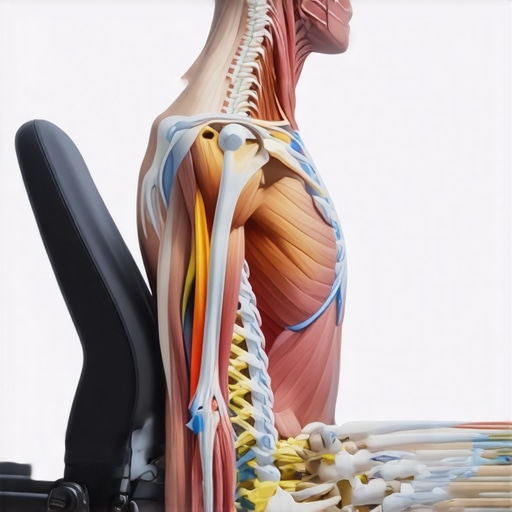 Another ‘oops’ factor I see constantly is the urge to self-manipulate for a quick fix. I was a chronic neck cracker. I thought that ‘pop’ meant I was fixing the alignment. In reality, why cracking your own back is making your joints more unstable comes down to the fact that you are usually hitting the segments that are already too loose while the truly stuck segments stay locked. You are essentially wearing out your ligaments while the root cause remains. We also have to look at the front of the body to find the real culprit. Many drivers focus only on their back, but why a tight psoas is often actually a weak psoas is a game-changer for long-haul comfort. When that hip flexor is weak, it tethers your lower spine forward, forcing your neck to compensate just to keep your eyes level. Have you ever fallen into this trap of over-stretching and wondering why you aren’t getting better? Let me know in the comments.
Grab These Two Tools and Leave the Pain Behind
I eventually stopped hunting for a “miracle” stretch and started looking at the physical objects I interacted with every day. If you’re serious about long-haul comfort, you need a firm lumbar roll. Most car seats, even those marketed as ergonomic, lack the specific density required to keep your lower back from flattening into a “C” shape. Learning the specific way to use a lumbar roll for maximum relief was the first time I felt like I wasn’t fighting gravity while merging onto the highway. My second essential tool is a simple tennis ball. I keep one in my glove box at all times. When I’m a passenger or parked at a rest stop, how a simple tennis ball can release your deep glute tension is a game-changer for someone who suffers from that nagging, off-balance feeling in their hips. These aren’t just gadgets; they are active ways to reset your nervous system while you’re out in the real world.
How do I maintain my mobility without a two-hour routine?
Consistency beats intensity every single time. You don’t need a massive home gym or a complex yoga sequence to stay loose. My daily maintenance is really just a collection of tiny habits I call mobility mastery. For example, every time I walk through a doorway at home, I do a 10-second wall slide to pull my shoulders out of that “driving slump” and back over my rib cage. As noted by Dr. Stuart McGill, a world-renowned expert in spinal biomechanics and author of Back Mechanic, “spinal hygiene”—the way we move and sustain postures throughout the day—is often more predictive of long-term recovery than any single corrective exercise. If you can maintain the integrity of your spine during the mundane tasks, the long drives become much less threatening to your physical health.
Fix Your Desk to Save Your Drive
We often treat our commutes as isolated events, but your body doesn’t work that way. If you spend eight hours looking down at a laptop, your neck is already pre-fatigued before you even start your engine. You have to look at your workstation as the “pre-game” for your drive home. I swear by the 15-degree rule for your computer monitor to ensure my cervical spine isn’t being pulled into a forward-head position all day. When your workstation and your car seat work together, you stop the cumulative damage that leads to those sciatica relief secrets we all search for when things get desperate. Within the next decade, I predict we’ll see cars equipped with biometric sensors that automatically adjust the seat’s lumbar support and tilt based on real-time muscle tension readings from the driver—essentially automated posture correction. But until then, the responsibility sits with us. I challenge you to pick just one thing: either adjust that rearview mirror today or commit to a wall slide every time you leave your desk. Your spine will thank you by the time you hit the highway.
The Breakthrough That Finally Stopped My Sciatica Flares
Looking back at my journey from a stiff, rigid driver to someone who moves with ease, I’ve realized that the “no pain, no gain” mentality is a dangerous trap. Here are the core truths I wish I’d known on day one:
- Pain is a messenger, not a defect. When you feel that twinge, it’s your body’s way of saying something is out of balance. Instead of ignoring it, use it as a cue to check your rib cage or seat angle.
- Small changes compound. You don’t need to spend an hour on the floor every morning. Often, expert strategies for lasting comfort are built on the back of 30-second habits done consistently.
- Know when to ask for help. If you’re seeing red flags like numbness or progressive weakness, it’s vital to recognize if your back pain is a sign of something more serious before trying to “fix” it yourself.
[IMAGE_PLACEHOLDER]
The Only Tools I Trust for Long-Term Mobility
I have a very short list of items that I actually keep in my car and office. These aren’t fancy gimmicks; they are proven ways to maintain your structural integrity. First, I always recommend the work of Dr. Stuart McGill. His insights are a masterclass in navigating your path to restored mobility without unnecessary surgery. Second, don’t underestimate the power of simple exercises that make a difference, like the tennis ball release or the seated shoulder squeeze. I trust these methods because they focus on stabilizing the spine rather than just stretching the symptoms away.
Take the Reins of Your Daily Commute
You are not destined to live with a “driver’s neck” or a cranky lower back just because you have a long commute. By integrating mobility mastery tips into your day, you change the physical narrative of your life. Whether it’s reclaiming your range of motion through proven neck pain solutions or simply moving your wallet to your front pocket, every action counts. Don’t be afraid to start small. Your body is incredibly resilient when you stop fighting it and start supporting its natural mechanics.
Have you ever tried the mirror trick during a long drive, or do you have another secret for staying loose in the car? Let me know below!