
Why your shoulder blade pain might actually be a neck issue

I spent three solid months acting like a grizzly bear against a tree trunk, trying to grind out a ‘knot’ under my right shoulder blade with a tennis ball. Every morning started the same: lean, press, wince, and hope. It felt like a hot poker was buried deep in the muscle. I was so sure I just had a ‘tight back,’ but no matter how hard I rolled it out, that burning sensation between my shoulder blades always came back by lunchtime. It was a classic case of looking at the smoke while the fire was burning three inches higher up. Today, we’re going to stop the guesswork and reveal why your neck is likely the real culprit behind that stubborn mid-back ache.
Stop Chasing the Ghost in Your Rhomboids
The biggest mistake I made early on—and one I see neighbors and friends make constantly—is assuming that where you feel the pain is exactly where the problem lives. I wasted a small fortune on massage guns and specialized ‘shoulder’ pillows, thinking my rhomboids were just permanently angry. I didn’t realize that my scapular pain was actually referred pain. When I finally started looking into neck pain solutions, everything changed. It turns out, those muscles in your back are often just the messengers delivering a letter from your cervical spine.
Is it actually possible for my neck to hurt back there?
It sounds counterintuitive, doesn’t it? But according to the Cleveland Clinic, cervical radiculopathy—essentially a pinched or irritated nerve in your neck—frequently manifests as sharp or dull pain right next to the shoulder blade. The nerves at the C5, C6, and C7 levels are the usual suspects here. When they get compressed, they don’t always make your neck feel stiff; instead, they send a ‘false’ signal to your mid-back. If you’ve been stretching your back for weeks without relief, it’s time to consider that your stiff upper back is actually a victim of your neck’s misalignment. Have you ever found yourself digging a lacrosse ball into your back for hours with absolutely zero lasting results? If so, you’re likely treating the wrong zip code. We need to shift our focus upward to find real, lasting comfort.
Find the Source Before You Fight the Symptom
To stop the cycle of chasing symptoms, you need to prove to yourself that your neck is the boss of your mid-back. Most of us just keep poking at the fire. Instead, try this simple diagnostic: sit up straight and slowly bring your chin toward your chest, then look up at the ceiling. Does that movement trigger a sharp zing or an increase in the burning near your shoulder blade? If it does, you’ve found your culprit. You can use the simple test for text neck you can do in the mirror to see exactly how far forward your head has drifted. When your head sits even two inches forward, it doubles the load on those tiny muscles between your blades. They aren’t ‘tight’ because they need stretching; they are exhausted from holding up a ten-pound bowling ball at a precarious angle.
Reset Your Spine with the Drawer Slide
The most effective way to revitalize your neck is a move called the cervical retraction. Think of your head like a dresser drawer. You aren’t tilting your head up or down; you are simply sliding the drawer back into the cabinet. Sit tall, look straight ahead, and pull your chin straight back until you feel a gentle stretch at the base of your skull. I remember doing this at my desk for the first time. It felt ridiculous, and I felt like I had three chins, but within three reps, that ‘hot coal’ feeling in my right shoulder started to dim. It was the first time in months I felt relief that didn’t involve a bruise from a tennis ball. Perform ten of these every hour to keep the pressure off those cervical nerves.

Stop Looking Down at Your Future Pain
We spend hours in a ‘closed’ position, whether we are driving or scrolling. This creates a massive mechanical disadvantage. Think of a crane: if the arm is extended too far without enough counterweight, the base starts to buckle. Your shoulder blades are the base of your neck’s crane. If you want to stop the ache, you have to change how you interact with your technology. Start by evaluating the specific way to hold your phone that saves your cervical spine. Bring the screen to your eye level rather than dropping your chin to your chest. If you work at a computer, your eyes should hit the top third of the screen when looking straight ahead. If you’re looking down, even slightly, you’re inviting that burning sensation to stay for dinner.
Open the Chest to Save the Back
When the front of your body is tight, your back has no choice but to overstretch. It’s like trying to close a door when there’s a rug caught underneath it—you can pull all you want, but until you move the rug, that door isn’t moving. You need to address the chest muscles that are pulling your shoulders forward. Use the 10-second wall slide for instant shoulder tension relief to reset your scapular position. Stand against a wall and try to keep your elbows and wrists in contact with the surface as you slide them up and down. If your hands pop off the wall, your chest is too tight and is likely contributing to that ‘pinched’ feeling in the back. By opening the front, you give the nerves in your neck the space they need to stop sending those distress signals to your rhomboids.
Stop trying to stand like a soldier
We’ve been told since kindergarten to ‘stand up straight,’ which most of us interpret as pulling our shoulders back and puffing our chests out. Here is the contrarian truth: that rigid, military-style posture is often more damaging than a slight slouch. When you force your spine into an artificial ‘perfect’ line, you’re actually creating a state of constant muscular contraction. This is exactly why your perfect upright posture is actually tensing your spine. Real mobility isn’t about a static position; it’s about movement variability. A study published in the British Journal of Sports Medicine highlights that there is no single ‘correct’ posture that prevents pain. Instead, the best posture is your ‘next’ posture. If you stay in one spot—even a ‘good’ one—too long, your tissues will starve for blood flow and start to ache.
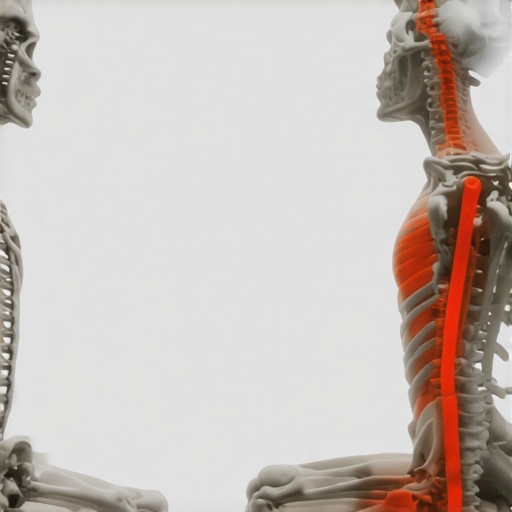
Why does my back ache even with a standing desk?
I hear this from clients constantly: ‘I spent a fortune on a motorized desk, so why is my sciatica worse?’ The trap here is static load. When you stand still for four hours, you aren’t actually being ‘mobile.’ You’re just trading sitting fatigue for lower back fatigue. Your body wasn’t designed to be a statue. If you aren’t shifting your weight or taking micro-breaks, your glutes eventually ‘turn off,’ leaving your lower back to handle the entire weight of your torso. This is where mobility mastery comes into play. It’s not about the desk; it’s about the frequent, small movements you do while at the desk to keep your joints lubricated.
Stop the self-cracking before you cause a wobble
Here is the ‘oops’ factor that almost every chronic pain sufferer falls into: the self-crack. It feels amazing for about five minutes, doesn’t it? You twist your neck or lean back until you hear that satisfying pop. But here’s the nuance: you are usually cracking the joints that are already too loose. The ‘stuck’ joints—the ones actually causing the problem—remain jammed. By repeatedly popping the loose ones, you’re creating local instability. This is why cracking your own back is making your joints more unstable over time. You’re essentially stretching a rubber band that’s already overextended. If you’re also dealing with leg issues, you might find that why your hamstrings feel tight is actually a protective response to this very instability in your spine. Have you ever fallen into the trap of thinking ‘tighter is better’ when it comes to posture? Let me know in the comments below—I’d love to hear your experience with the standing desk struggle.
If you are like me, you probably have a graveyard of foam rollers and massage guns gathering dust in your closet. We buy them in a moment of desperation when the sciatica feels like a lightning bolt or the neck tension starts a three-day headache. But tools are only as good as the strategy behind them. To truly move from a state of ‘recovering’ to ‘thriving,’ you need to stop treating these items like emergency sirens and start using them like daily maintenance. I’ve found that the most expensive gear rarely solves the problem. Instead, it’s the boring, cheap stuff used with precision that actually makes the difference.
How do I maintain my spinal health over the long term?
Maintenance isn’t about hour-long gym sessions; it’s about winning the war of attrition against your desk. The secret is to stop your muscles from ‘locking’ into a single shape. I personally swear by the ‘movement snack’ approach. Every 45 minutes, I perform the 5-second glute squeeze that prevents sciatica flares while standing. This simple contraction wakes up the posterior chain and prevents the pelvis from dumping forward. If you want to keep your results, you have to prioritize mobility mastery through these tiny, consistent resets. We are moving toward a future where ‘smart’ chairs and AI-driven haptic sensors in our shirts will vibrate when we slouch, but until that tech becomes affordable, you are your own best sensor.
The lumbar roll that actually works
Most people buy a lumbar cushion that is far too thick, which actually pushes the lower back into an unnatural arch and makes the problem worse. After years of testing, I’ve found that a simple, firm foam roll—about the diameter of a large grapefruit—is the sweet spot. You need to master the specific way to use a lumbar roll for maximum relief by placing it just above your belt line, not in the middle of your back. This maintains the natural curve of your spine without forcing it. I take mine everywhere: the car, the office, and even on flights. It’s the difference between landing with a ‘stuck’ hip and walking off the plane feeling like a human being.
Your monitor is likely too low and too far away
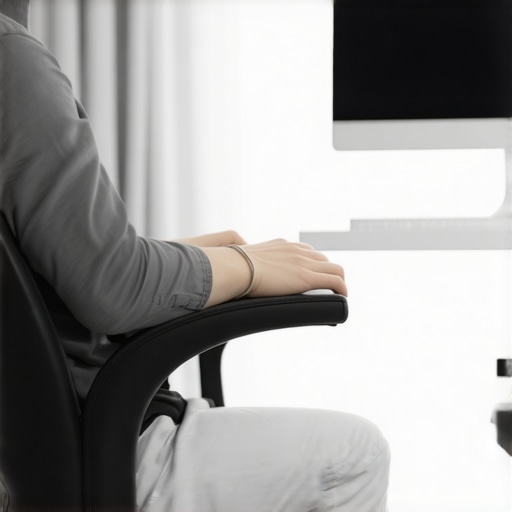
If you are constantly squinting or leaning forward, your neck is doing ten times the work it should. I learned this the hard way when I realized why your laptop stand might be making your neck knots worse: if the stand doesn’t allow for an external keyboard, you’re just trading neck strain for wrist strain. According to research from the Journal of Physical Therapy Science, even a 15-degree forward head tilt doubles the force on the cervical spine. This is why I religiously follow the 15-degree rule for your computer monitor to save your neck. I use a simple stack of books or a cheap riser to ensure my eyes hit the top third of the screen. You can easily learn how to set up your home office for less than fifty dollars using things you already own. My best advice? Go find a stack of old textbooks right now and raise your screen three inches. Your upper traps will thank you by the end of the day.
The future of back care is proactive and personalized
We are seeing a massive shift away from ‘one-size-fits-all’ stretching routines. In the next few years, I predict we will see widespread use of wearable biomechanical sensors that provide real-time data on how much load your spine is taking during everyday tasks. Until then, you have to be the expert on your own body. This means moving beyond ‘generic’ relief and finding back pain breakthroughs that fit your specific movement patterns. Whether it’s learning the specific way to lift a grocery bag to avoid a spasm or finally fixing your monitor height, the power is in the details. My challenge to you today: don’t just read this and move on. Go grab that lumbar support or raise your monitor right now. The best tool in the world is the one you actually use before the pain starts.
The Hidden Truths Your Spine Wants You to Hear
Reflecting on those three months of “grizzly bear” rubbing, I realize I was focused on the noise, not the signal. First, remember that pain is often a liar; where you feel it is rarely where it starts. Second, I learned that “perfect posture” is a trap—stiffness is the real enemy. Third, the most expensive massage gun in the world can’t fix a monitor that is four inches too low. These realizations turned my recovery from a chore into mobility mastery. I had to stop looking for a “cure” and start looking for a better movement habit.
My Non-Negotiable Support Kit
I don’t recommend things lightly, but three specific shifts changed my life. I swapped my soft couch for a firm chair with a lumbar roll because I finally understood the link between poor posture and chronic back pain. I also invested in a simple laptop stand to keep my eyes at the 15-degree sweet spot. Lastly, I stopped the “self-cracking” habit entirely, which was a major part of my back pain breakthroughs. These aren’t just tools; they are boundaries I set to protect my nerves from constant irritation.
Your Spine is More Resilient Than You Think
It’s easy to feel like your body is “broken” when that burning sensation won’t quit, but you are actually incredibly adaptable. By implementing these neck pain solutions, you are giving your nervous system the breathing room it deserves. Don’t wait for a “perfect” time to start; just lift your phone to eye level or do one chin tuck right now. You have the power to shift from constant discomfort to lasting relief through these small, intentional adjustments. Have you ever spent weeks treating one spot only to find the problem was somewhere else? Let me know in the comments below.