
Why your hamstrings feel tight but never get better with stretching
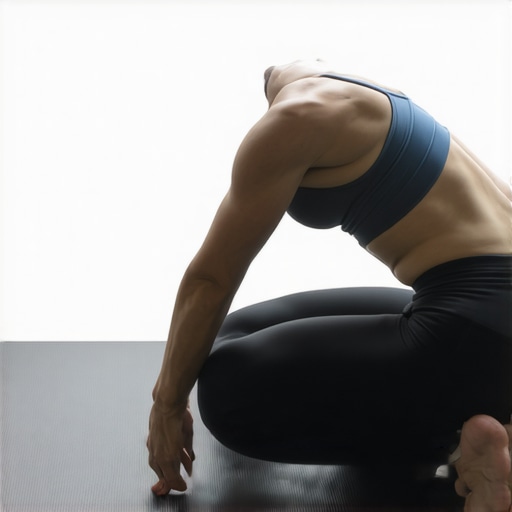
I remember standing in my living room three years ago, determined to finally touch my toes without grunting. I leaned forward, reached, and felt that familiar, searing tug behind my knees. I pushed through it, thinking I was winning the battle against my stubborn anatomy. The next morning, I could barely get out of bed. My legs felt like they were made of rusted rebar, and my lower back was screaming. It was my classic lightbulb moment: if stretching was the ‘cure,’ why was I consistently feeling worse? I was caught in a cycle of pulling on muscles that didn’t want to be pulled, and I’m willing to bet you’re stuck there too. Today, we are going to stop the madness and look at why your body is actually locking those muscles down and how we can finally find some slack in the system.
Your Hamstrings Are Not the Real Villain
We’ve been told since middle school gym class that if something feels tight, you should yank on it. But here is the thing: tightness is a sensation, not always a physical length issue. Often, your hamstrings feel tight because they are actually overstretched or acting as a secondary stabilizer for a weak core or a grumpy lower back. When I first started my mobility journey, I made the huge mistake of ignoring my pelvic position. I was constantly in an anterior pelvic tilt, which meant my hamstrings were already pulled taut like a bowstring before I even started moving. By stretching them further, I was just irritating my nervous system. If you want to see where you stand, you should try the toe-touch test that reveals your actual back injury risk to see if your ‘tightness’ is actually a mobility red flag.
Could stretching be the reason you’re still in pain?
It sounds counterintuitive, doesn’t it? But for many of us, why reaching for your toes is the worst way to stretch your back becomes very clear once you understand neural tension. If your hamstrings are tight to protect a sensitive sciatic nerve, stretching them is like pulling on a live wire. According to research published in the Journal of Orthopaedic & Sports Physical Therapy, what we perceive as muscular ‘shortness’ is frequently actually ‘neural mechanosensitivity’—basically, your nerves are just hypersensitive to being stretched. Have you ever spent weeks dutifully stretching every single morning only to find yourself right back at square one by lunchtime? If so, you aren’t alone. It’s a frustrating plateau that usually signals your body is using that tension as a protective armor. We need to teach your brain that it’s safe to let go, rather than trying to force the muscles into submission. In fact, why stretching your hamstrings won’t fix your tight legs usually comes down to the fact that we are treating the symptom, not the source. We’re going to dive into how your hip position and even your breathing can do more for your flexibility than a thirty-minute yoga session ever could.
Stop Tilting Your Pelvis Into the Floor
Think of your pelvis as a bucket of water. Most of us are walking around with that bucket tipped forward, spilling water out the front. This position—anterior pelvic tilt—is exactly why your hamstrings feel like they are about to snap. They are literally being pulled tight because the bones they attach to have moved away from each other. Last year, I spent three weeks trying to ‘stretch out’ what I thought was a hamstring strain, only to realize I was just yanking on a muscle that was already at its physical limit. The moment I learned to tuck my tailbone slightly and engage my lower abs, the ‘tightness’ vanished instantly. It wasn’t a length problem; it was a positioning problem. If you are constantly feeling stuck in your lower half, the 2-minute hip reset for better sleep tonight can help re-center that bucket before you hit the pillow.
Breathe Into Your Lower Back to Find Instant Slack
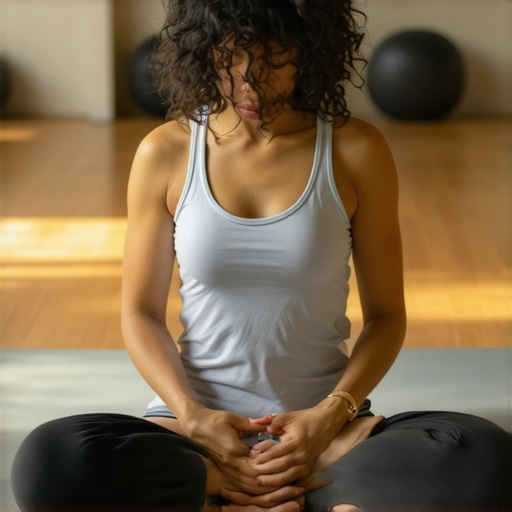
Your diaphragm is the most underrated mobility tool you own. When we are stressed or in pain, we breathe high in the chest, which keeps the back muscles in a constant state of ‘on.’ I remember one Tuesday when my back was so locked up I could barely reach my shins. Instead of reaching further, I sat on the floor, rounded my back slightly, and focused on sending my breath into my kidney area. It felt weird—like I was trying to inflate a balloon inside my spine—but after five breaths, I could suddenly touch my toes. This works because how a simple reach and breathe move can decompress your back signals to your nervous system that the danger is over. You can even try the 10-second breathing trick for instant lower back relief during your workday to prevent that afternoon stiffening effect.
Glide Your Nerves Instead of Yanking Them
If you feel a sharp, zingy sensation when you stretch, you aren’t stretching a muscle—you’re pulling on a nerve. Nerves do not like to be stretched; they like to be ‘flossed’ or ‘glided.’ Think of a piece of dental floss moving back and forth between your teeth. When I was dealing with a nasty bout of leg pain, I realized that why stretching your hamstrings can actually flare up sciatica is because static holds create too much tension on the sensitive sciatic nerve. Instead of the traditional reach, I started using gentle leg pumps while lying on my back, moving the nerve through its pathway without putting it on maximal tension. This approach treats the nerve with respect rather than force. It is a key reason why deep tissue massage isn’t fixing your recurring back pain—you cannot massage away a nerve that is being physically irritated by your own movement patterns.
The Reason Your Brain Keeps the Brakes On
Your body uses tension as a security guard. If it does not trust your joints to be stable, it will lock down the surrounding muscles to prevent injury. When I finally stopped trying to force my way into flexibility and started showing my brain that I could control my movements, the permanent tightness finally dissolved. We often think we need more ‘length,’ but what we actually need is more ‘safety.’ This is precisely why your favorite yoga pose might be hurting your spine—if you are forcing a shape your body isn’t ready for, your brain will just tighten the guard rails even more the next day. Focus on stability first, and the mobility will follow naturally.
Ditch the Idea of Perfect Posture
For years, I believed that if I just sat up as straight as a board, my back pain would vanish. I was wrong. The biggest myth we’ve been sold is that there is a ‘perfect’ posture we need to maintain at all costs. In reality, why your perfect upright posture is actually tensing your spine comes down to the fact that static positions, no matter how ‘aligned’ they look, starve your muscles of blood flow and create constant isometric tension. Your body thrives on movement, not rigidity. A study published in the British Journal of Sports Medicine emphasizes that there is no strong evidence linking specific postural alignments to pain levels; instead, it is the lack of ‘postural variability’ that predicts discomfort. If you are trying to force an ‘S-curve’ all day, why your straight posture is actually straining your muscles is likely the reason your upper back feels like a sheet of plywood.
Can a stiff ankle really be the source of your neck tension?
It sounds like a stretch, but your body is a continuous kinetic chain. I once worked with a client who had chronic neck stiffness that wouldn’t budge regardless of how many massages they got. We eventually looked down and realized their right ankle was nearly fused from an old soccer injury. Because that ankle couldn’t flex, their entire gait changed, forcing their pelvis to tilt and their head to jut forward to maintain balance. Understanding how a stiff ankle is actually causing your recurrent lower back aches is a masterclass in how the site of pain is rarely the site of the problem. You might find that the 30-second ankle drill that reduces your risk of back injury does more for your neck than any chin tuck ever could.
#IMAGE_PLACE_HOLDER_C#
The Danger of Chasing the “Crack”
One of the most common “oops” factors I see in people desperate for relief is the habit of self-manipulation. If you are constantly twisting your torso or yanking your neck to hear that satisfying pop, you are likely creating a cycle of hypermobility. When you crack your own back, you are usually hitting the segments that are already moving too much, while the truly “stuck” joints remain frozen. This is why cracking your own back is making your joints more unstable—you’re temporarily flooding the area with endorphins, but you’re making the structural problem worse. Have you ever fallen into this trap of “cracking” for temporary relief only to have the pain return even sharper? Let me know in the comments below.
Another nuance people miss is how they interact with their environment at a micro-level. For instance, how your monitor height is causing those recurring headaches is often about the tiny, repetitive strain on the suboccipital muscles. We focus on the big stretches but ignore the eight hours we spend in a slight, strained crane-neck position. Check the 15-degree rule for your computer monitor to save your neck to see if your screen is secretly sabotaging your recovery. Lastly, if you are over-bracing your core to ‘protect’ your spine, why you should stop doing planks if your back already hurts might be the most important shift you make. It is about working smarter, not harder, with your anatomy to find lasting relief.
I used to think I needed a thousand-dollar ergonomic chair and a state-of-the-art massage gun to fix my body. But after years of trial and error, I’ve realized that the most effective tools in my arsenal are remarkably low-tech. My daily ‘maintenance’ routine usually involves nothing more than a wall and a $3 ball. In my experience, the fancy gadgets often just mask the symptoms, while the simple stuff forces you to actually engage with your anatomy. If you’ve been struggling to figure out the truth about using heat packs versus ice for chronic stiffness, you’re already moving in the right direction by questioning the standard ‘quick fixes.’
The simple tools I actually use every morning
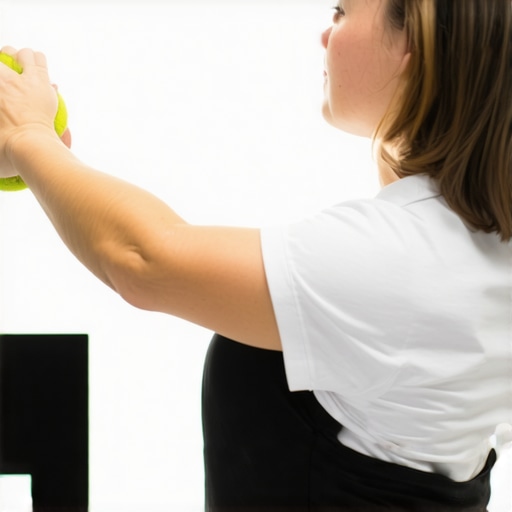
Instead of expensive rollers, I swear by a standard lacrosse ball or even a tennis ball. Why? Because the smaller surface area allows for much more precision. I use it to hit the high-tension spots in my glutes that tend to pull on my sciatic nerve. You’d be surprised at how a tennis ball can relieve deep glute and sciatic pain by releasing the piriformis without the generalized pressure of a foam roller. At my desk, I don’t use a lumbar pillow anymore; instead, I focus on the simple chair height trick to stop your legs from falling asleep. This ensures my hips are slightly higher than my knees, which naturally preserves the curve of my spine without needing a plastic prop to do the work for me.
How do I keep these results from disappearing?
Maintenance is less about a 60-minute gym session and more about ‘movement snacks’ throughout the day. I’ve found that consistency beats intensity every single time. To keep things working, I use external cues to remind me to move. For example, I’ve learned how to adjust your rearview mirror to force better driving posture. If I start to slouch while driving, I can’t see out of the mirror, which forces me to sit tall and engage my mid-back. This is a game-changer for long commutes. It’s the same logic behind the 15-degree rule for your computer monitor to save your neck. If your environment is set up correctly, you don’t have to ‘remember’ to have good posture—your environment demands it of you.
As we look toward the future of physical wellness, I predict we will see a massive shift away from ‘static ergonomics’ and toward ‘dynamic variability.’ We are already seeing the rise of wearable biofeedback that doesn’t just tell you to sit up straight, but tracks how long you’ve been in *any* single position. The goal isn’t to find one perfect pose, but to ensure you are never stuck in one for too long. In his book Low Back Disorders, Dr. Stuart McGill, a world-renowned expert in spine biomechanics, explains that ‘clinical stability’ is often a result of muscle endurance and coordination rather than just raw strength. This is why I focus on mobility mastery daily tips to keep your spine and joints healthy instead of just doing heavy deadlifts once a week.
If you find yourself constantly relapsing into old patterns, check your living room. Seriously. I realized why your favorite armchair is secretly causing your lower back stiffness after I tracked my pain levels and noticed they spiked every Sunday night after a movie. Your environment is either your best friend or your worst enemy in this journey. I strongly encourage you to try the rearview mirror trick tomorrow morning on your way to work. It is the easiest way to turn a mundane commute into a postural training session without adding a single minute to your busy schedule.
Three Hard Lessons I Learned While Chasing Pain-Free Movement
The first big realization I had was that pain is a request for change, not just a nuisance to be stretched away. If I had listened to my body instead of forcing it to follow a generic yoga video, I would have avoided months of flare-ups. I also learned that managing back pain in 2025 requires looking at the micro-moments—like how you stand at the sink. For instance, I didn’t realize how your kitchen counter height is straining your neck every single day until I started paying attention to my eye level while chopping vegetables. Lastly, I discovered that consistency beats intensity; five minutes of ‘breathing into the back’ is worth more than a sweaty hour at the gym if that gym session leaves you locked up the next day.
The Simple Items I Use to Keep My Spine Happy
You don’t need a basement full of gym equipment to find relief. I personally trust these three things above all else: a standard lacrosse ball for deep tissue work, a firm-backed chair for focused work, and the environment-hacks we discussed earlier. The lacrosse ball is my go-to for targeted pressure because it doesn’t compress like foam does. I also constantly refer back to mobility mastery daily tips to keep your spine and joints healthy to ensure I’m not slipping into old habits. #IMAGE_PLACEHOLDER_E# I also swear by the ‘mirror trick’ because it takes the mental load out of posture—I’ve seen how to adjust your rearview mirror to force better driving posture change lives simply because it creates a physical boundary that you can’t ignore.
Your Body is Ready for This Shift
Starting a new approach to your health can feel overwhelming, but remember that your body wants to heal. It’s been using tension to protect you, and now you’re finally giving it the safety it needs to let go. By shifting your focus from ‘fixing’ a muscle to ‘optimizing’ your environment, you’re creating a sustainable path to freedom. This journey toward mobility mastery isn’t about perfection; it’s about the small, daily choices that add up to a life without constant stiffness. You have the tools now, and I can’t wait to hear how these simple shifts change your daily experience. Have you ever noticed a specific piece of furniture, like a couch or chair, that seems to make your stiffness worse by the end of the day? Let me know in the comments below.