
How to carry a heavy backpack without leaning forward

I remember the exact moment my spine decided it had enough. I was halfway through a long-awaited weekend hike, lugging a pack that felt like it was filled with lead bricks, when I realized I was staring at my own boots more than the mountain view. My neck was screaming, and I was hunched over like I was trying to fold myself in half. I looked like a question mark, and I felt twice as old as I actually am. It was not just the weight; it was that dreaded backpack lean—that involuntary forward tilt we all do to compensate for a heavy load. It drains your energy and turns a pleasant stroll into a survival mission. [image-placeholder]
Your Spine Is Not a Crane
We have all been there, whether it is a backpacking trip or just a heavy laptop bag on the commute. We lean forward because our center of gravity is being pulled backward, and our brain thinks leaning over is the fix. Spoiler alert: it is not. In fact, understanding the link between poor posture and chronic back pain reveals that this misalignment is often the root cause of that nagging ache between your shoulder blades. When I first started, I made the classic rookie mistake: I pulled my shoulder straps so tight I could barely breathe, thinking if I fused the bag to my skin, it would not pull me back. All I did was cut off my circulation and end up with neck tension that makes your eyes feel tired for three days straight. Actually, carrying a load correctly is less about brute strength and more about physics and finding ways to enhance your back mobility. If you carry the weight in your lower back instead of your hips, you are basically asking for a spasm. Today, I want to show you how to stop fighting the weight and start working with it, so you can walk upright without feeling like your spine is about to snap.
Is a heavy pack just naturally going to hurt?
It is a fair question. We often assume that heavy equals painful, but that is a myth that keeps people stuck on the couch and afraid of their own gear. According to the American Chiropractic Association, a backpack should ideally not exceed 10% to 15% of your body weight to avoid long-term spinal issues, but even if you are within that range, poor distribution will wreck you. If you have ever felt that sharp pinch or felt like your head feels heavy at the end of the day, you know exactly what I am talking about. The secret is not just in the straps; it is in how you prime your body and stack the weight. If you are constantly forcing a perfectly straight posture that is actually straining your muscles, you are making the problem worse by keeping your joints in a state of high alert. You cannot just muscle through a five-mile walk with a bad setup. Have you ever finished a walk and felt like you needed a week-long nap just for your back to stop throbbing? I would love to hear your stories in the comments; I have certainly been there myself. Let us get into how we fix your center of gravity.
Put the Heavy Stuff Where it Belongs
Think of your backpack like a lever. If you put a ten-pound weight at the end of a long stick, it feels impossible to hold. If you hold that same weight against your chest, it is easy. Your spine works exactly the same way. When you pack, the heaviest items—your water, your stove, or that extra-large laptop—need to be centered horizontally and placed as close to your back as possible, specifically between your shoulder blades. When I was trekking through the Ozarks a few years back, I made the mistake of putting my heavy camping stove at the very bottom of the bag. Every step felt like an invisible hand was pulling my shoulders backward, forcing me into a massive forward lean to compensate. I ended up with a burning sensation in my mid-back that didn’t go away for a week. Once I rearranged the bag so the heavy gear sat flush against my spine, the ‘pull’ vanished. If you are already feeling that burn, the doorway move that opens your chest and fixes your slouch is a lifesaver for resetting your posture after the straps come off. 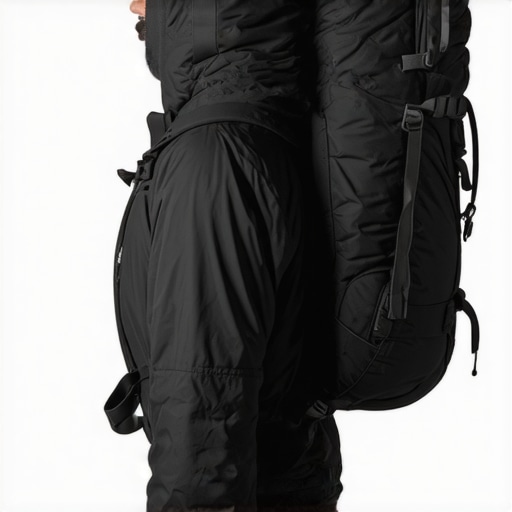
Let Your Hips Do the Heavy Lifting
Your shoulders are not designed to carry thirty pounds for hours; your pelvis is. Most people wear their hip belts too low or too loose, which transfers all that weight directly onto the delicate structures of the neck and upper back. You want the padded section of the hip belt to wrap right over the top of your iliac crest (those bony ‘hip’ points on your front). When you tighten it, you should feel the weight literally lift off your shoulders. If you skip this, the constant pressure on your lower back can lead to a compressed feeling, often making you wonder why your hip feels stuck when you try to sit cross-legged later that evening. I once hiked a full day with a loose belt and by mile eight, my glutes were so tight I was limping. I had to learn how a simple tennis ball can release your deep glute tension just to get back on the trail the next morning.
The Three-Second Shake Test
Once everything is packed and the straps are buckled, give yourself a quick shake. If the load shifts or ‘sloshes’ around, your center of gravity is going to be all over the place, forcing your stabilizer muscles to work overtime. Use the compression straps on the side of your bag to cinch everything down into a single, solid unit. A stable load is a predictable load. To prepare your body for this kind of stress, you should incorporate mobility mastery daily tips to keep your spine and joints healthy into your routine. Priming your nervous system before you add the weight makes a massive difference in how your body handles the strain. If you are starting from a place of stiffness, you can always boost your back mobility with simple exercises that make a difference before you even pick up your bag. Keeping the weight tight to your frame prevents the micro-oscillations that cause long-term fatigue and keeps you walking upright rather than looking for a place to collapse.When we talk about back health, there is a big lie we have all been told: that ‘good’ posture is a rigid, unmoving statue. In reality, why your straight posture is actually straining your muscles is a concept most hikers and office workers miss entirely. If you are forcing your spine into a rod-like position while carrying weight, you are not supporting yourself; you are bracing for impact. This constant muscular ‘armoring’ leads to a cycle of neck pain and stress that no amount of strap-adjusting can fix. You need variability, not rigidity. Studies published in the Journal of Orthopaedic & Sports Physical Therapy suggest that there is no single ‘ideal’ posture that prevents pain; rather, it is the lack of movement and the duration of static loading that causes trouble. Have you ever fallen into the trap of trying to stand ‘perfectly’ only to feel more exhausted? Let me know in the comments. 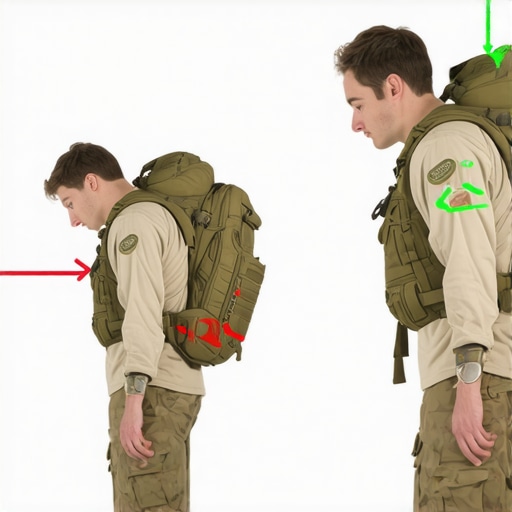
Stop Trying to Stand Like a Soldier
Most people believe that the solution to a heavy load is to pull the shoulders back and puff out the chest. This is a massive mistake. When you do this, you are actually compressing your facet joints and shortening your lumbar spine. This is why understanding the link between poor posture and chronic back pain is so nuanced. It is not about being straight; it is about being stacked. If you are fighting your natural curves, you are just creating a new set of problems. I have seen so many people try to ‘muscle’ their way into a better stance, only to end up needing strategies for overcoming sciatica later because they have been crushing their own nerves for five miles.
The Self-Cracking Trap You Need to Quit
We have all been there—that quick twist of the neck or the back to get that satisfying ‘pop.’ It feels like instant relief, right? Here is the hidden nuance: when you crack your own back, you are not usually hitting the ‘stuck’ joint. You are actually over-mobilizing the joints above and below the stiff one, which are already working too hard. This is exactly why cracking your own back is making your joints more unstable over time. You are stretching the ligaments that should be holding you together, which eventually leads to more stiffness as your muscles tighten up to protect the loose joint. It is a vicious cycle that keeps you reaching for your own neck every twenty minutes.
Can stretching actually make your nerve pain worse?
Surprisingly, yes. The most common advice for back pain is to stretch your hamstrings. But if your pain is actually coming from the sciatic nerve, stretching that muscle can be like pulling on a raw, inflamed wire. In my experience, why stretching your hamstrings can actually flare up sciatica is the number one thing people get wrong. Nerves do not like to be stretched; they like to be ‘glided.’ If you have been aggressively reaching for your toes and your leg pain is getting sharper, you are likely irritating the very thing you are trying to soothe. Real mobility mastery comes from knowing when to move and when to stop pulling. If you have been stuck in this ‘stretch-pain-stretch’ loop, it is time to change the strategy.
Maintaining the progress you have made with your spine is not about a three-hour gym session once a week; it is about the micro-decisions you make between emails and during your morning coffee. I have learned the hard way that if I do not perform the simple morning move to prime your spine for the day, my body starts defaulting to its old, hunched-over patterns by noon. I call this the ‘Minimum Effective Dose’ approach. It is about doing the smallest amount of correct movement consistently enough that your nervous system never feels the need to ‘lock’ your muscles in a protective spasm.
The Tools That Actually Saved My Lumbar Spine
I have a closet full of gadgets that promised to fix my back, but only two have stood the test of time. First is a standard, firm lacrosse ball. I use it for five minutes every evening to address the deep knots in my glutes. It is far more effective than a foam roller because it is localized and dense. If you have been struggling with a localized ache, learning how a simple tennis ball can release your deep glute tension is a great starting point, but the lacrosse ball is the ‘pro’ version. Second, I swear by a dedicated cervical pillow. When I stopped sleeping on my stomach and wrecking my neck alignment, I noticed that my morning headaches vanished within a week. I personally use a contoured memory foam version that keeps my head in a neutral position whether I am on my side or my back, which is a game-changer for revitalize your neck with effective techniques.
Wearable Biofeedback Is the Next Frontier
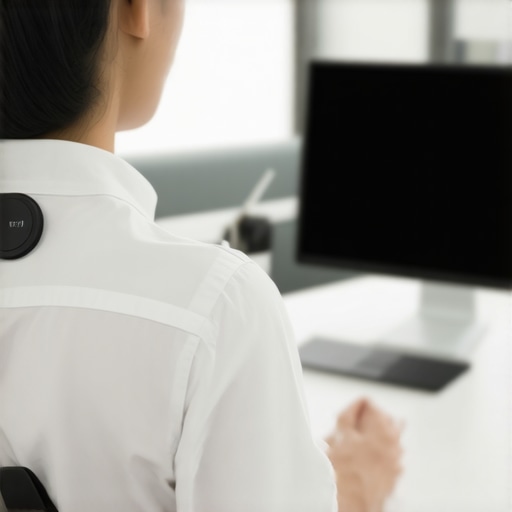
I predict that in the next five years, we will move away from static lumbar supports and toward wearable biofeedback sensors. We are already seeing the emergence of ‘smart’ shirts and small haptic sensors that vibrate when your thoracic spine begins to round too far forward. This shift from external support to internal awareness is vital. Instead of relying on a chair to hold you up, these tools train your brain to engage your own stabilizers. It is much like how to adjust your rearview mirror to force better driving posture; the environment is used to teach the body a better habit. For those who want to be ahead of the curve, finding ways to enhance your back mobility through active sitting is the most sustainable way to scale your health results.
How can I stay mobile when my schedule is packed?
The secret is ‘stacking’ your mobility work with existing habits. For example, I perform the 10-second wall slide for instant shoulder tension relief every time I get up to refill my water bottle. According to research by Dr. Stuart McGill, a world-renowned expert in spine biomechanics at the University of Waterloo, building ‘stiffness’ in the core through specific movements like the ‘Big 3’ is more effective for long-term stability than traditional flexibility training. This aligns with the idea that mobility mastery is about control, not just range. If you can integrate how a simple reach and breathe move can decompress your back during your lunch break, you are essentially doing preventative maintenance that stops small tweaks from becoming full-blown crises. My challenge to you: pick one ‘trigger’ habit today—like checking your email—and pair it with a 30-second chest opener. You will be amazed at how much lighter your spine feels by Friday.
The Three Hard Truths I Had to Accept About Chronic Stiffness
Looking back at my years of struggling with a heavy pack and even heavier fatigue, I realized that I was my own worst enemy. First, I had to accept that there is no such thing as a ‘perfect’ posture that you can just hold forever. I spent far too long trying to maintain a rigid, military-style stance, only to find that why your straight posture is actually straining your muscles was the very reason I felt so exhausted. Your spine needs to move, breathe, and adapt, not act like a steel rod. Second, I learned that pain is a signal, not a failure. When my back started to burn, it wasn’t because I was ‘weak’; it was because my load distribution was fighting physics. Finally, I realized that real progress happens in the micro-moments. Incorporating mobility mastery daily tips to keep your spine and joints healthy into my morning routine was worth more than any expensive ‘posture corrector’ gadget I ever bought.
#IMAGE_PLACEHOLDER_E#
A Few Non-Negotiables for Your Spine Health Toolkit
I am often asked what tools I actually use when the hike is over or the workday ends. My first recommendation is always a firm Lacrosse Ball. While a foam roller is great for general work, you need something dense to get into the deep tissue of the hips. If you are new to this, learning how a simple tennis ball can release your deep glute tension is the perfect entry point. Next, invest in a contoured cervical pillow. You cannot recover if your neck is being cranked into an odd angle for eight hours every night; shifting my sleep habits was a core part of finding neck pain solutions and proven techniques to regain range of motion. Lastly, I recommend keeping a digital ‘mobility log.’ Tracking which small moves—like the 10-second wall slide for instant shoulder tension relief—actually make you feel better helps you build a personalized plan that works for your specific body type.
Stop Waiting for the Perfect Moment to Move
It is easy to get overwhelmed by the science of biomechanics, but your journey to a pain-free life doesn’t require a degree. It starts with the very next time you put on your bag or sit down at your desk. Your spine is incredibly resilient and capable of carrying you through amazing adventures if you simply give it the support and variability it craves. Whether you are seeking back pain breakthroughs or just trying to get through your commute without a headache, remember that you have the tools to change your physical narrative. Don’t wait for a major flare-up to start caring for your alignment; start today by simply breathing into your lower back and loosening those straps. You deserve to move through the world with ease and confidence. Have you ever tried to ‘perfect’ your posture only to feel even more stiff the next day? Let me know your story in the comments below.