
The specific way to cough if you have a sensitive lower back disc

I stood in my kitchen, a single piece of dust caught in my throat, and I felt that familiar, cold dread. I knew what was coming. I let out a sharp cough, and within seconds, I was clutching the counter, sweating, wondering if I’d just blown out my L5-S1 for the third time that year. It’s a miserable way to live—viewing a basic human reflex as a threat to your ability to walk. For a long time, I made the huge mistake of trying to ‘stiffen’ my entire body like a board, thinking rigidity equaled safety. I was so wrong. I even spent weeks obsessing over how to fix the head forward posture while reading in bed and trying to boost your back mobility with simple exercises, but I never addressed the internal pressure of a cough. Today, I’m sharing the exact technique that saved my sanity. We are going to solve the ‘sneeze-panic’ once and for all. Have you ever had to grab a wall just because you felt a tickle in your nose?
The Day a Simple Cough Sent Me to the Floor
It was the middle of a dry winter, and I was already on edge. My lower back had been ‘grumpy’ for weeks—you know that dull ache that tells you a disc is sensitive? I coughed without thinking, and the resulting spasm was so intense I couldn’t stand up straight for two days. That was my rock bottom. I realized then that my approach to spinal health was incomplete. I was doing the ‘big’ things right but failing at the ‘small’ moments. I had looked into whether is your back pain a sign of something more serious, but I hadn’t mastered the 10-second mechanics of daily life. I used to think I could just muscle through it, but discs don’t care about your willpower. I even tried the wrong exercises, eventually learning why you should avoid the cobra stretch during a back spasm, which was a painful lesson I learned after a particularly bad morning flare-up.
Does a ‘Proper’ Cough Really Make a Difference?
You might be thinking, ‘It’s just a cough, do I really need a masterclass in it?’ I thought the same thing until the medical bills started piling up. When you have a sensitive disc, your margin for error is razor-thin. According to biomechanical data published in the Journal of Biomechanics, the pressure inside your discs can spike by as much as 300 percent during a forced expiration like a cough. That is a massive amount of force hitting a tissue that is already struggling to heal. If you are skeptical, I get it. But ask yourself: how many more times do you want to play ‘Spinal Roulette’ with a dusty room?
How Your Core Muscles Actually Betray Your Spine
When we cough, our diaphragm and abdominal muscles contract violently to expel air. This is great for your lungs but terrible for a bulging disc because it creates a ‘piston’ effect, driving pressure directly into the spinal canal. I used to think I could just ‘hold it in,’ but that actually increases the internal pressure even more. I eventually discovered that using the 10-second breathing trick for instant lower back relief wasn’t enough; I needed a structural ‘shield’ for the moment of impact. We’re going to dive into how to create that shield without making your muscles even tighter than they already are. It involves a shift in posture and a very specific way of ‘aiming’ the pressure that changed everything for me. It’s not about being stronger; it’s about being smarter with the physics of your own torso.
Look Up to Save Your Discs
The most immediate way to protect your lumbar spine during a cough or sneeze is to simply change your eye line. When we feel a sneeze coming, our natural instinct is to hunch forward, which is the absolute worst position for a sensitive disc. It puts the posterior wall of the disc under maximum tension right before a high-pressure blast. Instead, look up at the ceiling or where the wall meets the ceiling. By extending your neck and looking upward, you naturally encourage your lower back into a slight arch—its most stable position. This minor shift in physics redirects the explosive force away from the vulnerable back of the disc. I remember standing in the cereal aisle of a supermarket when a sudden tickle hit. I looked straight up at the fluorescent lights, ignoring the weird looks from other shoppers. That split-second adjustment prevented the usual ‘lightning bolt’ of pain that typically followed a sneeze. This is a key part of unlocking mobility expert tips on managing back pain in 2025 because it prioritizes structural integrity over reflexive movement. 
Build a Tripod with Your Own Body
If you aren’t near a sturdy table or wall, your own legs are your best defense. I call this the ‘Human Tripod’ method. The moment you feel the ‘ah-choo’ starting, place one hand firmly on your mid-thigh and lock your arm straight. This creates a secondary pathway for the force of the cough to travel through. Instead of the pressure bottoming out in your L4 or L5 vertebrae, it gets shunted through your arm and into your femur. This is similar to the mechanics you should use when learning the specific way to lift a grocery bag to avoid a spasm. Think of your spine like a bridge; the hand on the thigh acts as an extra support beam that keeps the middle from collapsing under weight. I’ve used this while driving, too—placing a hand on the dashboard or the steering wheel (if safe) to stabilize my torso. It’s a vital habit, much like how you might how to adjust your rearview mirror to force better driving posture to keep your spine in check during long commutes.
Ditch the Belly-Suck Maneuver
There is a common myth that sucking your belly button toward your spine protects your back. In reality, during a cough, this creates even more internal abdominal pressure. You want a ‘brace,’ not a ‘hollow.’ Think of it like someone is about to poke you in the stomach and you are just gently stiffening the muscles to resist. This provides a muscular corset without the crushing internal pressure of hollowing. This distinction is critical because why your perfect upright posture is actually tensing your spine often comes down to over-activating the wrong muscles at the wrong time. If you’re already dealing with a flare-up, you might also find that the 10-second breathing trick for instant lower back relief helps reset your nervous system after the shock of a sneeze. Mastering these micro-movements is what bridges the gap between being ‘stuck’ and actually understanding the link between poor posture and chronic back pain on a functional, everyday level.If you’ve followed my journey, you know I used to be a ‘stretching addict.’ Every time my back felt stiff after a sneeze or a long day, I’d drop to the floor and reach for my toes. I thought I was ‘loosening up.’ In reality, I was pouring gasoline on a fire. Here’s the nuance most people miss: tightness is often a protective reflex, not a length issue. If you have a disc issue, your hamstrings will tighten to protect the sciatic nerve. When you stretch them, you are literally yanking on an inflamed nerve. It’s no wonder people find why stretching your hamstrings can actually flare up sciatica the hard way. I learned that distinguishing between a tight muscle and a compressed nerve is the first step toward conquering sciatica with proven approaches.
Stop Pulling Your Nerves Like a Guitar String
One of the biggest mistakes I see is the ‘stretch through the pain’ mentality. Research in the Journal of Orthopaedic & Sports Physical Therapy suggests that neural mobilization—essentially ‘flossing’ the nerve rather than stretching it—is significantly more effective for radiating pain than traditional static holds. When you pull on a nerve that is already being pinched by a disc, you trigger a defensive spasm. I spent years in this cycle, not realizing the difference between muscular sciatica and a slipped disc meant my ‘healing’ routine was actually my ‘hurting’ routine. I was treating a nerve like a muscle, and the nerve was winning. 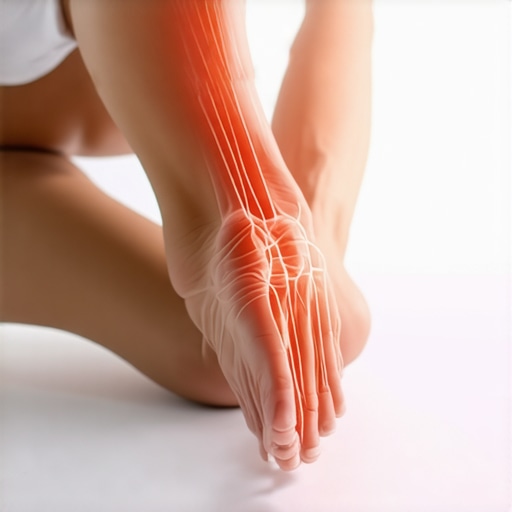
Why Your Morning Toe-Touch is a Trap
We’ve been conditioned to think that touching our toes is the gold standard of mobility. However, performing a deep forward fold first thing in the morning is a recipe for disaster. Your discs are most hydrated and pressurized right after you wake up. When you bend over, you create a massive ‘wedge’ effect that pushes the disc material further into the nerve. I now use the toe-touch test that reveals your actual back injury risk only as a diagnostic tool, never as a repetitive stretch. If you find yourself why reaching for your toes is the worst way to stretch your back, try focusing on hip hinge movements instead. This shift was a cornerstone of my back pain breakthroughs for restored mobility.
Does Your Tightness Actually Need a Stretch?
This is the advanced question you must ask. Most of the time, that ‘tight’ feeling in your hamstrings or glutes is ‘neural tension.’ Your brain is tightening the muscles to stop you from moving into a range of motion that would damage the nerve. Instead of fighting your brain, you need to address the root of the irritation. This is where neck pain solutions and proven techniques actually play a role, as the entire spinal cord is one continuous system. Believe it or not, I found that how a stiff upper back is forcing your neck to move too much was indirectly keeping my lower back in a state of high alert.
The Upper Body Connection You’re Ignoring
We often treat the spine like a series of disconnected parts, but it’s a single kinetic chain. If your neck is stuck in a forward-leaning posture, it puts tension on the entire dural sac that surrounds your spinal cord. This means your ‘sciatica’ flare-up might actually be aggravated by how you look at your phone. Have you ever fallen into the trap of stretching your legs while ignoring your posture? Let me know in the comments. By zooming out and looking at the whole spine, you’ll find much faster relief than just hammering at your hamstrings with a foam roller. It’s about being precise, not just being active.I’ve spent thousands of dollars on ‘ergonomic’ gimmicks over the years, from chairs that looked like spacecraft to vibrating posture sensors that only succeeded in annoying me. But through that expensive trial and error, I’ve learned that the best tools aren’t the ones that do the work for you; they are the ones that provide a mechanical advantage. For me, that meant stripping back to the basics. I now swear by a simple McKenzie Lumbar Roll because it provides a physical stop—it prevents me from slouching into that ‘C’ shape when I’m deep in a writing flow. If you’re looking to upgrade your environment, you should start with enhance your back mobility with ergonomic tips for everyday comfort. I’ve also found that following the 15-degree rule for your computer monitor to save your neck is the single most effective way to prevent those 4:00 PM tension headaches that used to ruin my evenings. 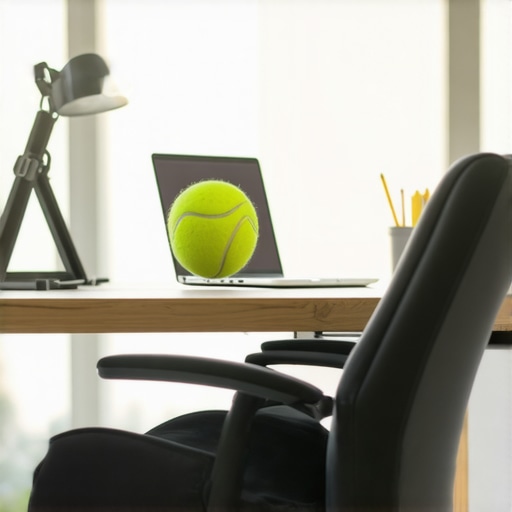
Gear That Actually Earned a Permanent Spot on My Desk
Beyond the lumbar roll, I’ve found that my footwear was a hidden culprit in my chronic stiffness. I used to wear high-cushion sneakers thinking they were helping, but they actually dulled my body’s proprioception. Switching to a firmer sole helped my brain ‘talk’ to my glutes again, which is a massive part of mobility mastery and daily tips to keep your spine healthy. I also keep a simple tennis ball under my desk. Whenever I feel a pinch in my hip, I use it for a quick release, which is a much safer alternative to some of the more aggressive stretches people often try. This kind of equipment-based maintenance is what turns a ‘good day’ into a ‘good year.’
How do I maintain my spinal health over time?
Maintenance isn’t about doing a two-hour workout once a week; it’s about the micro-adjustments you make every hour. I personally follow the ‘Big 3’ protocols developed by Dr. Stuart McGill at the University of Waterloo. In his research on spinal stability, Dr. McGill notes that ‘the spine is a pile of oranges that needs the abdominal wall to be the guy-wires.’ This means our goal isn’t just flexibility, but endurance. I focus on building the kind of core stamina that keeps my spine supported while I’m doing mundane things like unloading the groceries or picking up my kids. This philosophy is at the heart of most back pain breakthroughs for navigating your path to restored mobility.
The Future of Spine Tech is Surprisingly Personal
Looking ahead, I predict we are moving toward a world of AI-integrated biofeedback. Within the next few years, we’ll likely see wearable sensors that don’t just count steps but monitor the actual shear load on your L4-L5 vertebrae in real-time, pinging your phone before a disc reaches its limit. Until that tech is perfected, we have to be our own biofeedback systems. We have to learn to listen to the ‘whispers’ of stiffness before they become the ‘screams’ of a spasm. This is why I am so vocal about conquering sciatica with proven approaches that focus on long-term resilience rather than just temporary relief. If you take one thing from this today, let it be this: Try setting a timer for every 30 minutes of desk work. When it goes off, stand up and perform the wall angel move that fixes rounded shoulders. It’s the most powerful ‘reset’ button I know for desk-related fatigue and a perfect way to scale your progress.
Small Tweaks That Saved My Lumbar Spine
Reflecting on my journey, the biggest shift wasn’t a fancy new surgery but a change in my daily philosophy. I used to think of my back as a fragile glass tower, but it’s actually more like a suspension bridge. The hardest lesson I learned was that my protective spasms were actually my body’s way of saying it didn’t trust me to move safely. By focusing on mobility mastery and daily tips to keep your spine healthy, I stopped fighting my own anatomy. Another lightbulb moment? Realizing that how I breathe dictates how my core supports me; the breathing habit that is keeping your back muscles tight was the silent culprit behind my morning stiffness.
Simple Tools for a Resilient Back
I don’t believe in buying every gadget on the market, but a few specific items have earned their place in my life. First, I stopped wearing squishy shoes and realized why your current sneakers are causing your lower back to ache. Switching to footwear that allows for better ground feel changed my balance instantly. I also highly recommend looking into the McGill ‘Big 3’—it’s not a set of exercises, it’s a foundation for back pain breakthroughs for navigating your path to restored mobility. Finally, never underestimate a simple tennis ball; how a tennis ball can relieve deep glute and sciatic pain is a trick I use every single evening while watching TV.
Start Small But Start Today
You don’t have to overhaul your entire life to see results. Sometimes, it’s just about looking up when you feel a sneeze coming or using a ‘human tripod’ while reaching for the dishwasher. Managing back pain is a marathon of tiny, smart choices, not a sprint of aggressive stretches. You have the tools now to stop the ‘sneeze-panic’ and start trusting your body again. It takes time to rebuild that relationship, but the freedom of movement is worth every micro-adjustment. Have you ever felt that terrifying ‘lightning bolt’ in your back from a simple cough? Let me know your experience in the comments below!