
How to sit on a couch without ruining your spinal alignment
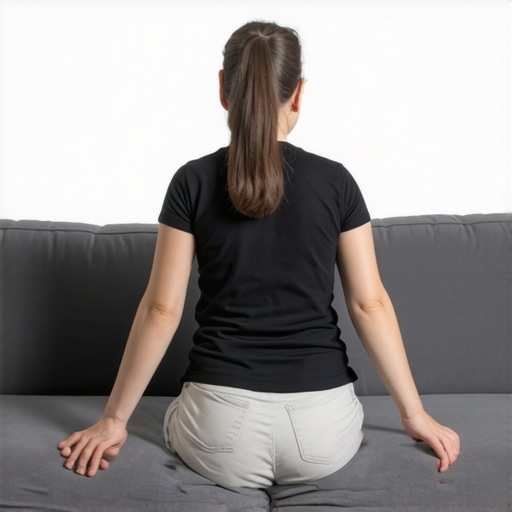
I remember one Tuesday evening perfectly. I was melted into the corner of my favorite overstuffed sofa, halfway through a Netflix marathon, when I tried to stand up to grab a glass of water. A sharp, lightning-bolt pain shot through my lower back, leaving me frozen in a half-crouch. It was embarrassing, painful, and frankly, a bit scary. I realized then that my ‘relaxation’ was actually a slow-motion car crash for my vertebrae. We all love our couches, but most of us are sitting in ways that practically invite sciatica flare-ups or chronic stiffness. Today, I’m sharing the hard-won secrets of how to lounge without the limp. I’ve made every mistake in the book—from stacking pillows like a fortress to thinking a footstool solved everything—so you don’t have to.
Your Sofa is Secretly Sabotaging Your Spine
It sounds dramatic, but the truth is that the deep, soft cushions we crave are often the worst enemies of our spinal health. When you sink in, your pelvis tilts backward, rounding your lower back into a ‘C’ shape. This ‘C’ curve puts massive pressure on your spinal discs. In fact, research published by the National Institutes of Health suggests that improper sitting posture can increase intradiscal pressure by up to 40% compared to standing. I spent years wondering why my posture felt so wrecked even though I hit the gym regularly. The culprit was my 8:00 PM wind-down. [IMAGE_PLACEHOLDER] I mistakenly thought that more padding meant more protection, but it actually just turned my core muscles off entirely, leading to that heavy, ‘stuck’ feeling when I finally got up.
Is lounging around really worth the long-term pain?
You might be thinking, ‘It’s just a couch, surely it can’t be that bad?’ But consistent slouching is a cumulative debt. Every hour spent in a slump is an hour your ligaments are being overstretched and your muscles are weakening. I used to think I needed a $5,000 ergonomic chair to fix my life, but I found out that resting too much on a soft surface was actually the root cause of my morning stiffness. Have you ever felt like you aged twenty years just by sitting through a movie? If you’ve ever had to ‘roll’ off the couch instead of standing up, you know exactly what I’m talking about. Let’s look at how we can fix this without throwing out your furniture.
Turn Your Couch Into a Spinal Support System
I had to treat my couch like a construction project. I started by looking at the seat depth. Most couches are designed for aesthetic ‘deep lounging,’ which is basically code for spinal destruction. If you can’t sit with your back against the cushion and your knees clear of the edge, the couch is too deep. To fix this, I stopped using the soft throw pillows that came with the set; they offer the support of a wet noodle. Instead, I grabbed a firm, rectangular cushion. This isn’t just about comfort; why your couch is the worst place to sit with a herniated disc often boils down to that lack of physical resistance against your lumbar spine. By placing a firm support at the base of my spine, I stopped the ‘C-curve’ from forming in the first place.
Kill the Sink Before It Kills Your Back
If your cushion is too big, it actually pushes you too far forward, which is just as bad as slouching. Finding the specific way to use a lumbar roll for maximum relief means positioning it right at the small of your back—not too high, not too low. I spent twenty minutes one night just shifting a rolled-up towel until the pressure in my lower back finally sighed in relief. It’s a game of millimeters. 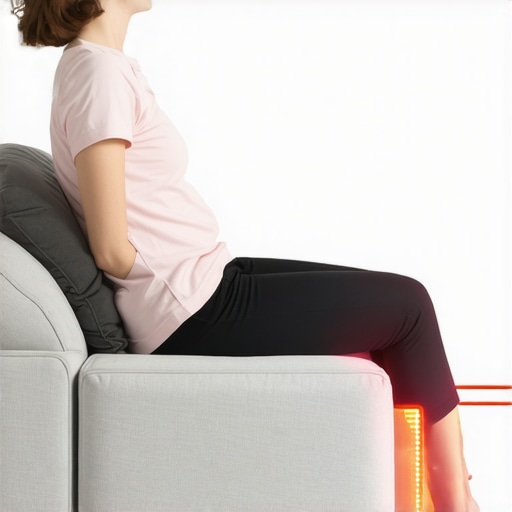
Build a Foundation Under Your Feet
Next came the feet. I used to tuck my left leg under my right thigh, a habit that felt cozy but was actually wreaking havoc on my pelvis. I discovered that why crossing your legs is the fastest way to tilt your pelvis is because it creates an asymmetrical pull on the muscles surrounding your SI joint. Now, I keep both feet flat, or better yet, I use a firm ottoman. Using the simple footstool trick to stop lower back pain while sitting changed everything for me. It’s like giving your spine a solid floor to stand on, even while you’re sitting. Think of your legs as the kickstand for your spine; if the kickstand is folded or crooked, the whole frame starts to warp under the weight.
Save Your Neck from the Dreaded Phone Slump
The neck is usually the last thing people think about until the headache hits. I remember one specific Saturday night, halfway through a documentary, when my neck felt like it was being squeezed by a vice. I was looking down at my phone in my lap while leaning back—a double whammy of strain. I had to look into neck pain solutions and proven techniques to regain your range of motion just to be able to turn my head the next morning. The solution was surprisingly low-tech: I put a pillow on my lap to rest my arms on, which brought my phone up to eye level. This is exactly how to fix the head forward posture while reading in bed or on the sofa. If your ears aren’t over your shoulders, your neck muscles are working overtime to keep your head from falling off.
Reclaim Your Glutes During Movie Marathons
We also need to address the ‘glute amnesia’ that happens during long sessions. When you sink into those soft cushions, your brain literally stops communicating with your butt muscles. I realized why your glutes turn off when you sit for over an hour—the pressure and lack of movement shut them down, leaving your lower back to stabilize your weight alone. Every 20 minutes, I now do a ‘glute squeeze’ or a quick stand-up reset. It sounds silly, but that 10-second muscle activation prevents the heavy, stiff feeling that used to make me dread getting up after a long movie. It’s about keeping the system online even when you’re technically offline.
Let’s dig deeper into the stuff most ‘posture experts’ get wrong. Everyone tells you that if your back or legs feel stiff, you need to stretch them into submission. But in my experience, and according to many modern clinical studies, aggressive stretching is often the ‘gasoline’ on the fire. One major ‘oops’ factor I see constantly is the classic hamstring stretch. If you have shooting leg pain or numbness, why stretching your hamstrings wont fix your tight legs is simple: you aren’t stretching a muscle, you’re tensioning an already irritated sciatic nerve. This can actually increase ‘neural mechanosensitivity,’ which is just a fancy clinical term for making your nerves hypersensitive to any movement.
Why Does Sitting Perfectly Upright Still Cause Aching?
This is the sophisticated trap that catches almost everyone. We try so hard to avoid the ‘C-curve’ slouch that we swing to the other extreme. I call it ‘posture fatigue.’ Attempting to hold a rigid, chest-out, shoulders-pinned-back position all day is exactly why your perfect upright posture is actually tensing your spine. Your muscles aren’t meant to be static anchors; they are meant to be dynamic springs. In fact, a study published in the Journal of Manual & Manipulative Therapy suggests that maintaining a rigid, ‘ideal’ posture can actually decrease blood flow to the spinal tissues compared to relaxed, intermittent movement. 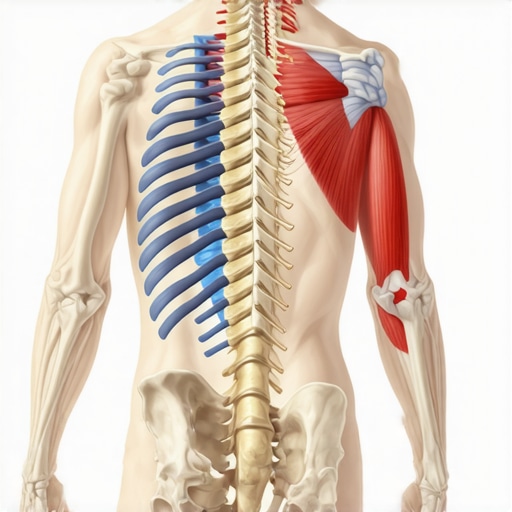
We also need to address the ‘tightness’ myth. I spent years thinking I had a chronically ‘tight’ front hip area. However, it turns out that why a tight psoas is often actually a weak psoas is the real secret. Your brain keeps that muscle in a state of high tension because it doesn’t trust the muscle to be strong enough to stabilize your spine. If you just keep stretching it, you’re taking away the only stability your lower back has left. This is where people get confused about their diagnosis, especially when trying to understand the difference between a bulging disc and a herniated disc; one might need stabilization while the other requires very specific directional movements.
The hidden nuances are everywhere in our daily lives. Even a simple movement during your commute can be a trigger; why you should never reach for the backseat while driving is a prime example of how a sudden ‘twist-and-load’ move can cause a disk to bulge in an already fatigued system. True mobility mastery comes from understanding these tiny mechanical traps before they spring. For me, the turning point was switching from aggressive, old-school stretches to the nerve flossing routine for stubborn leg numbness and tingling. It’s about gliding the nerve gently through the ‘tunnels’ of your muscles, rather than yanking on it like a rubber band. Have you ever fallen into this trap of ‘over-fixing’ your posture only to find the pain got worse? Let me know in the comments.
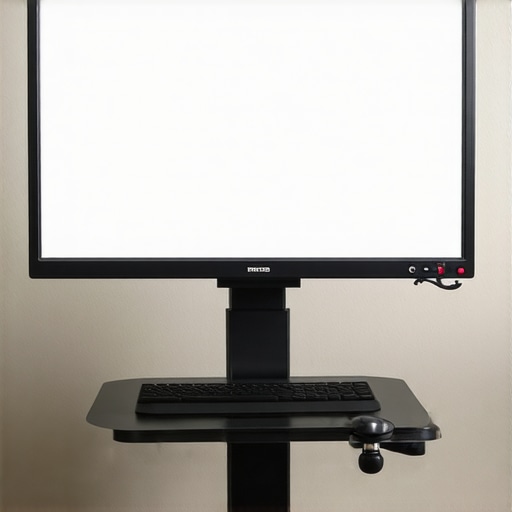
If you’re anything like me, you want the ‘lazy’ version of long-term health—the stuff that works while you’re barely paying attention. We’ve talked about the couch and the hidden traps of over-stretching, but staying pain-free is really about the environment you build around yourself. I realized that my environment was constantly nudging me into a slump, so I had to nudge back. It started with my desk. I realized that the 15-degree rule for your computer monitor to save your neck wasn’t just a suggestion; it was a physical requirement to stop my cervical spine from feeling like it was holding up a bowling ball with a toothpick. By raising my screen just three inches, I eliminated that 3 PM ‘head-heavy’ feeling almost overnight.
Stop Guessing with Your Gadgets
I’m a sucker for a new tool, but most of them gather dust in the closet. The ones that stayed in my daily routine are the ones that provide immediate, tactile feedback. For example, I used to struggle with deep hip tension until I realized how a simple tennis ball can release your deep glute tension more effectively than a $200 massage gun. It’s small, portable, and forces you to find the exact ‘hot spot’ that is referring pain down your leg. I also keep a simple lumbar roll in my car because the real reason your neck feels stiff every time you drive is often the lack of support four feet lower down at the base of your spine. When your low back collapses, your neck has to protrude forward just to keep your eyes on the road.
The Expert Secret to Building a Bulletproof Core
When we talk about ‘scaling’ your recovery, we have to look at actual spinal mechanics. Dr. Stuart McGill, a world-renowned back pain expert from the University of Waterloo and author of Back Mechanic, points out that many people fail because they focus on ‘mobility’ when they actually need ‘stability.’ He advocates for the ‘Big Three’ exercises—the bird-dog, the side bridge, and the modified curl-up—which are designed to stiffen the torso and protect the discs without adding high-impact loads. This was a game-changer for me. I stopped doing traditional sit-ups and started focusing on back pain breakthroughs and navigating your path to restored mobility through these low-load, high-reward movements.
How do I stay pain-free for the next decade?
Maintenance isn’t about doing a two-hour routine every morning; it’s about the ‘micro-adjustments’ you make during the day. I predict that in the next few years, we’ll see a massive shift toward wearable biometric sensors that vibrate when your pelvis tilts too far or your shoulders roll in. But until then, you have to be your own sensor. I use a trick where I adjust my rearview mirror to force better posture while I’m still feeling fresh. The moment I can’t see out of the mirror properly, I know I’ve started to slump, and I sit back up. It’s a passive coach that never stops working. This kind of mobility mastery is what separates people who have ‘flashes’ of relief from people who actually get their lives back. My best advice? Try that rearview mirror trick tomorrow morning. It’s the single easiest way to audit your body without overthinking it.
What I Finally Realized After Years of Failed Stretching
Looking back, the biggest mistake I made was thinking I could ‘out-stretch’ a bad environment. If you spend eight hours a day irritating a nerve, ten minutes of yoga won’t save you. I had to learn that why your straight posture is actually straining your muscles is often due to over-correction and rigid tension. Another huge lightbulb moment? Realizing that ‘rest’ isn’t always recovery. If your rest position is causing a lumbar slump, it’s just slow-motion damage. You have to be proactive about spotting is your back pain a sign of something more serious before it becomes a full-blown crisis that keeps you off the couch entirely.
The Low-Tech Tools That Actually Stayed in My Living Room
[IMAGE_PLACEHOLDER_E]
I’ve tried every gadget under the sun, but only a few made the cut for my daily life. First, the humble tennis ball—nothing beats it for pinpointing those deep glute knots that feel like a toothache in your hip. Second, I always keep a firm lumbar roll nearby. It’s not just for sitting; learning the specific way to roll over in bed without triggering a flare-up often requires that extra bit of tactile feedback to keep your spine neutral through the night. I also highly recommend checking out enhance your back mobility and ergonomic tips for everyday comfort to see how simple household objects can replace expensive medical equipment.
Take Your Living Room Back From Chronic Pain
You don’t have to choose between your favorite show and a healthy spine. By making these micro-adjustments to how you sit, move, and support your body, you are building long-term resilience. True unlocking sciatica relief and expert strategies starts with the small habits you practice when no one is watching—like how you lounge on a rainy Tuesday. Don’t let the fear of a ‘perfect’ posture stop you from making progress today. You’ve got the tools; now just give them a try tonight.
Have you found a specific pillow or a clever footstool trick that finally let you watch a whole movie without standing up in pain? Let me know in the comments below!