
The difference between a bulging disc and a herniated disc
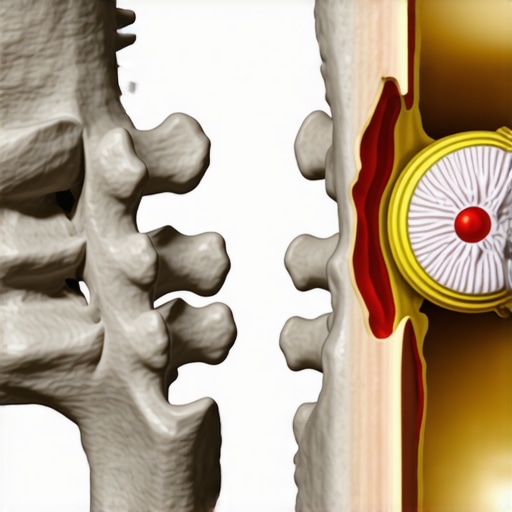
I was standing in my kitchen, reaching for a simple ceramic mug, when my lower back decided to stage a full-scale mutiny. It wasn’t a dull ache; it was a sharp, electric protest that left me frozen. For weeks, I tossed around terms like ‘slipped disc’ and ‘blown out back’ like I knew what they meant. I made the classic rookie mistake of thinking all disc issues were created equal. I spent hours reaching for my toes thinking I just needed to ‘loosen up,’ only to find myself unable to stand up straight for two days. That was my wake-up call. If you’ve ever felt that terrifying ‘catch’ in your spine, you know the panic. Is it just a bulge? Or did something actually rupture? Today, we are going to strip away the medical jargon and look at the real difference between a bulging disc and a herniated one, so you can figure out why you feel a sharp pinch when standing up. We will look at the mechanics, the recovery timelines, and why your current stretches might be fueling the fire.
Your Spine Isn’t Actually Made of Glass
I used to think of my spine as a stack of fragile china plates. One wrong move and—crack—it’s over. But our bodies are remarkably resilient. The problem is that we often treat the symptom without knowing the source. When I first felt that radiating heat, I panicked and assumed I’d need a surgeon on speed dial. I didn’t realize that asking if your back pain is a sign of something more serious is the first thing every neighbor does, but the answer is rarely as grim as we fear. Most of the time, your body is just asking for a change in how you move.
Is this whole disc thing just an excuse for surgery?
It’s the big elephant in the room. You hear ‘herniated’ and you think ‘operating table.’ But here’s a secret: many people have disc issues and don’t even know it. According to the Mayo Clinic, many people have no symptoms from a herniated disc, often discovered only during imaging for other issues. The difference between the two terms often comes down to space and containment. A bulging disc is like a hamburger that’s slightly too big for its bun—it’s protruding out the sides, but the meat is still where it belongs. A herniated disc is more like a jelly donut that’s been squeezed too hard; the outer layer has a tiny tear, and the internal ‘jelly’ is leaking out. One is a structural shift; the other involves a chemical reaction that irritates your nerves. Have you ever been told you have a ‘slipped disc’ without anyone actually explaining what that meant for your morning routine? It’s time to stop the guesswork and start focusing on what really matters: your mobility.
Quit Stretching the Pain and Start Assessing the Damage
When my back first flared up, my instinct was to fight it with intensity. I thought if I could just pull the muscles hard enough, the disc would ‘pop’ back into place. That is the biggest lie we tell ourselves. If you have a herniated disc, your nerve is already under siege; the last thing it needs is to be yanked like a guitar string. Instead of blind stretching, you need to find your ‘directional preference.’ This is a fancy way of saying you need to figure out which way your spine actually likes to move. For some, leaning backward offers a reprieve, while for others, that same move sends a lightning bolt down the leg. If you’re constantly fighting your body, you’re likely making the inflammation worse. You need to stop and perform the toe touch test that reveals your actual back injury risk before you do anything else. This isn’t about flexibility; it’s about identifying if your spine is protecting itself by locking down.
Test Your Movement Before You Break Your Back
Most of us treat every back ache with the same three yoga poses, but that’s like trying to fix a leaky pipe with a hammer. If you have a true herniated disc where the ‘jelly’ has escaped, certain movements are purely toxic. For instance, many people swear by the ‘Cobra’ pose, but you should actually avoid the cobra stretch during a back spasm because it can pinch the very disc material you’re trying to soothe. Instead of pushing into the pain, try the ‘breathe and reset’ method. Lie on your stomach with a pillow under your hips and just breathe. This tiny bit of decompression allows the muscles to stop guarding. I remember the first time I tried this; I was so used to forcing a stretch that just lying still felt like I was failing. But ten minutes later, the sharp ‘catch’ in my lumbar spine had softened into a dull throb. That was the first sign that my body didn’t need more force; it needed less friction.
How I Finally Stopped the Morning Spasm at the Sink
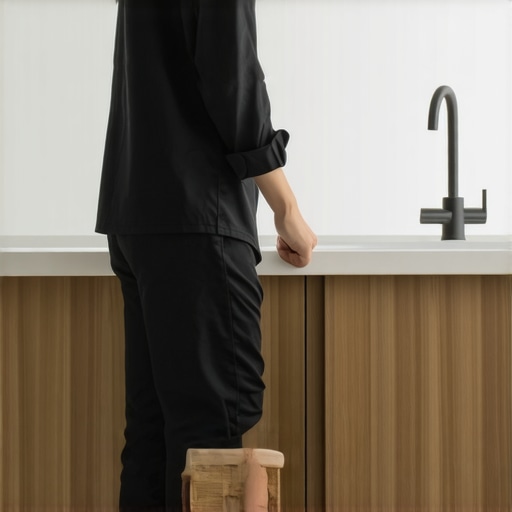
I used to dread the simple act of cleaning up after breakfast. I’d lean over the sink, and by the third plate, my lower back would start that familiar, terrifying hum. I didn’t realize that my ‘straight’ posture was actually a rigid trap. I learned how to unload the dishwasher without rounding your spine by using the ‘golfer’s lift’ or, even better, the footstool trick. By opening the cupboard under the sink and placing one foot on the bottom ledge, I instantly shifted the load from my discs to my hips. This is the one foot up rule for pain free dishwashing and chores, and it is a total game-changer for anyone with a bulging disc. It prevents your pelvis from tilting forward and tugging on those sensitive nerves. Even if you’ve transitioned to a home office, beware—your standing desk is giving you lower back pain if you aren’t varying your stance. The key to managing a disc issue isn’t a single exercise; it’s the 1,000 tiny adjustments you make to how you stand, reach, and move throughout your day.
I spent years trying to sit like a statue because I believed ‘good posture’ meant keeping my spine at a rigid ninety-degree angle. I thought if I deviated even slightly, my discs would slide out like wet bars of soap. Here is the contrarian truth: there is no such thing as a perfect, static posture. In my experience, the quest for a perfectly straight spine actually keeps your muscles in a state of chronic ‘co-contraction.’ When you force yourself into that military-straight position, why your perfect upright posture is actually tensing your spine becomes obvious—you are essentially asking your muscles to run a marathon while standing still. According to research published in the journal Spine, postural variability, or the ability to move through different positions, is much more important for spinal health than maintaining one ‘correct’ pose. If you aren’t moving, you aren’t lubricating your joints.
Is Your Hamstring Tightness Actually a Nerve in Disguise?
This is where most people fall into the ultimate ‘oops’ factor trap. You feel a pull in the back of your leg and immediately assume your hamstrings are tight. You spend twenty minutes a day on your yoga mat, yet the tightness never goes away. If you have any history of disc issues, why stretching your hamstrings can actually flare up sciatica is because you aren’t actually stretching a muscle—you are yanking on an inflamed sciatic nerve. When a nerve is sensitized, it ‘tethers.’ Pulling on it doesn’t make it looser; it makes it angrier. This is why you feel better for five minutes and then feel like you’ve been hit by a truck an hour later. You need to distinguish between muscular tension and neural tension. Have you ever fallen into this trap? Let me know in the comments.
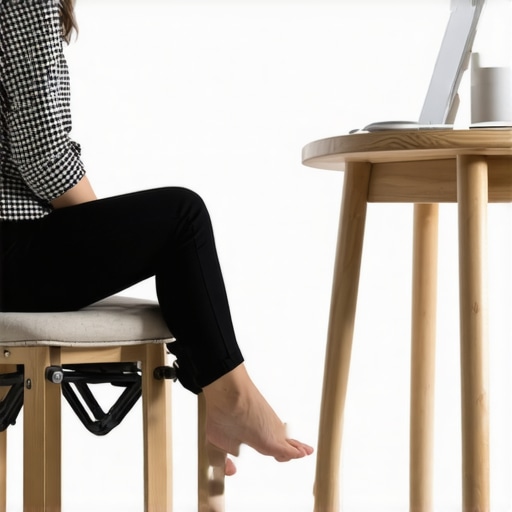
Establishing true mobility mastery daily tips to keep your spine and joints healthy requires looking at the joints that no one else is talking about. We often blame the lower back for everything, but the spine is often just the victim of a lazy neighbor. For instance, how a stiff ankle is actually causing your recurrent lower back aches is a nuance that changes the entire recovery game. If your ankle is stiff, your body loses its primary shock absorber. Every time your foot hits the pavement, that force travels straight past the ankle, bypasses the knee, and slams into your lumbar discs. You can treat the back forever, but if the ankle doesn’t move, the back will never heal.
We also have to stop ignoring the ‘digital’ toll on our spinal health. It isn’t just about how you sit; it’s about how your senses dictate your movement. I found that how your phones font size is impacting your neck tension is a hidden trigger for many. If you’re squinting or leaning forward to read a small screen, your deep neck flexors shut down and your traps take over, creating a ripple effect of tension that ends at your tailbone. To see real progress, you have to look at the difference between muscular sciatica and a slipped disc with a critical eye, recognizing that your pain is often a complex symphony of lifestyle habits rather than a single broken part.
Maintaining a healthy spine isn’t about buying a five-thousand-dollar ergonomic throne; it’s about the small, consistent inputs that prevent the ‘creep’ of tension. I used to buy every ‘as seen on TV’ back brace, only to realize my best friend was a $5 lacrosse ball. I use it against the wall every single evening to hunt for those ‘hot spots’ in my rhomboids and along the spine. This is where how a simple tennis ball can release your deep glute tension really shines—it’s not about the cost of the tool, but the precision of the pressure. When you find that knot, you aren’t just mashing tissue; you’re sending a signal to your nervous system to downregulate. For me, this is the cornerstone of back pain breakthroughs navigating your path to restored mobility. If I skip my five-minute ‘ball work’ for three days, my neck starts to feel like it’s being pulled by invisible wires, and that familiar lower back ‘hum’ returns. 
The Simple Tools That Actually Earned a Spot in My Gym Bag
Beyond the lacrosse ball, I’ve found that a high-density foam roller is often misused. Most people roll their lower back like a piece of dough, but that actually causes the lumbar spine to arch painfully. Instead, I use it only for my thoracic spine (upper back) to undo the ‘C-shape’ I get from typing. I also keep a set of toe spacers. It sounds crazy, but your foot health dictates your pelvic tilt. If your toes are squished, your balance is off, and your back pays the price. I’ve integrated mobility mastery daily tips to keep your spine and joints healthy into my morning coffee routine, using that five-minute wait to do standing calf stretches.
How do I keep my spine happy for the next decade?
Consistency beats intensity every single time. We often treat rehab like a sprint, but your spine views it as a marathon. I follow the ‘Virtual Window’ rule: every 20 minutes of sitting, I look 20 feet away and do three deep belly breaths. This resets my rib cage and prevents that ‘crunched’ feeling that leads to midday fatigue. As Dr. Stuart McGill, author of the seminal text Back Mechanic and a world-renowned expert on spine biomechanics, often notes, the goal of long-term health is to build ‘stiffness’ in the core while maintaining ‘mobility’ in the hips. This balance is what allows you to reach for a heavy grocery bag without that sickening ‘pop’ or a sudden trip to the ER. I’ve found that how a simple reach and breathe move can decompress your back is the most effective way to create space in the vertebrae after a long drive or a stressful day at the office.
Wearables are finally getting smart about our slouch
I truly believe the future of back health lies in ‘passive biofeedback.’ We are moving toward a world where your shirt will vibrate if your shoulders slouch too far, or your chair will subtly shift its tilt to prevent static loading. This technology is already emerging in niche athletic wear, but it will soon be as common as a smartwatch. But until that day comes, you are your own best sensor. If you feel a twinge, don’t ignore it. Check if is your back pain a sign of something more serious and then adjust your stance immediately. My final challenge for you: tonight, before bed, spend just two minutes on the floor with a tennis ball under your glutes or upper back. It’s a tiny investment that pays massive dividends for your tomorrow. If you want to see real results, stop looking for a miracle and start looking for a habit.
The Three Hardest Realities I Had to Accept About Spinal Healing
Looking back at my recovery, I realize that my biggest hurdle wasn’t the disc itself; it was my mindset. First, I had to accept that pain does not always mean more damage. Sometimes your nervous system is just screaming because it’s sensitive, not because the disc is worsening. Second, I learned that why your workout might be feeding your chronic inflammation is often down to choosing intensity over consistency. I had to stop trying to ‘kill’ the pain with heavy exercise and start coaxing it out with gentle, rhythmic movement. Finally, I realized that the one sign that your sciatica is finally starting to heal is ‘centralization’—when the pain moves from your foot up toward your back. It might feel like your back is stiffer, but it is actually a victory sign that the nerve is being decompressed.
The Daily Maintenance Kit That Actually Stays in My Bag
I don’t believe in expensive gadgets, but three specific things have changed my life. First, the Lacrosse Ball. It is the most surgical tool for hitting those deep glute knots that pull on your sacrum and irritate the sciatic nerve. Second, I swear by the book Back Mechanic by Dr. Stuart McGill; it is the only guide that treats the spine like a biological machine rather than a medical mystery. Third, I had to audit my environment. I discovered why your firm mattress is making your morning sciatica worse—sometimes ‘extra firm’ creates pressure points that starve the disc of oxygen while you sleep. I also realized why your thin shoes are impacting your lower back shock absorption, forcing my spine to take the jarring hit of every step on concrete. These small shifts in gear made a bigger difference than any ‘quick fix’ could offer.
Your New Normal Starts with One Small Pivot
You aren’t defined by an MRI report or a scary medical term. Whether you have a bulging disc or a full herniation, your body is built to adapt and heal if you provide the right environment. By embracing back pain breakthroughs navigating your path to restored mobility, you are choosing a life where you control the movement, not the other way around. Don’t wait for the pain to disappear before you start your mobility mastery daily tips to keep your spine and joints healthy. Small, daily wins like the ‘one foot up’ rule or checking your monitor height are the bricks that build a resilient future. Have you ever found a weird habit or a simple tool that actually helped your morning back stiffness? Let me know in the comments below—I’d love to hear what is working for you!