
The real reason your neck cracks when you look over your shoulder

I was merging onto the highway last Tuesday, checking my blind spot for a speeding truck, when my neck let out a sound so loud I thought the car window had shattered. It wasn’t just a little “pop.” It was a gritty, grinding crunch that resonated right through my jawbone. I actually froze for a second, gripped the steering wheel, and wondered if I’d just permanently damaged something. That was the moment I realized my “normal” stiff neck wasn’t so normal anymore. If you’ve ever felt that same panic—or if you just find yourself “testing” your neck by cracking it every twenty minutes—I want you to know you aren’t alone, and you’re likely not actually breaking anything. Today, we’re going to get to the bottom of why your spine is so noisy and how we can finally quiet it down.
Why your neck sounds like a bag of gravel
It’s easy to assume that “cracking” means bone hitting bone, but that’s rarely the case. Most of the time, what you’re hearing is a process called cavitation. Inside your facet joints, there’s a lubricating fluid called synovial fluid. When you turn your head sharply, the pressure in the joint changes, causing tiny bubbles of gas—mostly nitrogen and carbon dioxide—to form and then collapse. Think of it like popping bubble wrap inside your neck. Early on, I made the huge mistake of thinking that if I cracked my neck myself, I was “fixing” the alignment. I’d grab my chin and give it a quick jerk just to get that temporary hit of relief. But according to experts at Harvard Health Publishing, while the sound itself might be harmless, force-cracking your own joints can lead to hypermobility and long-term instability. It took a week of debilitating tension headaches for me to realize that the truth about cracking your own neck is that it’s a temporary mask for a much deeper issue: stiffness in the surrounding areas.
Does all that popping mean I’m falling apart?
This is the question that kept me up at night. I was terrified I had early-onset arthritis or that my vertebrae were wearing thin. The reality is usually much more boring—and fixable. When your upper back gets stiff from sitting at a desk, your neck has to overwork to compensate for that lost movement. Essentially, your stiff upper back is forcing your neck to move too much, and those joints are just crying out for a bit of relief from the extra load. I’ve found that small changes in my daily routine made a massive difference. For instance, learning how to adjust your rearview mirror to improve your driving posture forced me to sit taller and stopped me from wrenching my neck every time I changed lanes. Have you ever felt that sharp “stuck” feeling that only a loud pop seems to fix? Drop a comment below—I’d love to hear if your neck is as noisy as mine used to be. By understanding proven techniques to regain your range of motion, we can start moving smoothly again without the soundtrack.
Start moving from the middle out
To stop the grinding in your neck, you have to stop treating the neck like it’s the only player on the team. Think of your spine like a mast on a ship. If the base of that mast—your upper back—is locked tight, the top part has to whip around violently just to keep up with the wind. To fix this, we focus on thoracic mobility. When you boost your back mobility, you’re essentially greasing the hinges of your entire upper body. I remember the first time I tried a movement called the Wall Angel. I felt confident until I actually leaned against the drywall and realized my elbows couldn’t even touch the surface without my lower back arching like a bridge. I looked like a confused turtle, but after three days of consistency, that ‘gravel’ sound in my neck during lane changes started to fade.
The wall angel test for hidden stiffness
To try this yourself, stand with your back against a flat wall, heels about six inches away. Try to keep your tailbone, upper back, and head in contact with the wall. Bring your arms up into a ‘goalpost’ position. The goal is to slide your arms up and down without anything losing contact with the wall. If your ribs flare out, you’ve found the exact spot where your stiffness is forcing your neck to compensate. Using the wall angel move that fixes rounded shoulders is the fastest way to signal to your nervous system that your neck doesn’t have to do all the heavy lifting anymore.
Adjust your digital habits before the damage sticks
Most of us spend hours a day in ‘tech neck,’ which is like hanging a 12-pound bowling ball off a thin twig for eight hours. Over time, this position stretches the ligaments in the back of your neck until they become loose and ‘noisy.’ You need to change the geometry of your day. Start by learning the specific way to hold your phone that saves your cervical spine—hint: it involves bringing the screen to your eye level, not your chin to your chest. Similarly, if you work at a desk, how your monitor height is causing those recurring headaches is often a direct result of that same forward-leaning strain. If you can’t raise your monitor, stack some books under it today. It’s a low-tech fix that provides high-level relief.
Soften your jaw to melt neck tension
There is a massive, often ignored connection between your bite and your neck. If you’re a ‘clencher’ when you’re stressed, those jaw muscles pull directly on the fascia of the neck, making the joints feel compressed and ready to pop. I found that performing the 10-second jaw release that softens your neck muscles every hour at my desk stopped that afternoon build-up of grit. You can also how to use a doorway to release chest tension and improve posture to open up the front of your body. When the chest is open, the jaw relaxes, and the neck finally finds its neutral home. If you ignore the chest and jaw, you’re just stretching a muscle that is being pulled tight by a much stronger force elsewhere.We’ve all been told since grade school to ‘sit up straight,’ but here is the contrarian truth: chasing a perfectly rigid, upright posture is one of the fastest ways to exhaust your spinal stabilizers. When you force yourself into a ‘military’ stance, you’re creating isometric fatigue that locks your joints in place. I used to be a stickler for this until I realized why your straight posture is actually straining your muscles. Your spine is designed to be a dynamic shock absorber, not a frozen pillar. This brings me to a major ‘oops’ factor I see all the time: stretching through the pain. If your neck or back feels tight and you keep pulling on it, you might be irritating a nerve rather than releasing a muscle. In fact, research published in the Journal of Physical Therapy Science suggests that excessive static stretching can actually decrease joint stability in certain populations, leading to more of those ‘cracks’ and ‘pops’ as the joint hunts for support. For instance, why stretching your hamstrings can actually flare up sciatica is a perfect example of how the ‘obvious’ solution can backfire if you aren’t addressing the underlying nerve tension.
Can a stiff ankle really be the source of your neck noise?
It sounds counterintuitive, but your body operates in a kinetic chain. If you have limited range of motion in your feet, your gait changes, your hips tilt, and eventually, your neck has to compensate just to keep your eyes level with the horizon. I’ve seen countless cases where how a stiff ankle is actually causing your recurrent lower back aches—and eventually neck stiffness—was the missing piece of the puzzle. If you only treat the neck, you’re just mopping the floor while the sink is still overflowing. 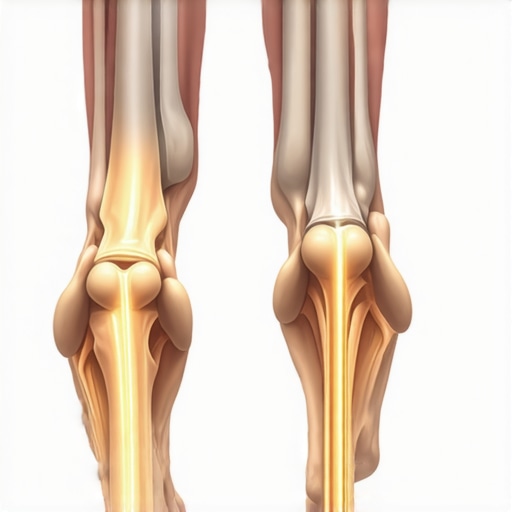 To find lasting comfort, we have to look at the whole system and revitalize your neck by addressing the tension from the ground up. Have you ever fallen into this trap of stretching a spot that just keeps getting tighter? Let me know in the comments.
The three tools I refuse to work without
Maintaining a silent neck and a pain-free back isn’t about expensive gadgets; it’s about the right geometry. I personally never travel without a collapsible laptop riser and a dedicated external keyboard. If you’re still typing directly on a laptop flat on a desk, you’re essentially forcing your cervical spine into a permanent crunch. This setup allows me to follow the 15-degree rule for your computer monitor to save your neck, ensuring my gaze is level and my shoulders aren’t hiked toward my ears. I also swear by a small, firm lumbar roll—or even a rolled-up towel—to keep my lower back from flattening out. When you lose that natural curve, the tension travels straight up the chain. This is a big reason why your lumbar support might be making your back stiffer if it isn’t positioned correctly for your specific height. I’ve found that how to set up your laptop for better spine protection is the single most important habit for anyone working remotely in 2025.
How do I keep my joints quiet for the next decade?
Long-term results come from ‘micro-dosing’ movement rather than one-hour gym sessions. I’ve integrated the ‘one foot up’ rule whenever I’m standing for long periods. Using the one-foot up rule for pain-free dishwashing and chores takes the sheer force off your lower spine and prevents that dull ache that eventually leads to neck compensation. According to the Occupational Safety and Health Administration (OSHA) Computer Workstation guidelines, the most effective ergonomic intervention is not a better chair, but frequent, small changes in position. I predict that in the next few years, we’ll move away from ‘standing desks’ as a cure-all and toward ‘dynamic seating’ that encourages shifting weight every ten minutes. If you want mobility mastery, you have to treat your body like a moving machine, not a statue. 
Advanced strategies for high-stress days
On days when my neck feels like it’s tightening back into that old gravelly mess, I go back to the basics of nerve gliding and thoracic opening. I’ve found that innovative strategies for fast recovery often involve the simplest tools, like a doorway. I use a specific pectoral stretch to keep my chest from collapsing forward, which is the root cause of that ‘heavy head’ feeling. If you’re feeling stuck right now, try the 10-second wall slide for instant shoulder tension relief. It’s the fastest way I know to reset the nervous system and stop a tension headache in its tracks. Don’t wait for the pain to become ‘serious’ before you act; check key symptoms to watch so you can catch these imbalances before they require a doctor. My challenge for you today: move your monitor up two inches and see how much lighter your head feels by 5:00 PM.
Three Truths That Finally Silenced the Grinding
After years of thinking I was “fixing” things with a quick crack, I had three major lightbulb moments. First, the noise is almost never the problem—it is a symptom of joints that are starving for better movement patterns. When you break the cycle of neck pain and stress, the muscles finally let go of that protective grip that creates the grinding sound. Second, I realized that my eyes were leading my neck into trouble; I was “reaching” with my chin instead of turning my whole upper body. Lastly, I learned that poor posture and chronic back pain are actually a feedback loop—your neck cannot be quiet if your mid-back is screaming for support.
My Personal Kit for a Frictionless Day
You do not need a thousand-dollar ergonomic chair to feel a difference. My daily toolkit is surprisingly low-tech but highly effective. I always use a laptop riser to ensure my screen is at eye level, which immediately stops that heavy-head feeling. I also rely on the doorway move that opens your chest several times a day; it is the only way I know to undo the damage of an eight-hour desk shift. #IMAGE_PLACEHOLDER_E# Finally, I have found that simple ergonomic tips for everyday comfort, like using a dedicated external keyboard, allow my shoulders to stay down and relaxed rather than hiked up to my ears.
The Path to a Quieter Lighter You
Remember that your spine is a living, breathing structure that adapts to what you ask of it. If you ask it to be a frozen statue, it will respond with stiffness and noise. But if you feed it small, frequent doses of movement, it will reward you with smooth, silent function. You have the tools now to manage back pain and mobility with confidence. Don’t wait for the next loud “pop” to remind you to take care of yourself—start with one small adjustment today and feel the weight lift off your shoulders. Have you noticed your neck getting noisier during high-stress weeks? Let me know in the comments below!