
How to unload the dishwasher without rounding your spine
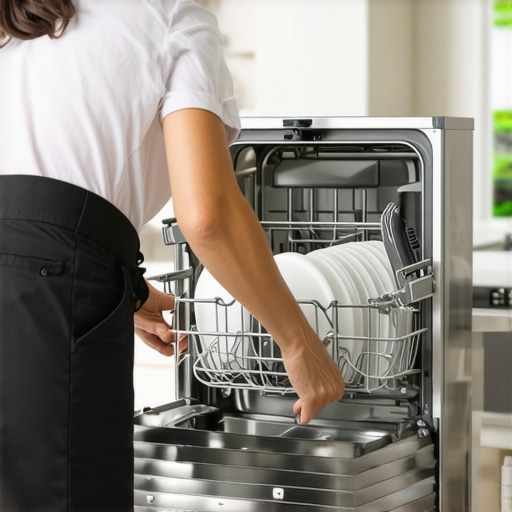
I was standing in my kitchen, barely five minutes after waking up, when it happened. I leaned over to grab a single bowl from the bottom rack—nothing heavy, just a ceramic cereal bowl—and my lower back screamed. It felt like a hot iron was pressed against my spine. For years, I’d been ignoring that “creaky” feeling, but that one morning it finally caught up to me. We often think back injuries happen during heavy lifting at the gym, but research suggests that many back issues actually stem from repetitive micro-traumas during everyday activities like chores. According to the Mayo Clinic, even simple repetitive movements can lead to significant disc strain if the mechanics are off. Today, I’m going to show you how to break that cycle so you can stop dreading the cleanup and start keeping your joints healthy while you move. Have you ever felt that sharp, unexpected pinch while just trying to tidy up?
The Sneaky Morning Habit That Triggers Your Spasms
The biggest mistake I made for years was thinking my body was “ready” the moment I rolled out of bed. In reality, your discs are extra hydrated and sensitive first thing in the morning. When you round your spine to reach for those plates, you are putting immense pressure on your lumbar region. I used to just hinge at my waist and hope for the best, which is exactly why my morning routine was secretly hurting my lower back. It isn’t just about one bad movement; it’s about the cumulative effect of poor posture and chronic back pain working together to wear you down. I learned the hard way that “powering through” is just another word for inviting a flare-up that lasts all week.
Does a Different Way of Bending Really Work?
You might be skeptical. After all, it’s just a dishwasher, right? But the way you interact with that machine sets the tone for your entire day’s mobility. If you start your morning by irritating a nerve, you’ll be fighting that inflammation until bedtime. By implementing the one foot up rule for chores, you can immediately take the load off your spine and put it on your powerful leg muscles instead. It sounds simple, but for someone like me who spent years rounding my back to save two seconds of time, it was a total revelation. I had to stop reaching blindly and start thinking about how to reach for items in the bottom cupboard safely before I could ever hope to stay pain-free. It’s time to stop treating your spine like a hinge and start treating it like the precious cargo it is.
The Hip Hinge: Moving Like a Pro Athlete in Your Kitchen
To protect your spine, you have to master the hip hinge. Most of us bend like a weeping willow, curving the spine until the vertebrae are screaming for mercy. Instead, imagine your spine is a steel rod and your hips are the only hinge in the building. When you go for those heavy pots, push your hips back as if you’re trying to close a car door with your butt. This shift is vital because why reaching for your toes is the worst way to stretch your back applies here too; you’re looking for stability, not a deep stretch in a compromised position. Last Tuesday, I was unloading a stack of cast iron pans. Normally, I’d just round over and yank them out. This time, I sat back into my hips, and my back didn’t even register the weight. It felt like I was using my glutes as a natural shock absorber.
Use the Kickstand Method for Instant Relief
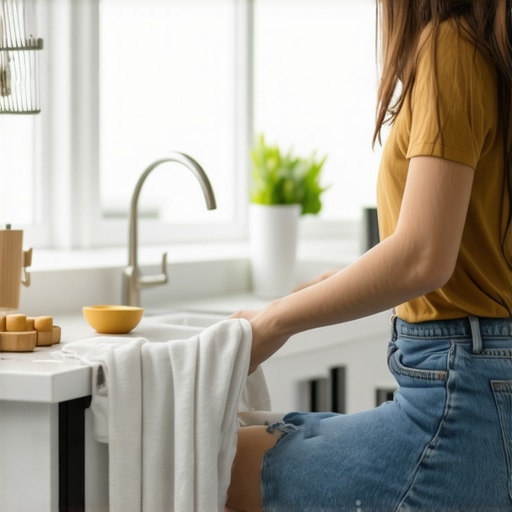
Next, let’s talk about the ‘kickstand.’ Open your under-sink cabinet and place one foot on the bottom ledge. This is the one foot up rule for pain-free dishwashing and chores in action. It tilts your pelvis slightly, which creates more space for your nerves and prevents that deep, achy fatigue that usually sets in after five minutes at the sink. If you don’t have a ledge, use a small step stool. It’s a game changer for enhance your back mobility ergonomic tips for everyday comfort because it breaks the static posture that leads to stiffness.
Stop Holding Your Breath While You Tidy
Finally, check your air. It sounds strange, but the breathing habit that is keeping your back muscles tight is often the missing piece of the puzzle. We tend to hold our breath when we lift or reach, which spikes internal pressure and locks the muscles in a state of high alert. As you reach down, exhale. This small act allows your diaphragm to move and helps how a simple reach and breathe move can decompress your back effortlessly. If you feel a twinge, stop and use the 10-second breathing trick for instant lower back relief to reset your nervous system before finishing the task. You aren’t just cleaning plates; you are practicing how to reach for items in the bottom cupboard safely every single morning.
We’ve been sold a lie about what ‘good’ movement looks like. Most people think they need to look like a mannequin to be healthy, but that rigidity is often where the trouble starts. I used to sit bolt upright at my desk, thinking I was a gold-star student of ergonomics. But why your straight posture is actually straining your muscles became clear when I realized my mid-back was constantly knotted. Many people assume that if their back hurts, they need to stretch it until it gives up. But here is the contrarian truth: your back might be tight because it’s trying to protect you. If you have an unstable segment, your muscles will ‘guard’ that area. When you force a stretch, you’re essentially ripping away your body’s only defense mechanism. This is why cracking your own back is making your joints more unstable over time. You’re seeking a temporary pop of endorphins while sacrificing long-term structural integrity.
Why does my MRI look normal if I’m still in pain?
This is the big one that confuses even the most seasoned patients. We often equate structural damage with pain, but the two are not always linked. Many people with bulging discs feel nothing, while those with ‘perfect’ scans are bedridden. This is why asking is your back pain a sign of something more serious is such a nuanced question. It’s often about your nervous system’s sensitivity, not just the state of your bones. According to research published in the Journal of Orthopaedic & Sports Physical Therapy, there is often a poor correlation between imaging findings and the actual source of clinical pain. If you’ve been told your scan is ‘clean’ but you still can’t tie your shoes, don’t lose heart. It means the issue might be functional rather than structural, such as the toe touch test that reveals your actual back injury risk through movement patterns rather than static pictures.
The Hamstring Trap: Stop Stretching Your Sciatica
The ‘Oops’ factor often happens during a sciatica flare. You feel that pull down your leg and think, ‘I must stretch my hamstrings.’ Stop right there. Why stretching your hamstrings can actually flare up sciatica is a physiological reality; the nerve is already sensitized and inflamed. Stretching it just adds mechanical tension to a chemical irritation. Instead, you should be looking at the real reason your hamstrings feel tight after a long walk, which often has more to do with pelvic tilt or nerve tension than muscle length. If you keep pulling on that nerve, you are only delaying your recovery. 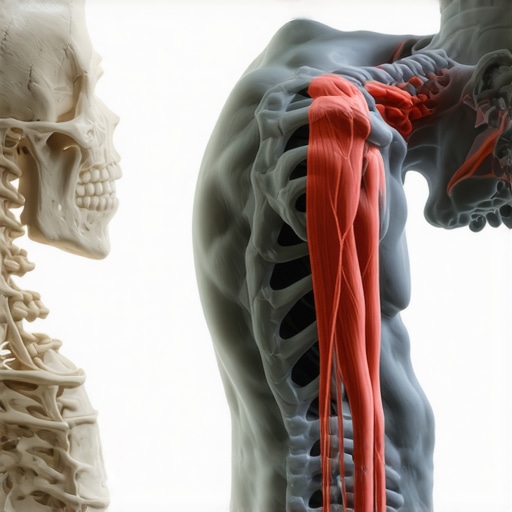 I spent months making this mistake, thinking I was one ‘good stretch’ away from relief, when I was actually just aggravating the root cause.
We also need to rethink our reliance on passive treatments. I see so many people frustrated because why deep tissue massage isn’t fixing your recurring back pain is usually because the massage only addresses the symptom, not the mechanical habit—like the way you load your dishwasher every morning. Have you ever fallen into this trap? Let me know in the comments. Real mobility isn’t about being flexible; it’s about being strong and stable through the movements your life requires. It’s time to stop chasing the ‘stretch’ and start building the stability your spine is actually craving.
Fix Your Setup Before It Fixes Your Joints
I used to believe that if I just did my exercises for twenty minutes a day, the other twenty-three hours didn’t matter. I was wrong. Long-term maintenance is about the environment you build around your body. For instance, I completely changed how to set up your laptop for better spine protection because I realized my neck was essentially a ticking time bomb while I worked. I also had to face the uncomfortable truth about my workstation; why your standing desk is giving you lower back pain often comes down to static loading. If you aren’t moving, you’re just trading one type of strain for another. I now use a drafting stool that allows me to ‘perch,’ keeping my hips above my knees, which mimics a more natural lumbar curve than traditional sitting or standing.
How do I maintain these results over time?
Consistency beats intensity every single time. You don’t need a gym full of equipment; you need a few high-leverage habits. One of my favorites is a daily check-in with my ankles. It sounds unrelated, but how a stiff ankle is actually causing your recurrent lower back aches is a fascinating mechanical chain reaction. If your ankles are locked up, your lower back has to pick up the slack every time you walk. To prevent this, I use the 30-second ankle drill that reduces your risk of back injury right before I head out for my morning walk. It keeps the whole system fluid from the ground up.
The One Tool You Already Own That Forces Better Posture
The most effective ‘tool’ I use isn’t something I bought on Amazon; it’s my rearview mirror. Most people slouch into their car seats and then adjust their mirrors to match that slump. Instead, I sit up tall, engage my core, and then adjust my rearview mirror to force better driving posture. If I start to slouch during a long drive, I can no longer see the traffic behind me. This immediate visual feedback is more effective than any wearable posture corrector I’ve ever tried. It’s a simple way to enhance your back mobility ergonomic tips for everyday comfort without spending a dime. Dr. Stuart McGill, a world-renowned spine biomechanics expert, emphasizes in his book Back Mechanic that ‘spine hygiene’—the way we move throughout the day—is more critical than any specific exercise for long-term recovery.

Stop Making This Common Foam Rolling Mistake
When my sciatica flares up, my first instinct used to be to roll out my lower back or my IT band until I was bruised. I’ve since learned how to use a foam roller for sciatica without making it worse by focusing on the soft tissue of the glutes and calves rather than rolling directly over the inflamed nerve. I predict that in the next few years, we’ll see a massive shift toward AI-driven biofeedback wearables that tell us exactly when our muscles are beginning to guard, allowing us to intervene before the pain even starts. For now, we have to rely on our own internal sensors. If you’re ready to take this seriously, I challenge you to try the 5-second glute squeeze that prevents sciatica flares while standing next time you’re waiting in line at the grocery store. It’s a small win that builds the stability your spine needs to stay healthy for the long haul.
Hard Truths I Discovered While Healing My Own Spine
One of the biggest eye-openers was realizing that pain isn’t always the enemy; it’s a messenger. I spent years trying to ‘kill’ the sensation rather than listening to what my movement patterns were telling me. I also learned that back pain breakthroughs often happen in the kitchen or the car, not just in a doctor’s office. It’s the invisible habits—like how you stand while brushing your teeth—that dictate your long-term comfort. Finally, I had to accept that there is no ‘magic’ stretch that overrides a day of poor mechanics.
The Tools That Actually Kept Me Moving
If you’re looking to build your own recovery kit, I highly recommend starting with Dr. Stuart McGill’s Back Mechanic for a foundational understanding of spine hygiene. For those dealing with nerve issues, having a few quick home remedies for sciatica on hand—like the ‘kickstand’ method we discussed—can prevent a minor twinge from becoming a week-long flare-up. I also swear by using a simple bathroom step stool for chores; it’s the most underrated piece of ‘medical equipment’ you’ll ever own. #IMAGE_PLACEHOLDER_E#
Your Path to a Pain-Free Tomorrow Starts Now
Changing how you move feels clunky at first, almost like learning to write with your non-dominant hand. But every time you hinge at the hips or breathe through a reach, you are depositing ‘health points’ into your physical bank account. You don’t have to be perfect; you just have to be intentional. As you work toward unlocking mobility in 2025, remember that your body is incredibly resilient when given the right environment. Have you ever noticed a specific chore that always seems to trigger your back pain? Let me know in the comments below!