
The simple movement that resets your SI joint after a run
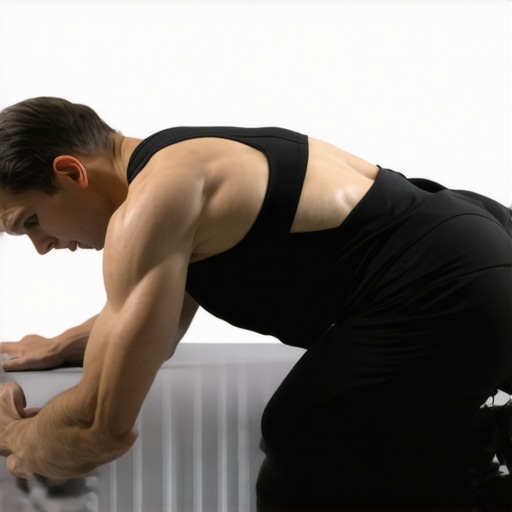
I’ve spent half my life chasing a runner’s high, only to be met with a runner’s low that felt like a rusty hinge in my lower back. I remember one specific Tuesday—crisp air, perfect pace—and the moment I stepped back into my kitchen after a five-mile loop, my right hip just… quit. It wasn’t a muscle pull. It was a deep, gnawing instability that made me feel like my pelvis was put on backward. I tried to walk it off, but by dinner, I was tilting like the Leaning Tower of Pisa. If you’ve ever felt that ‘stuck’ sensation in your lower back that radiates into your glute, you know exactly the frustration I’m talking about. Today, I’m going to show you the exact movement that saved my sanity and my running habit.
Why Your Hips Feel Locked After a Long Run
For the longest time, I made the classic rookie mistake: I assumed my ‘tightness’ was a muscle issue. I’d spend twenty minutes on a foam roller, screaming in pain, only to feel worse the next day. I didn’t realize that the repetitive impact of running can actually shift the way your sacroiliac joint—that tiny but mighty bridge between your spine and your pelvis—is sitting. When that joint gets even slightly ‘out of whack,’ your whole kinetic chain goes haywire. My breakthrough came when I realized I was actually flaring up my nerves by overstretching my hamstrings instead of addressing the joint itself. It wasn’t until I learned how to check my own hip mobility that I realized the problem was structural, not just muscular. Your SI joint isn’t meant to move much, but when it stops moving entirely, your lower back takes the hit. This is why you feel that sharp, localized ache right above your tailbone.
Is this tiny movement really enough to fix a major ache?
I get the skepticism. We’re taught that big problems require big, sweat-inducing solutions. But according to research from the Journal of Physical Therapy Science, even minor pelvic asymmetries caused by repetitive motion can lead to significant compensatory patterns in the lumbar spine. Sometimes, the body just needs a gentle ‘reset’ signal to stop guarding those muscles. Have you ever felt like your back was permanently jammed after a run? Let me know in the comments—I’m curious how many of us are out there dealing with this lopsided feeling! Before you dive into the fix, you need to make sure you aren’t dealing with a different beast altogether. I usually recommend taking the simple test to see if leg pain is actually sciatica, because if it’s nerve impingement, we have to be a lot more careful. Once you’ve ruled that out, you can focus on the specific core move that stabilizes the SI joint to keep the pain from coming back.
Reset Your Pelvis in Under Two Minutes
Think of your pelvis like a bucket full of water. When you run, if one side of your SI joint jams up, it’s like the bucket is permanently tilted to the left. No matter how much you stretch your hamstrings, you can’t level the water because the bucket itself is stuck. To fix this, we use a muscle energy technique. This isn’t about force; it’s about using your own muscles as a lever to gently nudge the joint back into its proper track. I’ve found that how a simple reach and breathe move can decompress your back is the perfect primer for this reset.
The Push-Pull Maneuver for Instant Alignment
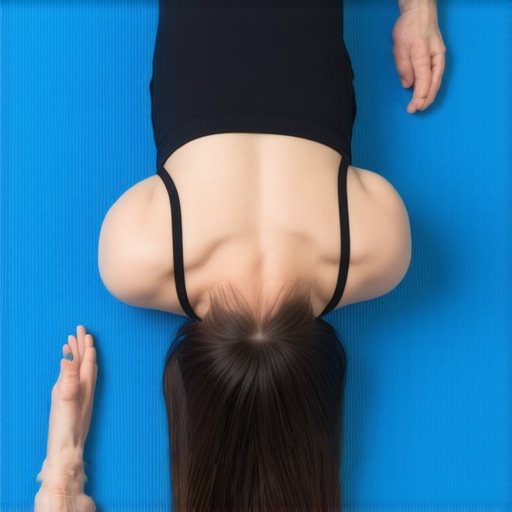
Lay on your back with your knees bent. If your right hip feels higher or stuck, you’re going to place your right hand on the front of your right thigh and your left hand behind your left thigh. Simultaneously, push your right knee into your hand while pulling your left knee toward your chest against your other hand. Hold this isometric tension for five seconds. You aren’t trying to win a strength contest; you’re just giving your nervous system a clear signal. I did this once at a trailhead after a particularly grueling trail half-marathon. I was leaning against my open car door, using the frame for resistance because my legs were too shaky to hold the position on the ground. The clunk I felt wasn’t a bone moving—it was the muscle guarding finally letting go. If you still feel stuck, you might need to realize why your core strength won’t fix your back if your hips are locked.
Lock the Reset into Place Without Re-injuring
Once you’ve performed the push-pull, you have to tell your body to keep it there. Most people stand up immediately and the joint just slips back into the old, familiar rut. To prevent this, you need to engage the deep stabilizers. This is where the specific core move that stabilizes the SI joint becomes your best friend. Imagine your deep abdominal muscles are a corset. Before you even think about standing up, gently draw your belly button toward your spine and perform three slow, diaphragmatic breaths. This bracing acts like a structural glue for the adjustment you just made. I’ve seen runners who skip this step end up right back where they started within ten minutes. You might also find that how a simple tennis ball can fix deep glute tension helps release the secondary muscle spasms that often follow a joint shift. If you’re unsure if this is even your issue, take a second to learn how to check your own hip mobility in under a minute to confirm which side needs the most work.
The real reason that ‘hip clunk’ I described earlier feels so satisfying is that it provides a momentary neural reset. However, here is where most people—even seasoned athletes—fall into a dangerous trap. We have been conditioned to believe that if something feels tight, we must pull on it until it lets go. But in my years of trial and error, I have found that chronic tightness is rarely a ‘short’ muscle problem; it is a ‘protection’ problem. Your brain is locking those muscles down because it doesn’t trust your joints to stay stable. If you keep stretching a muscle that is trying to protect an unstable joint, you are essentially trying to rip the band-aid off a wound that hasn’t healed yet. This is exactly the hidden reason your hamstrings always feel tight despite your daily stretching routine.
The Self-Cracking Trap That Keeps You Stuck
One of the biggest mistakes I see people make when they feel that ‘stuck’ sensation in their SI joint or lower back is trying to force a ‘pop’ by twisting violently on the floor. I used to be the king of this, thinking that if I could just get that one loud crack, I’d be cured. The truth is much more sobering. When you force a self-adjustment, you are usually hitting the segments that are already moving too much (hypermobile) rather than the one that is actually stuck. This creates a vicious cycle where you feel relief for ten minutes, but you are actually realizing why cracking your own back is making your joints more unstable in the long run. Eventually, the surrounding muscles have to work twice as hard to protect that now-loose area, leading to even more spasms.
Stop Looking at Your Back to Fix Your Pain
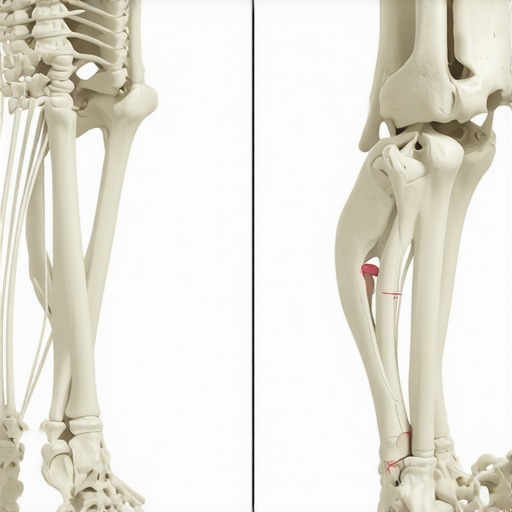
We need to talk about the concept of ‘regional interdependence.’ This is the sophisticated way of saying that your body is a single unit, not a collection of isolated parts. If your lower back is screaming, the culprit might actually be six inches higher or twelve inches lower. For instance, I’ve worked with runners who spent thousands on lumbar treatments only to find that how a stiff ankle is actually causing your recurrent lower back aches was the missing piece of the puzzle. If your ankle doesn’t flex when your foot hits the pavement, your lower back has to arch to compensate for the lost motion. Research published in the Journal of Orthopaedic & Sports Physical Therapy (JOSPT) supports this model, suggesting that distal impairments in the extremities are often the primary drivers of spinal dysfunction.
Is it possible to have a core that is actually too tight?
This is the contrarian truth that most ‘fitness gurus’ won’t tell you: you can actually over-stabilize. Many people with chronic back pain have been told to ‘keep their core tight’ at all times. This constant bracing creates a rigid cylinder that prevents the natural, subtle micro-movements the spine needs to absorb shock. I realized that why your perfect upright posture is actually tensing your spine was my biggest hurdle. When you are perpetually ‘on,’ your muscles never get a chance to recover, leading to the very inflammation you’re trying to avoid. Have you ever fallen into this trap of trying to be ‘perfectly aligned’ only to feel more stiff? Let me know in the comments—I’m curious how many of you were told the same advice I was. Sometimes, the goal isn’t more strength, but mobility mastery through better coordination. Before you go back to the gym, make sure you aren’t accidentally causing your own pelvic tilt with poorly executed heavy lifts.
Moving from a state of ‘fixing a crisis’ to ‘maintaining a lifestyle’ was the biggest shift in my personal health journey. Once I stopped reacting to every twinge and started treating my mobility like a daily hygiene habit, the long-term results finally stuck. I’ve found that I don’t need a thousand-dollar recovery suite or a personal therapist on speed dial to stay limpy; I just need a handful of targeted tools and the discipline to use them before the pain starts. One thing I never travel without is a simple tennis ball. It’s my go-to for those deep trigger points that flare up after a four-hour flight, but there is a catch. Most people just roll around on it and hope for the best, which is a recipe for bruising. I’ve learned that knowing how a tennis ball can relieve deep glute and sciatic pain is about precision and gentle pressure, not trying to tenderize your muscles like a steak. Similarly, while every gym has a foam roller, many people use them in ways that actually increase inflammation. You need to understand how to use a foam roller for sciatica without making it worse by avoiding direct pressure on the nerve itself.
How do I maintain my mobility results over time?
Consistency beats intensity every single time. Dr. Stuart McGill, a world-renowned spine biomechanics expert and author of Back Mechanic, often discusses the concept of ‘spine hygiene.’ This means that the way you brush your teeth, tie your shoes, and pick up a grocery bag matters just as much as your hour in the gym. I personally live by the ‘mirror trick’ to keep my posture from collapsing during my commute. I set my car’s rearview mirror when I am sitting perfectly tall at the start of my drive. If, twenty minutes later, I can’t see the traffic behind me, I know I’ve slumped. It’s an instant, low-tech bio-feedback loop. You can learn how to adjust your rearview mirror to improve your driving posture and turn your daily commute into a corrective session. For those who stand a lot, I highly recommend integrating the 5-second glute squeeze that prevents sciatica flares while standing to keep your pelvis from tilting into a painful position.

Looking ahead, I predict that ‘passive correction’ will be the next big trend in spinal health. We are already seeing the emergence of haptic-feedback clothing and wearable sensors that vibrate when your lumbar spine enters a high-shear position. While these gadgets are exciting, they are ultimately just high-tech versions of the self-awareness techniques we’ve discussed today. The goal is always mobility mastery where you become so in tune with your body’s signals that you can adjust before a spasm ever occurs. If you want to see an immediate difference in how your back feels tomorrow morning, I challenge you to try the rearview mirror trick on your very next drive. It’s the simplest way to force your brain to stay engaged with your spine’s alignment without needing a single piece of expensive equipment.
What Nobody Tells You About Chronic Hip Tightness
Over years of managing my own runner’s low, I’ve had a few lightbulb moments that changed everything. First, I realized that more intensity isn’t always better. Sometimes, why your workout might be feeding your chronic inflammation is simply because you aren’t giving your SI joint the reset it needs before adding load. Second, I stopped blaming my age for my stiffness. Stiffness is a data point, not a destiny. Finally, I learned that rest without re-alignment is just waiting for the next flare-up. If the joint is stuck, the rest of the body has to work overtime to compensate.
My Personal Tools for Staying Out of the Pain Cycle
I don’t leave my health to chance anymore. I have a small kit of habits that goes everywhere with me. This includes the mirror technique, which I use to how to adjust your rearview mirror to force better driving posture every single time I get in the car for a commute. I also pay much closer attention to my footwear, as I’ve seen firsthand why your thin shoes are impacting your lower back shock absorption during those high-mileage weeks. And of course, the classic: knowing how a tennis ball can relieve deep glute and sciatic pain is the difference between a restful night and a weekend spent on the couch nursing a spasm.
Ready to Reclaim Your Running Routine?
You don’t have to accept hip pain as a permanent tax on your active lifestyle. By focusing on joint alignment first and muscle stretching second, you’re working with your body’s biology instead of fighting it. Achieving true mobility mastery: daily tips to keep your spine and joints healthy is a marathon, not a sprint, but the reward is a body that feels fluid, stable, and ready for the trail. You’ve got the tools and the technique—now it’s just about taking that first pain-free step. Have you ever had a run cut short by that nagging stuck feeling in your hip? Let me know in the comments below!