
The truth about ‘cracking’ your own knuckles and neck
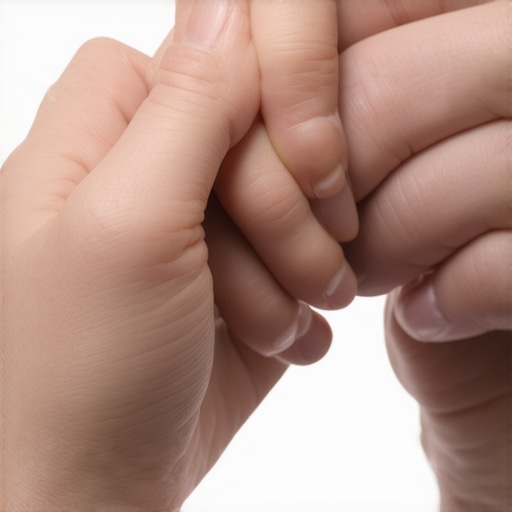
I’ll never forget the sharp, hot flash of panic that hit me when my neck simply refused to “pop” one Tuesday morning. I had been a habitual self-cracker for nearly a decade, convinced that my loud, crunchy adjustments were the only thing keeping my desk-bound body from turning into a statue. I would twist, pull, and lean until I heard that familiar crack, feeling a brief rush of relief before the tension inevitably crept back thirty minutes later. It wasn’t until I started experiencing weird dizzy spells and a “heavy head” sensation that I realized my little habit was actually a cry for help from a spine that was becoming dangerously unstable.
The short-lived high of a self-adjustment
We’ve all been there—sitting at the computer for three hours straight until your neck feels like it’s made of dry wood. You give it a quick yank, pop, and suddenly you can see clearly again. Or so you think. The truth is, that relief is mostly chemical. When you “crack” a joint, you’re often just releasing a tiny burst of endorphins and stretching the joint capsule, which triggers a temporary sense of ease. I fell into this trap hard, thinking I was “fixing” my alignment, when really I was just making my joints more unstable by overstretching the ligaments that were supposed to hold me together. If you find yourself constantly needing to pop your neck just to get through the day, you aren’t actually solving the problem. Usually, you’re cracking the joints that are already moving too much to compensate for a stiff upper back that won’t budge. Have you ever felt like you’re stuck in a loop where the more you crack, the more you need to crack? That’s exactly where I was before I learned the hard way that I was feeding a cycle of inflammation.
Is the sound of your knuckles popping really a sign of early arthritis?
One of the biggest fears people have—and one my grandmother definitely tried to scare me with—is that cracking your knuckles or neck will lead to gnarled, arthritic joints. Interestingly, research suggests this might be a bit of an old wives’ tale. A famous self-experimenter named Donald Unger cracked the knuckles on his left hand for sixty years while leaving his right hand alone, and found no difference in arthritis between the two hands. However, while your knuckles might be fine, your neck is a much more delicate system of nerves and arteries. My mistake wasn’t just cracking; it was assuming my neck functioned like a simple door hinge rather than a complex highway for my nervous system.
Stop treating the symptom and start fixing the movement
When I finally saw a professional, they pointed out that my neck tension was actually a secondary effect of my poor wrist position at my desk and a complete lack of mid-back mobility. By focusing only on the “pop,” I was ignoring the fact that my body was trying to protect itself from poor posture. If we don’t address the root cause, we’re just hitting the snooze button on an alarm that’s eventually going to get much louder. Today, I want to show you how to break that need to crack cycle by looking at how you move and sit every single day.
Stop the forward lean with a simple chin tuck
Think of your neck like a tent pole. If the guy-wires are pulled too tight on one side and completely loose on the other, the pole leans. Cracking your neck is like kicking the pole back into place—it stays for a second, then tilts right back because the tension in the wires is still uneven. To stop the cycle, you have to adjust the wires themselves. The first step I learned was the ‘chin tuck.’ Instead of tilting your head back, imagine someone is pulling a string from the crown of your head toward the ceiling while you gently tuck your chin in, creating a ‘double chin’ look. This simple movement stretches the tiny, overworked muscles at the base of your skull while engaging the deep stabilizers in the front of your neck. It’s one of those essential neck pain solutions that helps you regain your range of motion without the violent snap.
Wake up your mid-back to save your neck
My therapist once told me that my neck was the ‘victim’ and my mid-back was the ‘bully.’ Because my upper back was as stiff as a frozen steak, my neck had to do all the work every time I looked around. If you want to stop the crack, you have to make your mid-back move again. I started doing a move called the ‘Reach and Breathe.’ You sit tall, reach your arms forward as if you’re trying to touch a wall just out of reach, and take a deep breath into the space between your shoulder blades. It feels weirdly satisfying, and it’s a great way to decompress your back without needing a chiropractor on speed dial. When that mid-back opens up, the pressure on your cervical spine vanishes almost instantly. You can also incorporate the seated shoulder blade squeeze to kill midday tension headaches, which keeps those muscles from locking up in the first place.
The rearview mirror trick that changed my commute
Last month, I was halfway through a four-hour drive, and that familiar heavy-headed feeling started creeping in. Usually, I’d reach up and yank my neck to the side for a quick pop. Instead, I used a trick I’d recently discovered: I adjusted my rearview mirror. While sitting perfectly tall with my chin tucked, I set my mirror so I could see clearly. Ten minutes later, I noticed I couldn’t see out of the mirror anymore. Why? Because I had started to slump. Instead of cracking my neck, I used the mirror as a signal to sit back up and reset my posture. You can how to adjust your rearview mirror to force better driving posture by making it your ‘alignment coach.’
Use the wall to reset your frame
When I’m at home and the urge to crack becomes overwhelming, I head for the nearest flat wall. This is a game-changer because the wall provides the feedback your brain is missing. Stand with your heels, glutes, and shoulders touching the wall. Try to get the back of your head to touch the wall without looking up at the ceiling. Most people find this incredibly difficult at first because we’ve spent so much time hunched over. Holding this position for sixty seconds is a fantastic wall supported move that fixes slumping posture fast. It forces your muscles to remember what ‘neutral’ feels like. Once your body feels supported and aligned, the urge to create a fake sense of mobility through cracking naturally starts to fade away.
We’ve all been told that sitting up straight like a soldier is the gold standard for spine health, but I’m going to tell you something that might sound like heresy: your ‘perfect’ upright posture is actually tensing your spine and keeping you in pain. I spent years trying to maintain a military-grade arch in my back, only to find my muscles were constantly on fire. The nuance that most beginners miss is that the spine thrives on movement, not static rigidity. When you force yourself into a ‘perfect’ position, you’re often just trading one type of strain for another.
Your ‘perfect’ posture is probably making you stiffer
In my experience, the obsession with keeping the back straight leads to what I call ‘postural guarding.’ You become so stiff trying to be ‘correct’ that your muscles never actually relax. Research published in the Journal of Biomechanics suggests that postural variability—the ability to shift and move frequently—is far more important than holding any single position, no matter how ‘correct’ it looks. This is why why your perfect upright posture is actually tensing your spine and preventing the natural blood flow your discs need to stay hydrated. Have you ever fallen into this trap of trying to sit ‘perfectly’ only to feel worse? Let me know in the comments.
Why does stretching my hamstrings make my leg pain worse?
This is the advanced ‘oops’ factor I see all the time. People feel a pull in the back of their leg and immediately assume they have tight hamstrings. They bend over to touch their toes, hoping for relief, but instead, they wake up the next morning with lightning bolts shooting down their leg. If you are dealing with nerve irritation, that ‘tightness’ you feel isn’t a short muscle—it’s a sensitive nerve being pulled like a guitar string. In these cases, why stretching your hamstrings can actually flare up sciatica becomes a painful reality. Instead of aggressive stretching, you need unlocking sciatica relief expert strategies for lasting comfort that focus on nerve gliding and spinal decompression rather than just yanking on the tissue.
Stop chasing the ‘knot’ with deep tissue massage
Another common myth is that every ‘knot’ in your shoulder needs to be crushed into submission with a deep tissue massage. I used to go to therapists and tell them to ‘dig in’ as hard as they could, thinking that more pressure equaled more healing. The hidden nuance? Sometimes those knots are ‘protective tension.’ Your brain is tightening those muscles to stabilize a joint that it perceives as weak or injured. If you force those muscles to relax without addressing the underlying instability, your brain will simply lock them up again—often tighter than before—within 24 hours. This is why deep tissue massage isn’t fixing your recurring back pain. To truly break the cycle, you have to look at the intersection of neck pain and stress and how your nervous system is reacting to your daily environment.
Stop relying on luck and start using the right gear
Once I realized my neck tension was just a symptom of a much larger movement problem, I had to find ways to maintain my progress without falling back into the trap of self-cracking. I personally swear by a 36-inch high-density foam roller. I don’t use it to roll out my lower back—which can actually be counterproductive for stability—but I use it specifically for thoracic extension. By lying on it lengthwise, I allow my chest to open and my ribcage to expand, which is the perfect antidote to eight hours of typing. This kind of daily maintenance for your spine and joints is what prevents those flares from coming back. I’ve found that ten minutes of focused mobility work is worth more than an hour of aggressive, unfocused stretching.
How do I maintain my mobility over time without getting bored?
The secret isn’t a grueling 90-minute yoga session; it’s the “micro-reset.” I follow the methodology of Dr. Stuart McGill, a world-renowned biomechanics expert and author of Back Mechanic. He emphasizes that creating stiffness in the core is actually what allows the rest of the body to move freely and safely. I’ve integrated his core stabilization movements into my morning routine to protect my discs from the start of the day. If you want to see expert tips on managing back pain in 2025, look toward this shift from “stretching everything” to “stabilizing the right things.” I predict that in the next few years, we’ll see a massive move toward wearable biofeedback sensors that tell us exactly when our stabilizers are switching off before the pain even has a chance to start.
The tennis ball trick for deep glute relief
When my lower back feels that familiar “heavy” tightness that usually precedes a sciatica flare, I don’t reach for my toes. Instead, I use a simple tennis ball or lacrosse ball against a wall. By pinning the ball into the upper-outer quadrant of my glute and moving slowly, I can release the piriformis muscle that often irritates the sciatic nerve. You can learn how a tennis ball can relieve deep glute and sciatic pain without needing expensive equipment or a personal masseuse. It’s a precision tool that provides a way to navigate your path to restored mobility right from your own living room.
Ditch the no pain no gain mentality for good
My biggest breakthrough was realizing that if a movement causes a sharp pinch or a shooting sensation, I should stop immediately. This is especially true for lasting neck pain relief. If you keep pushing into pain, your nervous system will stay on high alert, keeping your muscles in a protective state of “guarding.” Start small and build your capacity slowly. I challenge you today to try the one foot up rule for pain-free dishwashing next time you’re at the kitchen sink. It sounds almost too simple, but it shifts your pelvis just enough to take the massive load off your lower spine during static standing tasks.
The one thing I wish I’d known before my first ‘crack’ went wrong
After a decade of chasing the loudest “pop” possible, I realized that my body wasn’t failing me; I was failing to listen to it. The hardest lesson I learned is that stability is actually the foundation of mobility. If you don’t have the strength to hold your spine in place, your brain will keep creating that feeling of “tightness” as a protective mechanism. I used to think I was tight because I needed to stretch more, but I was actually tight because I was weak. Once I started focusing on mobility mastery through daily habits rather than aggressive adjustments, the need to crack simply vanished. Another lightbulb moment was realizing that poor posture and chronic back pain are often just a lack of variety in how we sit and stand. Movement is medicine, but only if it’s the right kind of movement.
My go-to tools for keeping the crunch away
I don’t believe in buying every gadget on the market, but three things completely changed my recovery. First, the 36-inch high-density foam roller is my non-negotiable for opening up my chest after a long day at the laptop. Second, the book Back Mechanic by Dr. Stuart McGill; it’s basically the Bible for anyone trying to find back pain breakthroughs and restored mobility. Lastly, a simple lacrosse ball for pinpointing those deep glute “knots” that my foam roller can’t reach. These aren’t just tools; they are my way of taking back control from the cycle of pain. #IMAGE_PLACEHOLDER_E# I also recommend checking out these expert tips on managing back pain in 2025 to stay ahead of the curve.
Start moving like you actually like yourself
Getting out of pain isn’t about one giant change; it’s about the small, boring things you do when no one is watching. Whether it’s adjusting your mirror or doing a 10-second chin tuck, these micro-wins add up to a spine that doesn’t scream for help every thirty minutes. You deserve to feel light in your own body again. Focus on revitalizing your neck through lasting techniques rather than quick, risky fixes. Your future self—the one who can turn their head to check a blind spot without a sharp wince—will thank you for starting today. Have you ever felt like you were “addicted” to cracking your own neck or back? Let me know in the comments below!