
Why sleeping on your stomach is wrecking your neck alignment

I remember it clearly—that Tuesday morning when I tried to look at my alarm clock and felt a lightning bolt of pain shoot from my ear down to my shoulder blade. I sat there, frozen, realizing I had ‘slept wrong’ again. For years, I defended my stomach-sleeping habit like it was a personality trait. ‘I just can’t fall asleep any other way,’ I’d tell myself. But my neck was paying a price I couldn’t afford anymore. We often focus on our desk setups or how we lift heavy boxes, but we ignore the eight hours we spend grinding our cervical joints into the mattress. If you have ever felt like your head weighs a hundred pounds or struggled to check your blind spot while driving, you are likely caught in the same trap I was. Today, I want to show you exactly how why sleeping on your stomach is wrecking your neck alignment and, more importantly, how you can finally break the cycle of waking up in pain.
Stop treating your neck like a twisted towel
Stomach sleeping is basically the arch-nemesis of a healthy spine. Think about the mechanics for a second. When you lay flat on your belly, you have to turn your head nearly 90 degrees just to breathe. You are essentially holding a full-range neck rotation for eight hours straight. Imagine trying to walk around during the day with your head cranked over your shoulder; you’d be in agony in twenty minutes. Yet, we do it every night. This constant torque strains the ligaments and forces your vertebrae out of their happy place. I made the mistake of thinking I could just find a thinner pillow to solve it. I was wrong. I spent hundreds of dollars on ‘orthopedic’ foam while my joints were still screaming. I didn’t realize that the best sleeping position for a herniated disc in your neck or even general stiffness is almost never on your stomach. According to the Mayo Clinic, stomach sleeping is generally discouraged because it makes it incredibly difficult to maintain a neutral spine position, leading to significant strain on the back and neck. This strain is often the real reason your neck cracks when you look over your shoulder later in the day.
Is it actually possible to change how you sleep after thirty years?
You might be skeptical. I certainly was. I thought my body was hard-wired to face-plant into the bed. The fear of tossing and turning all night keeps many people stuck in bad habits. However, once you understand how revitalizing your neck starts with your nocturnal posture, the motivation to change becomes much stronger. I had to learn the hard way that why your perfect upright posture is actually tensing your spine during the day doesn’t matter much if you’re sabotaging yourself every night. Have you ever felt that sharp, localized pinch the moment you try to sit up in bed? That is your body’s alarm system telling you the alignment is blown. We aren’t just looking for a temporary fix here; we are looking for a total reset of your sleep mechanics.
Build a pillow fortress to trick your brain
Transitioning away from your stomach isn’t about willpower; it is about making it physically impossible to roll over. When I first tried to switch to side sleeping, I would wake up three hours later, face-down, with my neck screaming. I realized I needed a barrier. By placing a long body pillow or a firm king-sized pillow tightly against my chest and stomach, I gave my brain the sensation of ‘pressure’ it craved without the neck torque. This is why learning the side sleeping trick for people with narrowing in the spine is a total game-changer. It mimics the safety of stomach sleeping while keeping your cervical spine in a neutral line.
Lock your hips to protect your lower back
If you choose the side-sleeping route, your top leg will naturally want to slide forward and pull your pelvis into a twist. This rotation travels all the way up your spine and puts tension on your neck. You need to know how to sleep with a pillow between your knees for back relief to stop this. When I finally tucked a firm pillow between my knees, the ‘pulling’ sensation in my hip disappeared, and I noticed I wasn’t waking up with that familiar dull ache in my mid-back. It acts like a spacer, keeping your hips stacked like a deck of cards rather than a twisted slinky.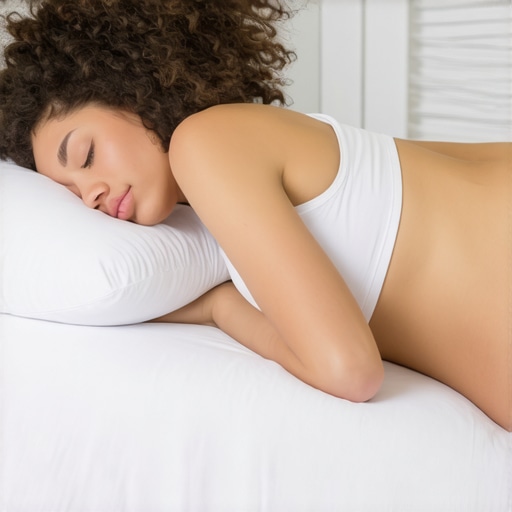
Master the back-sleeping reset
If side sleeping still feels too restrictive, the back-sleeping position is the gold standard for neck recovery. However, most people fail at this because their legs are too flat. When your legs are straight, it pulls on your psoas muscle, which arches your lower back and makes your neck feel strained. I struggled with this for weeks—feeling like I was lying on a plank of wood—until I put a large, rolled-up towel or a wedge pillow under my knees. This tiny change tilted my pelvis back and allowed my entire spine to melt into the mattress. It is one of the most effective neck pain solutions proven techniques to regain your range of motion because it removes the ‘tug-of-war’ happening between your hips and your head.
Neutralize your daytime habits to save your night
You cannot expect your neck to heal overnight if you are punishing it for eight hours at a desk. I learned this the hard way when my morning neck pain persisted despite my new sleeping posture. I realized I was staring down at my screen all day, creating a ‘tech neck’ hump that no pillow could fix. You have to implement the 15-degree rule for your computer monitor to save your neck. By raising my monitor so my eyes hit the top third of the screen, my chin naturally tucked back into a safe position. If you still feel tension creeping in around 3 PM, try the 10-second jaw release that softens your neck muscles. We often clench our teeth when we focus, which sends a signal to the neck muscles to stay rigid. Releasing that jaw tension throughout the day makes your body much more receptive to a new sleeping position at night.Let’s dig deeper into the ‘mobility’ obsession that often does more harm than good. Most people assume that if a muscle feels tight, the solution is to pull on it until it gives way. We have been conditioned to think of our bodies like a system of stiff rubber bands that just need a good yank. But here is the nuance: your ‘tight’ hamstrings are often a neurological brake, not a physical limitation. When I was struggling with my neck and back, I spent thirty minutes every morning trying to touch my toes, only to feel tighter an hour later. I didn’t realize that why stretching your hamstrings can actually flare up sciatica is because you aren’t stretching muscle; you are yanking on an already sensitized and inflamed nerve. This is the common trap that turns a minor annoyance into a chronic flare-up. Your brain is keeping those muscles ‘locked’ to protect your spine from what it perceives as a threat, and trying to force them open only increases that perceived danger.
Stop stretching your ‘tight’ hamstrings if you want real relief
If you have ever felt like your legs are permanently made of wood, you might be tempted to reach for a foam roller. However, you need to be careful with your technique. Learning how to use a foam roller for sciatica without making it worse is essential because rolling directly over a compressed nerve is like hitting a bruise with a hammer. Instead of forcing mobility, we should be looking at the ‘threat’ levels in our nervous system. This is why why stretching your hamstrings wont fix your tight legs if the root cause is actually coming from your lumbar spine or a lack of core stability. Research published in the Journal of Orthopaedic & Sports Physical Therapy confirms that aggressive static stretching of a sensitized nerve can actually increase mechanosensitivity, leading to more pain rather than less. Sometimes, the truth about using heat packs versus ice for chronic stiffness is that you just need to calm the nervous system down with gentle warmth rather than trying to beat it into submission with a stretch. 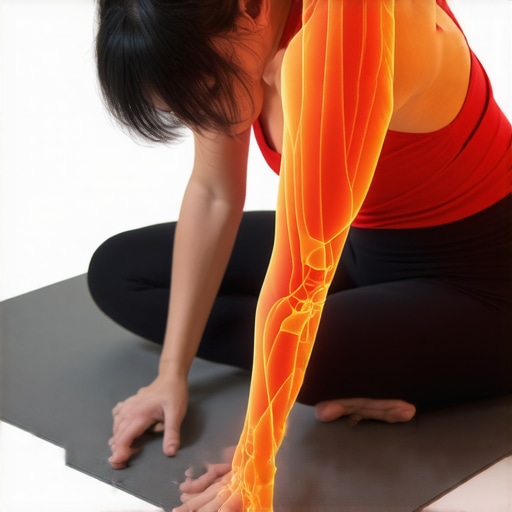
Avoid the ‘Cobra’ trap during a back spasm
If you have been doing the ‘Cobra’ or ‘Upward Dog’ stretch because a video said it is good for discs, you might be falling into a dangerous ‘oops’ factor. For many people, especially those over forty, why you should avoid the cobra stretch during a back spasm is simple: if your pain is caused by narrowing in the spinal canal or facet joint irritation, arching your back is like slamming a door on your fingers. You are compressing the very structures that need space. Another hidden nuance is how we treat the symptoms rather than the source. We rub our necks because they hurt, but we ignore the fact that how a stiff upper back is forcing your neck to move too much is the real culprit. Your cervical spine is designed for stability, while your thoracic spine is meant for movement. When your mid-back becomes a block of cement, your neck has to do double the work to compensate.
Does your leg pain get worse when you reach for your toes?
This is a critical distinction that most beginners miss. If you feel a sharp, electrical pull or a burning sensation rather than a dull muscle ache, you are likely dealing with nerve tension. You must use the simple test to see if your leg pain is actually sciatica before you attempt any more aggressive mobility drills. If it is nerve-related, you should focus on ‘nerve flossing’—gentle movements that glide the nerve through the tissues—rather than static holds. Have you ever fallen into this trap of stretching through the pain? Let me know in the comments.
Maintenance isn’t about doing a grueling hour of yoga every day; it is about the micro-adjustments you make when you aren’t even thinking about your body. For me, the most effective tool wasn’t a fancy electronic gadget, but my car’s rearview mirror. I learned that you can how to adjust your rearview mirror to force better posture by setting it just a fraction higher than your relaxed eye level. The moment you start to slouch into the driver’s seat, the mirror view becomes cut off, providing an instant physical cue to sit tall. It is a passive feedback loop that corrects your spine without you having to mentally obsess over it during a long commute.
The desk setup that actually respects your vertebrae
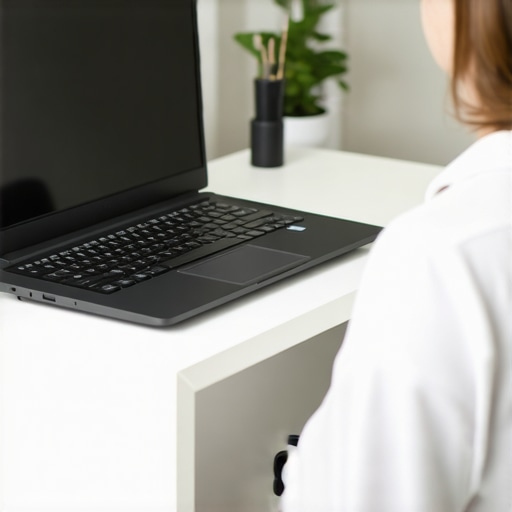
When I moved my office to a home setup, I initially thought a basic riser would solve everything. However, I quickly discovered why your laptop stand might be making your neck knots worse. If the stand is too high and you are still reaching up to use the laptop’s built-in keyboard, you are creating a massive amount of tension in your upper traps. I now use a dedicated mechanical keyboard and a vertical mouse, allowing my shoulders to drop into a neutral position while the screen remains at eye level. This transition is a key part of unlocking mobility expert tips on managing back pain in 2025 because it treats the workspace as a dynamic environment rather than a static one.
Beyond the desk, look at what you are wearing on your feet. I used to be a huge proponent of barefoot-style footwear until I realized why your thin shoes are impacting your lower back shock absorption when walking on hard city concrete. Your spine ends up absorbing the force that your shoes’ midsoles should be handling. If you are currently in the middle of a flare-up, even something as small as the specific way to tie your shoes when you have a herniated disc can change your gait enough to reduce the jarring impact on your lower lumbar region. It is about reducing the total ‘mechanical load’ your body has to process throughout the day.
How do I maintain my spine health over the long term?
Consistency in maintenance requires understanding the difference between mobility and stability. While we want the joints to move, we want the core to be a rock. Dr. Stuart McGill, a world-renowned expert in spine biomechanics at the University of Waterloo, suggests that ‘proximal stiffness leads to distal mobility.’ This means that by building a stable, stiff core, your hips and shoulders are actually freed up to move more naturally. I have integrated mobility mastery daily tips to keep your spine and joints healthy into my morning routine, specifically focusing on McGill’s ‘Big Three’ exercises to brace the spine before I even head for my morning coffee. I predict that as we move further into a sedentary digital age, the focus will shift away from ‘stretching’ and toward this kind of ‘functional bracing’ to protect our discs from the constant pressure of sitting. I strongly encourage you to try the rearview mirror trick tomorrow morning; it is the most revealing test of your actual posture you will ever perform.
The Lessons My Body Forced Me to Learn About Nerve Tension
Changing my life didn’t happen when I bought a new mattress; it happened when I stopped fighting my body’s natural mechanics. Here is what years of trial and error taught me: Pain is a protective signal, not a broken part. When your neck screams in the morning, it isn’t ‘weak’—it is exhausted from protecting you all night. I also realized that consistency beats intensity every single time. Doing a three-minute mobility drill every morning is infinitely more powerful than a two-hour yoga class once a month. Lastly, I learned to stop chasing the ‘stretch’ and start seeking stability. If your joints feel loose and clicking, more stretching is the last thing you need. You might need to check is your back pain a sign of something more serious key symptoms to watch if you aren’t seeing progress with simple postural fixes.
The Essential Tools for Your Spinal Recovery Journey
I don’t believe in gadgets, but I do believe in functional support. My personal toolkit starts with Dr. Stuart McGill’s book, ‘Back Mechanic’. It changed how I viewed spinal load and taught me that ‘stiffness’ in the core is actually a gift. For daily ergonomics, I recommend a high-quality firm body pillow to act as a physical barrier against rolling onto your stomach. This simple tool is a cornerstone of enhance your back mobility ergonomic tips for everyday comfort. Finally, I suggest using a simple digital timer on your desk to remind you to perform a jaw release every hour. Combining these tools with mobility mastery daily tips to keep your spine and joints healthy creates a lifestyle where pain no longer has a seat at the table. #IMAGE_PLACE_HOLDER_E#
Take Your First Step Toward Lasting Relief Today
You don’t have to live in a cycle of ‘good days’ and ‘bad days.’ By making the conscious choice to protect your neck while you sleep and adjusting your environment to respect your spine, you are taking control of your longevity. Finding neck pain solutions innovative strategies for fast recovery is a journey of listening to what your body is trying to tell you. Start tonight with the pillow fortress, and tomorrow with the mirror trick. Your future, pain-free self will thank you for the effort you put in today. Have you ever tried the ‘pillow fortress’ method to stop rolling onto your stomach at night? Let me know your results in the comments below!