
Why you should stop tucked-chin exercises if you have a flat neck
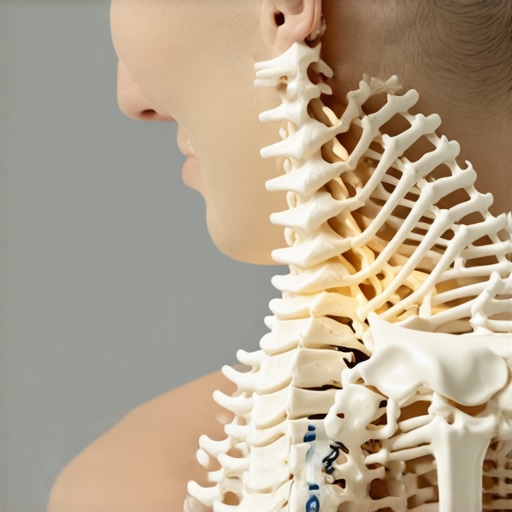
I was staring into the bathroom mirror, double-chinning myself for the tenth time that morning, convinced that more was better. I had read every blog post and watched every video telling me that chin tucks were the holy grail for fixing my posture. But instead of relief, I felt a sharp, localized pinch at the base of my skull every time I did them. It turns out, I was making a massive mistake because I did not realize I had what doctors call a flat neck or a loss of cervical lordosis. If you have noticed that your head feels heavy by 3 pm every afternoon, you might be tempted to tuck that chin even harder to fight the fatigue. Please, stop. Today, I am going to explain why this generic advice is backfiring on you and how you can actually revitalize your neck without the extra strain.
Stop Jamming Your Vertebrae with Traditional Chin Tucks
The chin tuck is designed to strengthen the deep neck flexors, but it assumes your neck has a natural, healthy curve to begin with. When you have a military neck, your spine is already too straight. Forcing it backward with a tuck is like trying to bend a piece of rebar that is already flattened out; it just creates unnecessary tension. I spent months doing these exercises religiously, only to find that my neck felt stiff every time I got behind the wheel. I was essentially jamming my vertebrae together. According to research published by the National Center for Biotechnology Information (NCBI), the loss of the natural cervical curve can lead to increased stress on the spinal cord and a significantly higher risk of disc degeneration over time. When you add aggressive chin tucks to a flat neck, you are often just accelerating that mechanical stress instead of fixing it.
Is This “Holy Grail” Exercise Actually a Waste of Time?
The biggest fear I had was that if I stopped doing chin tucks, my text neck would just get worse. I thought I was doomed to look like a gargoyle forever. But the truth is, your spine needs space and proper curvature, not just more retraction. Many people who struggle with the consequences of looking at their phone on their lap are actually suffering from a lack of extension, not a lack of backward movement. I want to hear from you; have you ever followed a popular piece of fitness advice only to realize it was actually causing your flare-ups? Let me know, because we need to stop treating every neck like it is built the same way. We are moving toward a more personalized way to handle discomfort.
Build a Healthy Curve Instead of Flattening It Further
To fix a flat neck, you have to stop thinking about retraction and start thinking about extension. If your neck is a straight line, pulling your chin straight back just compresses the discs. Imagine a stiff garden hose; if you pull it tight from both ends, it loses all its flexibility. Instead, you need to introduce a gentle, localized arch. This is where neck pain solutions proven techniques to regain your range of motion shift from aggressive pulling to supportive molding. By focusing on the middle of the neck rather than the jawline, you create space for the nerves to breathe.
The Towel Roll Trick for Immediate Relief
This is the single most effective way I found to counteract the damage of a military neck. Take a small hand towel and roll it up tightly until it is about the diameter of a foam roller, but much softer. Lie on a firm surface—not your bed—and place the roll directly under the curve of your neck. Your head should gently tilt back, touching the floor. This passively encourages the cervical spine to return to its natural C-shape. I remember the first time I tried this; I was lying on my living room floor, and for the first three minutes, it felt incredibly awkward, almost like my head was hanging off a ledge. But when I stood up, the constant ‘buzzing’ tension at the base of my skull had vanished for the first time in weeks. This is far superior to the simple towel roll trick for better sleep with neck pain because it actively re-trains your ligaments while you are awake and focused. 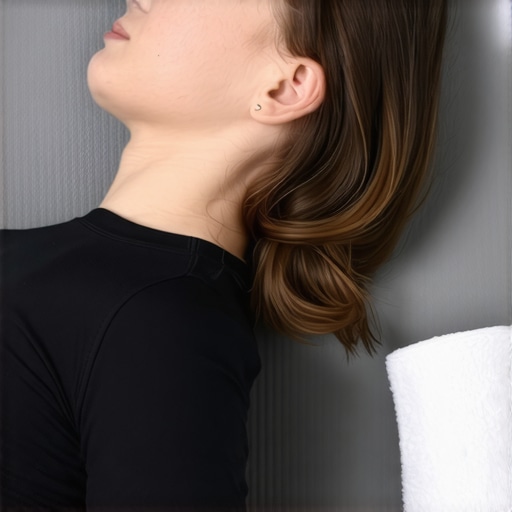
Fix Your Mid-Back to Take the Pressure Off
Your neck is often the victim of what is happening lower down your spine. If your mid-back (thoracic spine) is locked up like a rusty gate, your neck has to overcompensate just to keep your eyes level. You cannot fix a flat neck if your shoulders are rounded forward. I realized that my own struggles were tied to understanding the link between poor posturing and chronic back pain. To address this, incorporate the wall angel move that fixes rounded shoulders. Stand against a wall and try to keep your tailbone, mid-back, and the back of your head in contact with the surface while sliding your arms up and down. If you feel a pinch, it’s a sign your thoracic mobility is the real culprit behind your neck stiffness.
Adjust Your Screen to Stop the Slouch Before It Starts
All the exercises in the world won’t help if you spend eight hours a day staring down at a laptop. I used to think I was being ergonomic by using a stand, but I was actually making things worse by not considering the angle of my gaze. You must follow the 15 degree rule for your computer monitor to save your neck. Your eyes should hit the top third of the screen when looking straight ahead. If you are looking down even slightly, you are essentially hanging a bowling ball off a thin stick. This constant load is why why your back hurts more after a day of resting on the couch; your muscles never actually get to relax because they are fighting gravity 24/7.
Even if you fix your screen height, you might still find yourself trapped in a cycle of constant stretching. We have been conditioned to believe that if a muscle feels tight, the solution is to pull on it until it lets go. But here is the contrarian truth: that tightness is often your brain’s way of protecting you. When your deep stabilizers are weak, your nervous system creates ‘protective tension’ to keep your joints from moving into ranges they can’t control. If you keep stretching that tension away without building strength, you are essentially removing the only thing holding you together. This is why why standing up straight is actually making your back pain worse for many of you; you are forcing a position your muscles aren’t prepared to hold.
Your Stiff Muscles Might Actually Be Weak, Not Short
I see this most often with the psoas and the hamstrings. You spend all day at a desk and feel like your hips are made of concrete. You lunged, you pulled, and yet the sensation never leaves. The reality is that why a tight psoas is often actually a weak psoas is a much more common diagnosis than actual muscle shortening. The muscle is exhausted from trying to stabilize your spine, so it stays ‘on’ 24/7. When you stretch it, you might feel a temporary endorphin rush, but the brain immediately clamps the muscle back down to regain that lost stability. The same logic applies to your legs; why your hamstrings feel tight but never get better with stretching is usually because they are overworking to compensate for a pelvic tilt or a weak core. Have you ever fallen into this trap? Let me know in the comments, because I spent years pulling on my hamstrings only to make my back ache more.
Why Does the Pain Flare Up Only After You Finish Exercising?
This is the ‘Oops’ factor that most people miss, especially when dealing with the lower body. If you have any history of nerve irritation, traditional stretching is your worst enemy. If you are conquering sciatica with proven approaches, you must understand the concept of neural tension. Unlike a muscle, a nerve does not want to be stretched; it wants to slide and glide. When you perform a deep hamstring stretch while your sciatic nerve is inflamed, you are literally tugging on a raw, sensitive wire. This is precisely why some sciatica stretches actually pinch the nerve further and lead to that late-night throbbing. A study published in the Journal of Bodywork and Movement Therapies highlights that ‘nerve glides’ or neural mobilization is significantly more effective for lasting relief than static stretching because it reduces intraneural edema without triggering a protective spasm.
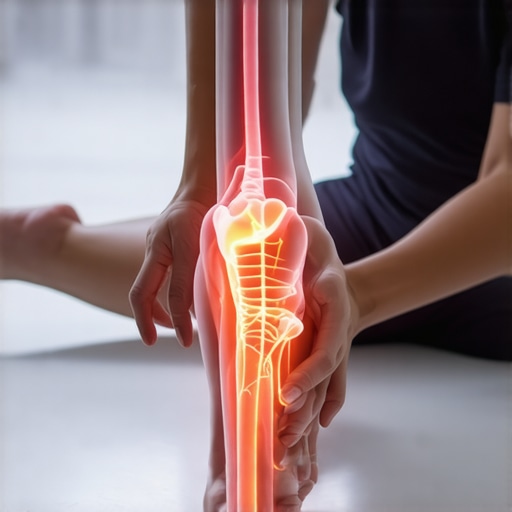
If you’re unsure what you’re dealing with, you need to learn the difference between muscular sciatica and a slipped disc before you try another yoga pose. For those dealing with true nerve sensitivity, I highly recommend transitioning to the nerve flossing routine for stubborn leg numbness and tingling. It’s a gentle, rhythmic movement that moves the nerve through its pathway without tensioning it at both ends. Remember, ‘no pain, no gain’ is a dangerous mantra when it comes to your spinal health. We need to stop treating our bodies like a piece of dough that needs to be rolled out and start treating them like a complex system that needs to be recalibrated. If you’re ready to stop the endless stretching cycle, check out our guide on why stretching your hamstrings won’t fix your tight legs to see what you should be doing instead.
Shift Your Strategy from Emergency Repairs to Real Maintenance
I used to wait until my neck was in a full-blown spasm before I did anything about it. I treated my body like a cheap car, only taking it to the shop when the engine started smoking. But real progress happens when you stop reacting to pain and start building a environment where pain cannot thrive. This requires a shift toward mobility mastery daily tips to keep your spine and joints healthy. It is about the small, boring things you do every day, not just the big interventions. To truly maintain your gains, you must move from passive relief to active structural support. According to the Cornell University Ergonomics Research Laboratory, even the most expensive ergonomic chair is useless if you do not maintain a neutral spine position and take frequent ‘micro-breaks’ to reset your muscular tension. If you are just starting your day, I cannot recommend the simple morning move to prime your spine for the day enough; it sets the tone for your nervous system before you even check your email.
How do I maintain these results once the pain is gone?
Maintenance is less about hours of exercise and more about identifying the ‘leaks’ in your daily habits. I found that my biggest leak was how I sat during long meetings. I started using a dedicated lumbar support because most built-in chair supports are in the wrong place. However, you have to be careful; there is the specific way to use a lumbar roll for maximum relief that most people ignore by placing it too low. The goal is to support the natural curve, not to push your hips forward. In the future, I predict we will see AI-driven ergonomic sensors built into our clothing that vibrate the second our deep stabilizers shut off, but until then, we have to rely on conscious habits. If you find your progress stalling, it is usually because you have stopped the maintenance phase too early. Consistency is what turns a temporary fix into a permanent change in your posture.
Ditch the Fancy Gadgets for These Specific Tools
You do not need a thousand-dollar setup to fix your spine. In fact, many people find that how to set up your home office for less than fifty dollars is more effective than buying every gadget on Instagram. The most important tool in my arsenal is actually a simple external keyboard and mouse. This allows you to elevate your screen properly. I have seen so many people buy a riser only to realize why your laptop stand might be making your neck knots worse because they are still reaching up to type on the elevated keys, which creates massive tension in the upper traps. 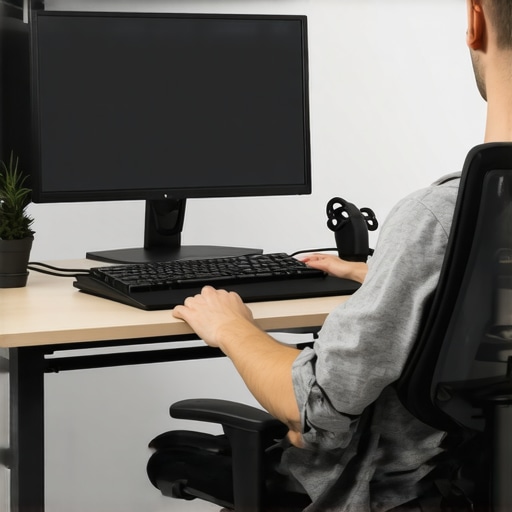 By separating the screen from the input, you allow your shoulders to drop into a relaxed, neutral position. This one change saved me from that 3 pm ‘heavy head’ feeling more than any massage ever did. I also suggest keeping a firm massage ball at your desk. When you feel that familiar pull between your shoulder blades, a quick reset against a wall can stop a flare-up before it starts. If you are ready to take your maintenance to the next level, I challenge you to perform the 30 second wall slide for better shoulder alignment every single time you hang up a phone call or finish a meeting. This simple reset prevents the slow creep of the ‘scrolling slouch’ and keeps your mid-back mobile enough to support your neck properly.
The Hardest Lesson I Learned About My Own ‘Flat Neck’
After years of trial and error, I realized that my neck pain wasn’t a mechanical failure of my body, but a protective response to how I was living. First, I had to accept that ‘more’ exercise isn’t ‘better’ exercise; if a movement causes a sharp pinch, your nervous system is screaming at you to stop. Second, I learned that neck pain and stress how to break the cycle for good is a physical reality—your traps are the first to tighten when you’re overwhelmed. Finally, I discovered that consistency beats intensity every time. Doing 30 seconds of the 10 second wall slide for instant shoulder tension relief three times a day is worth more than an hour of stretching on a Sunday.
The Essential Tools I Keep in My Spine-Health Kit
I don’t believe in expensive gadgets that promise a quick fix. My setup is purposefully simple. I rely heavily on a rolled-up towel for passive restoration and a dedicated monitor riser to prevent the ‘turtle neck’ look. If you often read at night, you must learn how to fix the head forward posture while reading in bed, as this is where most of us undo a day’s worth of good posture. #IMAGE_PLACEHOLDER_E# I also frequently revisit back pain breakthroughs navigating your path to restored mobility whenever I feel a new ache, as it helps me stay grounded in evidence-based movements rather than Instagram fads.
Your Next Step Toward Lasting Mobility
Rebuilding the natural curve of your neck takes time, but the relief you will feel is worth the patience. You are not stuck with the posture you have today. By making small shifts—like adjusting your screen and prioritizing extension over retraction—you are giving your spine the space it needs to heal. Don’t be afraid to take it slow. Real revitalize your neck strategies are about sustainable change, not overnight miracles. Your future self, free from that afternoon heavy-head feeling, will thank you for the effort you put in today.
Which of these common posture habits are you most guilty of—scrolling on your phone in your lap or a monitor that is sitting too low? Let me know in the comments below!