
The ‘Wall Angel’ move that fixes rounded shoulders

I’ll never forget the day I caught a glimpse of my silhouette in a dark window. I looked like a question mark. My chest was collapsed, my chin was jutting forward, and my shoulders were rounded so far inward I looked like I was permanently shielding myself from a cold wind. For years, I just assumed this was the tax I had to pay for working a desk job. I felt stiff, my breath felt shallow, and every time I tried to sit up ‘properly,’ my muscles screamed in protest. I spent way too much time early on trying to force a military-style posture, not realizing that why your straight posture is actually straining your muscles was the exact reason my upper back was constantly on fire. I was fighting my own anatomy instead of working with it. But then I discovered the ‘Wall Angel.’ It didn’t involve expensive equipment or hours at the gym. It was just me, a flat surface, and a very humbling realization about how much range of motion I had lost. Today, I want to show you how this one move can pull your shoulders back and open up your life again.
That Hunch Is Not Your Destiny
The problem isn’t just how we look; it’s how we feel. When our shoulders roll forward, it creates a domino effect. Your chest tightens, your neck strains to keep your eyes level, and suddenly you’re dealing with headaches and upper back knots that won’t quit. I’ve learned the hard way that how a stiff upper back is forcing your neck to move too much is the root of most of that nagging tension. We live in a world designed to pull us forward. Our phones, our laptops, and even our driving positions conspire to keep us in a ‘c-curve.’ Research from the New York Spine Surgery & Rehabilitation Medicine suggests that for every inch your head moves forward, it adds about 10 pounds of pressure on your spine. That’s a lot of extra weight for your poor neck to carry! Have you ever felt like you’re literally stuck in a slouch, no matter how hard you try to sit up? I’d love to hear if you’ve felt that same ‘stuck’ sensation in your own shoulders.
Is This Simple Wall Exercise Actually Worth Your Time?
You might be thinking, ‘It’s just a wall stretch, how much of a difference can it really make?’ I was a massive skeptic too. I figured I needed a deep tissue massage or a fancy new ergonomic chair to solve the link between poor posture and chronic back pain. But the Wall Angel is different because it acts as a ‘reset’ for your nervous system and your muscles simultaneously. It forces those sleepy muscles between your shoulder blades to wake up while lengthening the tight ones in the front. The beauty of the wall-supported move that fixes slumping posture fast is its simplicity. It’s a diagnostic tool and a treatment all in one. If you can’t get your arms to touch the wall, you know exactly where the restriction lies. We aren’t just aiming for ‘pretty’ posture; we are aiming for a body that doesn’t feel like it’s constantly fighting gravity.
Nail the Starting Position Against the Wall
To get this right, you need to treat the wall like a literal blueprint for your spine. Stand with your heels about six inches away from the baseboard and lean your back against the flat surface. Your buttocks, your upper back, and the back of your head should all make contact. This is where most people realize their daily habits have caught up with them. If you have to tilt your chin way back just to touch the wall, you’re seeing exactly how much your head has migrated forward over the years. I remember the first time I set this up; I felt like a rusty Tin Man. My lower back immediately tried to arch away from the wall to compensate for my tight shoulders, which is a classic sign of why your perfect upright posture is actually tensing your spine. You want to focus on keeping your ribcage ‘down’ and your core lightly engaged so your spine stays as neutral as possible. 
Find Your Three Points of Contact
Before you even move your arms, you need to establish what I call the ‘Holy Trinity’ of the Wall Angel: the tailbone, the shoulder blades, and the back of the head. If any of these pop off the wall, the exercise loses its effectiveness. Think of the wall as a lie detector. If your lower back arches enough to fit a whole hand behind it, you’re not actually moving your shoulders; you’re just bending your spine. This kind of compensation is exactly what leads to chronic issues, and it’s why mobility mastery daily tips to keep your spine and joints healthy are so vital for long-term relief.
Slide Your Arms Without Losing Contact
Now, bring your arms up into a ‘W’ shape. Your elbows and the backs of your hands should be flat against the wall. From here, slowly slide your hands upward toward the ceiling, aiming for an ‘I’ shape. Stop the moment your elbows or wrists want to lift off. For me, that ‘stop’ happened almost immediately during my first week. I could only move my arms about three inches before my wrists started hovering. It was a humbling moment that proved I needed these neck pain solutions proven techniques to regain your range of motion more than I realized. The goal isn’t to reach the top; the goal is to maintain the connection.
Breathe Through the Sticky Spots
The secret sauce of this move is your breath. As you reach the highest point you can manage without ‘cheating,’ take a deep breath into your belly. This helps decompress the ribcage from the inside out. You can even pair this with the 10 second breathing trick for instant lower back relief to help settle your nervous system while your muscles are under tension. When you exhale, try to sink your shoulder blades even flatter against the wall. It’s a rhythmic process of reaching and releasing. This is effectively how a simple reach and breathe move can decompress your back without needing a traction table. Consistency here is better than intensity; three minutes of focused Wall Angels every day will do more for your ‘hunch’ than an hour of aggressive stretching once a week.However, there is a nuance that most ‘posture gurus’ miss: you cannot force a muscle to relax if the brain doesn’t feel safe. I spent years cranking my shoulders back, only to find they’d snap right back to a slouch the moment I stopped thinking about it. This is because why deep tissue massage isn’t fixing your recurring back pain is often a neurological issue, not a mechanical one. Your body is holding that ‘c-curve’ as a protective mechanism. If you aggressively pull against it, your nervous system will actually tighten those muscles further to prevent what it perceives as an injury. We need to shift our focus from ‘forcing’ to ‘inviting’ movement.
Can you actually over-correct your spine during this move?
Yes, and this is where many well-meaning people fall into the ‘military posture’ trap. They pull their shoulder blades together so hard they actually pinch the nerves in their neck or cause their lower ribs to flare out, which is exactly why your perfect upright posture is actually tensing your spine. Real mobility isn’t about standing like a stiff statue; it’s about having the option to move in and out of different positions with ease. A study published in the Journal of Physical Therapy Science indicates that postural awareness and proprioceptive training are far more effective for long-term correction than forced isometric holding. If you’re just ‘holding’ a pose through sheer willpower, you’re missing the biological point of the Wall Angel.
Avoid the ‘False Flat’ Trap
A common ‘oops’ factor I see with those trying to master this move is the ‘False Flat’ back. In an effort to keep the spine against the wall, people will tuck their pelvis so aggressively that they lose the natural, healthy curve of their lower back. This creates a secondary problem where why you should stop stretching your back into a c-shape becomes relevant because you are essentially flattening your spine into an unnatural line that lacks shock absorption.  The real secret lies in thoracic extension—the ability of your mid-back to move independently of your lower back. Most people think they are moving their mid-back, but they are actually just hinging at the spot where the lower back meets the ribcage. This ‘cheating’ is why boost your back mobility simple exercises that make a difference often fail to provide long-term relief; you’re just stressing your facet joints instead of opening your chest. Instead, focus on keeping your ribs heavy and soft while you slide your arms. If you feel a sharp pinch, that is a signal to stop, not a challenge to push through. This is a vital component of back pain breakthroughs navigating your path to restored mobility. Have you ever felt like you were ‘trying too hard’ to sit up straight and ended up in more pain? I’d love to hear about your experience with that in the comments below. We need to stop treating our bodies like a project to be finished and start treating them like a system to be tuned. Utilizing unlocking mobility expert tips on managing back pain in 2025 means moving with intention and patience, allowing the wall to guide you rather than dominate you.
I’ve spent thousands on ergonomic gadgets over the years, but the best tool for maintenance is actually the most annoying one: consistent environmental feedback. Once you’ve felt that opening in your chest from the Wall Angel, the goal is to stop the ‘slow creep’ back into a slouch. I personally use the rearview mirror trick every single day. I set my mirror while sitting up tall at the start of my commute. The moment I can’t see clearly out of it, I know I’ve started to slump. It’s a low-tech way to how to adjust your rearview mirror to force better driving posture without having to constantly overthink it.
Turn Your Environment Into a Silent Coach
Maintenance isn’t about being perfect; it’s about being aware. I found that my environment was actually the biggest obstacle to my progress. For example, I realized my monitor was just low enough to keep me in a permanent forward-head tilt. By applying the 15 degree rule for your computer monitor to save your neck, I stopped the cycle of tension before it could even start. It’s about creating a ‘frictionless’ life for your spine. When your workspace supports your body, your muscles don’t have to work overtime just to keep you upright. This is the cornerstone of enhance your back mobility ergonomic tips for everyday comfort.
Why I Swapped My Fancy Chair for a Simple Yoga Block
People often ask me which $1,000 ergonomic chair they should buy. My answer? Spend $20 on a laptop stand and a foam roller instead. I’ve found that how to set up your laptop for better spine protection matters more than the cushion you’re sitting on. I use a yoga block to elevate my feet when I’m at my desk to keep my pelvis in a better position, and I use a foam roller as a ‘reset’ at the end of the day. However, you have to be careful; knowing how to use a foam roller for sciatica without making it worse is key to preventing accidental nerve irritation. 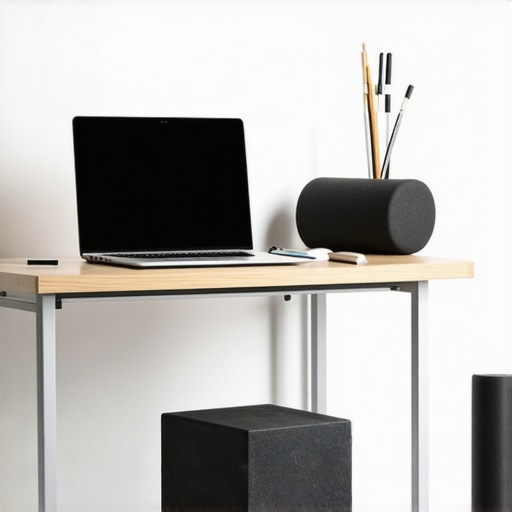
Will We All Be Wearing Posture Sensors by 2030?
I predict that the future of spinal health isn’t in better chairs, but in real-time biofeedback. We are already seeing the rise of wearable sensors that vibrate when you slouch, and I believe these will become as common as smartwatches. As Dr. Stuart McGill, a world-renowned expert in spine biomechanics and author of Low Back Disorders, often emphasizes, ‘spine hygiene’ is about the cumulative load of your daily movements. In the next few years, AI-driven apps will likely track our shoulder position through our webcams, giving us gentle nudges to ‘angel out’ against the wall before the stiffness sets in.
How Do I Keep My Spine This Happy Long-Term?
Consistency is your only true friend here. You can’t ‘bank’ mobility; you have to earn it every day. I integrate mobility mastery daily tips to keep your spine and joints healthy into my morning routine—right between brushing my teeth and my first cup of coffee. It takes less than three minutes, but it sets the tone for my entire nervous system. If you want a specific advanced tip to try today: go set your rearview mirror about half an inch higher than your ‘relaxed’ gaze. It will force you to lift through your crown every time you look back, effectively turning your morning commute into a stealthy posture session.
My Humbling Shift From Forcing Posture to Feeling It
The biggest lie I ever told myself was that I could ‘willpower’ my way into a straight spine. I’d sit up tall for five minutes, get distracted by an email, and melt right back into a slump. It wasn’t until I realized that my body was protecting itself that things changed. I also learned that the quick fix of why cracking your own back is making your joints more unstable was actually making my neck feel looser for five minutes but tighter for five days. Real change happened when I stopped trying to ‘fix’ my skeleton and started communicating with my nervous system through the Wall Angel. It’s a slow process of teaching your brain that it is safe to let go of the tension.
A Few Simple Gadgets for a Lifetime of Mobility
You don’t need a high-tech gym to stay upright. My toolkit is intentionally minimal. I recommend keeping a simple foam roller or a tennis ball nearby to tackle the 30 second wall stretch that releases shoulder blade knots whenever you feel that mid-day burn starting. I also swear by Dr. Stuart McGill’s ‘Back Mechanic’ for anyone who wants to understand the ‘why’ behind their movement. These resources are part of my personal back pain breakthroughs navigating your path to restored mobility that keep me out of the chiropractor’s office and on the trails. It’s about having the right tools to troubleshoot your own body before a small ache becomes a major flare-up.
Reclaim Your Height and Your Confidence
Improving your posture isn’t about vanity; it’s about reclaiming the space you were meant to occupy. When you stand tall, you breathe better, you think clearer, and you move with more power. If you ever worry that your discomfort is unusual, checking is your back pain a sign of something more serious key symptoms to watch can give you the peace of mind to keep moving forward. Remember, every Wall Angel you do is a vote for a future version of yourself that moves without restriction. Don’t wait for the ‘perfect’ time to start—the wall is right there. Have you noticed one side of your body is much ‘stickier’ than the other when you try the Wall Angel? I’d love to hear about your progress in the comments below!
#IMAGE_PLACEHOLDER_E#