
Why your car pedal distance affects your lower back alignment
I was three hours into a drive to see family when my right hip started screaming. It wasn’t just a cramp; it was that deep, gnawing ache that tells you your spine is under siege. I spent years blaming my “bad back” or my old mattress, but the culprit was much closer to the floor. Every time I reached for that gas pedal, I was unknowingly twisting my entire foundation. It’s a visceral, sharp realization when you find out your daily commute is actually a slow-motion injury. Today, I’m going to show you why that pedal reach is the hidden enemy of your spinal alignment and how a few inches can save your lower back from years of misery.
Your Pedals Are Secretly Pulling Your Pelvis Out of Line
We obsess over lumbar pillows and ergonomic office chairs, but we rarely look at what our feet are doing. When your seat is pushed too far back, your right leg has to fully extend to maintain speed. This seems fine for a minute, but over an hour, that “reach” pulls your right hip forward. This rotation is a major contributor to how poor posture affects your spine, creating a functional leg length discrepancy that your lower back has to compensate for. I spent months making the mistake of prioritizing “legroom” over alignment, thinking I was giving my body space to breathe. Instead, I was just giving my pelvis more room to tilt and lock up.
Does an inch of legroom really matter?
It sounds like such a small thing, right? A few centimeters here or there shouldn’t be the difference between a pain-free day and a weekend on the heating pad. But it absolutely is. According to research from the Mayo Clinic, maintaining a slight bend in the knee is crucial because a locked-out leg transfers road vibration and mechanical stress directly into the pelvic girdle. If you don’t address this, you’ll find yourself searching for why your neck gets stiff behind the wheel as your body tries to stabilize itself from the bottom up. We are going to fix this today by finding your “neutral reach” position. Have you ever stepped out of your car and felt like you’ve aged twenty years during a thirty-minute commute? When I first started tweaking my seat position, I realized that correcting your driving slump isn’t just about sitting up straight; it’s about making sure your limbs aren’t acting as levers that pry your joints apart.
Reset Your Seat to Save Your Spine
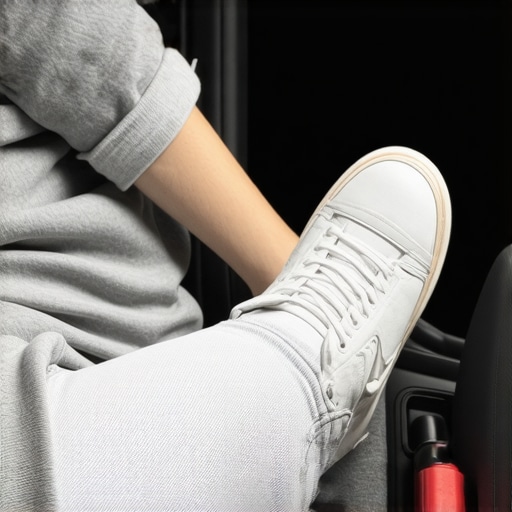
The biggest mistake most of us make is treating our car seat like a lounge chair. When you lean back too far, you create a “reaching” environment that forces your muscles to strain just to maintain contact with the controls. To fix this, you need to find your neutral reach. Start by pushing your seat forward until your foot can fully depress the brake or clutch without your lower back leaving the seat back. If your hip has to hike forward to reach the floor, you are effectively pulling your spine out of its socket every time you stop. This is a primary way the simple way to check your own spine for pelvic tilt reveals itself in the real world.
Find the Perfect Distance Between You and the Floor
Think of your leg as a shock absorber. If a shock absorber is fully extended and locked out, every bump in the road goes straight into the frame of the car. In this case, the “frame” is your pelvis. I remember a trip where I thought I was being “comfy” by sliding the seat all the way back to stretch out. By the time I reached the halfway mark, my right leg was tingling with a weird, cold sensation. I wasn’t sure if it was just a cramp or something worse, which is why it’s vital to know how to tell if your leg pain is a muscle pull or a nerve root. The fix was moving the seat up two inches. That small change kept my knee slightly bent, allowing my muscles to absorb the road vibration instead of my L5-S1 disc.
The Three-Step Alignment Check
Once your distance is set, look at your hip height. Your knees should never be higher than your hips if you want to avoid chronic compression. When your knees are jacked up high, it rounds your lower back into a “C” shape, which is a recipe for a herniated disc over time. If your car allows it, tilt the seat base so your thighs are supported but your hips remain slightly elevated. This preserves the natural curve of your lumbar spine and helps you boost your back mobility even while you’re stuck in rush-hour traffic.
Keep Your Heels Grounded and Your Hips Level
Your right heel should act as a stationary pivot point rather than a roaming weight. If you have to lift your whole leg to move from gas to brake, you’re engaging your hip flexors and psoas constantly. This repetitive lifting causes a deep, burning ache that many people mistake for true sciatica. If you’re already feeling that radiating burn down the back of your leg, you should look into conquering sciatica with proven approaches that address the root cause rather than just the symptoms. Position your heel so you can pivot your toes between the pedals without shifting your pelvis. This “fixed heel” technique ensures your foundation stays level, preventing the rotational stress that leads to those mid-drive back spasms.
Why Your Perfect Posture is Actually Making You Stiffer
Most of us were told from a young age to ‘sit up straight,’ but when you’re behind the wheel, that advice can be a one-way ticket to a flare-up. The contrarian truth is that holding a rigid, ‘perfect’ posture while driving creates a state of static loading that your discs simply weren’t designed to handle for long periods. A study published in the International Archives of Occupational and Environmental Health demonstrates that the combination of static sitting and whole-body vibration is a primary driver for disc herniation and degeneration. When you lock your spine into a stiff, upright position, you lose the ability to dissipate the road’s energy. This rigidity is exactly why standing up straight is actually making your back pain worse in some driving scenarios; your muscles become rigid guards instead of flexible shock absorbers.
Is Your Rib Cage Position Secretly Fueling Your Sciatica?
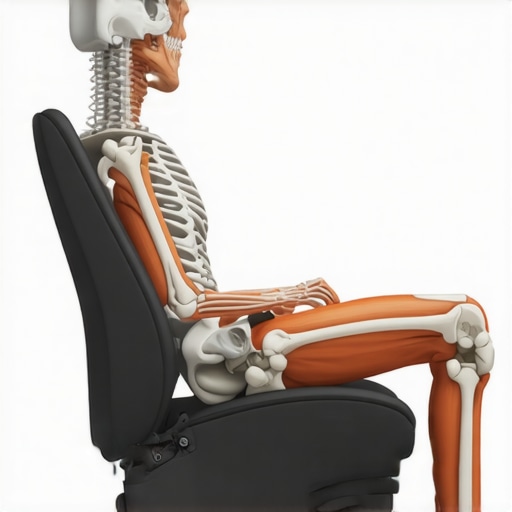
This is a nuance many drivers miss: the relationship between your breath and your pedal reach. If your rib cage is ‘flared’ or disconnected from your pelvis—meaning your chest is puffed out and your lower back is arched away from the seat—you’re losing core stability. This misalignment is why your rib cage position determines your shoulder health and your lower back’s resilience. If your ribs are tilted back, every time you press the gas pedal, you are putting a micro-tug on the sciatic nerve. For those looking for long-term fixes, unlocking sciatica relief with expert strategies involves far more than just seat distance; it requires stacking your rib cage directly over your pelvis to create a ‘cylinder’ of support.
Stop Over-Supporting Your Lumbar Spine
The ‘Oops’ factor in driving ergonomics often comes from the lumbar roll. Many people jam a massive, firm pillow behind their lower back, thinking more support is always better. However, if that support pushes your torso so far forward that your feet have to reach and strain to stay on the pedals, you’ve just traded one problem for another. This over-extension causes the psoas muscle to work overtime. Understanding why a tight psoas is often actually a weak psoas explains why your hip flexors feel ‘locked’ after a long drive. You aren’t actually tight; you’re exhausted from trying to stabilize a spine that’s being pushed into an unnatural curve by your ‘ergonomic’ pillow.
Why do my legs tingle even when I sit correctly?
If you’ve fixed your seat and you’re still feeling that familiar buzz in your feet, you might be dealing with neural tension rather than just muscle tightness. When you over-extend to reach the pedals, you might be tempted to stretch the pain away, but be careful because why some sciatica stretches actually pinch the nerve further is a common pitfall for the self-treating driver. Sometimes, the nerve is already over-sensitized from the vibration of the car, and aggressive stretching just makes it angrier. Instead, focus on small, micro-movements during stoplights. Maintaining mobility mastery with daily tips will keep your joints lubricated and your nerves calm during those long hauls. Have you ever fallen into this trap of trying to sit ‘too straight’ only to feel worse? Let me know in the comments.
The Rearview Mirror Hack for Perfect Posture
I have a personal ‘cheat’ for those days when my focus slips and I start to melt into the car seat. Once you’ve dialed in your neutral seat position and stacked your ribs over your pelvis, adjust your rearview mirror. Move it slightly higher than you usually would. Now, if you start to slump or your pelvis tilts forward, you won’t be able to see out of the back window. It forces you to maintain that lift through your crown, ensuring you don’t fall back into old habits that lead to understanding the link between poor posture and chronic back pain. This simple environmental cue acts as a 24/7 posture coach without you having to think about it.

How Do I Keep My Spine Mobile Over the Long Haul?
Maintenance behind the wheel isn’t about a one-time fix; it’s about mobility mastery with daily tips to keep your spine and joints healthy. I personally swear by a specific routine before I even touch the car keys. If I know I have a four-hour drive, I perform the morning routine that prevents lower back stiffness to prime my nervous system. By waking up the stabilizers in my core and hips, I’m not asking my spine to handle the road vibration while it’s still ‘cold’ and rigid. Consistency is what separates people who have ‘bad back days’ from those who enjoy the journey.
The Only Two Tools You Actually Need
I don’t go anywhere without a high-density foam lumbar roll, but most people use them wrong. You need to learn the specific way to use a lumbar roll for maximum relief—it should sit right at the belt line, not higher up where it arches your mid-back and causes rib flare. If you’re a passenger, or if your legs are on the shorter side, the simple footstool trick to stop lower back pain while sitting can be a lifesaver. This prevents the seat edge from cutting off circulation to your hamstrings, which often mimics the burning of sciatica. Research in the Journal of Biomechanics regarding interface pressure distribution shows that even small shifts in pelvic angle can reduce peak pressure on the ischial tuberosities by up to 15%. This is the difference between a numb leg and a comfortable drive.
Smart Cars and the Future of Back Health
Looking ahead, the trend is moving toward ‘active seating.’ By 2025, I expect we will see AI-integrated car seats that use sensors to detect the simple way to check your own spine for pelvic tilt in real-time. These seats will vibrate slightly or adjust the lumbar bolster automatically to prevent static loading. Until that technology is in every car, we have to be our own advocates. Tonight, I want you to try the mirror trick. Set it just a half-inch higher than normal and see how many times you have to ‘straighten up’ just to see the car behind you. It’s an eye-opening way to see unlocking mobility expert tips on managing back pain in 2025 in action.
Lessons from the Open Road I Wish I Had Known Sooner
The most profound realization I had during my recovery wasn’t about a specific exercise, but about the ego. I used to pride myself on being able to drive ten hours straight with only one stop. I thought I was ‘tough,’ but I was actually just being reckless with my joints.
- Pain is not a passenger: If you feel a twinge, your body is already in a state of compensation. Pushing through doesn’t make you stronger; it just reinforces a bad movement pattern.
- The 90-Minute Rule: I now set a timer on my phone. Every 90 minutes, I pull over—even if I feel great—to perform the simple morning move to prime your spine for the day. It resets the clock on road vibration stress.
- Adjustments are a partnership: I learned the real reason your adjustment didn’t last through the weekend is often because we undo the work of a professional by sitting in a slumped car seat for hours immediately after an appointment.
#IMAGE_PLACEHOLDER_E#
The Toolkit That Keeps Me Out of the Clinic
Over the years, I’ve narrowed down my ‘travel kit’ to a few non-negotiables. First, I never drive in boots with a thick heel or overly cushioned running shoes; why your current sneakers are causing your lower back to ache is a real phenomenon that affects your pedal feel and pelvic tilt. I stick to flat, flexible soles that let my heel stay grounded. Second, I always carry a firm lumbar roll to ensure my spine stays in neutral, and I use the mirror trick we discussed to keep myself honest. These aren’t just ‘accessories’—they are essential components of mobility mastery with daily tips to keep your spine and joints healthy.
Reclaiming the Joy of the Long Drive
Driving shouldn’t be something you dread or a task that leaves you sidelined for the rest of the weekend. By making these small, intentional shifts in how you interact with your pedals and your seat, you are choosing a path of long-term health. We often look for big back pain breakthroughs navigating your path to restored mobility, but the real magic happens in the two-inch adjustments and the habit of checking in with your body every few miles. You have the tools now to transform your commute into a recovery session. How many times a day do you catch yourself slumping in the driver’s seat? Share your mirror-adjustment stories below!