
How to tell if your leg pain is a muscle pull or a nerve root
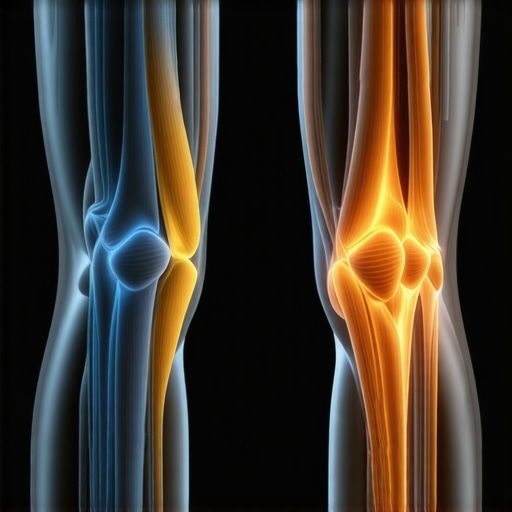
I was standing in my kitchen, reaching for a heavy cast-iron skillet, when it happened. A sharp, searing bolt shot from my hip down to my mid-calf. My first thought? “Man, I really pulled a muscle this time.” I spent the next four days on the floor, frantically googling how to stretch a hamstring, only to find that every stretch made the fire in my leg burn even hotter. I was making the classic rookie mistake of treating a nerve like a muscle. That mistake cost me weeks of unnecessary limping. I don’t want that for you.
The Panic of the Mystery Leg Pain
If you’re reading this, you’re probably in that same boat. You’re hobbling around, wondering if you should keep moving or stay perfectly still. It’s frustrating. You want to fix it, but you don’t want to make it worse. I’ve been there, and let me tell you, treating conquering sciatica like a simple muscle strain is a recipe for a long, painful recovery. Today, I’m going to help you stop the guessing game. We are going to look at the subtle signals your body is sending so you can take the right steps toward relief. Have you ever felt that specific, zapping sensation and wondered if you were doing more damage by walking?
Can a simple self-test really be accurate?
I know what you’re thinking. “I’m not a doctor; shouldn’t I just wait for an MRI?” Here’s the reality: while imaging has its place, your symptoms often tell a much clearer story than a picture ever could. In fact, many people have disc issues on an MRI but zero pain. The key is how to tell if your leg pain is a muscle strain or a pinched nerve by tracking how the pain behaves when you move. You can often narrow it down right in your living room just by paying attention to the “flavor” of the discomfort.
Why Identifying the Source Changes Everything
When I first started dealing with back and leg issues, I thought all pain was created equal. I was wrong. A muscle pull is a localized injury—it stays where it started and usually feels like a dull ache or a cramp. Nerve root irritation, however, is a communication error from your spine. According to the Mayo Clinic, radiculopathy (nerve root compression) often involves “paresthesia,” which is that weird pins-and-needles sensation or numbness that muscles just don’t produce. If you treat a nerve issue with aggressive stretching, you might be pinching the nerve further and increasing inflammation. On the flip side, if you baby a muscle strain too much, it gets stiff and weak. Have you ever felt like you were doing all the “right” things only to feel worse the next morning? That’s the red flag we need to talk about. We need to determine if your back pain is a sign of something more serious or just a temporary tweak that needs a bit of rest and heat. Let’s break down the specific differences so you can stop worrying and start healing.
Listen to the specific flavor of your discomfort
The first thing you need to do is stop thinking about ‘pain’ as a single category. Instead, think about the quality of that pain. A muscle strain feels heavy, dull, and localized. If you poked it, you could probably find the exact spot that hurts. Nerve pain is a completely different animal. It’s often described as electric, searing, or even cold. If you are experiencing stubborn leg numbness and tingling, you are dealing with a nerve that is being compressed or irritated, not a muscle that needs more power. I remember spending weeks trying to ‘foam roll’ my way out of what I thought was a tight IT band, only to realize I was essentially bruising an already angry nerve. Knowing the difference between muscular sciatica and a slipped disc starts with identifying if the pain stays in one lump or if it ‘shoots’ down a path like a highway.
The 30-second test you can do in a chair
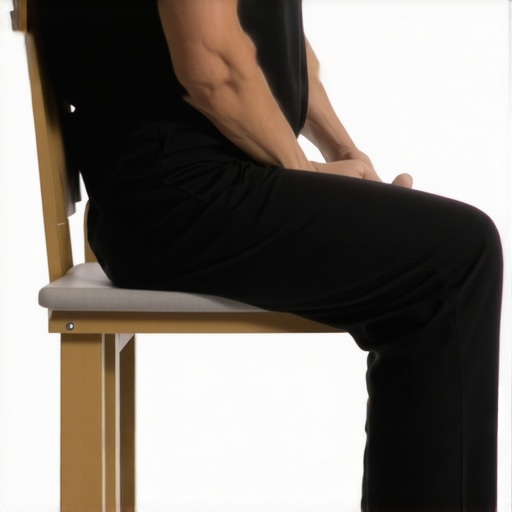
One of the most effective ways to see what is really going on is to observe how your body reacts to tension. Sit on the edge of a firm chair, slump your shoulders forward, and tuck your chin to your chest. Slowly straighten the leg that hurts. If that movement recreates that familiar ‘zing’ down your leg, you’ve likely found a nerve issue. This is because nerves are like long electrical wires; when you create tension at both ends (your head and your foot), a pinched nerve will scream. A simple muscle strain usually won’t care about your chin position. If you find that certain positions like this make things worse, you need to be very careful with your morning habit that prevents your sciatica from flaring up, as many people jump straight into aggressive toe-touches that do more harm than good.
Why stretching your hamstrings might be making you worse
This is where I failed the most during my own recovery. I had this nagging, tight feeling in the back of my thigh, so I did what everyone does: I propped my foot up on a bench and leaned into a deep hamstring stretch. Every time I did it, the tightness felt slightly better for about five minutes, and then it would return twice as sharp. The hard truth is that why stretching your hamstrings won’t fix your tight legs is often because the ‘tightness’ you feel is actually protective tension from a nerve. When a nerve is threatened, it tells the muscles around it to lock down to protect the area. By stretching the muscle, you are actually pulling on the nerve further. This is exactly why some sciatica stretches actually pinch the nerve further and prolong your misery.
Track how your symptoms change with movement
Instead of forcing a stretch, start tracking what ‘centralizes’ your pain. If you stand up and walk, does the pain stay in your calf, or does it move up toward your hip? Moving toward the spine is called centralization, and it is a massive win. It means you are unloading the nerve. If your leg pain is a muscle strain, it will usually feel better with light movement and heat. If it’s a nerve issue, it might feel worse when you sit for long periods. Pay attention to how you feel after a day at work; if you notice that why your glutes turn off when you sit for over an hour correlates with increased leg zingers, you have your answer. You are dealing with a mechanical issue in your lower back that is manifesting in your leg.
Once you start tracking those movement patterns, you will likely notice that the common advice you have been following is actually holding you back. We have all heard the standard instruction: ‘pull your shoulders back and sit up straight.’ But here is the contrarian truth: that rigid, military-style posture might be the very thing keeping you in a cycle of chronic tension. In my years of helping people achieve mobility mastery, I have seen that ‘perfect’ posture often just replaces one type of strain with another. When you force your spine into a static, upright position, you are essentially asking your muscles to hold an isometric contraction for hours. That is exhausting and counterproductive. In fact, a study published in the Journal of Orthopaedic & Sports Physical Therapy (JOSPT) emphasizes that postural ‘idealism’ lacks strong clinical evidence for pain prevention, suggesting that movement variability—your ability to shift and change positions—is far more protective than any single rigid stance.
Everyone thinks they are helping their spine by staying perfectly upright, but why standing up straight is actually making your back pain worse often comes down to muscle fatigue and increased intra-abdominal pressure. If you are already dealing with neck pain solutions that involve ‘bracing’ your neck, you are likely just creating new trigger points. The ‘oops’ factor here is the belief that rest is always best. You might think taking a full day to lie on the sofa will help your disc settle, but why your back hurts more after a day of resting on the couch is because the lack of movement allows inflammatory markers to pool around the nerve roots, making them even more sensitive the next time you try to stand.
Is your firm mattress actually fueling your morning flare-ups?
This is a sophisticated nuance that most beginners miss. We are told to buy the firmest mattress possible for back support, but why your firm mattress is making your morning sciatica worse is often due to the lack of pressure relief for your hips and shoulders. If the mattress doesn’t give at all, it forces your spine to arch or twist to accommodate your body’s natural curves, putting direct pressure on an already irritated sciatic nerve. Similarly, people often obsess over stretching their ‘tight’ hip flexors, but why a tight psoas is often actually a weak psoas means that all that stretching is just making the muscle more unstable. Instead of blindly stretching, you need to build stability in the deep stabilizers. One final trap to avoid is the sudden rotational reach; why you should never reach for the backseat while driving is a classic lesson in biomechanics. Reaching behind you while seated combines spinal rotation with a long lever arm, creating a massive amount of shear force on your lower discs. Have you ever fallen into this trap of trying to be ‘perfect’ with your posture only to end the day with more knots? Let me know in the comments.
After you have identified that your ‘stiff hamstrings’ are actually a nerve issue, the next hurdle is staying out of the danger zone. I used to think I needed a $5,000 ergonomic chair to survive a workday, but I was wrong. My most valuable tool is a simple lumbar roll. By learning the specific way to use a lumbar roll for maximum relief, I can turn even the flimsiest kitchen chair into a spine-safe workstation. I also keep a tennis ball in my desk drawer. It sounds primitive, but how a simple tennis ball can release your deep glute tension is a total game-changer when you feel that ‘closing in’ sensation in your hips after a long call. The key to long-term success isn’t one big fix; it is the daily repetition of low-intensity movements. For me, that means a non-negotiable morning routine that prevents lower back stiffness. I am not talking about an hour of yoga; I am talking about three minutes of cat-cow and some diaphragmatic breathing. If you do not know how your breathing pattern affects your core stability, you are missing the most basic ‘brace’ your body already has. As we look at the future of spinal health, I predict we will move away from ‘posture correction’ and toward ‘movement snacks.’ The trend is shifting from static standing desks to dynamic workstations that encourage micro-shifts every 15 minutes. In fact, a 2024 meta-analysis in the Journal of Applied Biomechanics found that short, frequent ‘micro-breaks’ of as little as 30 seconds were more effective at reducing musculoskeletal discomfort than one long mid-day walk. This confirms what I have always felt: your best posture is your next posture.
How do I maintain my results without becoming obsessed?
Maintenance is about high-leverage moves. If I feel a flare-up coming, I go straight to the dead bug exercise variation that actually protects your spine. It resets the pelvis and reminds the core how to fire without involving the lower back. If the ‘zing’ returns to my leg, I immediately start a nerve flossing routine for stubborn leg numbness and tingling instead of reaching for the ibuprofen. This is mobility mastery in action—knowing which tool to grab for which specific sensation.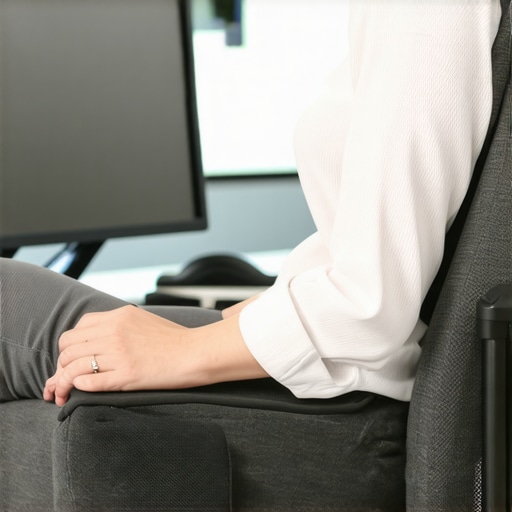 If you are serious about never going back to that ‘floor-bound’ state of panic, start small. My challenge to you today: set a timer for every 45 minutes and perform the 10-second wall slide for instant shoulder tension relief. It is the easiest way to break the ‘tech-neck’ cycle before it turns into a headache. Once you see how much a 10-second habit can change your afternoon, you will never go back to sitting still.
The Hardest Lessons My Lower Back Taught Me
I spent years fighting my own body before I realized that pain isn’t an enemy to be crushed, but a signal to be decoded. Here are the shifts that changed everything for my recovery:
- Nerves don’t like tension: If you feel a ‘zing,’ stop stretching immediately. I had to learn that why stretching your hamstrings won’t fix your tight legs is because the nerve is already at its limit, and pulling further just increases the fire.
- Movement is the best lubricant: Sitting still is what lets inflammation settle around the nerve root. I found that why your back hurts more after a day of resting on the couch is because our spines were built to oscillate, not stagnate in a soft cushion.
- Consistency beats intensity: A simple 10-second wall slide every hour did more for my posture than a two-hour gym session once a week.
The Recovery Kit I Keep Within Reach
You don’t need a massive budget to fix your back, but you do need the right leverage. These are the tools I personally use every single week to maintain mobility mastery:
- A simple tennis ball: It is the most underrated tool for how a simple tennis ball can release your deep glute tension. It targets the piriformis in a way that standard foam rollers simply cannot reach.
- The 15-degree rule: I adjusted my home office based on the 15-degree rule for your computer monitor to save your neck, and my afternoon tension headaches vanished almost overnight.
- A firm lumbar roll: I never sit in a car or at a desk without one now. Knowing the specific way to use a lumbar roll for maximum relief is the difference between a productive workday and one spent in a pain-induced fog.
#IMAGE_PLACEHOLDER_E#
Your Path to Moving Without Fear
Recovering from a pinched nerve or a stubborn muscle strain isn’t just about the physical tissues; it is about regaining your confidence. When you stop fearing every twist and turn, your nervous system finally begins to relax. You do not have to be perfect; you just have to be curious about how your body responds to small, gentle shifts. By focusing on unlocking sciatica relief through smart movement rather than total avoidance, you are setting yourself up for a lifetime of freedom. Have you noticed that your leg pain gets worse after a long drive or when sitting in a specific chair at home? Let me know your experience in the comments below.