
Why your reading position in bed is ruining your neck

I vividly remember finishing a gripping mystery novel at 1 AM last year, feeling that rush of satisfaction as I closed the cover. But when I tried to actually roll over and go to sleep, my neck felt like it had been fused into a permanent C-shape. I couldn’t even look at my nightstand without a sharp, searing pinch. It was my lightbulb moment—or rather, my ouch moment. For years, I’d been stacking three pillows against the headboard, chin tucked to my chest, thinking I was the peak of comfort. In reality, I was practically begging for a case of chronic stiffness. Today, I’m going to show you why that cozy setup is actually a nightmare for your spine and how you can fix it without giving up your favorite hobby.
The Hidden Reason Your Relaxing Book Night Ends in a Morning Ache
I made a classic mistake for a long time: I assumed that as long as I felt propped up, my body was supported. It wasn’t. By forcing my head forward for hours, I was essentially performing a slow-motion car crash on my cervical discs. This habit is a primary reason why your head feels heavy by 3 PM every afternoon. When you sit in that slumped position, your muscles are working overtime to keep your head from falling off your shoulders. It’s no wonder we wake up feeling like we’ve been hit by a truck. If you’ve been struggling, you might need to check out neck pain solutions and proven techniques to regain your range of motion before the stiffness becomes permanent.
Is reading in bed actually worth the risk of chronic pain?
You might be thinking, “Come on, it’s just a book! I’ve done this since I was a kid.” I get it. I was skeptical too until I saw the data. According to research published in Surgical Technology International, while the average human head weighs about 10 to 12 pounds, leaning it forward at a 60-degree angle—which is exactly what we do when we tuck our chins to read—increases the weight on our neck to a staggering 60 pounds. That is like carrying an eight-year-old child on your neck for two hours every night! This constant strain is a major factor in the link between poor posture and chronic back pain. Before you pick up your next chapter, try the simple test for text neck you can do in the mirror to see the damage firsthand. Have you ever felt that sharp pinch between your shoulder blades right as you’re getting to the best part of a story? Let me know if you’ve experienced this too. The good news is that learning how to fix the head-forward posture while reading in bed is easier than you think, and it doesn’t involve tossing your library.
Rebuild Your Reading Throne from the Mattress Up
To stop the cycle of stiffness, you have to treat your bed setup like a workspace. You wouldn’t work at a desk with your keyboard in your lap and your monitor on the floor, so why do the equivalent while reading? The goal is to keep your spine in a neutral ‘S’ curve rather than a stressed ‘C’ shape. I tried to skip the gear and just ‘sit up straighter,’ but after twenty minutes of a gripping thriller, my focus shifted from the plot to the dull throb in my traps. I eventually learned that muscle memory is no match for gravity; you need physical structures to hold you in place.
Create a Ramp Instead of a Wall
Most of us make the mistake of stacking pillows vertically against the headboard. This creates a 90-degree angle that forces your head to tilt forward to see the pages. Instead, you need to create a gradual incline. I started using a firm wedge pillow that begins at the mid-back and slopes up toward the headboard. When I first tried this, I actually used a stack of bed pillows but arranged them like shingles on a roof. It wasn’t perfect, but for the first time in months, I didn’t feel that familiar ‘kink’ when I stood up to turn off the light. To take this a step further, you should look into the simple towel roll trick for better sleep with neck pain to support the natural curve of your neck while you’re leaning back. 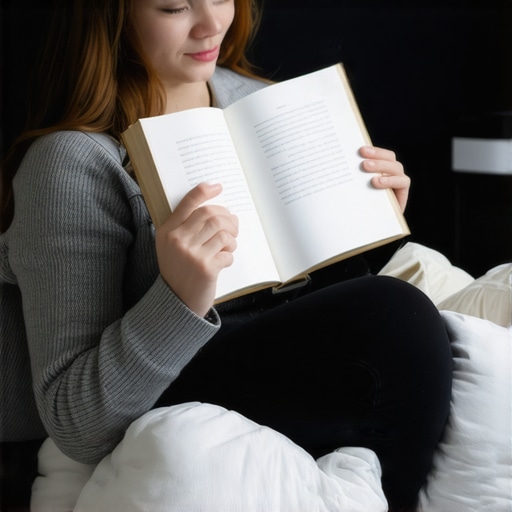
Bring the Story to Your Eyes
This is the biggest ‘ah-ha’ moment for most readers. If your book is resting on your lap, your neck has to do all the work to look down. Think of your neck like a crane; the further it leans, the more strain it puts on the base. To fix this, use a dedicated reading pillow or even a couple of extra bed pillows placed on your lap. This elevates the book or e-reader so it sits at chest level. When the book is higher, you only need to move your eyes, not your entire head. This simple shift is a core part of how to fix the head-forward posture while reading in bed.
Don’t Ignore Your Lower Half
It sounds strange, but your neck pain often starts at your hips. When you sit in bed, your hamstrings are often pulled tight, which tugs on your pelvis and rounds your lower back. This ‘slump’ travels all the way up to your shoulders. I found that placing a pillow under my knees instantly took the pressure off my lumbar spine, allowing my upper body to relax against the ‘ramp’ I built. This is similar to how to use a pillow between your knees to stop morning back stiffness. If you’re a side reader, the truth about using two pillows for side sleeping is that alignment is everything. Without that support, you’re just waiting for the link between poor posture and chronic back pain to manifest as a morning migraine. If you’ve already reached the point where the pain is constant, you might need revitalize your neck with effective techniques for lasting pain relief to reset those stubborn muscle knots.
Stop Obsessing Over Perfect Posture
I used to believe that if I could just find the ‘perfect’ static position, my neck pain would vanish instantly. This is perhaps the biggest myth in the wellness world. We are told to sit like statues, but your spine actually craves variability. In fact, why your straight posture is actually straining your muscles comes down to the lack of movement. When you hold any position—even a ‘good’ one—for over thirty minutes, you are essentially creating a low-grade isometric contraction that starves your tissues of fresh oxygen. A study published in the European Spine Journal highlights that static postures, no matter how ‘correct’ they appear, lead to reduced disc hydration and increased metabolic waste buildup in the muscles. The fix isn’t just a better chair; it is micro-movements every ten minutes to keep the fluid moving. 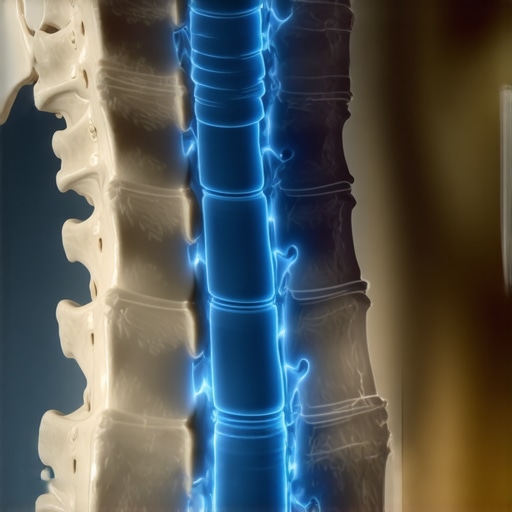
Why Stretching Your Aching Back Often Backfires
Here is the ‘oops’ factor most readers fall into: when your neck or back feels tight after a long chapter, your first instinct is to pull, twist, and stretch. But here is the nuance—that feeling of ‘tightness’ is often a protective tension, not a short muscle. If you have underlying nerve irritation, why your hamstrings feel tight but never get better with stretching is because the nerve is being yanked like a guitar string. Stretching into a ‘pinch’ can actually increase inflammation. I’ve seen so many people try to stretch their way out of a flare-up only to end up needing the nerve flossing routine for stubborn leg numbness and tingling because they over-sensitized their system. Similarly, why icing your lower back might be slowing down your recovery is a nuance often missed; while it numbs the pain, it can also restrict the very blood flow needed to heal those microscopic muscle tears from your reading marathon.
Does your spine need a rest or a reset after a long reading session?
If you’ve finished a book and feel like you can’t stand up straight, you might be tempted to just lay flat on the couch. However, resting on a soft surface can actually perpetuate the slump. You likely need a ‘reset’ rather than more rest. This involves movements that reverse the ‘reading curl.’ If you ignore these signals, you might find yourself wondering is your back pain a sign of something more serious as the ache transitions from a dull throb to a sharp, electrical zing. The trap is thinking that silence equals safety; just because it doesn’t hurt while you’re reading doesn’t mean the damage isn’t accumulating. Have you ever fallen into this trap of over-stretching a sore spot? Let me know in the comments.I spent years thinking that a better pillow was the magic bullet for my neck stiffness, but the real breakthrough came when I looked at the gear used by professional ergonomists. If you’re a heavy reader, you need to stop fighting gravity and start outsmarting it. The most game-changing tool I’ve ever purchased is a pair of prism glasses, often called ‘lazy glasses.’ These allow me to lie completely flat on my back while the lenses refract the light 90 degrees, meaning I can see the book resting on my stomach without tilting my head a single millimeter. This is the ultimate hack for neck pain solutions and innovative strategies for fast recovery. When I first put them on, I felt ridiculous, but after a two-hour reading session with zero fatigue, I was a believer. This setup respects the 15-degree rule for your computer monitor to save your neck, applying those same professional ergonomic principles to your leisure time.
Stop Squinting and Start Saving Your Cervical Spine
Another tool I swear by is a high-quality tablet floor stand with an articulating arm. Most people hold their e-readers or books with their hands, which eventually leads to rounded shoulders and ‘text neck.’ By suspending the device exactly at eye level, you eliminate the temptation to slump. If you are using a phone, keep in mind that how your phones font size is impacting your neck tension is a real factor; if the text is too small, you will naturally lean forward to see better, negating the benefits of your stand. I’ve found that increasing the font size by just 20% allowed me to sit back further into my support, which is a key part of mobility mastery and daily tips to keep your spine and joints healthy. 
How do I maintain my spinal mobility over years of heavy reading?
Maintenance isn’t about one big stretch; it’s about ‘spine hygiene.’ Dr. Stuart McGill, a world-renowned expert in spinal biomechanics, explains in his work that the ‘cumulative load’ on our tissues is what leads to injury. To counteract the hours spent still, I incorporate the 10-second wall slide for instant shoulder tension relief every single time I finish a chapter. It resets the scapula and opens the chest. If you find your progress stalling, you might be navigating your path to restored mobility through trial and error, but consistency with these micro-resets is what prevents a minor ache from becoming a chronic flare-up. Looking ahead, I predict we will soon see Augmented Reality (AR) reading glasses become mainstream. Imagine a world where your book is projected as a floating HUD (Heads-Up Display) directly in your line of sight, regardless of your body position. Until then, we have to be intentional. My challenge to you: tonight, try using a book stand or a stack of pillows to bring the story to your eyes instead of bringing your eyes to the story. Your spine will thank you by the time you reach the epilogue.
What Years of Midnight Reading Taught Me About Spinal Longevity
I used to think that because I didn’t feel pain while reading, I was in the clear. I was wrong. The biggest takeaway from my journey is that pain is a lagging indicator. By the time your neck screams, the damage is already done. I also learned that you can’t out-stretch a bad habit. If you spend two hours in a ‘C-shape’, no amount of yoga will fully undo that localized stress without a change in the environment. Finally, I realized that the morning habit that prevents your sciatica from flaring up often starts the night before with how you support your lumbar and cervical spine during your ‘wind-down’ time.
The Gear That Finally Rescued My Reading Routine
If you are serious about your library, you need to invest in your anatomy. I swear by prism glasses for complete horizontal reading—it is the only way to achieve true neutral alignment. For those who prefer sitting up, a wedge pillow system (not just one pillow) is non-negotiable. I also recommend a floor-standing tablet holder; it removes the weight from your hands and the strain from your traps. These tools are just as vital as how to set up your home office for less than fifty dollars because ergonomic health doesn’t punch out at 5 PM. #IMAGE_PLACEHOLDER_E#
Your Spine Deserves a Happier Ending Too
You don’t have to choose between your favorite authors and a pain-free life. By implementing even one of these shifts—like using a book stand or learning how to fix the head-forward posture while reading in bed—you are banking long-term mobility. Start tonight by building your ‘ramp’ instead of your ‘wall’ of pillows. Your body is capable of incredible recovery when you stop fighting its natural mechanics and start supporting them. For more ways to stay limber, check out mobility mastery and daily tips to keep your spine and joints healthy. Which chapter of your reading journey are you in—painless and propped up, or battling the midnight ache? Let me know in the comments below!