
The truth about using heat packs versus ice for chronic stiffness
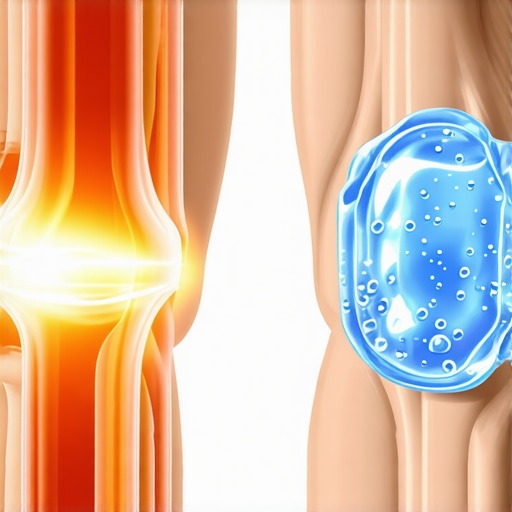
I still remember three years ago, waking up and trying to turn my head to see the alarm clock, only to feel like my neck had been fused into a solid block of concrete. I did exactly what the internet told me to do: I grabbed a bag of frozen peas and strapped it to my neck. Twenty minutes later, I couldn’t move at all. My muscles had clamped down even harder, reacting to the cold like a rubber band left in a freezer. It was a miserable mistake that cost me a full day of work and a lot of unnecessary frustration. That was my lightbulb moment. I realized my chronic stiffness wasn’t an injury needing a cold snap; it was a circulation problem needing a thaw.
Stop freezing your muscles into a standstill
If you are battling that nagging, dull ache in your lower back or a neck that feels like it is made of rusted hinges, you are likely searching for any relief you can find. Most of us default to ice because it is the standard first-aid advice we have heard since middle school gym class. But for chronic issues—the kind that linger for weeks or months—ice can often act as a handbrake on your recovery. Today, I am going to show you why flipping the switch to heat can finally melt away that tension and help you avoid the common mistakes that keep you feeling like a statue. Using the right temperature is a cornerstone of mobility mastery and long-term joint health.
Is the “Ice First” rule actually worth the hype?
For years, the R.I.C.E. method (Rest, Ice, Compression, Elevation) was the gold standard for every ache and pain. However, even Dr. Gabe Mirkin, the physician who coined the term in 1978, eventually recanted the “ice” portion of his advice, noting that cold can actually delay the healing process by preventing the necessary inflammatory response required for tissue repair. When we deal with neck pain and stress, our tissues need oxygen and nutrients delivered through fresh blood flow. Cold does the exact opposite; it shuts the gates. I made the mistake of icing my stiff back for months, wondering if my back pain was a sign of something more serious, when in reality, I was just starving my muscles of the heat they craved. According to research published in the Journal of Clinical Medicine Research, heat therapy increases the extensibility of collagen tissues, which is exactly what you need when your range of motion feels limited. Have you ever felt like your morning routine is just a series of ouches and cracks? If so, tell me—has ice ever left you feeling stiffer than when you started?
Why your body craves warmth over a cold snap
Chronic stiffness is rarely about a fresh, swollen injury. Usually, it is about a lack of blood flow to the area. When you apply warmth, you are essentially telling your nervous system to stand down. It is a primary reason why heat is often better than ice for chronic neck stiffness specifically. It opens up the pipes, allowing blood to flush out metabolic waste and bring in the good stuff. If you have been struggling to get through the day without reaching for a bottle of ibuprofen, understanding this distinction is the first step to waking up without that dreaded heavy feeling in your limbs. We are going to dive into exactly how to apply this to your daily routine without causing more harm.
Heat your body like a vintage car engine
Think of your stiff muscles like the engine of a 1960s Mustang on a freezing winter morning. If you just jump in and redline it immediately, something is going to snap or seize. You need to let it idle and warm up first. Applying heat for 15 to 20 minutes before you even think about significant movement is the absolute key to success. This isn’t just about feeling cozy; it is about physically changing the state of your tissues. When I finally stopped reaching for the ice pack and started using a heating pad the moment I sat up, I noticed neck pain solutions proven techniques to regain your range of motion worked twice as fast. You are essentially pre-heating the “taffy” of your muscle fibers so they can stretch and glide without the risk of micro-tears.
Moist heat reaches the deep tissues dry pads miss
Not all heat is created equal. A standard electric heating pad provides “dry heat,” which can sometimes just dehydrate the skin without penetrating the underlying fascia. Moist heat—like a hot shower, a damp towel heated in the microwave, or a specialized steam pack—is far more effective at conducting temperature into the deeper layers of muscle. This is especially crucial if you have realized why your couch is the secret cause of your morning back stiffness. A dry pad might make the surface of your skin feel warm, but moist heat actually coaxes the deep blood vessels to dilate, flushing out the metabolic waste and inflammatory markers that make you feel like you have aged twenty years overnight.
My messy fifteen-minute morning ritual
I remember a Tuesday last October when my lower back felt like it was held together by rusted bailing wire. Usually, I would just grit my teeth and head straight to the kitchen to start my day, but that morning I tried something different. I threw a damp hand towel in the microwave for forty-five seconds—I almost scorched my fingers because I was impatient—and draped it over my lumbar spine while I sat on the edge of the bed. It felt a little messy and damp, but within five minutes, that “locked” sensation in my spine started to dissolve. I followed it up with the 10-second hip reset for relief after sitting, and for the first time in weeks, I did not have that sharp, stabbing “catch” when I stood up to brush my teeth. It was the simplest shift, but it changed my entire day.
Pair your warmth with gentle movement for lasting results
The biggest mistake you can make is “cooking” your muscles and then remaining completely still. Once those tissues are warm and pliable, you have a small window of opportunity to actually change your baseline flexibility and retrain your nervous system. This is the time for gentle, rhythmic movement—not aggressive pulling or static stretching. You must be careful and learn why you should stop stretching your back into a c-shape, as rounding out a warm spine too aggressively can actually irritate the spinal discs. Instead, think of this as “active warmth.” After your 15 minutes of heat application, perform small neck circles, pelvic tilts, or shoulder rolls. You are teaching your body that this new, expanded range of motion is safe and accessible. If you just heat the area and then sit back down, the “taffy” just cools down and hardens back into the same cramped, restricted position it started in.While heating your tissues is a game-changer, it is only one piece of a much larger puzzle. Most people assume that once the ‘engine’ is warm, they just need to build a fortress of muscle around their spine to stay pain-free. We have all heard that a weak core is the root of all evil. However, in my experience, the obsession with ‘bracing’ actually creates a different kind of prison.
Your core isn’t the shield you think it is
If you are constantly squeezing your midsection, you might actually be increasing the intra-abdominal pressure that irritates your spinal discs. But the real nuance lies in the relationship between your pelvis and your spine. Why your core strength won’t fix your back if your hips are locked is the fundamental hurdle I see with my advanced clients. If your femurs cannot rotate freely, your lower back is forced to act like a hinge every time you take a step. No amount of planks can outwork a set of hips that refuse to budge.
Why does your leg pain get worse when you try to stretch it out?
When you feel that searing, electric pull down your thigh, your instinct is to grab your toes and pull. You think your hamstrings are tight. But here is the ‘oops’ factor: why stretching your hamstrings can actually flare up sciatica is one of the most common mistakes in recovery. You aren’t stretching a muscle; you are yanking on a nerve that is already tethered and irritated. A study published in the Journal of Orthopaedic & Sports Physical Therapy found that ‘nerve gliding’—moving the limb in a way that slides the nerve through its sheath without tension—produced significantly better outcomes than traditional static stretching. If you have been aggressively stretching your legs and wonder why the pain won’t quit, you might be the one keeping the inflammatory fire alive.
Stop treating your nerves like they are rubber bands
To truly find sciatica relief secrets how to banish pain quickly today, you have to distinguish between muscle tension and neural sensitivity. You can use the simple test to see if your leg pain is actually sciatica or something else entirely. If you cannot tell the difference, you might spend years chasing the wrong solution. Identifying how to tell if your sciatica is a disc or muscle issue is the hallmark of someone who has moved past basic stretching and into real back pain breakthroughs navigating your path to restored mobility. Healing isn’t just about doing more; it’s about doing the right thing at the right time. Conquering sciatica proven approaches to end discomfort now requires a level of precision that ice packs and generic gym stretches just cannot provide. Have you ever fallen into this trap? Let me know in the comments.
How do I keep my spine healthy for the long haul?
Once you have managed to lower the initial fire of a flare-up, the real work begins. It is easy to get complacent when the sharp pain fades into a dull hum, but that is exactly when most people stop doing what worked. This is why maintenance care is better than waiting for a spinal crisis. I have found that long-term success isn’t about hour-long gym sessions; it is about micro-habits and having the right tools within arm’s reach. Dr. Stuart McGill, a world-renowned expert in spine biomechanics and author of ‘Back Mechanic,’ emphasizes that the spine has a ‘fatigue life.’ We need to manage the load we put on it every single day, not just when it hurts. For me, this meant stop looking for a ‘cure’ and start looking for a sustainable system of mobility mastery.
The $2 solution for deep glute tension
If you have ever spent a fortune on high-end percussion massagers only to find they barely scratch the surface of your sciatica, you are overcomplicating things. I carry a standard tennis ball in my laptop bag everywhere I go. It is firm enough to provide pressure but has enough ‘give’ to avoid bruising the bone. Knowing how to use a tennis ball to relieve glute tension is a total game-changer for those of us who sit for long stretches. By placing it right under the piriformis muscle while sitting on a hard chair, you can pinpoint the exact spot where the nerve gets squeezed. It is a targeted, manual release that most expensive machines simply cannot replicate because they lack the precision of your own body weight.
Stop the tech neck before it becomes permanent
The biggest threat to your progress is the subtle, daily creep of gravity. Every inch your head moves forward, you add ten pounds of pressure to your cervical spine. I eventually realized how to adjust your monitor to stop that burning neck pain was the most important ergonomic shift I could make. If your screen is too low, you are essentially performing a slow-motion car crash on your neck discs for eight hours a day. I now use a simple riser to keep the top third of my screen at eye level. When I feel that familiar tightness creeping in, I use the 30-second neck tuck to stop tension headaches at your desk. It resets the alignment and tells my suboccipital muscles to relax. For my lower back, I never sit without a support; learning how to use a lumbar roll to prevent mid-day back fatigue has saved me from countless evening spasms.
The future of spine health is in your pocket
As we look toward 2025 and beyond, I predict we are going to see a massive shift away from static chairs and toward ‘dynamic biofeedback’ wearables. We are already seeing sensors that track spinal curvature in real-time, vibrating not just when you slouch, but when your muscle fatigue reaches a threshold that risks injury. This kind of data will help us achieve back pain breakthroughs navigating your path to restored mobility by catching the ‘micro-errors’ before they become macro-problems. Until that tech is perfected, my best advice is to stay proactive. Don’t wait for the stiffness to return. Today, I want you to try one thing: Grab a tennis ball and spend exactly two minutes on that one spot in your glute that always feels tight while you are watching TV. It is the smallest investment with the highest possible return for your mobility.
What three years of fused vertebrae taught me about healing
Looking back at my journey from that “concrete neck” morning, the biggest shift wasn’t just physical—it was a total mindset overhaul. First, I learned that pain is a request for change, not a punishment to be silenced with ice. Second, consistency beats intensity every single time; five minutes of daily maintenance is worth more than a two-hour weekend overhaul. Finally, I realized that my body is a series of connections. If I ignore my hips, my back pays the price. Using how a simple tennis ball can fix deep glute tension taught me that the most effective solutions are often the simplest ones we overlook because they don’t cost a fortune.
The three tools that stay in my recovery bag
#IMAGE_PLACEHOLDER_E#
I don’t leave my house without a few essentials that ensure I don’t revert to that “statue” state. I swear by a high-quality moist heating pad for my morning thaw, but for on-the-go relief, nothing beats a standard tennis ball for how a tennis ball can relieve deep glute and sciatic pain. I also keep a firm lumbar roll in my car, as how to use a lumbar roll to prevent mid-day back fatigue is the only way I can survive long commutes without a flare-up. Lastly, I recommend keeping Dr. Stuart McGill’s ‘Back Mechanic’ on your nightstand; it is the ultimate manual for anyone serious about mobility mastery and long-term joint health.
Start melting the rust away today
You don’t have to live in a body that feels like it’s fighting you. Whether you are dealing with chronic sciatica, a nagging neck ache, or a lower back that just won’t relax, the path forward starts with warmth and a little bit of curiosity. Don’t wait for the next crisis to take your health seriously. By integrating these small shifts, you can achieve back pain breakthroughs navigating your path to restored mobility and finally get back to the activities you love. You have the tools, the heat is ready, and your body is waiting for you to lead the way. Have you tried switching from ice to heat for your chronic stiffness yet, and did you notice a difference in how you moved the next morning? Let me know in the comments below!