
How to adjust your rearview mirror to force better driving posture

I remember the day clearly. It was a rainy Tuesday, traffic was a total nightmare, and by the time I finally pulled into my driveway, my lower back felt like it had been through a meat grinder. I wasn’t doing anything extreme—just commuting. But that ‘commuter slump’ was slowly wrecking my spine. I would try to sit up straight, but within three minutes, I would be sliding back into that comfortable, destructive hunch. It felt impossible to maintain decent form when my brain was on autopilot. Then, I had a lightbulb moment: what if I used the car’s own equipment to force me into a better position? That is when I learned how to adjust your rearview mirror to improve your driving posture in a way that literally will not let you slouch. Today, I am going to show you how to turn your car into a mobile posture clinic. Over the next few minutes, we are going to fix that nagging ache and stop you from feeling like a pretzel by the time you reach the office.
Your Commute is a Secret Spine Killer
The hard truth is that modern cars are often designed for safety and style, not necessarily for your vertebrae. I spent years wondering why your car seat is actually pushing your head forward, only to realize the setup was rigged against me. When we drive, we tend to relax into the seat, which rounds the lower back and juts the chin out. This isn’t just uncomfortable; it is a recipe for chronic issues. According to a study published in the Journal of Physical Therapy Science, prolonged sitting in a slumped posture significantly increases muscle fatigue and increases the load on your spinal discs. I made the mistake of thinking a fancy lumbar pillow would fix everything, but it did nothing for my neck or shoulders. You need a system that alerts you the second you start to fail. By looking for back pain breakthroughs in the most mundane places, I found that your rearview mirror is actually the ultimate posture alarm. If you set it while you are sitting perfectly, the moment you slouch, you lose your view of the road behind you. It is a brilliant, annoying, and effective feedback loop. Have you ever felt that burning sensation between your shoulder blades halfway through a road trip?
Is a simple mirror tilt actually worth the effort?
Some people think this sounds a bit too simple to work. I was a skeptic too. I thought I needed expensive neck pain solutions or a brand-new ergonomic car. But the reality is that behavior modification beats expensive gear every time. The mirror trick works because it uses ‘negative reinforcement’ for a positive outcome. If you can’t see the car behind you, you subconsciously sit up taller to regain that visibility. It forces you to engage your core and keep your ears aligned over your shoulders without having to constantly remind yourself. Before we get into the step-by-step setup, you need to understand exactly where your seat should be to make this work.
Get your seat distance right before touching the mirror
Before you even glance at the glass, you have to tackle the foundation. Your car seat is the base of your spine’s environment. Most people sit too far back, reaching for the pedals, which forces the lower back to flatten out and the neck to strain forward. I used to think I needed to be reclined like I was on a lounge chair, but that was just understanding the link between poor posture and chronic back pain the hard way. Slide your seat forward until your knees are slightly bent when the pedals are fully depressed. Your hips should be higher than your knees to take the pressure off your sciatic nerve. If you feel a shooting pain down your leg, you might already be dealing with compression, so learning how to sit in a car for hours without triggering sciatica is your first priority. Once your feet are set, adjust the backrest so it is tilted at about 100 to 110 degrees—just a slight lean back from vertical. This preserves the natural curve of your low back.
Lock in your visibility while sitting tall
Now comes the actual hack. Sit up as straight as you possibly can. Imagine a string pulling the crown of your head toward the roof of the car. Tuck your chin slightly—this is basically the 30-second neck tuck to stop tension headaches at your desk but performed behind the wheel. While holding this ‘perfect’ tall posture, reach up and adjust your rearview mirror so you have a clear, centered view of the back window. Here is the trick: do not adjust it for your ‘comfortable’ slouch. Adjust it for your ‘best’ self. The moment you start to fatigue and your spine begins to crumble into that C-shape, the mirror will suddenly show you the back seat or the floorboard instead of the road. It is an immediate, visual reminder to reset. 
Why staying perfectly still is actually a trap
I remember driving six hours straight to a cousin’s wedding in a borrowed SUV. I hadn’t set the mirror properly, and about three hours in, my mid-back felt like it was on fire. I realized I had spent the last hundred miles leaning toward the center console to see out the side mirror. It was a mess. Even with the perfect setup, your body isn’t designed to be a statue. This is where mobility mastery daily tips to keep your spine and joints healthy come into play even while driving. Every time you hit a red light, use it as a trigger to do a quick shoulder roll or a gentle neck stretch. Staying rigid for too long is a mistake; even why your perfect sitting posture is making you stiffer becomes obvious when you realize blood flow is the key to comfort. If you feel your shoulder blades tightening, try the ‘steering wheel push.’ Grip the wheel at 9 and 3, and gently push your back into the seat for five seconds. This engages the serratus muscles and resets the scapula. It’s like a mini-gym session at 65 miles per hour. By the time I reached that wedding, I wasn’t the guy hobbling to the buffet; I was actually ready to move because I hadn’t let my spine settle into a slump.While that mirror trick is a game-changer for daily awareness, I have to address the biggest myth I see in the mobility world: the ‘stretch it out’ fallacy. Most people feel a tug in their leg and immediately try to touch their toes, but why stretching your hamstrings can actually flare up sciatica is a hard lesson many learn too late. When you have nerve pain, that ‘tightness’ you feel isn’t a short muscle; it’s a protective tension from your nervous system. Stretching a nerve that is already irritated is like pulling on both ends of a frayed rope. Instead of achieving swift relief for sciatica, you end up triggering a massive inflammatory response. Experts like Dr. Stuart McGill, a world-renowned spine biomechanist, have shown that traditional ‘stretching’ of the back into flexion can actually increase the hydrostatic pressure on your discs, potentially worsening a herniation.
Can you actually tell if your leg pain is a muscle or a disc?
It is the question I get asked most. If you want conquering sciatica proven approaches, you have to know exactly what you are fighting. Use how to tell if your sciatica is a disc or muscle issue to guide your next move. If the pain gets worse when you tuck your chin to your chest while sitting, that is often neural tension, not a tight muscle. This is the ultimate ‘oops’ factor: people spend months stretching their hamstrings when they actually need to be stabilizing their spine and calming the nerve. Have you ever fallen into this trap of stretching harder when the pain doesn’t go away? Let me know in the comments. 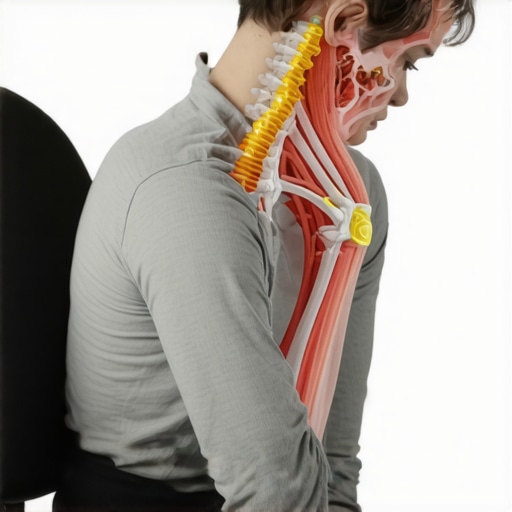
Why a strong core might be making your back worse
Another massive nuance is the ‘core’ obsession. I’ve seen athletes with six-packs who can’t pick up a pencil without a twinge. That’s because why your core strength wont fix your back if your hips are locked is the missing link in most recovery programs. If your hips don’t move, your lower back has to move to compensate, leading to repetitive micro-trauma. This is where unlocking mobility expert tips on managing back pain in 2025 suggests focusing on hip internal rotation rather than just doing more crunches. If you’re looking for back pain breakthroughs, start looking at the joints above and below the site of pain. The site of the pain is rarely the actual source of the problem.Since we know the hips are often the real culprits behind our discomfort, I keep a very specific toolkit in my car and my home office. I don’t go for those expensive vibrating massage chairs that promise the world and deliver a headache. Instead, I rely on a humble tennis ball. I use it to target the piriformis and glute medius while I’m sitting at my desk or even during long pit stops. Learning how a simple tennis ball can fix deep glute tension saved me from a dozen emergency appointments. I also keep a firm foam roller nearby, but I am incredibly careful with it. Many people make the mistake of rolling right over their lumbar spine, which can be a disaster for sensitive discs. I follow the methodology of Kelly Starrett, DPT, author of Becoming a Supple Leopard, who emphasizes that we should mobilize in the position of restriction. This means I use the roller primarily for my thoracic spine and quads to offload the pressure on my lower back. If you want to try this without causing a flare-up, you absolutely must check out how to use a foam roller for sciatica without making it worse. 
How can I keep my spine healthy for years to come?
The secret to long-term results isn’t a one-off fix or a miracle stretch. It is about building a lifestyle that supports your physical structure. I’ve transitioned from constantly looking for revitalize your neck effective techniques for lasting pain relief to implementing mobility mastery daily tips to keep your spine and joints healthy as a non-negotiable routine. This means checking my mirror every morning, doing my hip drills, and never staying in one position for more than 30 minutes at a time. Looking ahead, I predict we are going to see a massive shift in how our cars and offices interact with our bodies. We are already seeing the emergence of smart seats that use haptic feedback—much like the mirror trick—to vibrate when sensors detect you have started to slouch. But until that becomes standard, we have to be our own advocates. I want you to try one thing today: next time you are at a red light, don’t reach for your phone. Instead, perform the 10-second hip reset for relief after sitting. It is a tiny commitment that yields massive long-term results. By focusing on these boost your back mobility simple exercises that make a difference, you stop being a victim of your commute and start being the architect of your own comfort.
The Uncomfortable Truth About Why My Mirror Trick Actually Works
One thing I learned is that ‘comfort’ is often the enemy of progress. When you first adjust that mirror, you might feel like you’re straining. That’s because your postural muscles are weak and screaming for a break. The lightbulb moment for me was realizing that the annoyance is the point. If it wasn’t annoying when you slumped, you’d never change. You have to be willing to feel a little awkward to achieve unlocking sciatica relief expert strategies for lasting comfort over the long haul. This mental shift transformed my commute from a chore into a training session where my car seat became my coach.
Gear and Wisdom to Keep in Your Glove Box
I don’t travel without my ‘Spine First Aid’ kit. First, I always have a copy of Back Mechanic by Dr. Stuart McGill nearby—it’s the bible for anyone trying to understand is your back pain a sign of something more serious key symptoms to watch. Second, I keep a high-density lacrosse ball in my center console. While it’s great for the gym, knowing how a tennis ball can relieve deep glute and sciatic pain while you’re at a rest stop can be the difference between a ruined weekend and a great one. These tools, combined with a commitment to movement, are my non-negotiables for any road trip, ensuring I arrive as mobile as when I left.
#IMAGE_PLACEHOLDER_E#
You Aren’t Stuck With the Aches You Have Today
It is easy to believe that back pain is just an inevitable part of getting older or having a long commute. It isn’t. By making these small adjustments and staying consistent with mobility mastery daily tips to keep your spine and joints healthy, you are actively rewriting your physical future. You have the tools, the mirror is set, and your seat is in the right spot. Now, it’s just about the follow-through. Your body is incredibly resilient when you stop working against it. Have you tried the mirror trick yet, or do you have another secret for staying comfortable on long drives? Let me know in the comments below!