
Why your ‘perfect’ upright posture is actually tensing your spine
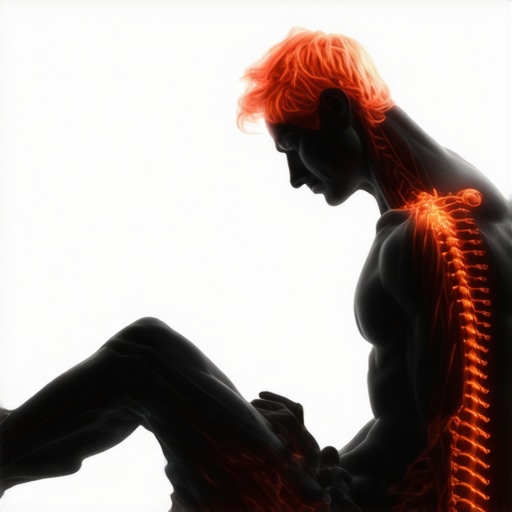
I remember sitting at my desk a few years ago, shoulders pinned back and chin tucked, feeling incredibly smug about my ‘perfect’ ergonomics. I was doing everything the textbooks told me to do. Then, I tried to reach for a glass of water and a sharp, electric jolt shot through my lower back, leaving me frozen in place. That was my wake-up call. I realized that my obsession with being perfectly upright was actually creating a cage of tension that my body couldn’t escape. We often think that stiffness equals stability, but in reality, why your perfect sitting posture is making you stiffer is a lesson I had to learn the hard way through months of unnecessary discomfort. Today, we are going to dismantle the myth of the rigid spine and find a way to move that actually feels like a relief rather than a chore.
Your Spine Was Never Meant to Be a Ruler
Most of us treat our backs like a structural beam in a house, but your spine is more like a dynamic suspension bridge. When you force yourself into that ‘military’ upright position, you are essentially asking your muscles to hold a static contraction for hours on end. This leads to what I call ‘postural fatigue,’ where the very muscles meant to support you become your biggest source of ache. I made the mistake of thinking that if I just tried harder to stay straight, the pain would go away. Instead, I was just understanding the link between poor posture and chronic back pain through the lens of over-correction. Research from the University of Queensland has shown that people who try to maintain ‘ideal’ posture often have higher levels of muscle co-contraction, which actually increases spinal load rather than reducing it. By trying to be perfect, you might be accidentally crushing your own discs.
Is ‘good’ posture actually worth the effort?
I get the skepticism; we’ve been told since kindergarten to ‘sit up straight’ or we’d grow a hump. But if your ‘good’ posture leaves you exhausted by noon, it isn’t actually good. We need to focus on back pain breakthroughs that prioritize movement over static positions. Have you ever spent an entire day consciously pulling your shoulders back only to find your neck screaming at you by dinner time? If so, you’re not alone, and it is a sign that your ‘perfection’ is actually a problem. In the next section, I’ll show you how to find a ‘resting’ position that doesn’t feel like a workout.The first thing I had to unlearn was the idea that movement is the enemy of productivity. We’ve been conditioned to think that ‘focus’ means ‘stillness,’ but for your joints, stillness is a slow-motion car crash. Instead of fighting the urge to shift, I started embracing what I call micro-movements. This isn’t about doing jumping jacks every ten minutes; it’s about subtle, constant adjustments that keep your blood flowing and your tissues hydrated. Incorporating mobility mastery daily tips to keep your spine and joints healthy into your routine is the real secret to avoiding that end-of-day rigidity.
Stop Acting Like a Statue and Start Fidgeting
I remember a three-hour webinar where I decided to be the ‘perfect’ student—spine straight, eyes forward, zero movement. By the time the host said ‘goodbye,’ I couldn’t even rotate my neck to look at my cat. It took three days of heat packs to undo that one afternoon of ‘good’ posture. Now, I aim to change my position every five to ten minutes. I’ll lean left, then right, then tuck one foot under my leg, then sit on the edge of the chair. This prevents any single muscle group from bearing the brunt of the load. Movement is medicine, and even the smallest wiggle counts toward back pain breakthroughs that actually last.
Breathe Into Your Hips to Unlock Your Lower Back
Most people breathe with their shoulders, which keeps the neck in a state of constant tension. To fix this, you need to learn how to breathe into your lower abdomen and pelvis. Imagine your pelvis is a balloon that you are trying to expand in 360 degrees. This pressure from the inside out creates a natural ‘internal splint’ for your spine without the need for rigid muscle clenching. I used to rely on the 10-second breathing trick for instant lower back relief whenever I felt a spasm coming on, and it was a game-changer. It’s about letting the air create the space that your muscles are trying to squeeze shut. 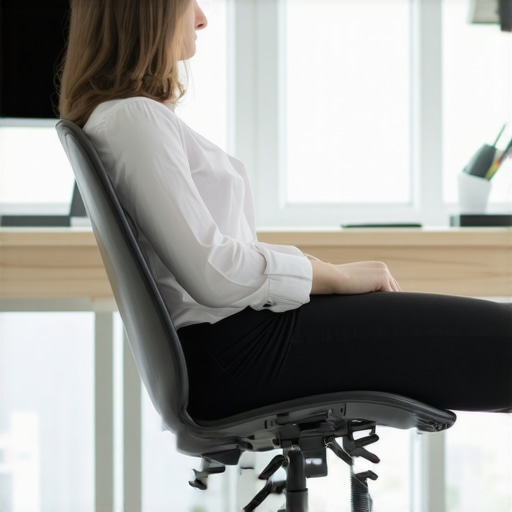
Let Your Environment Do the Heavy Lifting
If you are constantly fighting your chair or your desk, your body will eventually lose. I used to think I was the problem, but it turned out my setup was a trap. For instance, did you know that why your lumbar support might be making your back stiffer often comes down to it being in the wrong spot or being too aggressive? You want support that encourages your natural curve, not something that forces it. You also need to look at your eye level. If you are constantly looking down, your head—which weighs about as much as a bowling ball—starts pulling on your neck muscles with massive leverage. Learning how to adjust your monitor to stop that burning neck pain is a non-negotiable step. When your eyes are level with the top third of your screen, your head can sit balanced on your spine. Finally, check your hips. If your hip flexors are locked, your back will never feel loose. You can learn how to check your own hip mobility in under a minute to see if your ‘back pain’ is actually just a hip problem in disguise. When I fixed my monitor and started using the one foot up rule for pain free dishwashing and chores, my daily fatigue dropped by half almost overnight.Even after optimizing your desk, there is a massive trap that almost every back pain sufferer falls into: the stretching obsession. We have been conditioned to believe that if something feels tight, we must pull on it until it lets go. However, in my years of trial and error, I discovered that why stretching your hamstrings can actually flare up sciatica is one of the most misunderstood aspects of recovery. When your hamstrings feel like tight guitar strings, they are often performing a ‘guarding’ reflex. Your brain is literally tightening those muscles to protect an unstable spine or a sensitized nerve. If you force a stretch on a muscle that is trying to protect you, the brain responds by tightening it even further the moment you stop. This is why the hidden reason your hamstrings always feel tight often has nothing to do with the muscle length itself, but rather a protective signal from your nervous system.
Why Your Daily Stretch Might Be Making You Worse
If you are currently dealing with a disc flare-up, one of the biggest mistakes you can make is the classic ‘toe touch’ or any move that rounds your spine into a ball. I used to do these every morning, thinking I was loosening up, but I was actually just increasing the internal pressure on my spinal discs. This is a critical ‘oops’ factor that most people miss. Leading spine expert Dr. Stuart McGill has frequently pointed out that repeated spinal flexion, especially under tension, can exacerbate disc bulges rather than healing them. Instead of the relief you expect, why you should stop stretching your back into a c-shape becomes a lesson in biomechanics that can save you months of agony. 
How can you tell if it’s a disc or just a muscle pull?
It is the question I get asked most often by those seeking back pain breakthroughs. If your pain radiates down the leg, increases when you cough or sneeze, or feels like an electric zap, you are likely looking at a disc or nerve issue rather than a simple strain. Understanding how to tell if your sciatica is a disc or muscle issue is the first step in choosing a movement strategy that actually works. If it is a nerve issue, ‘stretching’ is usually the enemy, whereas ‘stability’ becomes your best friend. In these cases, conquering sciatica proven approaches to end discomfort now involves calming the nerve rather than tugging on it.
The Chain Reaction from Your Feet to Your Neck
The real nuance of advanced mobility is realizing that where you feel the pain is rarely where the problem started. I spent a year treating my lower back, only to realize that a lack of range of motion in my feet was the culprit. It sounds wild, but how a stiff ankle is actually causing your recurrent lower back aches is a perfect example of the kinetic chain in action. If your ankles don’t flex properly when you walk, your lower back has to over-rotate to compensate for that lost movement. This creates a ‘wear and tear’ cycle that no amount of lumbar support can fix. Have you ever fallen into this trap of over-stretching only to feel worse the next day? Let me know in the comments.
One tool I always have in my gym bag isn’t expensive or electronic—it’s a simple tennis ball. Most people think they need a $500 massage gun to see results, but learning how a simple tennis ball can fix deep glute tension is often the first step toward real relief. I use it to target the piriformis muscle, which frequently traps the sciatic nerve and causes that radiating leg pain. If you’ve been struggling with foam rolling, knowing how to use a foam roller for sciatica without making it worse is another essential skill. The key is to avoid rolling directly over the inflamed nerve and instead focus on the tight connective tissue in the hips and quads that pulls your pelvis out of alignment.
The Standing Desk Trap You’re Probably Falling Into
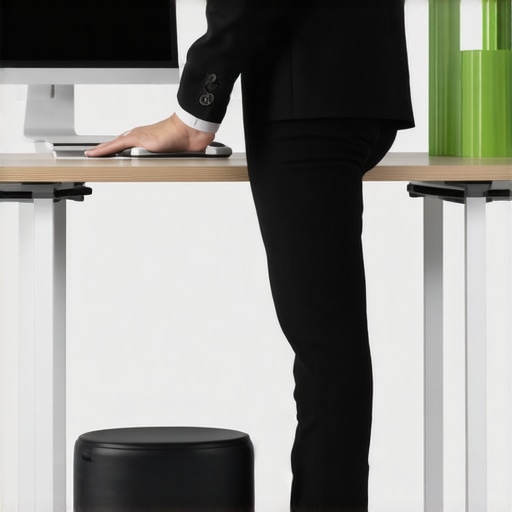
Many people think buying a standing desk is an automatic fix for their aches, but I’ve seen more people flare up their lower backs after switching than before. The problem is usually a lack of preparation and staying too static in a standing position. I personally use a ‘move-first’ approach. Instead of standing for eight hours straight, I rotate every 30 minutes. If you are ready to make the switch, you need to know how to transition to a standing desk without leg pain. Physical therapist Kelly Starrett, author of Becoming a Supple Leopard, emphasizes that ‘the best position is always the next position.’ This philosophy is why I keep a small footstool under my desk. Putting one foot up periodically takes the strain off my psoas and instantly relaxes my lumbar spine.
How do I keep my spine healthy for the next twenty years?
Maintenance isn’t about one big workout on the weekend; it’s about the cumulative effect of small wins throughout your day. I swear by the 10-second hip reset for relief after sitting. I do it every time I get up to refill my water or take a call. For my neck, I’ve integrated revitalize your neck effective techniques for lasting pain relief into my morning routine before I even look at my phone. If you want to scale your mobility results, you have to stop looking for a ‘cure’ and start looking for a ‘habit.’ Consistent, tiny adjustments are what prevent the slow creep of age-related stiffness.
What Posture Management Looks Like in 2025 and Beyond
Looking ahead, I believe we are moving away from passive furniture and toward active biofeedback. We are already seeing the emergence of wearable sensors that gently vibrate when your cervical spine reaches a dangerous angle or when your core muscles switch off. While tech is a great tool, the core of unlocking mobility expert tips on managing back pain in 2025 will still be your internal awareness. The goal isn’t to have a computer tell you you’re slouching, but to develop the proprioception to feel the tension before it becomes pain. These back pain breakthroughs are about empowering the individual to read their own body. I encourage you to try this one specific trick today: the next time you stand up from your chair, squeeze your glutes for five seconds before you take your first step. It is the simplest way to wake up the muscles that protect your spine and reset your pelvis after a long sit.
3 Painful Mistakes I’ll Never Make Again with My Spine
Reflecting on my journey, the biggest ‘lightbulb moment’ was realizing that pain is a conversation, not a punishment. I used to think that if my lower back ached, I simply needed to stretch it harder, but I eventually learned that aggressive stretching is often fuel for the fire. Now, I understand that why you should stop stretching your back into a c-shape is the most important rule for protecting my discs. Another lesson was the danger of ‘bracing’ my core all day; your muscles need to breathe and fluctuate, not stay clamped shut. Lastly, I stopped treating my body like a collection of parts and started seeing the connections, like how the hidden link between tight calves and neck stiffness can dictate my entire day’s comfort level.
The Minimalist Gear I Use to Keep My Joints Happy
You don’t need a room full of expensive gadgets to sustain your progress. My personal ‘relief kit’ is surprisingly simple. I keep a tennis ball nearby at all times because I’ve seen firsthand how a tennis ball can relieve deep glute and sciatic pain during long work sessions. I also swear by a small, portable lumbar roll for travel; knowing how to use a lumbar roll to prevent mid-day back fatigue has saved me on countless flights and commutes. For those who want deeper knowledge, I always recommend the Back Mechanic by Dr. Stuart McGill, which provides the foundational science for the back pain breakthroughs we’ve discussed today.
#IMAGE_PLACEHOLDER_E#
Reclaiming the Movement Your Body Was Built For
Your spine is an incredible piece of biological engineering designed for exploration, not just for holding up a head in front of a screen. As we look toward unlocking mobility expert tips on managing back pain in 2025, remember that the most successful people aren’t the ones with the most expensive chairs, but the ones who move most often. By integrating small habits—like the 5-second glute squeeze or the 10-second breath reset—you are building a resilient body that can handle the demands of modern life. Don’t wait for a major flare-up to start your mobility mastery journey. Start today, move often, and listen to the subtle signals your body is sending you. Have you ever noticed a specific ‘trigger’ activity that always makes your back feel stiff? Let me know in the comments below!