
The specific way to tie your shoes when you have a herniated disc
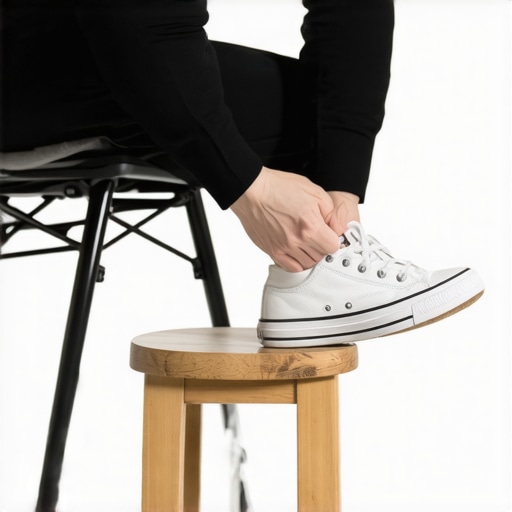
I remember the Tuesday morning I almost cried over a pair of sneakers. There I was, bent over at the waist, reaching for my laces, when a bolt of lightning shot down my leg. It wasn’t just a twinge; it was my L5-S1 disc screaming “no more.” When you’re dealing with a herniated disc, the simplest tasks—the ones you’ve done a million times—become the most dangerous. I realized then that if I didn’t change my morning ritual, I’d be stuck on the floor for good. Today, I want to show you the exact method I use to get my shoes on without the agony, so you can reclaim your restored mobility and get out the door. Have you ever had to cancel your whole day just because the thought of putting on shoes felt like climbing Everest? If so, you’re in the right place.
Stop Bending Over Like You’re Twenty
For the longest time, I made the classic mistake of thinking I could just “power through” the stiffness. I’d try to stretch it out every morning, but I eventually learned that reaching for your toes is often the worst way to stretch your back. When you have a disc issue, that forward flexion—the bending at the waist—is like squeezing a jelly donut. The pressure has to go somewhere, and it usually goes straight onto your nerves. According to the Mayo Clinic, bending forward at the waist can increase intradiscal pressure by up to 200%, which is exactly why your morning routine is a minefield. You might even find that your actual back injury risk is much higher when you’re cold and stiff first thing in the morning. I spent months doing it wrong before I realized that the goal isn’t to get closer to the floor, but to bring the floor closer to you. [image placeholder] When your disc is inflamed, every millimeter counts. I used to sit on the edge of the bed—the softest surface in the room—and wonder why my sciatica relief secrets weren’t working. It turns out, that slumped position on a soft mattress was doubling down on the damage before I even stood up.
Is This Really Worth All the Effort?
I know what you’re thinking: “It’s just tying a shoe. Can’t I just use slip-ons?” While slip-ons are a great temporary fix, life eventually requires laces, and learning to move properly protects your spine for everything else you do. If you aren’t sure if your discomfort is just a passing phase or something more, you should watch for these key symptoms. This isn’t just about footwear; it’s about re-learning how to protect your spine during every transition of your day. By the end of this guide, you’ll have a reliable, repeatable way to get ready without the fear of a flare-up.
Adopt the Tripod Stance to Save Your Spine
The secret to avoiding that lightning-bolt pain is to stop treating your spine like a hinge. When you bend at the waist, you’re essentially trying to fold a stiff piece of cardboard; eventually, it’s going to crease or snap. Instead, you need to bring your foot to your hands, not your hands to your feet. I found this out the hard way during a trip to Chicago. I was in a tiny hotel room with only a deep, mushy armchair. I tried to lean forward just a few inches to pull on my loafers and—BAM—I was frozen in place for twenty minutes. I realized then that your favorite armchair is secretly causing your lower back stiffness because it lacks the support needed to keep your pelvis neutral. Since then, I’ve sworn by a firm, straight-backed chair.
Sit on a Firm Surface Every Single Time
Your couch is the enemy when your discs are inflamed. Soft cushions allow your pelvis to tilt backward, which puts your L4-L5 and L5-S1 discs in a vulnerable, rounded position. If you want to protect yourself, you need to find a kitchen chair or a dedicated bench. Utilizing ergonomic tips for everyday comfort starts with where you park your backside. When you sit on a firm surface, your sit-bones are grounded, which allows you to maintain a slight arch in your lower back while you work.
Bring Your Foot to Your Knee
Once seated firmly, the magic move is the ‘Figure-Four.’ Instead of reaching down, lift your right ankle and rest it on your left knee. This keeps your spine perfectly straight while bringing the shoe within arm’s reach. If you find this impossible because your leg won’t go that high, it’s a major red flag for your joint health. You should check your own hip mobility in under a minute to see if your hips are actually the reason your back is taking such a beating. 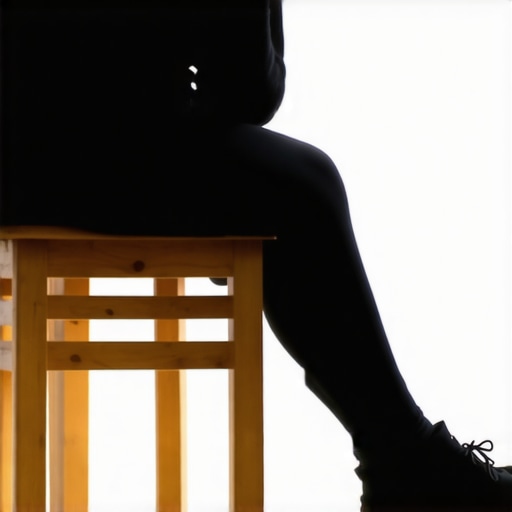
The Kneeling Pivot for Stiffer Mornings
Some mornings, even crossing your legs feels like too much. On those days, I use the kneeling method. Place one knee on a rug or a cushion and keep your chest upright while the other foot stays flat on the floor. It looks a bit like a marriage proposal to your sneakers, but it keeps your lumbar spine in a safe, vertical stack. This is very similar to learning how to do a proper squat to protect your knees and back. By staying vertical, you avoid the ‘jelly donut’ pressure on your discs.
Invest in a Long-Handled Shoehorn
If you really want to stay out of the danger zone, get a 24-inch shoehorn. This tool is a game-changer for managing back pain in 2025 because it eliminates the need to reach for your heel entirely. You simply slide your foot in while standing or sitting tall. Also, take a look at what you’re putting your feet into; your thin shoes are impacting your lower back shock absorption, meaning every step you take in flat, unsupportive footwear is sending mini-shocks straight to that injured disc. Combining a long-handled tool with supportive footwear is the ultimate insurance policy for your spine.Establishing a solid morning routine is just the first step; the real challenge begins when you realize that some of the most popular advice for back health is actually making you worse. We’ve all heard that we need a ‘stronger core’ or that we need to ‘stretch more’ to fix sciatica, but after years of trial and error, I’ve found that these broad strokes often lead to more flare-ups. For instance, most people assume that tight hamstrings are the cause of their back pain, but for those with nerve issues, the sensation of tightness is actually nerve tension, not muscle length.
The Stretching Trap That Flares Your Sciatica
If you feel a pulling sensation in the back of your leg and instinctively reach for your toes, you might be doing more harm than good. I once spent three weeks aggressively stretching my hamstrings, only to find my leg pain getting sharper every day. I eventually learned that stretching your hamstrings can actually flare up sciatica because you are physically yanking on an already inflamed nerve. Think of the sciatic nerve like a guitar string that’s already been tightened too much—pulling on it further won’t make it ‘relax’; it will make it snap. A study published in the Journal of Orthopaedic & Sports Physical Therapy highlights that neurodynamic mobilizations—or ‘nerve glides’—are far more effective for nerve-related pain than static stretching. If you’ve been stretching for months with no progress, it’s time to stop and ask: have you ever fallen into this trap? Let me know in the comments. 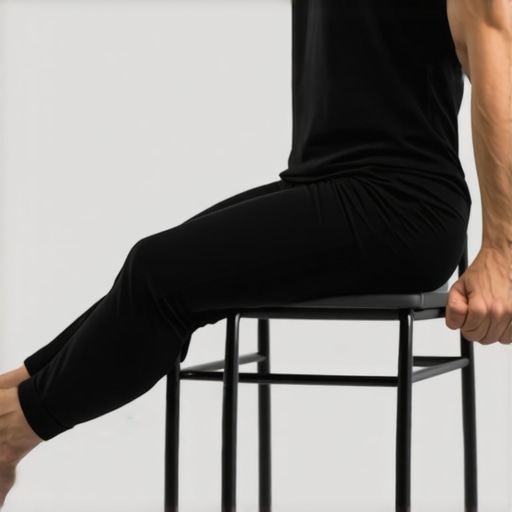
Does Core Strength Actually Prevent Back Spasms?
One of the biggest myths I had to unlearn was the idea that doing more planks and crunches would magically stabilize my spine. The truth is much more nuanced: your core strength won’t fix your back if your hips are locked. If your hip joints can’t rotate properly, your lumbar spine is forced to compensate by twisting during every step you take. This constant micro-trauma eventually leads to the ‘jelly donut’ pressure we talked about earlier. You can have the strongest abs in the world, but if your hips are stuck, your L5-S1 disc is going to bear the brunt of the work. This is why expert strategies for lasting comfort always prioritize joint mobility alongside muscle engagement.
Stop Fighting Your Spine with Rigid Posture
We’ve been told since childhood to ‘sit up straight,’ but when you have a disc injury, that rigid, military-style posture can be exhausting and counterproductive. I used to force myself into a perfect 90-degree angle at my desk, thinking I was helping my recovery, only to realize that your perfect upright posture is actually tensing your spine by overworking the small stabilizer muscles in your lower back. This constant tension prevents the discs from getting the blood flow they need to heal. Instead of focusing on a rigid line, focus on natural curves and frequent movement. These back pain breakthroughs often come from doing less, not more. By understanding these nuances, you stop guessing and start moving in a way that actually allows your body to mend itself.
I’ve spent thousands of dollars on ergonomic gadgets, from vibrating chairs to zero-gravity recliners, only to realize that the most effective tools in my arsenal usually cost less than a lunch at Chipotle. Once you’ve mastered the art of not blowing out your back while putting on sneakers, the real game begins: maintenance. You can’t just fix the fire and then leave the matches lying around. To keep your results, you need a system that works when you aren’t thinking about it.
Stop Rolling Blindly and Start Pinpointing Tension
Most people grab a foam roller and roll their lower back like they’re flattening pizza dough. If you have a herniated disc, this is a recipe for disaster because it can actually push the disc further into the nerve. Instead, I use a simple tennis ball or a lacrosse ball to target the soft tissue around the spine without hitting the bone. I specifically use it for my glutes and piriformis because, as I’ve learned, how a tennis ball can relieve deep glute and sciatic pain is all about releasing the muscles that are pulling on your pelvis. By pinning the ball against a wall and leaning into it, you get a localized release that a foam roller simply can’t provide.
How do I keep my spine healthy for the next twenty years?
Consistency beats intensity every single time. My long-term strategy involves what I call ‘micro-adjustments.’ I don’t spend two hours at the gym; I spend two minutes every hour checking my alignment. I carry a small, firm lumbar roll everywhere—the car, the office, even the movie theater. Learning how to use a lumbar roll to prevent mid-day back fatigue has been the single greatest factor in preventing my afternoon sciatica flares. This isn’t just my opinion; Dr. Stuart McGill, a leading expert in spine biomechanics and author of Back Mechanic, emphasizes that maintaining a ‘neutral’ spine under load is the most critical factor in avoiding re-injury. He argues that most back pain is caused by repetitive micro-movements at the end of your range of motion, not one single ‘accident.’

As we look toward the future of recovery, I predict we are going to see a massive shift toward wearable biofeedback. We are already seeing smart clothing that vibrates when your pelvis tilts too far forward or when your shoulders begin to round. Instead of guessing if your form is correct, technology will provide real-time data to help you achieve mobility mastery daily tips to keep your spine and joints healthy. This will take the cognitive load off the patient and make spinal protection second nature.
The Shift Toward Movement Quality Over Quantity
If you want to scale your recovery, you have to look at your entire day, not just your workout. This means implementing overcoming sciatica top lifestyle changes for better quality of life, such as changing how you get out of bed or how you reach for a gallon of milk. I challenge you to try one advanced tip today: the next time you are standing in line or at a sink, perform the 5-second glute squeeze that prevents sciatica flares while standing. It sounds too simple to work, but by engaging those muscles, you create a natural ‘back brace’ that offloads the pressure from your L5-S1 disc immediately. Give it a shot and see how much lighter your legs feel after just a minute.
Lessons Learned From a Year of Avoiding the Floor
I spent years thinking I could just ‘stretch away’ the pain, but the most profound shift happened when I stopped treating my body like a collection of tight muscles and started treating it like a delicate electrical system. Nerve health requires space and blood flow, not tension. I eventually learned that if your symptoms involve tingling or burning that travels past your knee, you need to know the warning signs your sciatica needs professional help rather than trying to DIY a solution. Another realization? Your floor is your biggest enemy; the closer you get to it without support, the more you risk a flare-up. [image placeholder] Recovery isn’t a straight line, and there will be days when your back feels ‘vulnerable’ for no apparent reason. On those days, the best thing you can do is stick to the mechanics of the tripod stance and avoid testing your range of motion just to see if it still hurts.
The Hardware I Use to Keep My Spine in Alignment
To bridge the gap between injury and freedom, I rely on a few non-negotiables that I keep in my daily toolkit. First, a simple tennis ball is better than any high-end massager for releasing the glutes that pull on your sacrum—I’ve detailed exactly how a simple tennis ball can fix deep glute tension in another guide. Second, ditch the soft office chairs and look for firm support that maintains your natural curve. Be careful, though; why your lumbar support might be making your back stiffer is often due to placing it too high or using a roll that is too thick for your specific anatomy. Finally, I never leave the house without wearing shoes that have a decent heel-to-toe drop to take the strain off my posterior chain.
Reclaiming the Freedom to Move Without Fear
Recovery isn’t about doing one big thing right; it’s about doing a hundred small things differently. By using the tripod stance and the figure-four method, you aren’t just putting on sneakers; you’re practicing conquering sciatica proven approaches to end discomfort now. You deserve to start your day without the fear of a lightning-bolt sensation in your leg. Trust the process, respect the inflammatory cycle, and remember that your spine is designed to support you if you give it the right environment to heal. Which of these shoe-tying methods are you going to try tomorrow morning—the figure-four or the kneeling pivot? Let me know in the comments!