
The one sign that your sciatica is finally starting to heal
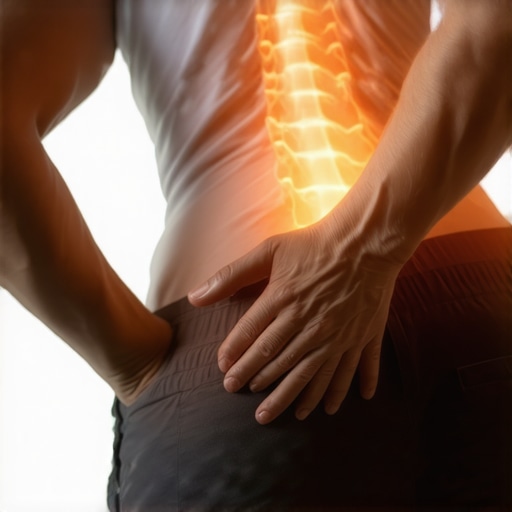
I remember the morning I couldn’t reach for my coffee mug without a searing jolt through my left glute. It felt like a live wire was sparking behind my knee, and honestly, I thought I was stuck like that forever. I spent weeks doing every stretch I found on YouTube, and I made the classic mistake of thinking that if I just pulled my leg harder, it would release. Instead, I was just stretching my hamstrings which only flared my sciatica further. It was a miserable cycle of two steps forward and three steps back. But then, during a particularly frustrating week, my physical therapist told me something that sounded totally backwards: if the pain moves out of your foot and into your butt, you’re actually winning. Today, I’m going to show you why that shift is the most important milestone in your recovery and how to stop accidentally pushing the pain back down into your leg. Have you ever noticed your pain changing locations and wondered if you were actually making things worse? [image_placeholder]
Watch for the pain moving toward your spine
I used to panic whenever my lower back felt stiffer, even if my calf finally stopped throbbing. I thought a new pain meant a new injury. In reality, I was experiencing ‘centralization.’ This is when the nerve root finally gets some breathing room, and the symptoms retreat from your extremities back toward the source in your spine. It’s the ultimate green light. I learned the hard way that trying to ‘stretch out’ the leg pain often just irritates the nerve more, much like why you feel a sharp pinch when standing up from a chair if your mechanics are off. Once I stopped obsessing over the leg and started focusing on my spine’s position, everything changed. I had to learn how to sit in a car for hours without triggering sciatica just to keep that progress from disappearing during my commute. It’s about small, deliberate wins rather than one big stretch.
Is this moving pain just a lucky coincidence?
It might feel like a fluke, but the science is pretty solid. According to research published in the Journal of Orthopaedic & Sports Physical Therapy, patients who experience centralization of symptoms have significantly better long-term outcomes than those whose pain stays localized in the leg. It’s not just a ‘feel good’ theory; it’s a clinical indicator that your disc or nerve is responding to the right movements. Early on, I made the mistake of doing the ‘cobra stretch’ whenever I felt a twinge, but I quickly realized why you should avoid the cobra stretch during a back spasm—it can sometimes jam the joints if you aren’t ready for it. Understanding that your body has a specific ‘map’ for healing helps take the fear out of those weird, shifting sensations. We’re going to dive into the specific movements that encourage this retreat and the common habits that are secretly keeping your nerve under pressure.
How to Coax Your Nerve Back into Place
Think of your spine like a tube of toothpaste. When you slump or bend forward, you’re essentially squeezing the bottom of the tube, forcing the inner contents (the disc material) to bulge out and press against the sciatic nerve. To get that pain to move out of your leg and back into your glute, you have to stop the constant pressure. I learned that the most dangerous position for me wasn’t moving—it was sitting still in a way that ground my vertebrae together. This is exactly why you should stop stretching your back into a c-shape if you want the nerve to settle down. Instead of rounded stretches, we need to focus on maintaining a neutral or slightly arched lower back to keep the pressure off the exit ramp of those nerves.
Ditch the Soft Couch Before It Drains You
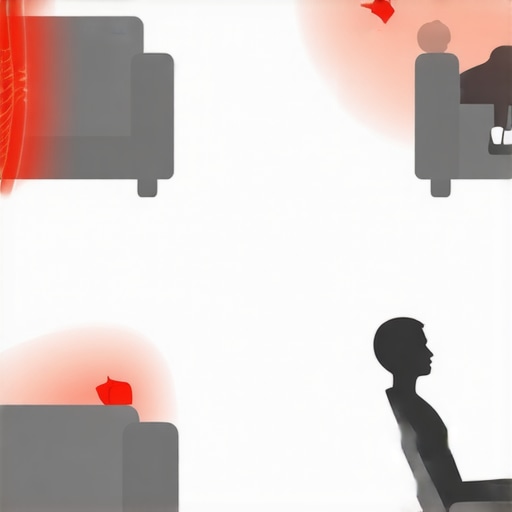
Last Thanksgiving, I spent three hours trapped in my aunt’s overstuffed velvet sofa. By the time the turkey was served, I couldn’t feel my right big toe. I had to migrate to a hard-backed kitchen chair just to make it through dessert. That was the moment I realized my furniture was feeding my injury. Soft couches are the enemy of centralization because they swallow your pelvis and force your lower back into that dreaded ‘C’ curve. If you’re struggling right now, you need to know why you should avoid soft couches if you have sciatica. Switch to a firm chair where your hips are slightly higher than your knees. This is the simple chair height trick to stop your legs from falling asleep and keeps your spine in a position that encourages the nerve to retreat from your foot.
The Five-Second Glute Squeeze That Changes Everything
Movement is medicine, but only if it’s the right kind. I used to stand up from my desk and immediately feel a lightning bolt down my leg. To stop this, I started using a trick my therapist called ‘active stabilization.’ Before you even move to stand, engage your core and give your glutes a firm squeeze. This acts like a natural corset for your spine. Performing the 5-second glute squeeze that prevents sciatica flares while standing creates a buffer zone around the disc. I remember the first day I tried this consistently—I actually made it through a whole grocery trip without having to lean on the cart for relief. It’s a tiny mechanical shift, but it’s the difference between irritating the nerve and letting it heal. If you aren’t sure if your leg pain is coming from your back or a local muscle issue, you can try the simple test to see if your leg pain is actually sciatica to confirm your strategy is on the right track.
Use Your Environment to Lock in Your Progress
Your daily habits are either pulling the pain up or pushing it down. For me, the ‘Aha!’ moment came when I realized I was undoing all my morning progress during my 45-minute commute. I had to learn to adjust my environment to support centralization. Simple things, like placing a rolled-up towel behind your lower back, can keep that ‘toothpaste’ inside the tube. It’s about being relentless with your positioning until the nerve stops screaming. When you stop the micro-aggressions of poor posture, your body finally has the resources to start the actual repair process in the disc space.
Most people assume that once they understand centralization, the path to recovery is just a straight line. But in my experience, this is where the real work begins because the devil is in the details. One of the biggest myths I encounter is the idea that you should sit as straight as a board to protect your spine. The reality is quite the opposite. I’ve found that why your perfect upright posture is actually tensing your spine is a major hurdle for many; you end up creating a rigid, brittle trunk that can’t absorb the natural shocks of daily life. When your muscles are constantly ‘on’ to maintain a specific look, they fatigue, and that pressure eventually transfers right back onto your discs.
Stop trying to sit like a statue
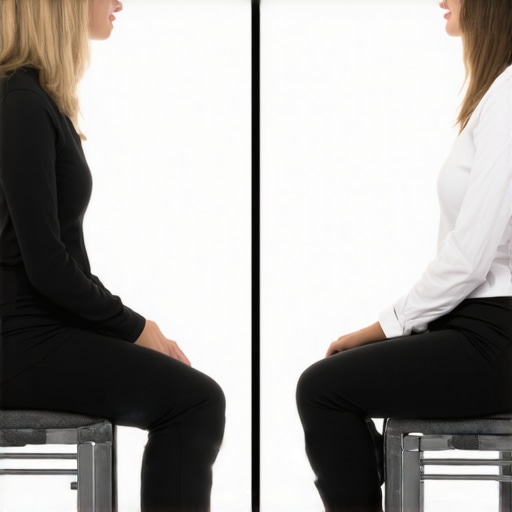
Instead of forcing a military posture, you should be looking for a ‘dynamic neutral.’ This means moving slightly and often. I used to think I was being ‘good’ by sitting perfectly still for an hour, but I was actually starving my discs of the nutrients they get through movement. According to research published in Clinical Biomechanics, excessive spinal rigidity can actually increase intradiscal pressure rather than reducing it. If you find yourself stiffening up, it might be why your straight posture is actually straining your muscles and delaying your healing. The goal isn’t to be a statue; it’s to be a willow tree—strong, but flexible enough to bend without snapping.
How can you tell if a movement is helping or just masking the pain?
This is the most common ‘trap’ I see. People often confuse a temporary relief of symptoms with actual structural progress. For instance, I spent months self-adjusting my own back. I thought that ‘pop’ meant I was fixing things. However, why cracking your own back is making your joints more unstable is a lesson I learned the hard way. You’re usually just forcing movement into the segments of your spine that are already hyper-mobile, while the truly stuck segments stay locked up. This leads to a ‘hypermobility trap’ where your joints become loose and prone to further injury. If you’re constantly reaching for a quick pop to feel better, you’re likely missing the back pain breakthroughs navigating your path to restored mobility that come from targeted, stable strengthening.
The hidden link between your neck and your lower back
Another nuance that most people miss is how the top of your spine dictates the bottom. If you are struggling with sciatica but ignoring your ‘tech neck,’ you’re fighting a losing battle. I’ve seen countless cases where how a stiff upper back is forcing your neck to move too much eventually creates a downstream effect that pulls on the entire spinal cord. Think of it like a piece of string; if you pull on the top, the tension travels all the way to the bottom. If you want to truly master mobility mastery daily tips to keep your spine and joints healthy, you have to look at the body as a closed system. Have you ever fallen into this trap of focusing only on where it hurts while ignoring the rest of your posture? Let me know in the comments.
That trap is exactly why I had to overhaul my entire approach to maintenance. Once you realize your neck and your lower back are teammates, you stop looking for a ‘quick fix’ and start looking for sustainable tools. I spent way too much money on expensive ergonomic chairs that did not work before I realized the simplest changes are usually the most effective.
Stop relying on sheer willpower to sit right
I used to think I could just ‘remember’ to sit better, but by 2 PM, my brain was too tired to care. Now, I use a physical cue like a McKenzie lumbar roll. It is firm enough that I cannot ignore it. However, you have to be careful with placement; I have seen many people use them incorrectly, which is why your lumbar support might be making your back stiffer if it is pushing into the wrong part of your curve. It should sit right at the belt line, supporting the natural arch without shoving your whole torso forward.
Ditch the expensive gadgets for a simple tennis ball
When I am on the road or stuck in a hotel, my secret weapon is a standard tennis ball. It is the ultimate DIY physical therapist. By lying on it and finding the hot spots in my glutes, I can release the tension that usually leads to a flare-up. Learning how a tennis ball can relieve deep glute and sciatic pain saved me from several miserable flights. It targets the piriformis and other deep rotators that a foam roller just cannot reach. 
Your sleep setup is the ultimate recovery tool
You spend a third of your life in bed, so if your spine is not neutral there, you are undoing all your daytime progress. I found that how to sleep with a pillow between your knees for back relief is the single most important habit for keeping my pelvis level. If you are a side sleeper, this prevents your top leg from pulling your spine into a twist. Additionally, if you have any upper body tension, you need to find the best sleeping position for a pinched nerve in the neck to avoid waking up with that familiar numbness.
How do I keep my spine mobile for the next thirty years?
Dr. Stuart McGill, the world-renowned expert on spine biomechanics and author of Back Mechanic, suggests that the key is not ‘more stretching,’ but ‘spine hygiene.’ This means moving in ways that spare the discs while building the endurance of the surrounding muscles. This proactive mindset is at the heart of unlocking sciatica relief expert strategies for lasting comfort, moving you from reactive crisis management to true long-term health. To truly master this, you should integrate mobility mastery daily tips to keep your spine and joints healthy into your existing routine, like during your morning coffee or while on a conference call. I predict that in the next few years, we will move away from chunky ergonomic furniture and toward smart-fabric clothing with built-in biofeedback that gently reminds us to adjust our posture in real-time. This long-term approach leads to the back pain breakthroughs navigating your path to restored mobility that finally feel permanent. Start small: tonight, try the tennis ball glute release for two minutes on each side before you get into bed. You will be surprised at how much lighter your legs feel tomorrow morning.[image_placeholder]
Hard Truths About Why Your Leg Pain Keeps Coming Back
One of the biggest eye-openers for me was realizing that pain is a lagging indicator. By the time your leg starts throbbing, the mechanical stress has likely been building for weeks. I learned that focusing on the leg is like trying to fix a flickering lightbulb by painting the wall; you have to address the wiring in your lower back. Another massive realization was that centralization feels weird. When my calf pain vanished and my lower back felt tight, I almost reverted to my old habits because I didn’t recognize that shift as progress. Understanding is your back pain a sign of something more serious vs. a sign of healing is the most empowering tool you can have. Lastly, I discovered that consistency beats intensity every time; doing five minutes of proper spine hygiene daily is worth more than a two-hour gym session once a week.
The Gear That Actually Saved My Spine
I wasted a lot of money on ergonomic gadgets that were just expensive plastic. If you want to build a foundation for long-term health, I recommend starting with these three essentials. First, Dr. Stuart McGill’s Back Mechanic is essentially the user manual for the human spine; it taught me how to move without micro-injuring my discs. Second, a McKenzie Lumbar Roll is non-negotiable if you sit for work because it forces your spine into a supportive arch. Third, check out these sciatica relief secrets how to banish pain quickly today to find simple, at-home hacks that don’t cost a dime. I also keep a firm tennis ball in my bag at all times for deep tissue release on the go, which provides swift relief for sciatica quick home remedies that work when I am traveling or stuck in long meetings.
Taking Back Control of Your Daily Freedom
Recovery isn’t about avoiding movement—it’s about moving with intent. It might feel like a slow process right now, but every time you choose a firm chair or engage your glutes before standing, you are casting a vote for a future without nerve pain. You are moving toward back pain breakthroughs navigating your path to restored mobility and away from the fear of throwing your back out. Don’t let a bad day convince you that you aren’t making progress. Your body wants to heal; you just need to give it the right environment to do so. Finding unlocking sciatica relief expert strategies for lasting comfort starts with these small, daily wins. You have got this.
Have you noticed your pain moving closer to your spine after trying these postural shifts, or does it still feel stuck in your leg? Let me know in the comments below!