
How your wallet in your back pocket is ruining your alignment
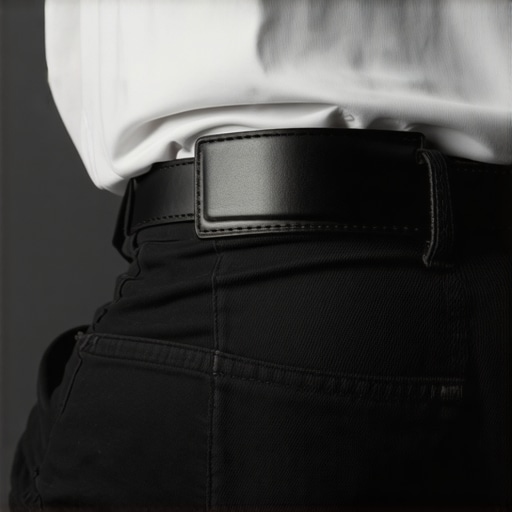
I remember the exact moment I realized my back wasn’t the problem—my pocket was. I was halfway through a four-hour drive, and my right leg felt like it was on fire. I kept shifting, trying to find a sweet spot that didn’t exist. I eventually pulled over, frustrated and limping. As I stood up, I felt a massive lump against my glute. It was my wallet, stuffed with old business cards and far too many receipts. I had been sitting on a literal brick for years, forcing my pelvis to tilt and my spine to compensate like a Jenga tower in a windstorm. It was a wake-up call that my daily habits were the real culprits.
Stop sitting on a brick every single day
Most of us do not think twice about where we shove our cash and cards. But that habit is a recipe for disaster. When you sit with a wallet in your back pocket, one side of your pelvis is hiked up. This creates a functional scoliosis where your spine has to curve just to keep your head level. This is not just about a little stiffness; it is about understanding the link between poor posture and chronic back pain and how it manifests in your daily environment. Today, I am going to show you how this wallet sciatica happens and the simple lifestyle shift that will save your lower back and keep your hips level.
Is a tiny piece of leather really that dangerous?
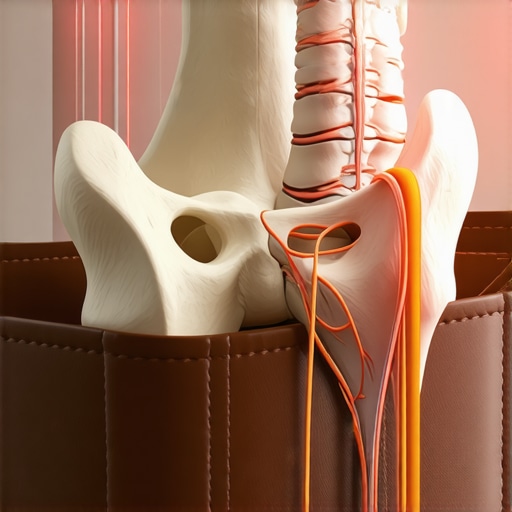
You might be thinking that an inch or two of leather cannot possibly be the root of your agony. I thought the same thing. I figured my body was tough enough to handle a slightly uneven seat. I was dead wrong. That tiny tilt puts direct pressure on the sciatic nerve. According to Harvard Health, wallet sciatica occurs when the wallet compresses the piriformis muscle, irritating the nerve beneath it. I made the mistake of thinking I needed a new mattress or expensive surgery when all I really needed was to move my cards to my front pocket. If you have been struggling to sit in a car for hours without triggering sciatica, look at what you are sitting on first. Have you ever felt that sharp, shooting pain after a long commute and wondered if it was your chair? You are not alone. Once you discover sciatica relief secrets, the solution becomes obvious. It is time to stop the tilt and level out your life.
Fixing the pain caused by your back pocket habit isn’t about buying fancy gadgets; it is about reclaiming symmetry. Think of your pelvis as the foundation of a house. If one side of the foundation is two inches higher than the other, the roof—your head—will eventually tilt, and the walls—your spine—will crack under the pressure. To fix this, we have to address the structural imbalance and then reset the muscles that have been screaming for help.
Stop carrying your life in your back pocket
The first and most non-negotiable step is the total eviction of the wallet from your rear pocket. I remember when I first made this switch. For the first three days, I felt completely lopsided. My brain had become so accustomed to the ‘normal’ tilt that sitting on a flat chair felt like I was leaning into a hole. I constantly reached for my back pocket out of habit, feeling a momentary panic that I’d lost my cash. But within 48 hours, that familiar electric zing down my right leg started to dull. If you want ergonomic tips for everyday comfort, this is the lowest-hanging fruit. Moving your wallet to your front pocket or using a slim card holder ensures your sit-bones are making even contact with the chair, allowing your spine to stack naturally.
Smash the knots with a tennis ball
Once you’ve removed the source of the pressure, you have to deal with the angry muscle underneath: the piriformis. This small muscle has been compressed against your sciatic nerve like a grape under a thumb. To release it, find a tennis ball or a lacrosse ball. Sit on the floor with your knees bent, place the ball under the glute that has been bothering you, and gently roll until you find a ‘hot spot.’ Hold that position for 30 to 60 seconds while taking deep breaths. Learning how a tennis ball can relieve deep glute and sciatic pain is a game-changer for those long-term compression issues. It’s a cheap, effective way to perform self-myofascial release without a professional massage.
Use your environment to force better habits
Our bodies are masters of returning to the path of least resistance. Even without the wallet, you might still find yourself leaning to one side out of muscle memory. This is where you have to ‘hack’ your environment to keep yourself honest.
Turn your rearview mirror into a posture alarm
One of the best ways to ensure you aren’t reverting to a slumped, tilted position is to use your car’s rearview mirror as a biofeedback tool. Sit up perfectly straight, level your hips, and then adjust your rearview mirror to force better posture. The moment you start to slouch or tilt your pelvis back into that old wallet-induced curve, you won’t be able to see out of the mirror. This forced correction keeps your spine elongated during long commutes, which is critical if you are trying to sit in a car for hours without triggering sciatica.
Reset your alignment with a quick glute squeeze
When you stand up after a long period of sitting, your hips are likely tight and rotated. Before you start walking, take five seconds to squeeze your glutes as hard as you can. This simple contraction helps ‘reset’ the pelvis and pulls the femur into a better position within the socket. Incorporating the 5-second glute squeeze that prevents sciatica flares ensures that you aren’t walking around with a rotated pelvis, which only perpetuates the cycle of back pain and nerve irritation. It’s a micro-habit that yields massive results over time.
Once you’ve ditched the wallet and started rolling out your glutes, you might think you’re on the fast track to a pain-free life. But here is the nuance that most people miss: sometimes, the very things we do to ‘fix’ our bodies are the things keeping us in a cycle of inflammation. I see it all the time with people who are obsessed with ‘perfect’ posture. They sit bolt upright, shoulders pinned back, spine as rigid as a board. In reality, why your straight posture is actually straining your muscles is a conversation we need to have more often. True mobility isn’t about being a statue; it’s about being able to move through a full range of motion without the nervous system screaming ‘stop!’
Stop stretching your hamstrings if you have sciatica
One of the biggest mistakes I see—and one I made for years—is the reflex to stretch whatever feels tight. If your legs feel stiff, you reach for your toes, right? Wrong. If you are dealing with nerve compression, why stretching your hamstrings can actually flare up sciatica becomes painfully clear. Nerves do not like to be stretched; they like to be ‘slid’ or ‘glided.’ When you pull on a sensitized sciatic nerve, you aren’t lengthening a muscle; you are irritating a high-voltage cable. This creates a protective guarding response that actually makes you feel tighter the next day. This is a classic ‘oops’ factor: treating a nerve problem like a muscle flexibility problem. A study published in the Journal of Orthopaedic & Sports Physical Therapy highlights that ‘neurodynamic’ movements—gentle gliding—are far more effective than static stretching for nerve-related pain. If you’ve been stretching for weeks with no relief, you’re likely just poking the bear.
Why does my back still hurt even though I’m doing everything right?
If you’ve cleared out your pockets, fixed your desk, and stopped the aggressive stretching, but the ache remains, it’s time to look at your ribs. Most chronic back pain sufferers are ‘chest breathers.’ We 10-second-fix our way through the day, never letting our diaphragm actually expand. This constant upward tugging of the ribcage keeps the lower back muscles in a state of high alert. Learning about the breathing habit that is keeping your back muscles tight is the ultimate ‘expert’ level shift. When you breathe into your belly, you create internal pressure that stabilizes the spine from the inside out, much like an internal airbag. Without this, your muscles have to work double-time just to keep you upright. You can spend thousands on neck pain solutions and lumbar supports, but if you’re breathing with your shoulders, you’re fighting a losing battle. Mobility mastery starts with the breath, not the gym.
The hidden trap in recovery is thinking that more intensity equals faster results. Whether it’s why your firm mattress is making your morning sciatica worse or why you shouldn’t be doing planks during a flare-up, the key is often doing less, but doing it better. We need to move away from the ‘no pain, no gain’ mentality and toward a ‘no strain, more gain’ philosophy. Have you ever fallen into the trap of over-stretching a painful area only to have it feel worse the next morning? Let me know in the comments—I’d love to hear how you’ve adjusted your routine once you realized the traditional advice wasn’t working.
I eventually moved from a tennis ball to a lacrosse ball because the density doesn’t give way when you hit a deep trigger point. It’s a brutal, necessary upgrade. If you’re serious about long-term results, you have to look at the gear that supports your structure when you aren’t thinking about it. For me, that meant investing in a specific McKenzie D-Section lumbar roll for my office chair. Most built-in chair supports are generic and hit the wrong part of the curve, which is exactly why your lumbar support might be making your back stiffer. I use the D-section specifically because it stays flat against the chair and doesn’t roll around, providing a consistent tactile cue to keep my spine neutral without the muscular effort of ‘sitting up straight.’ This isn’t just about comfort; it’s about navigating your path to restored mobility through environmental design rather than willpower.
Focus on the foundation to protect your lower back
I also realized that my back pain was often a downstream effect of my feet. I started using a slant board for three minutes every morning to open up my calves. It turns out, how a stiff ankle is actually causing your recurrent lower back aches is one of the most overlooked links in physical therapy. If your ankles can’t dorsiflex, your lower back has to pick up the slack every time you walk or squat. I now swear by the 30-second ankle drill that reduces your risk of back injury as my primary insurance policy. It’s a mechanical chain reaction: loose ankles lead to happy knees, which lead to a stable pelvis. 
How do I maintain spinal health over the long haul?
Consistency beats intensity every single time. You don’t need a 90-minute yoga session; you need ‘movement snacks.’ According to a 2024 study published in the British Journal of Sports Medicine, frequent micro-breaks are more effective for reducing musculoskeletal discomfort than one long bout of exercise at the end of a sedentary day. I set a timer on my desktop that forces me to stand every 25 minutes. During that break, I don’t just stand; I do one ‘wall angel’ or a quick glute squeeze. This keeps the nervous system from ‘locking’ the muscles into a protective, stiff state. If you want to dive deeper, mobility mastery is built on these small, repeatable wins. I predict that in the next five years, we will see a massive shift toward wearable biofeedback—tiny sensors in our clothing that vibrate when our pelvis tilts or our shoulders round, essentially acting as a digital coach that corrects us before the pain even starts. We are moving away from reactive treatments and toward real-time structural awareness.
Take the 24-hour posture challenge
If you want to see immediate change, I challenge you to do this: for the next 24 hours, move your wallet to your front pocket and adjust your rearview mirror to force better posture the next time you drive. You’ll likely feel ‘wrong’ or unbalanced at first, but that is simply your brain recalibrating to a level pelvis. These tiny, low-cost adjustments are the true sciatica relief secrets that the expensive gadget companies don’t want you to know about. Stop looking for a complex solution to a simple mechanical problem. Start by leveling your foundation and see how quickly your body rewards you with a full range of motion. If you’ve been struggling with stiffness, check out these proven techniques to regain your range of motion and start applying them today.
The One Thing I Wish I Knew Before Spending Thousands on My Back
I spent years chasing the symptoms of my pain while ignoring the architectural cause. If there is one thing I’ve learned, it’s that your body is remarkably resilient—it just needs a level playing field. First, I realized that nerves aren’t muscles; you can’t just stretch away a pinched sciatic nerve. Second, I learned that my brain was lying to me. It perceived the ’tilt’ as normal, making a healthy, flat seat feel alien. Finally, I discovered that back pain is often a cry for help from your feet and hips, not just your spine. Is your back pain a sign of something more serious? Usually, it is just a sign that your environment is working against your anatomy. I found that managing back pain in 2025 requires a look at these micro-habits before jumping into surgery or pills.
Tools That Actually Support Your Structural Integrity
You don’t need a gym full of equipment to fix your posture, but a few specific items changed everything for my recovery. I eventually swapped my tennis ball for a high-density lacrosse ball because it gets into those deep glute knots that soft foam misses. I also started using a McKenzie D-Section lumbar roll, which provides much more stable support than those flimsy cushions built into office chairs. For my morning routine, a simple slant board helps me tackle calf tightness, which is a major contributor to lower back strain. These swift relief for sciatica options are far more effective than expensive gadgets because they address the root mechanics of how you move every day. It is about creating a toolkit that allows for mobility mastery without needing a professional at your side 24/7.
You Aren’t Broken, You’re Just Out of Alignment
It’s easy to feel like your body is failing you when you’re in the middle of a flare-up. But remember, the journey toward navigating your path to restored mobility isn’t about perfection; it’s about progress. By making these small adjustments—ditching the wallet, fixing your mirror, and breathing into your belly—you are giving your nervous system the safety it needs to let go of that chronic tension. You have the power to change how your body feels by simply changing how you inhabit your environment. Let’s put these sciatica relief secrets into practice today by making your first pocket swap. Did you find that moving your wallet to your front pocket felt ‘wrong’ or unbalanced at first? Let me know in the comments below!