
The difference between muscular sciatica and a slipped disc
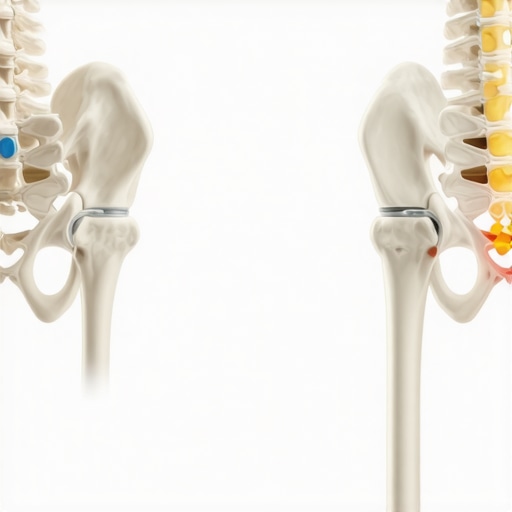
I remember the exact moment my world tilted. I was reaching for a heavy bag of groceries in the trunk of my car when a lightning bolt of pain shot from my lower back, through my hip, and all the way down to my ankle. My first thought? My spine is toast. I spent the next three days convinced I was headed for a surgical suite, terrified to even sneeze. I made the absolute classic mistake of aggressively trying to touch my toes to ‘loosen up,’ but as it turns out, why stretching your hamstrings can actually flare up sciatica is a lesson I had to learn the hard way. It wasn’t my spine at all; it was a stubborn, angry muscle in my glutes called the piriformis. Today, I want to help you stop the guesswork and finally figure out if your pain is coming from a structural ‘slipped’ disc or just a muscular rebellion, because the way you treat them is worlds apart.
That Searing Leg Pain Doesn’t Always Mean Your Spine Is Broken
Listen, when you feel that ‘nerve’ pain, your brain immediately goes to the worst-case scenario. We’ve all heard the horror stories of herniated discs. But here is a dirty little secret in the medical world: according to Harvard Health Publishing, many people have disc herniations visible on MRIs but feel zero pain, while others have excruciating symptoms caused by simple muscle imbalances. If you’ve been scouring the web for sciatica relief secrets, you need to know which enemy you are actually fighting. A slipped disc involves the cushion between your vertebrae pressing on a nerve root. Muscular sciatica, often called Piriformis Syndrome, is when a muscle in your butt gets so tight it literally strangles that same nerve. They feel almost identical, but the ‘fix’ for one can sometimes make the other feel like it’s being poked with a hot iron.
Is surgery the only way to fix this nightmare?
That is the fear that keeps us awake at 2:00 AM, isn’t it? We worry that if it’s a disc, we’re destined for a hospital gown. I’m here to tell you that’s rarely the case. Whether it’s a disc issue or a muscular knot, the body has a wild ability to heal when you stop poking the bear. I spent weeks doing the wrong exercises because I didn’t know the simple test to see if your leg pain is actually sciatica or something else entirely. Before you start looking for surgeons, you need to look at your daily habits. Are you sitting on a thick wallet? Did you know how your wallet in your back pocket is ruining your alignment could be the literal root of your ‘sciatica’? Have you ever felt like your leg was on fire just from sitting in your favorite armchair? If you’ve been struggling to walk or even stand without a wince, have you noticed if the pain changes when you shift your weight? Drop a comment below and let me know—does your pain get worse when you sit down, or when you try to stand up straight?If you answered that sitting makes the fire in your leg worse, you’re likely dealing with a disc that hates being compressed. If standing or walking for long periods is your trigger, your glutes and piriformis are likely the culprits. Regardless of the label, the first phase of recovery is the same: you must find your directional preference.
Stop Poking the Nerve and Start Finding Your Direction
To fix sciatica, you have to stop thinking about ‘stretching’ and start thinking about ‘centralizing.’ Think of your sciatic nerve like a frayed electrical wire. If you keep pulling on it—like when you try to touch your toes—you’re just making the sparks fly and the insulation wear thinner. Instead, you need to find the specific movement that pushes the pain back up toward your spine and away from your foot. This is called centralization, and it is the gold standard for knowing you’re actually healing.
Find the Movement That Actually Shuts the Pain Down
Take a second to perform the simple test to see if your leg pain is actually sciatica. If bending forward or slouching makes the fire in your leg worse, stop doing it immediately. I remember spending a whole Saturday trying to ‘roll out’ my glutes with a lacrosse ball because I thought it was just a knot. I was digging into the nerve like a jackhammer, and by Sunday, I couldn’t even stand up to make coffee. I was treating the symptom, not the source. It wasn’t until I learned how a tennis ball can relieve deep glute and sciatic pain without causing a flare-up—by targeting the muscle belly and not the nerve path—that I realized I had been bruising the very thing I was trying to save. If you spend all day hunched over a laptop, your spine is essentially being molded into a ‘C’ shape, which forces those discs to bulge backward. You need to reverse that mold by gently extending your spine.
Use Gravity to Give Your Discs Some Breathing Room
Your spine is like a stack of jelly donuts. If you squeeze one side too hard, the jelly (the disc material) starts to ooze out the other side and pinches the nerve. To get that jelly back where it belongs, you need decompression. You don’t need a fancy machine; you can learn how a simple reach and breathe move can decompress your back right at your kitchen counter. By lengthening the space between your ribs and your hips, you take the pressure off the ‘donut’ and let the nerve breathe. I do this every morning while the kettle boils, and it feels like my spine grows an inch.
Train Your Glutes to Protect Your Spine Automatically
Most of us have ‘glute amnesia.’ Our butts have forgotten how to work because we sit on them for eight hours a day. When your glutes are asleep, your lower back has to do all the heavy lifting, which is a recipe for a disc disaster. You can fix this while standing in line at the grocery store by using the 5-second glute squeeze that prevents sciatica flares while standing. It sounds silly, but that tiny contraction acts like a corset for your spine, stabilizing everything before you even take a step. It creates a ‘shield’ of muscle that prevents your spine from shearing forward every time you walk or lift.
Hack Your Environment to Force Better Habits
You can do all the exercises in the world, but if you spend three hours a day slumped in a car seat, you’re undoing all your hard work. One of my favorite tricks is to how to adjust your rearview mirror to force better posture. Set your mirror while you are sitting perfectly upright with a neutral spine. The moment you start to slouch, you won’t be able to see the traffic behind you. It’s a physical ‘nudge’ that keeps you honest without you having to think about it. If you feel the tension building during your commute, try the 10-second breathing trick for instant lower back relief to drop your diaphragm and take the strain off those tiny, overworked muscles in your lumbar region. Also, pay attention to how you move in the car; you need to understand why you should never reach into the backseat from the drivers seat if you want your discs to stay put during a commute. Think about those tiny ‘micro-twists’ you do throughout the day—they add up to big-time inflammation.We need to talk about the ‘Posture Police’ myth. For decades, we’ve been told that pulling our shoulders back and tucking our chin is the holy grail of spinal health. But here’s the nuanced truth: staying in any ‘perfect’ position for too long is just as damaging as slouching. In fact, research published in The Journal of Biomechanics suggests that spinal stiffness often stems from a lack of movement variety, not a lack of ‘straightness.’ If you’ve been told to sit up straight like a soldier, you might be surprised to learn why your perfect upright posture is actually tensing your spine and keeping those muscles in a state of constant ‘high alert.’ Have you ever fallen into this trap where you try to sit perfectly straight only to feel more exhausted by noon? Let me know in the comments.
Why does your neck still hurt even after you ‘fix’ your posture?
The ‘oops’ factor I see most often is what I call the compensation cascade. When your mid-back (the thoracic spine) gets stiff from years of office work, your neck has to work double-time to help you look around. You can stretch your neck until you’re blue in the face, but you’re just treating the victim. Understanding how a stiff upper back is forcing your neck to move too much is the key to breaking the cycle.
The hidden trap of self-adjusting for temporary relief
We’ve all been there—that satisfying ‘crack’ when you twist your neck or back just right. It feels like instant relief, right? But that relief is actually just a temporary chemical rush of endorphins. The problem is that you are usually cracking the joints that are already too mobile, while the stuck ones stay stuck. This leads to a vicious cycle where why cracking your own back is making your joints more unstable becomes the very thing keeping you in pain. Instead of chasing the ‘pop,’ you should be chasing the ‘flow.’ If you’ve been dealing with chronic stiffness, the truth about using heat packs versus ice for chronic stiffness is that you need to soothe the nervous system, not just shock the inflammation.
Why your hamstrings feel tight when your back is the real issue
This is perhaps the biggest myth in the mobility world: ‘If it feels tight, stretch it.’ If you have sciatica or a disc issue, your hamstrings will feel like steel cables. But they aren’t short; they are tense because the nerve is being tugged at the source. The real reason your hamstrings feel tight after a long walk isn’t that you didn’t stretch enough; it’s that your body is trying to protect your sciatic nerve. When you aggressively stretch those ‘tight’ legs, you’re actually pulling on an already inflamed nerve. This is why for many people, traditional neck pain solutions and back strategies fail—they focus on the muscle length instead of the neural harmony. Stop stretching the sensation and start addressing the mechanical pressure.
Ditch the Fancy Gadgets and Focus on These Essentials
I’ve spent thousands on high-end lumbar supports and futuristic ergonomic chairs, only to realize that why your standing desk is giving you lower back pain usually boils down to static loading, not the desk itself. High-tech gear can’t outrun a bad habit. These days, I keep my toolkit lean and focused on environmental triggers. My sleep setup is the first priority; I’ve found that the specific pillow height for back sleepers is the difference between waking up refreshed or feeling like my neck is in a vice. When I’m on the road or working from a café, I don’t rely on luck. I make sure I know how to set up your laptop for better spine protection because even thirty minutes of ‘shrimping’ over a screen can set my progress back a week.
How do I maintain my mobility results over time?
This is the hurdle where most people trip. They stop their routine the moment the fire goes out, but maintenance is where the real freedom lives. You don’t need a grueling hour-long gym session to stay pain-free. As Dr. Stuart McGill, a leading expert in spine biomechanics at the University of Waterloo, notes, the spine is constantly adapting to the ‘last’ thing you did to it. This is why I integrate mobility mastery daily tips to keep your spine and joints healthy into my existing routine. For instance, I strictly follow the 15-degree rule for your computer monitor to save your neck. It’s a passive fix that works while I’m focused on emails, preventing that slow, creeping tension from turning into a full-blown headache by Friday afternoon.
The Future of Spine Health is Sensory
We are entering an era where we stop treating the body like a series of pulleys and start treating it like a sophisticated computer. I predict that the next big shift in mobility won’t be a new stretch, but ‘proprioceptive priming’—teaching your brain to stabilize your joints before you even move. We’re moving away from brute-force stretching and toward nervous system hacks. If you want to jump ahead of the curve and protect your back from the ground up, I challenge you to try the 30-second ankle drill that reduces your risk of back injury. A stiff ankle forces the lower back to compensate for every step you take; fixing the foundation is the ultimate long-term shortcut. Give it a try before your next walk—you might be surprised how much quieter your back feels when your feet actually do their job.
The Lessons I Learned the Hard Way About My Spine
One of the biggest ‘aha’ moments I had was realizing that pain is a signal, not a life sentence. I used to think a flare-up meant I was back to square one, but now I look for the one sign that your sciatica is finally starting to heal—which is often just the pain moving out of the leg and into the back. I also had to accept that why stretching your hamstrings won’t fix your tight legs is a physiological fact when the nerve is the boss. If I could go back, I’d tell myself to stop chasing the ‘stretch’ and start chasing the ‘stability’. This shift from being a ‘victim’ of my spine to being its ‘guardian’ changed everything. Stop looking at your MRI like it is a death warrant; focus on how you move today instead.
The Only Resources You Need to Reclaim Your Mobility
I don’t believe in buying every gadget on Instagram. My spine survival kit is surprisingly simple. First, I rely on the science of experts like Dr. Stuart McGill—his ‘Big 3’ exercises are the foundation of unlocking mobility expert tips on managing back pain in 2025. Second, I keep a simple tennis ball in my car for long drives to tackle glute knots before they turn into nerve fire. Lastly, I always audit my environment using back pain breakthroughs navigating your path to restored mobility strategies, like checking my laptop height and my sleeping position every single night. These small, free changes outweigh any expensive ergonomic chair. #IMAGE_PLACEHOLDER_E#
Your Spine Is Far More Resilient Than You Think
The most important thing I can tell you is that your body is designed to heal. It isn’t a fragile vase waiting to shatter; it’s a living system that adapts to how you move. You don’t need a perfect spine to live a perfect life. You just need to stop the movements that ‘poke the bear’ and start the movements that create space. Science is showing us incredible new ways to find relief from chronic back pain, and by understanding your body’s mechanics, you are well on your way to reclaiming your freedom. Have you ever noticed your leg pain moving or ‘shifting’ up toward your back during a specific exercise? Let me know in the comments below!