
How to sit on the floor with your kids without hurting your hips

I was sprawled out on the rug last Tuesday, mid-way through building a very shaky LEGO “spaceship” with my four-year-old, when it happened. I tried to shift my weight and a sharp, nagging pinch shot straight through my right hip. It wasn’t just a little cramp; it was that deep, “I’m getting too old for this” kind of throb that makes you want to cancel your afternoon plans. For the longest time, I thought this was just the tax you pay for being a present parent. I figured my body was simply breaking down, or perhaps I was paying the price for years of poor posture and chronic back pain. But after one too many nights of limping to the medicine cabinet for ibuprofen, I realized that the way I was “relaxing” on the floor was actually a recipe for a hip disaster.
Stop Punishing Your Hips Every Time You Play
I’m going to be real with you: most of us sit like we’re trying to fold ourselves into a pretzel without the proper dough. We drop down into a cross-legged position and wonder why our hips feel stuck the moment we try to move. My biggest mistake early on was assuming that if it hurt, I just needed to push through it. I spent months aggressively stretching my hamstrings, only to find out that stretching your hamstrings won’t fix tight legs or hip impingement if your sitting mechanics are garbage. Today, I want to share the exact shifts I made so you can stay on that rug as long as the kids want without feeling like you need a hip replacement afterward. We’re going to fix your “floor-game” so you can focus on the memories, not the mobility issues.
Is floor sitting actually bad for your joints?
You might be thinking, “Maybe I should just sit on the couch and watch them from afar.” I get it. The fear is real. However, research suggests that floor sitting can actually be beneficial for longevity and joint health—if done correctly. According to a study published in the European Journal of Preventive Cardiology, the ability to sit and rise from the floor (the “sitting-rising test”) is a significant predictor of longevity in middle-aged and older adults. The problem isn’t the floor; it’s how we’ve lost the mobility and joint health required to be there comfortably. I used to be the parent who would groan every time I had to pick up a child or sit down for a game of Chutes and Ladders. Have you ever felt that sharp pinch in your groin or a dull ache in your lower back after just ten minutes of floor time? It’s frustrating, right? If you’ve ever found yourself making “old man noises” just to stand up from the carpet, you’re in the right place. We’re going to dive into how to enhance your back mobility and hip positioning so the floor becomes your friend again.
Control the Descent So You Don’t Crash
The way most of us get to the floor is less of a movement and more of a controlled fall. We round our spines, collapse our knees, and hope the carpet catches us. This ‘gravity-led’ approach puts immediate, sheer force on the lower lumbar discs and the sacroiliac (SI) joint. Instead, think of your body as a high-end elevator. You want a smooth, mechanical lowering. Much like the mechanics of how to pick up your dog or child without a back injury, you must lead with your hips.
The Hinge Is Your Best Friend
Before your knees even bend, push your hips back as if you are reaching for a chair that isn’t there. Keep your chest up and your core braced. This preserves the natural curve of your spine and engages the large glute muscles rather than dumping all the weight into your delicate hip sockets. Last Saturday, during an intense Hot Wheels race, I caught myself doing the ‘lazy drop.’ I immediately stood back up and reset, using my hands on my thighs to guide me down. The difference was instant; that sharp, familiar twinge in my tailbone never showed up because I didn’t let my pelvis tuck under me like a scared dog’s tail.
Elevate Your Pelvis to Save Your Spine
The biggest mistake people make on the floor is sitting with their butt at the exact same level as their feet. Unless you have the flexibility of a Cirque du Soleil performer, this position forces your lower back to round out. Think of your pelvis as a bowl of water; when you sit flat on the floor, the ‘water’ spills out the back, straining your ligaments.  By simply sitting on a firm cushion, a folded yoga mat, or even a thick book, you elevate your hips above your knees. This gravity-fed ‘dump’ of the pelvis forward creates a neutral spine. It is a key part of learning how to enhance your back mobility and ergonomic comfort. This tilt is often why your hip feels stuck when you try to sit cross-legged—your anatomy is literally fighting for space that isn’t there.
Switch Positions Before the Numbness Starts
The human body is designed for motion, not stillness. Even the ‘perfect’ posture becomes toxic if held for sixty minutes. I used to pride myself on being able to sit in a perfect ‘Indian style’ cross-legged position for an entire movie, only to find I couldn’t walk when the credits rolled. Now, I follow the ‘Five-Minute Rule.’ Every five minutes, I change my leg configuration. I go from cross-legged to a ‘Z-sit’ (one leg tucked in front, one behind), then to a ‘long-sit’ with legs out straight. This keeps the synovial fluid moving in your joints and prevents the ‘stiffening’ effect that leads to why your favorite yoga pose might be hurting your spine if you stay static too long. If you find yourself tightening up, try the 5-second glute squeeze that prevents sciatica flares while standing, but do it while seated. It acts as a micro-reset for your pelvic floor and deep hip rotators. After you finish your floor time, I highly recommend performing the 2-minute hip reset for better sleep tonight to ensure those muscles don’t stay locked in ‘play mode’ while you’re trying to rest.
I used to think that the tighter my back felt, the harder I needed to stretch it. It’s a logical trap: if a rubber band is tight, you pull it, right? But your body isn’t a rubber band. One of the most common mistakes I see—and one I lived through for years—is the obsession with reaching for your toes the moment you stand up from the floor. We’ve been conditioned to believe that flexibility is the ultimate cure-all, but for many of us, that aggressive hamstring pull is actually doing more harm than good.
Stop stretching your hamstrings if your back already hurts
Here is the contrarian truth: many people who think they have tight hamstrings actually have neural tension. When you sit on the floor in a slumped position, you are putting the sciatic nerve on a massive stretch. If you then stand up and immediately try to touch your toes, you aren’t just stretching muscle; you are yanking on a sensitized nerve. In fact, research by Dr. Stuart McGill, a world-renowned expert in spine biomechanics, suggests that excessive spinal flexion (like reaching for your toes) can actually increase intradiscal pressure and irritate the nerve roots. This is exactly why stretching your hamstrings can actually flare up sciatica rather than soothing it. If you feel a ‘zing’ or an electric sensation when you stretch, stop immediately. You’re likely tugging on your nervous system, not your musculature.
Can a stiff ankle really be the source of your lower back pain?
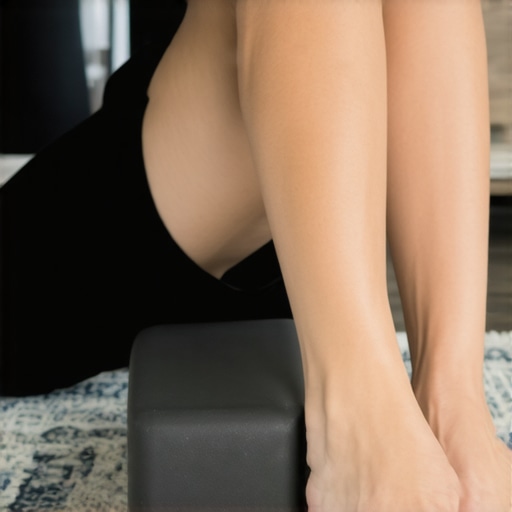
Most of us never look at our feet when our back hurts, but the body is an integrated chain. If your ankles are locked up—perhaps from years of wearing supportive shoes or old sports injuries—your body has to find that missing range of motion somewhere else. When you drop down to the floor to play, those stiff ankles force your knees to cave and your lower back to round prematurely to compensate. I discovered that by practicing a 30-second ankle drill that reduces your risk of back injury, I could actually sit deeper and more comfortably without my spine having to do the heavy lifting. It sounds wild, but how a stiff ankle is actually causing your recurrent lower back aches is a nuance that most general fitness programs completely overlook. If you can’t squat deeply with your heels on the ground, your floor-sitting game will always be a struggle for your spine.
The trap of self-adjusting your own spine
We’ve all done it. You stand up from the LEGO pile, feel stiff, and twist your torso until you hear a satisfying ‘pop.’ It feels like instant relief, doesn’t it? But here is the “oops” factor: that relief is often just a temporary hit of endorphins. By constantly ‘cracking’ your own back, you might be creating hypermobility in segments of your spine that actually need stability. This is why cracking your own back is making your joints more unstable over time. Instead of seeking that pop, focus on global movement. Look for the one sign that your sciatica is finally starting to heal, which is ‘centralization’—pain moving from your leg back toward your spine—rather than just chasing temporary cracks. Learning expert tips on managing back pain in 2025 means moving away from self-manipulation and toward intentional, stable movement patterns. Have you ever fallen into the trap of over-stretching or self-cracking just to get through the day? Let me know in the comments below, and let’s talk about better ways to find relief.
I used to think that a single ‘good’ session of floor play was enough to offset a week of sitting at a desk. I was wrong. Maintenance isn’t about the grand gestures; it’s about the boring, invisible habits you stack up when nobody is watching. If you want to keep your joints from feeling like rusted hinges, you have to treat your body like a high-performance machine that requires daily calibration. Over the last three years, I’ve moved away from the ‘no pain, no gain’ mentality and toward a system of mobility mastery and daily tips to keep your spine and joints healthy. This shift wasn’t just about feeling better; it was about ensuring I could still pick up my grandkids twenty years from now without a second thought.
The gear that actually saved my lower back
I’ve spent an embarrassing amount of money on ‘ergonomic’ gadgets that ended up as expensive dust collectors. However, a few items have become non-negotiable in my daily routine. The first is a high-density cork yoga block. Unlike the squishy foam ones, a cork block provides the firm feedback your pelvis needs to stay neutral when you’re working on the floor. I also keep a specific lacrosse ball in my bag at all times. While many people reach for a foam roller, I’ve found that how a tennis ball can relieve deep glute and sciatic pain is far more effective for pinpointing the piriformis muscle that often traps the sciatic nerve. If I’m working from a desk, I’ve learned exactly how to set up your laptop for better spine protection, which usually involves a separate keyboard and a stand that brings the screen to eye level. It sounds like a lot of gear, but these tools are the buffers that prevent a long workday from turning into a week-long flare-up.
How do I keep these joints moving for the next thirty years?
Maintenance is a psychological game as much as a physical one. I follow what I call ‘The 1% Rule’—I aim to improve one specific joint range by one percent every week. Dr. Kelly Starrett, author of Becoming a Supple Leopard and a pioneer in the field of human performance, emphasizes that ‘all human beings should be able to perform basic maintenance on themselves.’ This means spending at least ten minutes a day in ‘the bottom of the squat’ or working through sciatica relief secrets to banish pain quickly before it becomes chronic. It’s not about doing an hour of yoga; it’s about the ergonomic tips for everyday comfort that you integrate into your lifestyle. 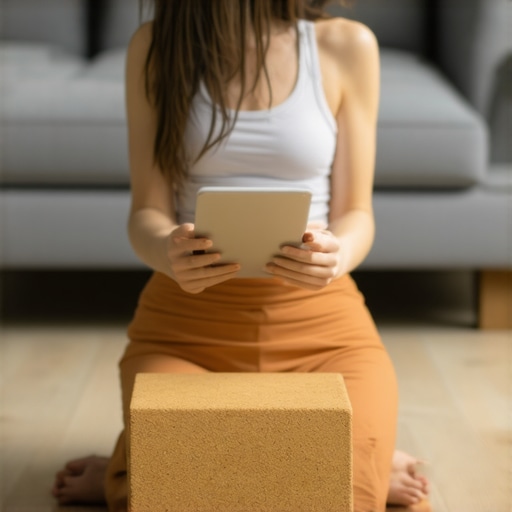
Why the future of back health is wearable
Looking ahead to 2025 and beyond, I predict we are going to see a massive shift toward bio-feedback technology. We are already seeing smart shirts with haptic sensors that vibrate when your shoulders round too far forward. Instead of relying on your own (often faulty) internal sense of posture, these tools will provide real-time data to help you overcome sciatica with lifestyle changes. This ‘quantified self’ movement will make it much harder to ignore the link between poor posture and chronic back pain. If you want to get ahead of the curve, I highly recommend trying one advanced tip this week: spend your next evening ‘scroll time’ on your phone while lying on your stomach, propped up on your elbows (the ‘Sphinx’ pose). This naturally reverses the slumped sitting posture and helps decompress the front of your hip capsules while you catch up on the news.
What I Wish I Knew Before My Hip Gave Out
Looking back, the biggest mistake I made wasn’t sitting on the floor—it was ignoring the “whispers” my body was sending before they became screams. I used to think a bit of stiffness was just part of getting older, but now I know that mobility is a skill you have to practice. First, I learned that sitting still is the enemy; even a “perfect” posture becomes a strain if you don’t move. Second, I realized that if I feel a sharp pinch, it’s often a sign that something more serious is happening and I need to adjust, not push. Finally, I discovered that consistency beats intensity every time. You don’t need a 90-minute yoga class; you need simple exercises that make a difference throughout your day.
The Toolkit That Keeps Me Mobile
You don’t need a home gym to stay healthy, but a few specific items changed the game for me. I keep a firm cork block near the coffee table for pelvic elevation—it’s far better than a soft pillow that just collapses. I also swear by a simple tennis ball for digging into those stubborn glute knots; it’s one of those sciatica relief secrets that costs almost nothing but provides massive comfort. Lastly, for my work-from-home hours, I’ve invested in a proper monitor stand to ensure I’m not undoing all my floor-sitting progress by hunching over a laptop. These small investments are my insurance policy for restored mobility and a pain-free life.
#IMAGE_PLACEHOLDER_E#
Build a Body That Can Play Forever
The goal of all this isn’t just to sit on the floor comfortably; it’s to ensure that your physical world stays as big as possible. When we stop getting down on the rug because it hurts, our world starts to shrink. By reclaiming your mobility today, you’re choosing a future where you aren’t sidelined by your own joints. Whether you’re dealing with neck tension or trying to revitalize your neck after a long day, remember that every small movement counts. Don’t wait for the “perfect” time to start taking care of your spine—start the next time you drop down to play.
What’s the biggest challenge you face when trying to get down on the floor or back up again? Let me know in the comments below!