
How your phone’s font size is impacting your neck tension
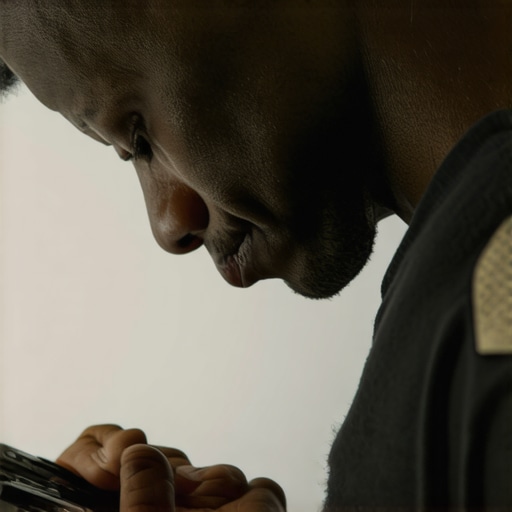
I was sitting on my couch last Tuesday, squinting at a news article on my phone, when a sharp, familiar pinch radiated from the base of my skull right down into my shoulder blades. I assumed it was just another long day at the office or that I had slept wrong again. But then I noticed my posture: I was hunched over like a question mark, my face inches from the glass, just trying to make out a three-sentence paragraph. It hit me then that my pride was literally hurting my spine. For the longest time, I refused to increase the text size on my device because I didn’t want to admit my eyes needed the help. That mistake kept me in a cycle of stiffness that no amount of stretching could fix because I was undoing the work every time I checked my email. Today, I want to show you how a thirty-second settings tweak can do more for your mobility than an hour of yoga.
My tiny text was a huge pain in the neck
The reality is that your body follows your eyes. When you struggle to read small characters, your head naturally drifts forward to compensate. This ‘forward head carriage’ places an incredible amount of strain on the cervical spine. In fact, research published in Surgical Technology International by Dr. Kenneth Hansraj reveals that tilting your head forward at a 60-degree angle to look at a phone can place up to 60 pounds of pressure on your neck. I learned the hard way that the specific way to hold your phone matters far less if you are still straining to see the screen. Once I bumped my font size up two notches, I stopped leaning into the ‘death grip’ pose. Have you ever caught yourself hunching over just to read a text message? It is a more common trigger for chronic discomfort than most people realize.
Is a bigger font actually worth the screen clutter?
I get the skepticism. You think your phone will look like a ‘grandpa phone’ or that you will be scrolling forever. I felt the same way until I realized that why your neck tension is making your eyes feel tired is actually a two-way street. By making the text larger, your eye muscles relax, which signals the suboccipital muscles at the top of your neck to let go of that protective guarding.
Why your eyes are bullying your neck muscles
Your nervous system is incredibly efficient; if it can’t see something clearly, it moves the whole ‘camera rig’ (your head) closer to the source. This constant micro-adjustment leads to what many call ‘Tech Neck.’ It isn’t just about the muscles in your neck getting tight; it can eventually lead to issues like neck pain and stress that feel impossible to break. When I finally swallowed my pride and adjusted my display settings, the ‘heavy head’ feeling I usually had by 3:00 PM started to vanish. We often look for complex medical solutions when the culprit is a digital setting we look at 100 times a day. By addressing the visual strain, we can finally give the spine a chance to recover and stop the constant tug-of-war between your vision and your posture.
Ditch the squint and save your spine
To stop the cycle of neck pain, you have to stop the eyes from leading the head into a trap. Think of your neck as a crane. If the load (your head) is positioned directly over the base, it is stable and easy to hold. But if the crane leans forward to get a better look at a small font, the weight on the base triples. I remember a flight to Chicago where I tried to finish an e-book with the font set to ‘compact.’ Halfway through, I felt a sharp throb behind my left eye. I wasn’t just tired; I was physically pulling my head toward the seatback in front of me just to see. I spent the next three days using the truth about using heat packs versus ice for chronic stiffness instead of enjoying the city because my neck had completely locked up.
Make your text bigger right now
Go into your phone settings under ‘Display & Brightness’ and increase the text size until you can read it comfortably from at least 12 inches away without leaning in. This forces your head back over your shoulders. It feels strange at first, almost like you are looking at a child’s book, but the relief in your upper traps is immediate. When you stop straining your vision, you stop the ‘eye-neck reflex’ that triggers constant guarding. If you’ve been dealing with long-term issues, you might also find that mobility mastery daily tips to keep your spine and joints healthy work much better once you’ve removed this daily visual stressor. 
Set your monitor to the sweet spot
Your desktop environment is often just as guilty as your phone. Your head is like a 10-pound bowling ball; for every inch it tilts forward, it adds 10 pounds of effective weight to your spine. You need to follow the 15-degree rule for your computer monitor to save your neck to ensure your gaze stays neutral. If your screen is too low, you will subconsciously tuck your chin and compress your airway. I once used a stack of old textbooks to lift my laptop just three inches, and the nagging burning sensation between my shoulder blades vanished by noon. If you aren’t sure if your setup is the culprit, consider how your monitor height is causing those recurring headaches as a primary signal to adjust your desk.
Release the tension with a simple jaw trick
There is a direct neurological link between your jaw, your eyes, and the base of your skull. When we squint to read small text, we often clench our teeth. This creates a chain reaction of tension that travels down the spine. You can break this by performing the 10-second jaw release that softens your neck muscles every time you switch between apps. While you are at it, incorporate the seated shoulder blade squeeze to kill midday tension headaches to reset your mid-back. By focusing on these micro-adjustments to your environment and your immediate physical response, you prevent the ‘creeping slouch’ that leads to chronic degeneration.
Ditch the military-style posture
Most ergonomic ‘experts’ tell you to sit up as straight as a board, shoulders pinned back like a soldier on parade. In my experience, this is the fastest way to end up in a specialist’s office. When you force a rigid, 90-degree angle, you are engaging in static loading, which essentially chokes off the blood flow to your spinal tissues. I spent years trying to maintain a ‘perfect’ spine, only to realize that why your perfect upright posture is actually tensing your spine. The real secret isn’t a static position; it’s movement. A study published in the European Spine Journal highlights that ‘postural variability’—the ability to shift and move throughout the day—is far more protective against chronic pain than holding any single ‘correct’ pose. If you find yourself stiffening up to look ‘proper,’ you are likely causing the very tension you are trying to avoid. Have you ever fallen into the trap of trying to sit too straight? Let me know in the comments. 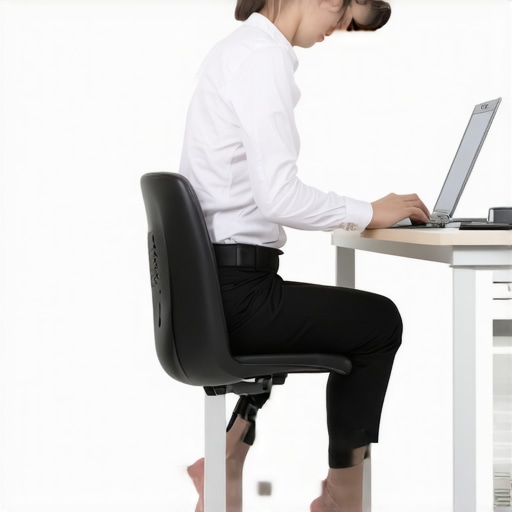
Stop stretching your hamstrings into a flare-up
This is the biggest ‘oops’ factor I see with people trying to fix their own back pain. We are taught that ‘tight’ equals ‘needs stretching.’ However, if you are dealing with nerve irritation, reaching for your toes is like pulling on a raw wire. I’ve seen countless people wonder why stretching your hamstrings can actually flare-up sciatica, and the answer is usually neural tension. If the nerve is already inflamed, aggressive stretching just makes it angrier. Instead of pushing through the burn, you should be looking at boost your back mobility simple exercises that make a difference without aggravating the delicate nerve endings. If you feel a ‘zing’ or a sharp pull that doesn’t feel like a normal muscle stretch, stop immediately; you are likely tugging on a nerve, not a muscle.
How do I know if my mattress is the secret culprit behind my morning stiffness?
If you wake up feeling like you’ve been in a car wreck but feel better after a hot shower and twenty minutes of walking, your bed is likely the problem. There is a common myth that a rock-hard mattress is better for your back. In reality, why your firm mattress is making your morning sciatica worse often comes down to pressure points. If the surface doesn’t give at the hips and shoulders, your spine is forced to bow sideways all night. You should also be careful with self-adjusting when you wake up stiff; why cracking your own back is making your joints more unstable is a real concern if you are forcing movement into joints that are trying to protect themselves. If you aren’t sure where the pain is coming from, it’s worth checking is your back pain a sign of something more serious key symptoms to watch to ensure you aren’t ignoring a deeper issue while you wait for a new mattress to arrive. Reclaiming your mobility is about nuances—like knowing when to move, when to rest, and when a simple setting on your phone is the real root of your neck’s rebellion.I’ve spent thousands of dollars on gadgets that promised to ‘cure’ my back, but only a few actually made the cut. One of my non-negotiables is a simple tennis ball that I keep right on my desk. It sounds low-tech, but how a simple tennis ball can release your deep glute tension while you are on a long Zoom call is an absolute game changer for preventing that deep sciatica ache. I also had to get honest about what was happening at my feet. I realized that why your current sneakers are causing your lower back to ache is often because they lose their internal support long before they look worn out. Now, I replace my daily walkers every six months like clockwork because my spine can’t afford the lack of shock absorption.
My secret weapons for a bulletproof desk
For the office, the Ergotron LX monitor arm was the best investment I ever made. It allows for what I call ‘dynamic height.’ If I feel my upper traps tightening, I can instantly raise the screen and move it closer, forcing me to lean back. This is part of what Dr. Stuart McGill, a legendary spine biomechanics expert and author of Back Mechanic, refers to as ‘spinal hygiene.’ It isn’t about one perfect move; it’s about the cumulative effect of how we interact with our environment. To get your own workspace in order, start with how to set up your laptop for better spine protection and see how three inches of elevation can stop that burning sensation in your shoulders. 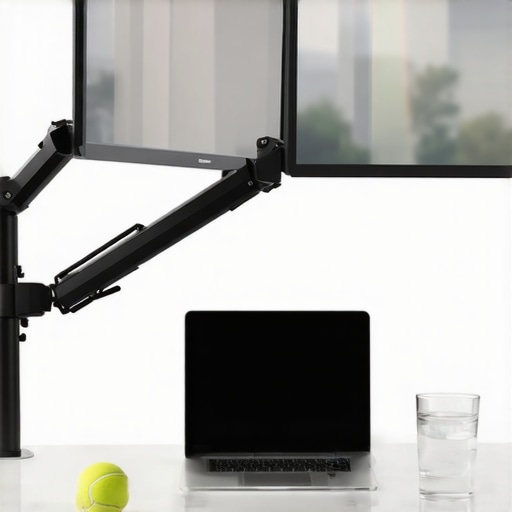
Wearable AI will soon replace your chiropractor
Looking ahead, I predict we are going to see a massive shift away from passive ergonomic chairs and toward active AI monitoring. We are already seeing the first generation of ‘posture guardians’—tiny sensors or webcam integrations that analyze your shoulder position in real-time and give you a haptic nudge when your head starts to drift forward. In five years, your monitor might actually shut off if you spend too long in a ‘question mark’ pose. This proactive technology will make back pain breakthroughs navigating your path to restored mobility much easier for the average person because the ‘reminders’ won’t rely on your tired brain.
How do I maintain my spine health without overthinking it?
The key is to automate your habits. I set a ‘mobility alarm’ on my phone for every 90 minutes. It isn’t an invitation to do a full workout; it is a cue to run through mobility mastery daily tips to keep your spine and joints healthy like a quick chest opener or a jaw release. If you make the environment do the work for you—by setting larger font sizes and raising your screen—you won’t have to ‘remember’ to sit up straight. Your body will naturally find the position of least resistance. If you do nothing else today, go into your monitor settings and bump that scaling up to 125% and watch how your neck tension drops by sunset.
The Hardest Lessons from My Journey With Tech Neck
The biggest lightbulb moment for me was realizing that my eyes were the puppet masters of my posture. I spent years trying to stretch my way out of pain, but I was ignoring the visual signal that told my brain to lean forward. Here are the truths I finally had to accept:
- Rigid posture is a trap. I found that why your straight posture is actually straining your muscles is a real phenomenon where you trade one kind of tension for another. True relief comes from variability, not from sitting like a statue.
- Vision is the driver. Your suboccipital muscles at the base of your skull are neurologically wired to your eye movements. If your eyes are straining to see tiny pixels, your neck will never truly relax.
- Upper back stiffness is a sneaky thief. I learned how a stiff upper back is forcing your neck to move too much, which made me realize I needed to treat the whole thoracic chain to save my cervical spine.
Tools That Earned a Permanent Spot on My Desk
I’ve tested every gadget on the market, but these three are the only ones that actually moved the needle for my neck pain and overall mobility. First, a high-quality monitor arm is essential because it allows for the 15-degree rule, keeping your gaze neutral. Second, never underestimate the power of self-massage; I’ve found that how a simple tennis ball can release your deep glute tension helps reset the entire posterior chain while I’m on long calls, which indirectly eases the pull on my lower back. Finally, I highly recommend checking out back pain breakthroughs navigating your path to restored mobility to understand how your environment dictates your physical health. These tools aren’t just luxuries; they are protective barriers for your joints.
Take Back Your Comfort One Setting at a Time
Reclaiming your life from chronic tension doesn’t require a complete lifestyle overhaul. It starts with the small, almost invisible choices you make while interacting with your technology every single day. By increasing your font size and adjusting your screen height, you remove the constant physical threat that makes your nervous system lock down your neck and shoulders. You have the power to stop the cycle of neck pain and restore your natural mobility starting today. I promise your future self will thank you for being the person who chose a larger font over a locked-up spine. For more ways to keep your body feeling young, check out these mobility mastery daily tips to keep your spine and joints healthy. #IMAGE_PLACEHOLDER_E#
What was the one small setting change that finally gave your neck a break? Let me know in the comments below!