
How to Get Out of a Car Without Twisting Your Back

It was a crisp Tuesday morning when my lower back decided to hold me hostage. I had just finished a painless, forty-minute drive to my favorite local coffee shop, feeling completely fine. I turned off the ignition, swung my right leg out of the door, and casually twisted my torso to grab my laptop bag from the passenger seat. Pop. A sudden, white-hot flash of pain shot through my lower spine, leaving me absolutely frozen, half-in and half-out of my sedan. I spent the next ten minutes trying to slide out of the driver’s seat like a melting piece of butter, praying none of my neighbors were watching. That agonizing morning was a massive wake-up call about how a single, mindless twist can instantly wreck your spinal health. You do not need to live in fear of your commute; there is a simple, biomechanical way to protect yourself.
Why Your Daily Commute is Quietly Wrecking Your Spine
Most of us treat exiting a vehicle like a casual shrug. We grab our bags, twist our upper bodies, and step out one leg at a time. It seems harmless, but this combination of rotation and flexion under load is the exact recipe for a herniated disc. When you sit, your lumbar spine is already in a vulnerable, flexed position. Adding a sharp pivot on top of that is asking for trouble. Early in my journey, I made the classic mistake of thinking I just needed to stretch my lower back more to fix this stiffness. I was completely wrong, and why stretching your back might be making your herniated disc worse taught me that flexibility is not a shield against terrible daily mechanics. According to the structural safety standards evaluated by ergonomics researchers, the twisting motion while seated forces the lumbar vertebrae to rotate beyond their natural, microscopic limits, placing immense shear stress directly on the delicate spinal discs. Today, we are going to fix this. I will share the exact, pain-free pivoting method that keeps your spine perfectly aligned so you can step out of any vehicle with confidence.
Is a simple pivot really enough to protect my lower spine?
You might be skeptical. It seems too simple to be true. Can changing the way you swing your legs really prevent a major muscle spasm? Absolutely. When you stop twisting your torso independently of your hips, you eliminate the shearing force that pinches nerves and strains deep stabilizers. If you are already dealing with a sensitive lumbar spine, you must also look at how you sit during the ride. For example, learning how to sit in a bucket seat without triggering your sciatica is a vital piece of the puzzle. Have you ever experienced that terrifying moment where your back locks up the second you try to stand up from your car? Tell me about your worst post-drive flare-up in the comments below. Let’s dive into the step-by-step mechanics of the ‘swivel-and-step’ technique so you never have to freeze in a parking lot again.
How to Master the Pain-Free Swivel and Step
To understand why this method works, think of your spine as a tall stack of delicate ceramic cups. When you sit in a car, that stack is already leaning slightly forward. If you turn your shoulders to grab your bag while your hips remain glued to the seat, you are violently twisting that leaning stack of cups. The result is a sharp, pinching shearing force. To prevent this, you must keep your shoulders and your hips locked together like a solid block of concrete. I learned this the hard way during a rainy winter afternoon at a gas station. I tried to rush my exit to avoid getting wet, forgot my own advice, twisted my torso, and felt that terrifying twinge. I had to sit back down, take a deep breath, reset my posture, and execute the movement correctly just to stand up without collapsing.
Turn Your Entire Body as a Single Unit
The secret lies in treating your torso and pelvis as one immovable piece. Before you even think about opening the car door, place both hands on the steering wheel or the side of your seat to stabilize yourself. Instead of sliding one leg out, squeeze your knees together and pivot your entire body toward the door on your pocket bones. Your shoulders, chest, and hips must rotate at the exact same time. By pivoting your whole pelvis, you completely bypass the twisting motion that triggers severe spinal issues. If you struggle with leg sensations during drives, knowing how to tell if your leg pain is a muscle strain or a pinched nerve can help you understand what areas are most vulnerable during this pivot.

Plant Both Feet Firmly Before Standing
Once you have pivoted, you should be sitting sideways in your car seat with both feet dangling over the doorsill. Do not try to stand up yet. This is where most people make a critical mistake: they attempt to stand up with one foot inside the car and one foot on the pavement, which tilts the pelvis sideways. Instead, plant both feet flat on the ground, shoulder-width apart. This creates a wide, stable base of support. If you suffer from tightness in your lower limbs, you might notice how physical limitations affect your stability; for instance, learning why your calves are tight and how it pulls on your lower back reveals how restricted ankles can make this flat-footed plant feel surprisingly difficult. Keep your weight evenly distributed between both heels.
Use Your Legs and Your Car Door for Leverage
Now that your feet are anchored, brace your core. Lean forward slightly from your hips, keeping your spine completely straight. Do not round your lower back. Place one hand on the car door frame and the other hand on the dashboard or your seat for support. Push through your heels to drive your body upward into a standing position, using your legs rather than pulling with your back. This movement is identical to a proper squat. For those managing ongoing lumbar issues, keeping your body moving correctly throughout the day is essential, which is why practicing mobility mastery daily tips to keep your spine and joints healthy will reinforce these healthy movement patterns outside of your commute.
The Mobility Myth: Why Stretching Is Actually Making Your Pain Worse
Ask anyone on the street how to fix a stiff, painful back, and they will almost certainly tell you to stretch. It seems incredibly logical. Your muscles feel tight, so pulling them apart should bring relief. However, in my years of studying movement mechanics and working through my own spinal issues, I have found that this is one of the most dangerous myths in modern recovery. When your lower spine is sensitized or dealing with a bulging disc, that feeling of tightness is not a mechanical shortening of the muscle. Instead, it is your brain’s protective guarding mechanism. Your nervous system is actively firing those muscles to act as a natural splint, protecting a vulnerable joint underneath. When you aggressively stretch, you bypass this protective barrier, forcing a hyper-mobile segment to move even further, which can worsen nerve compression.
Instead of forcing a stretch, we need to focus on stability and precise alignment. If you suffer from shooting leg pain, you might find that why some sciatica stretches actually pinch the nerve further perfectly explains why your morning hamstring routines leave you limping by lunchtime. The real key to relief is building a resilient, stable core that stops excessive movement in the lumbar joints altogether, rather than trying to make an already unstable spine more flexible.
Why does my back still feel incredibly stiff if flexibility is not the real issue?
The sensation of tightness is a symptom, not the root cause. This is the sophisticated trap that catches most chronic pain sufferers. A groundbreaking study published in the Journal of Orthopaedic & Sports Physical Therapy demonstrated that targeting motor control and deep spinal stabilization is significantly more effective at reducing long-term disability than general flexibility training. When you stretch a guarded muscle, you get a temporary neurological release that lasts for about twenty minutes, making you think you did something good. In reality, you have just weakened the protective guard, leaving your discs completely exposed to shearing forces the next time you sit, bend, or twist.
This is why people often find themselves in a vicious cycle: they stretch, feel good for a moment, sit down, and then lock up even worse. To break this loop, you need to implement active stabilization exercises. For instance, incorporating the dead bug exercise variation that actually protects your spine into your daily routine teaches your nervous system that it is safe to let go of that protective muscular spasm. Have you ever fallen into this trap of stretching your back only to have it seize up later? Let me know in the comments below.
The Static Sitting Trap and the Subtle Shift That Fixes It
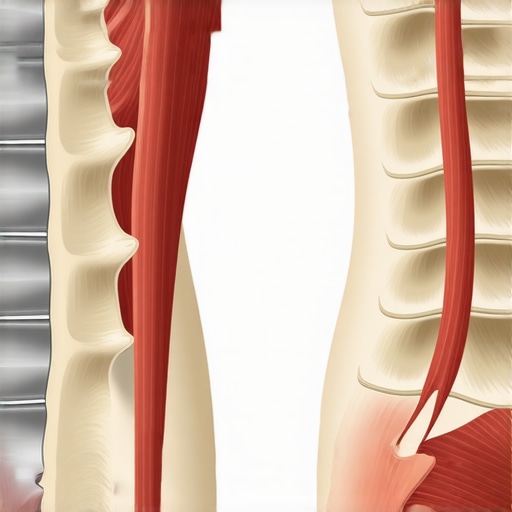
Another nuance that most people overlook is the absolute danger of long, uninterrupted static sitting. Even if you use the perfect swivel-and-step method to exit your vehicle, sitting for hours beforehand slowly starves your spinal discs of nutrients. Your discs do not have a direct blood supply; they rely on movement to pump fluid and nutrients in and out. When you sit completely still, you create a state of stagnant ischemia. To combat this, you do not need to do full workouts during your workday or commute. A slight, periodic change in your sitting angle is all it takes to redistribute the pressure across different parts of your lumbar discs. If you struggle with leg numbness on long drives, understanding how a slight change in your sitting angle stops leg numbness can be a game-changer for your daily comfort. Protect your spine by shifting your pelvis slightly every fifteen minutes, keeping your joints lubricated and ready for action.
Maintaining a healthy, pain-free spine over the long term requires more than just reacting when a spasm strikes. Once you have mastered the basic mechanics of movement, your focus must shift toward daily conservation and structural support. To build true resilience, I rely on a few highly specific tools that protect my lumbar integrity when my focus inevitably drifts during a busy workday.
My Personal Toolkit for Daily Spinal Defense
I do not believe in gimmicky gadgets, but there are two tools I use every single day to maintain my spinal health. The first is a high-density McKenzie Lumbar Roll. I do not place it haphazardly; I position it precisely at the level of my belt line to preserve my natural lordotic curve. This simple habit keeps my posture from collapsing during long office sessions, and learning the specific way to use a lumbar roll for maximum relief made a massive difference in preventing afternoon fatigue. The second tool is a simple wooden slant board, which I use to maintain ankle mobility. If your ankles are stiff, your hips and lower back must work twice as hard to stabilize your body when walking or squatting.
How do I maintain my spine and joint mobility over time?
Consistency beats intensity every single time. To keep your joints healthy, you must perform low-impact, stabilizing movements daily rather than relying on occasional intense workouts. Incorporating mobility mastery daily tips to keep your spine and joints healthy into your routine will help you establish sustainable habits. Focus on strengthening the deep stabilizers of your core and hips. Additionally, pay close attention to how you perform simple everyday tasks, such as understanding how to tie your shoes without straining your lower back, to prevent micro-traumas from accumulating over weeks and months.
Where the Future of Spinal Care is Heading
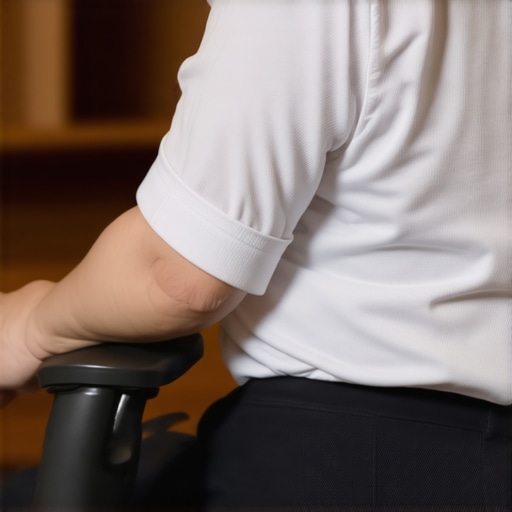
We are currently seeing a massive shift away from passive treatments like spinal fusions and heavy pain medications toward active, biomechanical restoration. Leading biomechanics expert Dr. Stuart McGill has long advocated for building a stiff, resilient core “box” rather than focusing on spinal flexibility, and modern physical therapy is finally catching up to this philosophy. In the coming years, I predict we will see smart wearable sensors integrated into daily apparel that provide subtle haptic feedback the moment your spine begins to shear or slump. Until that technology becomes mainstream, the responsibility lies with us to consciously build structural strength and practice mindful movement patterns. To start building that foundational core strength today without risking a flare-up, I highly recommend trying the wall sit modification for building core strength without back strain as your very next step.
The Hardest Lessons I Learned on My Path to Spinal Resilience
When my back first locked up in that coffee shop parking lot, I thought my active life was over. I spent months looking for a quick fix, falling into traps that many of us encounter. Through trial, error, and deep research, I discovered a few fundamental truths that changed everything:
- Your spine is not a fragile stick. It is a highly adaptable, robust system that only fails when we repeatedly abuse its basic biomechanical pathways.
- Guarding is not your enemy. That intense morning stiffness is actually your brain’s brilliant way of splinting a vulnerable joint. If you fight this guard with aggressive stretching, you invite more damage.
- Small, mindless movements accumulate. A single bad twist in a car seat does not happen in a vacuum; it is usually the final straw after hours of static sitting.
By understanding how these elements interact, you can stop reacting to sudden spasms and start proactively defending your body. If you are tired of dealing with morning discomfort, adopting the morning routine that prevents lower back stiffness is an incredible way to build momentum early in your day.
My Essential Daily Toolkit for Lasting Mobility
I do not advocate for expensive therapies or complex machinery. True structural recovery comes down to a few basic, high-yield tools that I use to keep my body balanced:
- McKenzie Lumbar Support: Placing this at my belt line keeps my lumbar spine neutral during long computer sessions, preventing that gradual, destructive slump.
- A Wooden Slant Board: I use this to keep my ankles mobile. Restrained ankles force your lower back to absorb forces it was never designed to handle.
- Core Stability Protocols: Rather than chasing flexibility, I focus on building a stable core box. Incorporating boost your back mobility simple exercises that make a difference helps me maintain movement control without triggering pain.
The Future of Your Spine Starts with Your Very Next Move
You do not have to live in constant fear of your daily commute or a sudden flare-up. By taking control of how you transition out of your car and how you sit during your workday, you are actively choosing a life of freedom and movement. Building a resilient body is a gradual process, but every mindful pivot and stable squat acts as a deposit into your long-term physical health. To expand your knowledge and explore more advanced recovery strategies, check out back pain breakthroughs navigating your path to restored mobility to keep moving forward with confidence. Have you ever experienced your back locking up during a simple daily task like getting out of your car? Let me know in the comments below!