
Why Stretching Your Back Might Be Making Your Herniated Disc Worse
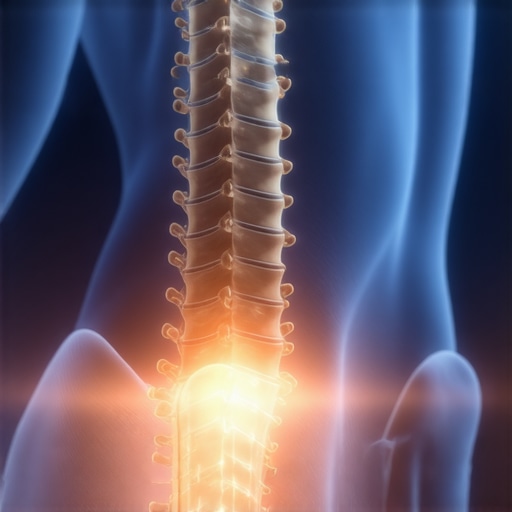
I still remember the exact Tuesday morning my back decided to quit on me. I rolled out of bed, felt that familiar, dull ache in my lower spine, and immediately dropped to the floor to do what I thought was the ultimate cure: a deep, double-knee-to-chest stretch. I pulled my knees in tight, expecting that sweet release of muscle tension. Instead, a white-hot bolt of lightning shot down my left leg, leaving me gasping for air on the carpet. I had just forcefully pushed my bulging spinal disc directly into my sciatic nerve root.
The Trait of the Spine: When Good Intentions Go Terrible
For years, we have been told that when something feels tight, we must stretch it. It is an instinctual response. But when you are dealing with a compromised spinal disc, that instinct is a lie. I spent months making my own recovery twice as long because I kept performing deep forward folds and twisting stretches every single morning. I thought I was working through the stiffness. In reality, I was repeatedly squeezing jelly out of a donut and wondering why the donut kept collapsing. If you are currently waking up and immediately bending forward to touch your toes, you might be trapping yourself in this exact same painful loop.
Is stretching actually always the right answer?
The short answer is a resounding no. When a disc is herniated or bulging, the outer fibers of the disc are torn or weakened. Bending your spine forward—known as spinal flexion—creases the front of your vertebrae and forces the inner disc material further backward, which is precisely where your sensitive nerves live. This is why why some sciatica stretches actually pinch the nerve further rather than offering relief. Research published by the National Institutes of Health (NIH) indicates that repetitive lumbar flexion drastically increases intradiscal pressure, which can worsen disc herniations. Today, we are going to break down why your back feels so tight in the morning and look at the actual mechanics of how to protect your spine. Have you ever felt your pain spike immediately after trying to stretch it out on the floor? Let me know in the comments below, because we need to talk about how why your lower back feels fragile in the morning before you make the same mistakes I did.
When you wake up, your spinal discs are naturally engorged with fluid. They act like fully inflated balloons, which is why your spine feels tight. If you immediately bend forward, you crease those balloons and force the fluid to press against your sensitive nerve roots. To stop this cycle of pain, you must replace your morning stretch with stabilization techniques that protect your spinal column.
How to Decompress and Stabilize Without Bending
The secret to relieving that deep morning ache is not stretching, but creating safe space between your vertebrae. Think of your spine as a hydraulic car jack; if you try to bend the metal while it is under heavy load, it will snap. Instead, you need to lift the pressure off the structure straight up. I remember a particularly terrible Thursday when my back was so locked up I could barely slide out of bed. Instead of reaching for my toes, I rolled onto my side, kept my spine completely neutral, and used my arms to push my torso upright. By avoiding that single forward bend, I managed to walk to the kitchen without a single spasm.
Roll Out of Bed Like a Log
The very first movement you make in the morning dictates how your nerves will behave for the next twelve hours. Never sit straight up from a flat back position. Instead, perform a strict log roll. Keep your shoulders and your hips moving at the exact same speed, turning onto your side as one unified piece. From there, let your feet swing off the edge of the mattress while using your elbow and opposite hand to press your upper body sideways into a sitting position. This simple change completely eliminates the shearing forces that compress your lower discs before you even stand up. It is the practical foundation of the morning routine that prevents lower back stiffness entirely.
Switch to the Dead Bug for Deep Core Control
Once you are up, you need to activate your deep core muscles to act as a natural back brace. Sit-ups and traditional crunches only mimic the exact forward-bending motion that injured you in the first place. Instead, lie flat on your back on a firm floor. Raise your arms straight toward the ceiling and bend your knees to ninety degrees. Slowly lower your right arm behind your head while extending your left leg straight out, keeping your lower back pressed flat against the floor. If your back arches, you have lost the engagement. Using the dead bug exercise variation that actually protects your spine ensures you build stability without putting any direct pressure on your bulging discs.
Hinge From Your Hips Instead of Your Waist
Every time you brush your teeth, wash the dishes, or tie your shoes, you are likely micro-flexing your spine. To protect your lower back, you must learn to hinge at the hips. Keep your spine perfectly straight and push your glutes backward, letting your knees bend slightly. This shifts the entire load of your upper body off your lower back muscles and onto your powerful glutes and hamstrings. If you must bend down to reach something low, practicing how to tie your shoes without straining your lower back will teach you the exact hip-hinging mechanics needed to keep your spine neutral throughout the day.
Breathe Into Your Pelvis to Release Tension
When our backs hurt, we tend to take shallow chest breaths, which causes the muscles around our lumbar spine to lock up in a protective spasm. You can actively release this tension by changing your breathing mechanics. Lie on your back with your knees bent and place your hands on your lower abdomen. Inhale deeply through your nose, focusing on pushing your hands upward and outward, filling your entire pelvic bowl with air. Learning how to breathe into your lower back to release deep muscle tension allows you to neurologically turn down the pain signals and relax tight muscles without ever bending or twisting your spine.
We have all been told that to fix a problem, we must attack it directly. If your hamstrings feel like tight violin strings, the natural instinct is to stretch them until they give up. But this is where the conventional wisdom fails, and it is the exact trap that kept me locked in a cycle of chronic flare-ups for over a year. When you are dealing with sciatica, that intense tightness in the back of your leg is actually a protective neurological response, not a muscular issue. Trying to forcefully stretch your way out of it is like pulling both ends of a knotted rope.
The Hamstring Myth and the Danger of Aggressive Stretching
Here is the contrarian truth: your hamstrings are probably not tight at all. Instead, your nervous system has placed them under high tension to protect an unstable lumbar spine. When you perform classic hamstring stretches, you are actually putting the sciatic nerve on a maximum stretch under tension. This aggressive pulling sensitizes the nerve root even further, leading to more protective spasm. It is a vicious loop. I spent months doing forward folds because I thought my tight legs were causing my back pain. Once I realized that why your hamstrings are not the real reason your back is tight, I stopped stretching them altogether, and my radiating leg pain finally began to recede.
Why does the pain return even after a perfect adjustment?
Many people find temporary relief from a chiropractic adjustment or physical therapy session, only to have the exact same dull ache return by Monday morning. The hidden nuance lies in your daily, repetitive movement patterns. Passive treatments create a window of neurological relief, but if you immediately return to your old habits—like slumping on a soft couch or crossing your legs at work—your brain will quickly re-engage the protective muscle guarding. In fact, a study published in the Journal of Orthopaedic & Sports Physical Therapy highlights that long-term recovery depends heavily on active movement re-education rather than relying solely on passive manipulation. Understanding the real reason your adjustment didn’t last through the weekend is the key to breaking this cycle and making your progress permanent.
The Static Sitting Trap That Shuts Down Your Glutes
Another massive blind spot in recovery is the way we sit. Most people think that buying an expensive ergonomic chair solves everything. However, the human body was designed for movement, not static support. When you sit for longer than sixty minutes, your brain actively suppresses the neural drive to your glutes—a phenomenon known as gluteal amnesia. When you stand up, your lower back has to work twice as hard to stabilize your pelvis because your main powerhouse muscles are essentially asleep. This silent shift in muscle recruitment is why your glutes turn off when you sit for over an hour, directly overloading your vulnerable spinal discs.
To truly heal, we have to look past the surface symptoms and address these deep, daily habits. Have you ever fallen into this trap of stretching your hamstrings only to feel worse hours later? Let me know in the comments below, because sharing these experiences is how we shift the conversation toward real, lasting recovery. If you are ready to stop chasing temporary fixes, focusing on spine hygiene and core stabilization will give your body the quiet space it needs to repair itself for good.
Once you understand the hidden triggers behind your morning stiffness and gluteal amnesia, the focus shifts from short-term relief to long-term spinal maintenance. Relying on passive therapy is a temporary fix; real recovery requires active, everyday tools that protect your spinal column. Over the years, I have tested countless devices, and most are marketing gimmicks. However, a few specific tools completely changed my recovery trajectory by physically preventing me from slipping back into bad habits.
How do I maintain my spinal health over time?
The key to maintaining spinal health is consistency and using tools that actively decompress your spine rather than just masking the pain. My absolute favorite tool is a simple, high-density foam roller. However, most people use it completely wrong by rolling aggressively over their lower back, which actually causes the lumbar spine to arch and spasm. Instead, learning how to use a foam roller on your mid-back without causing pain allows you to mobilize your thoracic spine, which instantly takes the mechanical pressure off your lower back.
For sitting, I completely stopped relying on the built-in lumbar supports of expensive office chairs. They are rarely placed at the correct anatomical height for your unique spine. Instead, I use an independent, firm foam cylinder. Learning the specific way to use a lumbar roll for maximum relief keeps your lumbar spine in its natural lordotic curve, preventing the disc bulges from creeping backward while you work.
Looking to the future, I predict we will see a major shift away from generic ergonomic furniture and toward smart, biofeedback-driven wearable sensors that gently vibrate when your pelvis tilts or your posture slumps. Until that tech becomes mainstream, we must rely on our own movement education. I highly recommend starting with one simple, active change today: the next time you sit down to work, adjust your lumbar roll to sit exactly at the waistband of your trousers and feel your spine immediately relax. By prioritizing these daily, active micro-adjustments, you can easily maintain mobility mastery with daily tips to keep your spine healthy for years to come.
When it comes to managing persistent lower back discomfort, we often get trapped in a cycle of immediate reaction. We feel a pinch, so we pull. We feel stiffness, so we stretch. But true spinal hygiene is about learning to step back and let the body stabilize. Over years of dealing with my own spinal quirks, I had to completely unlearn the brute-force approach to recovery.
3 Big Realizations That Changed How I Handle Spinal Flairs
The journey from constant pain to lasting comfort taught me that the body is not a machine you can simply stretch into submission. Here are the three most critical lightbulb moments from my recovery journey:
- The spine craves stillness over movement: When a disc is vulnerable, it does not need to be twisted or bent to heal. It needs a rigid, supportive environment so the surrounding tissues can calm down.
- My morning stiffness was actually inflammation, not tight muscles: Trying to stretch away morning stiffness is like rubbing sandpaper on a sunburn. The fluid-filled discs need gentle, upright movement to naturally decompress, not forced flexion.
- The sciatic nerve is a cord, not an elastic band: You cannot stretch a nerve to make it feel better. Pulling on a sensitized nerve only makes it swell more, which is why aggressive hamstring stretches often backfire so spectacularly.
The Simple Tools I Actually Rely On Daily
I threw away the complicated traction devices and expensive massage chairs. Instead, my daily routine relies on a few low-tech, high-yield tools that keep my spine aligned without any fuss:
- A Firm Lumbar Roll: Placed right at my waistband, this simple cylinder is non-negotiable for any drive longer than fifteen minutes. It mechanically prevents my lower back from slumping into a dangerous C-curve.
- A High-Density foam roller: I use this strictly on my mid-back, never my lower back, to keep my thoracic spine mobile so my lumbar spine does not have to overwork.
- A simple physical barrier: Sometimes, the best tool is just a physical cue, like placing a sticky note on my computer monitor to remind me to sit back and avoid leaning forward.
Taking Back Control of Your Daily Movement
True healing is not about finding a single miracle stretch; it is about rewriting the quiet, daily habits that slowly chip away at your spinal health. By replacing aggressive bending with smart stability, you give your body the exact environment it needs to repair itself. Every time you choose to log roll out of bed or hinge at your hips, you are actively choosing a pain-free future. If you are ready to build a foundation of lasting comfort, focusing on consistent spine hygiene is how you achieve true mobility mastery with daily tips to keep your spine healthy.
Have you ever found yourself in that frustrating loop of stretching your back only to feel tighter a few hours later? Let me know in the comments below, and let’s talk about what worked for you!