
Why Your Lower Back Hurts When You Reach for the Floor
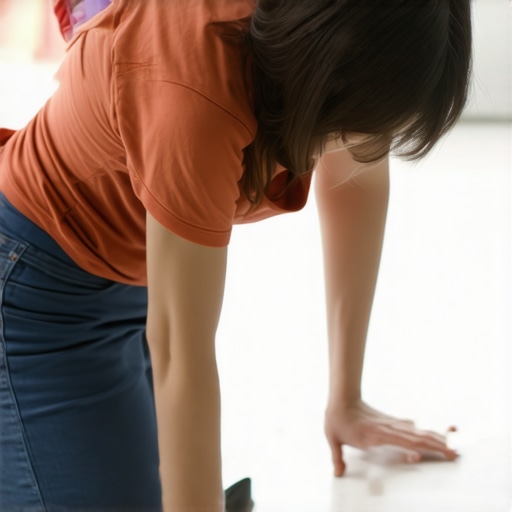
It was a chilly Tuesday morning, and my favorite coffee mug was sitting on the kitchen floor after slipping out of my hand. I leaned over to pick it up. No big deal, right? Just a simple, everyday bend. But halfway down, my lower back locked up with a fierce, sharp pull that left me gasping. I was stuck hovering over the linoleum like an unfinished statue. It was incredibly frustrating, and honestly, a bit embarrassing. If you have ever felt that sudden, protective spasm when simply trying to tie your shoes or grab something you dropped, you are definitely not alone. We tend to blame our spine or assume we are just getting old, but the mechanics behind this everyday struggle are much more interesting.
The Real Reason Gravity Feels Like an Enemy
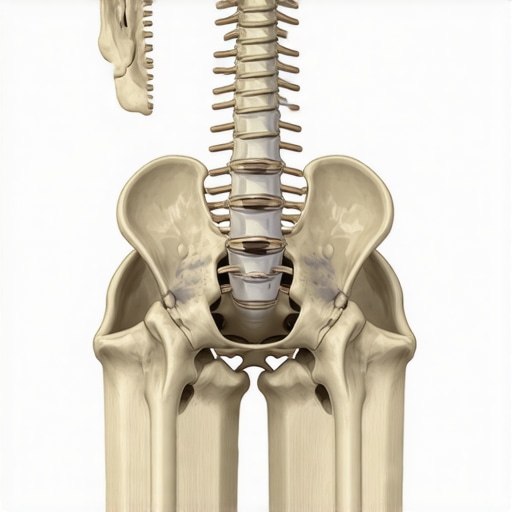
When you bend forward, your body relies on a beautiful, coordinated chain of movement. It is not just your spine doing the work. In fact, a major mistake I made for years was treating my back like an isolated pillar. I spent hours trying to stretch my spine directly, which actually made my discomfort worse. The truth is, your hips and legs are supposed to bear the brunt of that downward journey. If your hips are locked up, your lower back is forced to overwork and bend way past its comfortable limit. You can easily test how your lower body behaves by learning the simple way to check your own spine for pelvic tilt, which often reveals the silent posture habits contributing to this daily strain.
Is this just a permanent sign of getting older?
It is easy to throw our hands up and assume our joints are just wearing out. But the issue is rarely a permanent structural failure. Instead, it is usually a functional roadblock. When we sit for hours at our desks, our body adapts to that folded shape. Our hamstrings get short, our glutes go to sleep, and our pelvic alignment gets thrown completely out of whack. A surprising study published by the Journal of Biomechanics highlights that even minor limitations in hip flexion can increase shear loading on the lumbar spine by over 20%. That extra stress is exactly why your body screams at you when you try to reach the floor. To make matters worse, many of us default to a tight, shallow breathing pattern when we bend, which deprives our core of natural stability. Learning how to breathe into your lower back to release deep muscle tension can instantly change how safe your nervous system feels during movement.
How to Stop Fighting Your Own Anatomy
Today, we are going to unpack how to reclaim that lost range of motion so you can bend, scoop, and reach without that constant fear of throwing your back out. We will look at why your current stretching routine might be working against you, and how to transition to movements that build genuine resilience. To start protecting yourself immediately during your morning routine, you can practice how to tie your shoes without straining your lower back. Have you ever experienced that sudden, terrifying catch in your back while reaching for something completely light and harmless? Tell me about your most frustrating moment in the comments below, because understanding exactly when and how your back locks up is the first step to fixing the pattern for good.
Shift the Pivot Point from Your Spine to Your Hips
Imagine your spine is an expensive, high-tech fishing rod. It is designed to bend and curve gracefully under a dynamic load, but if you repeatedly bend it completely in half at one single point, it will eventually snap. Your hips, on the other hand, are built like heavy-duty door hinges. They are designed to carry massive weight and rotate smoothly without wearing out. To protect your lower back, you have to consciously shift the pivot point of your movement. The next time you need to reach down, keep your spine long and push your butt backward toward the wall behind you. This simple movement is called a hip hinge, and it instantly transfers the load from your fragile lower back muscles to your powerful glutes and hamstrings.
I remember a Saturday morning last spring when I was helping a friend move. I had to pick up a heavy wooden crate from the floor, and I could already feel that familiar, warning tightness creeping into my lumbar spine. Instead of just reaching down with rounded shoulders, I stood close to the crate, unlocked my knees slightly, and drove my hips straight back as if I were trying to close a car door with my backside. It felt a bit awkward and messy at first, but I lifted that heavy crate without a single twinge of pain. That moment proved to me that changing the movement pattern is far more effective than just resting and hoping the stiffness goes away. If you often struggle with these movement mechanics, learning how to lift heavy boxes using your hips instead of your spine can completely transform your daily physical resilience.
Unlock your tight calves to free your pelvis
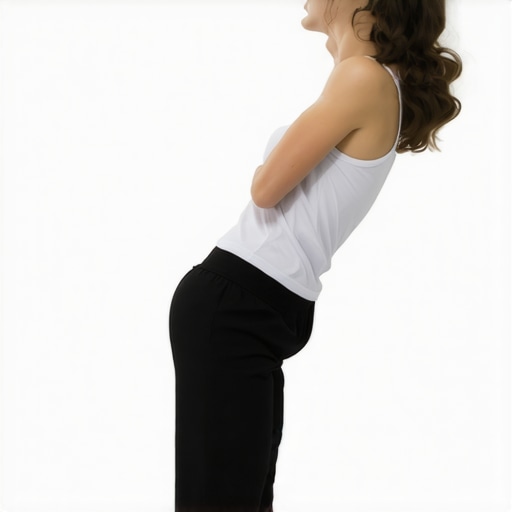
You might think your hips are the only roadblock, but your lower body is deeply interconnected. When your lower legs are incredibly stiff, they act like an anchor that prevents your pelvis from tilting properly when you bend over. This structural bottleneck forces your lower back to overcompensate for the lack of movement down below. Exploring why your calves are tight and how it pulls on your lower back is a crucial step in restoring your natural, pain-free range of motion. By targeting these lower leg muscles, you instantly take the mechanical pressure off your lumbar spine.
Build deep core stability without crunching
Many people believe they need to perform hundreds of sit-ups to protect their spine. However, traditional crunches actually increase the compressive forces on your lumbar discs, which can make your daily stiffness even worse. Instead, you need to focus on exercises that train your trunk to remain stable while your limbs are moving. Practicing the dead bug exercise variation that actually protects your spine helps build that deep, internal corset of muscle without putting any unnecessary strain on your back joints. This protective core strength is what keeps your spine safe when you reach for a dropped item or turn around quickly in your seat.
Stop stretching your lower back when it feels tight
When our back feels stiff, our immediate instinct is to fold forward and pull on our knees to stretch it out. While this might give you a temporary, fleeting sense of relief, it actually overstretches the ligaments and destabilizes the spine even further. This is especially true if you are dealing with disc issues. Understanding why stretching your back might be making your herniated disc worse will help you break this counterproductive cycle. Instead of forcing your spine into deep flexion, focus on mobilizing your hips and maintaining a neutral pelvic alignment throughout the day.
When you are struggling to bend over without a sudden protective spasm, it is easy to focus all your attention directly on the lumbar spine. We are conditioned to treat the area that hurts as the source of the problem. However, this hyper-focus on local symptoms leads to one of the biggest mistakes in modern physical recovery: trying to force mobility into a joint that is actually screaming for stability.
The Core-Strength Paradox You are Probably Falling For
Everyone tells you to build a stronger core to protect your back, but in my experience, traditional core training actually makes back tightness worse. We have been taught to believe that a rigid, braced midsection is the ultimate shield against injury. The truth is, over-bracing your torso during everyday movements like reaching or walking turns your midsection into a solid block of concrete. This constant tension robs your spine of its natural, micro-adjusting movement. If you want to break this cycle of stiffness, you should focus on boost your back mobility simple exercises that make a difference rather than endlessly bracing.
When you artificially stiffen your abdominal wall, you increase the intra-abdominal pressure to a point where your hips can no longer rotate smoothly. This is the ultimate biomechanical trap: by trying to protect your back with brute muscular force, you end up freezing your pelvic mechanics, which forces your lower back to bear the brunt of every step you take. A fascinating study published in the Journal of Orthopaedic & Sports Physical Therapy demonstrated that excessive, conscious trunk stiffness actually increases joint contact forces in the lumbar spine, accelerating wear and tear rather than preventing it.
Why does my back still lock up even though I stretch my hamstrings every single day?
If you are diligently stretching your legs and still cannot reach your toes without pain, you are likely treating a symptom of nerve tension rather than actual muscular tightness. When your pelvis is tilted out of its optimal position, it puts your hamstrings on a constant, protective stretch. They feel tight because they are already pulled taut like a bowstring to keep you from falling forward. Adding more aggressive static stretching to this system only irritates your sciatic nerve. To truly get to the root of this pattern, you can start by exploring understanding the link between poor posture and chronic back pain to see how your pelvic tilt controls muscle tension. Breaking this cycle is the only way to get lasting relief.
Another dangerous trap is ignoring how your upper body influences your lower joints. For example, severe thoracic stiffness from sitting at a desk can lock up your mid-back, leaving your lower spine to overcompensate for the lack of rotation. If you also experience stiffness that creeps upward, looking into neck pain solutions proven techniques to regain your range of motion can help restore systemic mobility. Have you ever fallen into this trap of stretching a muscle that was already overstretched? Let me know in the comments below, and let’s discuss how to shift your approach toward true, sustainable movement freedom.
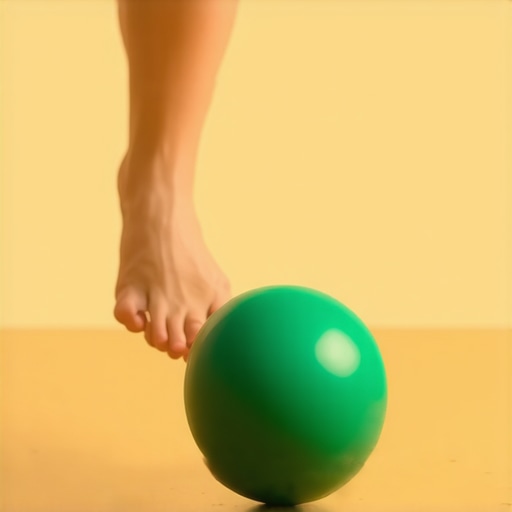
When you are trying to break a cycle of chronic stiffness, consistency always beats intensity. Many people make the mistake of reserving their movement practice for a weekly 60-minute yoga class, but your nervous system responds far better to tiny, frequent inputs of safety. This is why I personally rely on a simple tool called a lacrosse ball. I keep one under my desk and another next to the couch. By spending just two minutes rolled under the arch of each foot while taking a phone call, I can instantly release the plantar fascia. Because your body is connected from your head to your toes, releasing the bottom of your feet has a profound, cascading effect that relaxes your hamstrings and decompresses your lower back.
The Direct Connection Between Hydration and Your Spinal Discs
Another massive element of long-term spinal maintenance is simply looking at your cellular health. Your spinal discs do not have a direct blood supply; instead, they rely on a process called fluid imbibition to draw in nutrients and stay plump. When you are chronically dehydrated, those discs lose their height, making your joints sit closer together and increasing the likelihood of a pinched nerve. I recommend drinking a large glass of water with trace mineral drops first thing in the morning to jumpstart this process. To truly understand how this biological mechanism keeps your spine bouncy, you can read about how proper hydration keeps your spinal discs plump and healthy.
How do I maintain my back mobility over the long haul?
Maintaining a pain-free spine is not about avoiding movement; it is about building a diverse movement diet. The human body thrives on variety. If you only walk on flat concrete sidewalks, sit in ergonomic chairs, and bend in one straight plane, your joint receptors will eventually forget how to stabilize in other angles. I highly recommend incorporating dynamic ground movement into your daily life. Spending just five minutes a day sitting on the living room floor while watching television forces your hips to rotate and stretch in ways a standard sofa never could. Practicing mobility mastery daily tips to keep your spine and joints healthy is the best insurance policy against future flare-ups.
The Future of Spinal Longevity is Neurological
As we look toward the future of physical therapy and spinal health, the industry is shifting rapidly away from purely structural explanations toward neurological rehabilitation. Advanced clinics are now using specialized biofeedback tools that measure real-time muscle activation patterns, allowing patients to see exactly when their core muscles are over-bracing. World-renowned spine biomechanist Dr. Stuart McGill has long emphasized that retraining the motor patterns of how we move throughout the day is far more critical than simply building raw muscular strength. In the coming years, wearable sensors will likely track our pelvic tilt in real-time, gently alerting us before we ever make a movement error that causes a spasm. For those looking to take immediate charge of their recovery today, checking out these unlocking mobility expert tips on managing back pain in 2025 will give you an edge on these modern movement strategies. If you want to start building this resilience right now, I encourage you to try the hip hinge pattern the very next time you brush your teeth tonight.
When you are struggling to bend over without a sudden protective spasm, it is easy to focus all your attention directly on the lumbar spine. We are conditioned to treat the area that hurts as the source of the problem. However, this hyper-focus on local symptoms leads to one of the biggest mistakes in modern physical recovery: trying to force mobility into a joint that is actually screaming for stability.
Three Hard-Won Lessons About Lower Back Tightness I Had to Learn the Painful Way
For years, I believed that my stiff back was just a structural failure I had to accept. It took a lot of trial, error, and unnecessary flares to finally realize how the body actually operates as a single, connected unit. Here are the shifts in perspective that changed everything for me:
- Stretching is often a trap: Pulling on muscles that are already tense is usually an act of war against your nervous system. When I stopped aggressively stretching my hamstrings and started focusing on pelvic alignment, my persistent back aches finally began to dissipate.
- Your feet dictate your spine: I never realized that stiff ankles and locked-up arches could lock up my entire backside. The moment I started rolling out my feet and mobilizing my ankles, my hips suddenly found the freedom to hinge.
- True core strength is quiet: Bracing like a powerlifter just to pick up a pen only creates systemic stiffness. Your deep stabilizer muscles should work in the background, keeping you stable without forcing you to hold your breath.
The Tools I Rely on Every Day for Restoring Natural Movement
You do not need an expensive gym membership or high-tech machinery to reclaim your movement freedom. Instead, a few simple, highly deliberate tools can help you reset your alignment from home:
- A high-density lacrosse ball: This is my absolute favorite tool for self-myofascial release. It is small enough to target the arches of the feet and the deep glute muscles, which directly relieves the pulling forces on your pelvis.
- A simple lumbar roll: Placing a supportive roll behind your lower back when sitting helps maintain your natural spinal curve. If you want to maximize this simple setup, using the specific way to use a lumbar roll for maximum relief is an easy way to prevent your discs from decompressing unevenly during long workdays.
- An unweighted wooden dowel or broomstick: Holding a broomstick along your spine while practicing your hip hinge is the perfect biofeedback tool. It teaches your brain to keep your head, mid-back, and sacrum aligned, preventing you from rounding your spine when you reach down.
How to Take Back Control of Your Daily Movement
Reclaiming your mobility is not about achieving a perfect, athletic split or spending hours on a yoga mat. It is about restoring the simple, quiet confidence to bend down and tie your shoes, pick up your children, or grab a dropped set of keys without that sudden flash of fear. Your body is incredibly resilient, and it wants to move efficiently. By shifting the work to your powerful hips and teaching your nervous system to let go of protective tension, you can break the cycle of chronic stiffness and protect your spine for the long haul. Remember, every small movement choice you make today is an investment in your physical freedom tomorrow.
Have you ever had your lower back lock up on you during a completely normal, everyday task? Let me know in the comments below, and let’s talk about how to get your hips moving again.