
How to set up your home office for less than fifty dollars
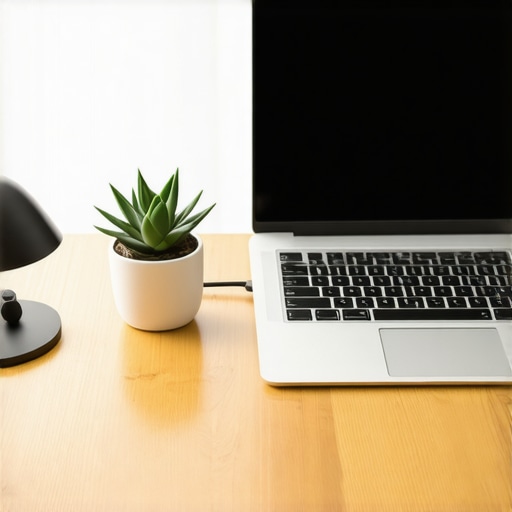
I was stuck. Literally. I’d spent three weeks working from my sofa, hunched over a laptop like a gargoyle, until one Tuesday morning when I tried to stand up and my lower back just… quit. It felt like a hot poker was being pressed into my spine. I’d always thought that ergonomics was just a fancy word companies used to sell thousand-dollar chairs, but as I crawled toward the kitchen for ibuprofen, I realized my cheap-out method was costing me my mobility.
My five hundred dollar mistake started with a cheap coffee table
I used to think I was being frugal. I’d tell myself that as long as I had Wi-Fi and a surface for my laptop, I was winning at the remote work game. But understanding the link between poor posture and chronic back pain became a very expensive lesson for me early on. My biggest blunder? I once bought a like-new ergonomic chair from a garage sale for twenty bucks, only to find out the internal lumbar support was snapped. Instead of fixing my posture, it forced my spine into a weird C shape that triggered a month of shooting leg pain. According to the Mayo Clinic, sitting without proper support can increase the load on your spinal discs significantly compared to standing, which explains why my budget setup was actually a recipe for disaster.
Can you really get a pro setup for the price of a pizza?
Most people think they need to drop a whole paycheck on a motorized standing desk, but the truth about standing desks and lower back fatigue is that they aren’t a magic cure-all if you don’t use them correctly. Today, I want to show you how I rebuilt my workspace for less than fifty dollars by focusing on what actually matters for your spine. We’re going to look at how to set up your laptop for better spine protection using items you probably already have in your closet. Have you ever felt that nagging ache between your shoulder blades after just an hour of emails? If so, you’re exactly who I wrote this for. We aren’t just saving money here; we are saving your neck and future mobility.
Reclaiming Your Spine Without Emptying Your Wallet
Think of your head like a twelve-pound bowling ball balanced on a single chopstick. Every time you lean forward to squint at your laptop, that bowling ball starts to feel like forty pounds to your neck muscles. This constant strain is exactly how your phones font size is impacting your neck tension on a larger scale. You need to stop the tech-neck before it starts by bringing the screen to your eyes, not your eyes to the screen.
The Secret Power of a Shoebox and a Ten-Dollar Keyboard
My first attempt at fixing my posture was a disaster because I tried to sit perfectly upright on a wooden stool. I quickly learned why your perfect upright posture is actually tensing your spine when my mid-back began to spasm. The solution was surprisingly low-tech. I took three thick cookbooks and a sturdy shoebox to raise my laptop until the top third of the screen sat at eye level. This is the foundation of the 15 degree rule for your computer monitor to save your neck. If you are looking down even slightly, your neck is doing overtime. However, once you lift the laptop, you can no longer type on it without looking like a T-Rex. I spent twelve dollars on a basic wired keyboard and mouse at a thrift store. This allows your shoulders to drop and your elbows to stay at a ninety-degree angle, which is the only way to avoid those deep knots between your shoulder blades. 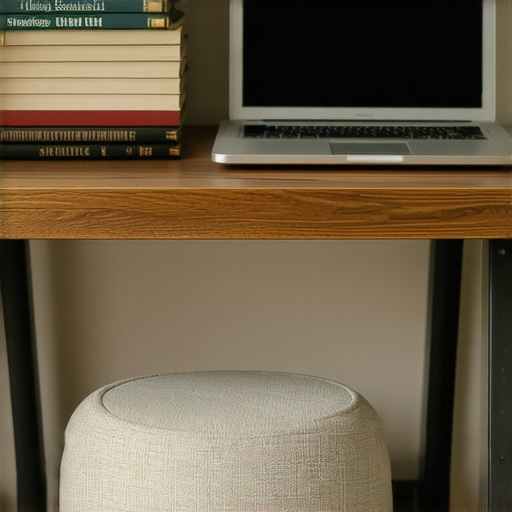
Stop Reaching and Start Supporting
When your arms reach forward to a laptop on a table, they act like levers that pull your upper back into a curve. I remember a specific Tuesday when I spent six hours straight reaching for my mouse; by 5:00 PM, I felt a burning sensation near my ribs. I found out later that why looking at your keyboard while typing is ruining your neck is often tied to this forward reaching habit. Now, I keep my external keyboard close enough that my elbows graze my ribs. If you feel like your arms are floating in space, your shoulders will eventually rebel.
The Footstool Secret for Low Back Relief
If your feet are dangling or even just flat on the floor while you sit in a chair that is slightly too high, your lower back takes the hit. I used to feel a dull ache in my tailbone until I implemented the simple footstool trick to stop lower back pain while sitting. You don’t need a fancy ergonomic wedge; a reams of printer paper or a folded-up yoga mat works perfectly. By slightly elevating your knees above your hips, you take the pressure off your lumbar discs. If you still feel tight after an hour, stop what you are doing and perform the 10 second wall slide for instant shoulder tension relief to reset your system. Be careful though, because why your laptop stand might be making your neck knots worse is a real risk if you don’t adjust your seat height to match your new screen position.I used to believe that as long as I wasn’t ‘slouching,’ I was doing everything right. But the reality is that ‘perfect’ posture can be just as damaging as a bad one. Let’s dig deeper into the nuances that most people—and even some doctors—overlook when it comes to long-term mobility.
Stop Trying to Sit Perfectly Still
The biggest myth in the ergonomic world is that there is one ‘correct’ static position you should hold for eight hours. In reality, why your straight posture is actually straining your muscles comes down to the lack of blood flow. Your spine thrives on movement. When you force yourself into a rigid, upright stance, you’re creating isometric tension that eventually leads to exhaustion. A study in the Annals of Internal Medicine found that for chronic low back pain, staying active and performing specific strengthening exercises outperformed bed rest and rigid stabilization by a significant margin.
The Hamstring Stretch That Might Be Making Your Pain Worse
We’ve all been told that if our back hurts, we need to stretch our hamstrings. However, why stretching your hamstrings won’t fix your tight legs is often because that ‘tightness’ isn’t a short muscle; it’s your nervous system trying to protect a sensitive sciatic nerve. If you have a disc issue, cranking on your hamstrings actually pulls the nerve taut, which can lead to a flare-up. This is the ‘Oops’ factor most fitness enthusiasts miss. 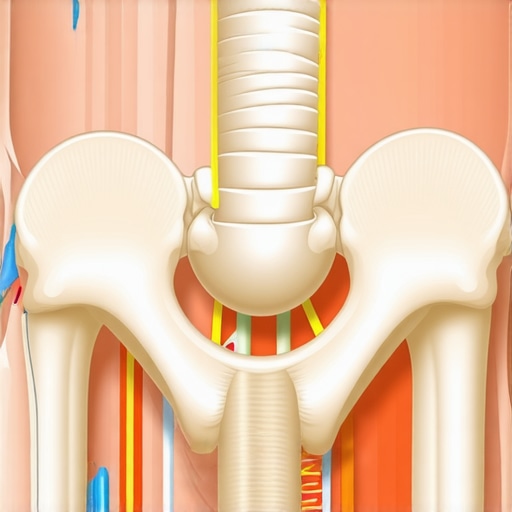
Why does my leg go numb even when I’m just standing?
If you feel a buzz or a pinch while standing at your desk, it’s likely not your back—it’s your glutes. When we sit all day, our brains ‘turn off’ the connection to our backside. This ‘gluteal amnesia’ means your lower back has to do all the work of holding you upright. You can quickly check this with the simple test to see if your leg pain is actually sciatica. If it is, something as small as the 5 second glute squeeze that prevents sciatica flares while standing can reset the pelvis and take the pressure off the nerve immediately.
Your Workout Might Be the Culprit
I once thought I could ‘exercise’ my way out of pain, but why your workout might be feeding your chronic inflammation is a harsh reality for many. For example, why you should stop doing planks if your back already hurts is because if your core isn’t firing correctly, a plank just jams your lumbar vertebrae together. We need to stop thinking about ‘strength’ and start thinking about ‘integrity.’ Have you ever fallen into the trap of thinking more stretching was the answer, only to wake up stiffer the next day? Let me know in the comments.Once I got the shoebox setup working, I realized I needed a few key items to stop the inevitable relapse into old habits. I eventually graduated from my DIY pile of books to a dedicated stand, but the real game-changer was switching to a vertical mouse. I learned quickly why your wrist position at your desk affects your neck health—that subtle, constant twist in your forearm creates a chain reaction of tension that travels all the way up to your traps and the base of your skull. I also started using a lightweight software called Stretchly, which forces a 20-second break every 10 minutes. During those micro-breaks, I perform the seated shoulder blade squeeze to kill midday tension headaches. It’s not about doing a massive workout; it’s about micro-dosing movement to prevent your fascia from ‘setting’ like wet concrete.
Gear that actually earns its keep
Maintenance is often where people fail because they treat ergonomics like a one-time event rather than a lifestyle.
How do I maintain these spinal gains over time?
The answer lies in building a mobility minimum that you can sustain even on your busiest days. I follow mobility mastery daily tips to keep your spine and joints healthy by committing to three specific movements every morning before I even touch my phone. Dr. Stuart McGill, a world-renowned expert in spine mechanics and author of Low Back Disorders, often notes that the goal of spine hygiene is to spare the discs from cumulative trauma throughout the entire day, not just during a gym session. This means being mindful of how you relax, too. I had to specifically learn how to fix the head forward posture while reading in bed, because a thousand-dollar workspace is useless if you’re spending your evenings wrecking your neck alignment while scrolling through TikTok or reading a novel. 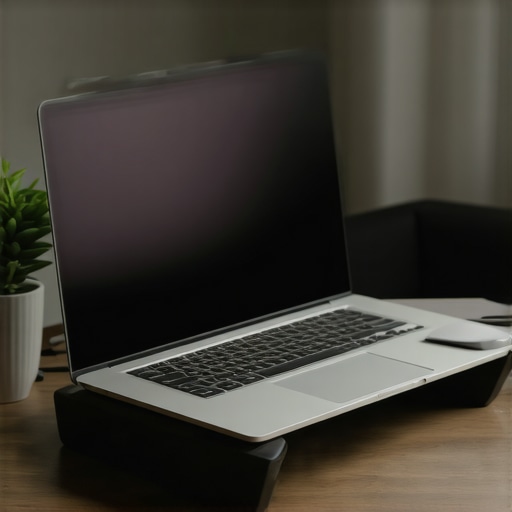
Your desk is about to get a lot smarter
Looking ahead to 2025 and beyond, I predict we are moving toward ‘active furniture’ that utilizes haptic biofeedback. Imagine a chair that vibrates slightly when it detects your core muscles have gone ‘dark’ or a monitor that dims if your sensors show your head leaning too far forward. We are already seeing back pain breakthroughs navigating your path to restored mobility through wearable tech that tracks our micro-slumps. Until those tools are standard, I rely on my own environmental cues. For instance, I’ve adjusted the specific way to hold your phone that saves your cervical spine so that I’m never tempted to ‘tech-neck’ while waiting for a bus or standing in line. If you do nothing else today, try this one advanced tip: set a silent alarm on your phone for every thirty minutes. When it goes off, do ten seconds of slow, controlled neck rotations and one deep diaphragmatic breath. It sounds too simple to work, but it’s the consistency of these ‘resets’ that eventually signals to your nervous system that it’s safe to let go of that chronic guarding.
The Hard Lessons My Spine Taught Me While Working From Home
I spent years thinking I could just ‘power through’ the stiffness. The reality is that neck pain and stress are often intertwined in a feedback loop that no amount of fancy gear can fix without a change in habits. One of my biggest lightbulb moments was realizing that pain is a messenger. When I felt that sharp catch in my hip, it wasn’t a signal to stop moving entirely; it was a signal to change how I was moving. This led me to explore back pain breakthroughs navigating your path to restored mobility through functional movement rather than just static stretching. Equipment alone doesn’t solve the problem; it is the mindfulness of how you use your body in that space that creates long-term health.
A Few Budget Tools That Saved My Career
You don’t need a corporate budget to fix your setup. I highly recommend the work of Dr. Stuart McGill, specifically his ‘Big 3’ exercises for core stability. I also swear by a vertical mouse to keep my wrist neutral, which prevents the tension creep that starts at the hand and ends at the neck. Additionally, using how a simple tennis ball can release your deep glute tension became a daily ritual that saved my lower back during long video calls. Finally, stop guessing about recovery. Knowing the truth about using heat packs versus ice for chronic stiffness helped me manage flare-ups without losing days of productivity. #IMAGE_PLACE_HOLDER_E#
Your Path to Pain-Free Work Starts with One Small Adjustment
Improving your mobility isn’t about a single workout or a perfect chair; it is about the small, consistent decisions you make every hour. Whether it is lifting your monitor or simply standing up to breathe, these actions signal to your nervous system that it no longer needs to brace for impact. If you are feeling overwhelmed, just start with these mobility mastery daily tips to keep your spine and joints healthy. You deserve a workspace that supports your life, not one that drains it. Have you ever tried the shoebox trick or found another DIY hack that actually worked for your back pain? Let me know in the comments below!