
The 2-minute foot massage that helps your lower back relax
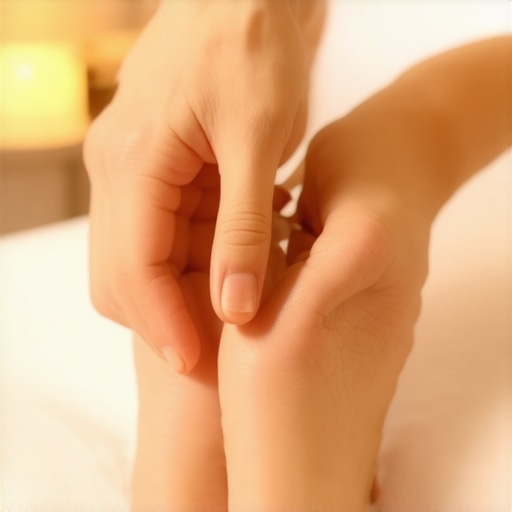
I’ll never forget the morning I stood frozen in his bedroom, staring at a pair of wool socks like they were an unscalable mountain. My lower back was so locked up that bending even an inch felt like a lightning bolt was striking my spine. Like many of you, I had spent months trying to boost my back mobility with every yoga pose and foam roller under the sun, only to wake up stiffer than a board the next day. It was a frustrating, lonely cycle. Then, a physical therapist friend told me to stop poking my back and start rubbing my feet. I thought she was joking. But then I tried it. Within two minutes, I could actually reach my shins. It felt like someone had finally greased the hinges on my body. Today, I’m going to show you exactly how to find that same relief by focusing on a part of your body you’ve probably been ignoring for years. [image_placeholder_1]
Stop chasing the pain and start looking at your feet
The biggest mistake I made for years was assuming that where the pain lived was where the problem started. I’d spend twenty minutes on a heating pad or stretching my hamstrings until I was red in the face, not realizing that my foundation was the real culprit. Our bodies are connected by a web of connective tissue called fascia. According to Thomas Myers’ ‘Anatomy Trains,’ the Superficial Back Line runs all the way from the soles of your feet, up your calves and hamstrings, and right into your lower back. When your feet are tight—maybe because your thin shoes are killing your shock absorption—that tension pulls on everything north of your ankles. It’s like a snag in a sweater; pull the thread at the bottom, and the collar bunches up around your neck. If you haven’t looked at your arches lately, you might be missing the key to your recovery.
Is a foot rub really enough to fix a back spasm?
I get the skepticism. When you’re looking for a real back pain breakthrough, ‘massaging your arches’ sounds like a placebo. But it’s about neurological signaling. By releasing the plantar fascia, you’re essentially sending a ‘relax’ signal up the entire posterior chain. Have you ever felt like your back was stuck in a permanent clench no matter how much you rested? That’s exactly what I want to help you break today. We aren’t just talking about a spa-style pampering session; we’re talking about a targeted, two-minute tactical strike on the tension that’s keeping you from picking up your kids or enjoying a simple walk. Before we dive into the specific techniques, I have to ask: Have you ever noticed your back feels significantly worse after a long day of wearing those flat, unsupportive dress shoes or flip-flops? Once you see the connection, you can’t unsee it.Grab a tennis ball and clear two minutes on your clock. You don’t need a gym or a fancy massage table for this; you just need a small, firm object. I prefer a lacrosse ball for its grip, but a tennis ball is a perfect entry point for anyone currently in a flare-up. Stand near a wall or a sturdy chair for balance. Place the ball under the arch of your foot, right in that meaty area between your heel and the ball of your foot.
Find the sweet spot in your arch
When I first tried this in a cramped hotel room in Omaha, I was desperate. My back was so tight I couldn’t even lean over the sink to brush my teeth. I used a hard plastic water bottle because I didn’t have a ball handy. The moment I stepped down and applied pressure, I felt a zing shoot up my calf. That ‘zing’ is exactly what you’re looking for—it’s the spot where the fascia is most restricted. This is often how a stiff ankle is actually causing your recurrent lower back aches. You aren’t just rubbing skin; you’re unsticking the glue that’s holding your posterior chain hostage. 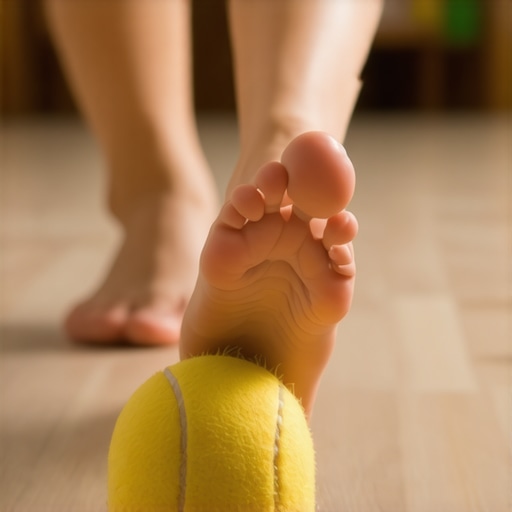
Breathe through the initial yikes moment
The instinct is to hold your breath when you hit a tender spot. Don’t do that. When you hold your breath, your nervous system goes into ‘fight or flight’ mode, which makes your muscles tighten even further. This is the breathing habit that is keeping your back muscles tight. Instead, take a slow breath in through your nose and imagine you are melting your foot over the ball. Think of it like a hot knife through butter. You want to apply enough pressure to feel a ‘good hurt’—around a 6 or 7 on a scale of 10—but not so much that you’re clenching your jaw.
The 30-second sweep that resets your chain
Once you’ve found the most tender point, stay there for about 30 seconds. Then, slowly begin to ‘scribble’ with your foot. Move the ball in small circles, then side to side, and finally, use your toes to grip the ball like you’re trying to pick it up. This multidirectional movement ensures you’re hitting all the different layers of tissue. This is a variation of the 30-second ankle drill that reduces your risk of back injury. I did this three times a day during that hotel stay, and by the second morning, I was able to put my socks on without doing that weird sideways hop. It’s a foundational part of mobility mastery.
Switch sides and feel the difference
Even if only one side of your back hurts, you must do both feet. Our bodies love symmetry, and tension on the ‘good’ side often migrates to compensate for the painful side. After you finish one foot, stand normally for a moment. You’ll likely feel like that foot is ‘flatter’ or more connected to the ground than the other. That’s the feeling of your fascia finally letting go. If you’ve been struggling with how a tennis ball can relieve deep glute and sciatic pain, you’ll realize that the foot is just the starting point of a much larger conversation your body is trying to have with you.
Stop stretching your hamstrings until they scream
Most people I talk to are convinced that the tighter their back feels, the harder they need to pull on their hamstrings. It’s the ultimate fitness reflex. But here’s the contrarian truth: in many cases, stretching your hamstrings won’t fix your tight legs because they aren’t actually short. They are ‘locked long.’ Imagine a rubber band stretched to its absolute limit; if you pull on it further, it doesn’t relax—it gets closer to snapping. This is often a result of poor posture and chronic back pain working in tandem to tilt your pelvis forward. When your pelvis tilts, it pulls your hamstrings taut before you even move. If you keep cranking on them, you aren’t releasing tension; you’re just irritating the sciatic nerve. 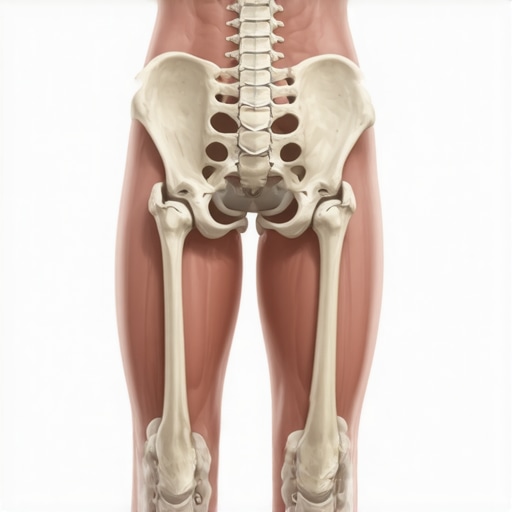
The ‘Oops’ factor of chasing a deep burn
One of the biggest traps I see—and one I fell into for years—is ignoring the difference between a muscle stretch and a nerve tug. If you feel a sharp, electric, or ‘zingy’ sensation while reaching for your toes, stop immediately. That is your nervous system screaming for help, and pushing through it is a recipe for a massive flare-up. This is why stretching your hamstrings can actually flare up sciatica rather than soothing it. Dr. Stuart McGill, a world-renowned expert in spine biomechanics, emphasizes that spinal hygiene often requires stability more than extreme flexibility. By obsessively stretching, you might be creating micro-instability in your lumbar spine that your body then tries to ‘protect’ by tightening your muscles even more. It’s a physiological arms race you will never win.
How do you tell the difference between muscular sciatica and a slipped disc?
This is the most common question I get from people who are tired of the guesswork. Is the pain coming from a tight piriformis muscle squeezing the nerve, or is a disc actually pressing on it? Understanding the difference between muscular sciatica and a slipped disc is crucial because the treatment for one could actively harm the other. For instance, if you have a disc issue, reaching for your toes is the worst way to stretch your back. It increases intradiscal pressure and can push that disc material further out. Instead of blind stretching, focus on mobility mastery through controlled movements and neutral spine positioning. I’ve found that your perfect upright posture is actually tensing your spine more than you realize. Have you ever spent weeks stretching a ‘tight’ muscle only to realize it was actually a nerve issue all along? Have you ever fallen into this trap? Let me know in the comments.So, you’ve rolled your feet and stopped the aggressive hamstring yanking. What now? I’m often asked what I keep in my travel bag to prevent a relapse. It’s not a three-thousand-dollar massage chair; it’s a five-dollar lacrosse ball and a specific mindset about my workspace. I use a lacrosse ball specifically because it doesn’t compress under my weight like a tennis ball does. When I’m working on mobility mastery daily tips to keep your spine and joints healthy, I need that firm density to reach the deeper hip rotators and the piriformis. If I’m sitting for too long at my laptop, I strictly follow the 15-degree rule for your computer monitor to save your neck. It’s a game changer because it prevents that subtle, chin-poking-forward position that wrecks your cervical spine and leads to those 4 PM tension headaches. Dr. Kelly Starrett, the physical therapist who wrote ‘Becoming a Supple Leopard,’ often talks about how every human being should be able to perform basic maintenance on themselves. That’s the philosophy I live by now. I also swear by a lumbar roll, but not for the reason you think. I use it to enhance your back mobility by placing it slightly higher than most people—right at the base of the ribcage—to encourage a natural thoracic curve rather than just jamming it into the lower back and forcing an unnatural arch. 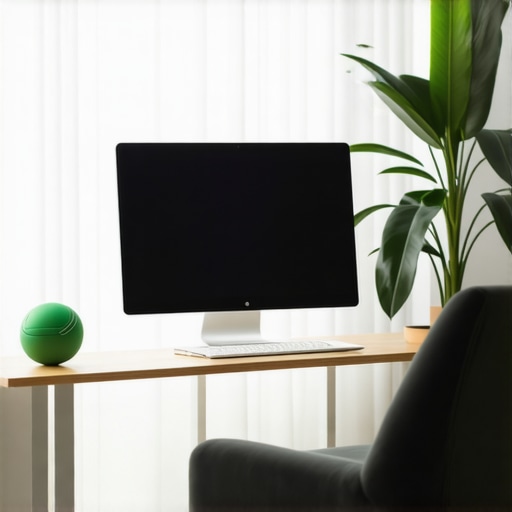
How do I make these mobility gains stick forever?
Consistency beats intensity every single time. You don’t need an hour-long yoga routine to stay out of pain; you need two-minute ‘movement snacks’ every few hours. This is one of the most overlooked sciatica relief secrets how to banish pain quickly today: don’t let the cement dry. If you sit for an hour, stand for a minute and squeeze your glutes. Looking toward the future, I suspect we’re going to see a massive shift toward wearable bio-feedback sensors that vibrate when your pelvis tilts too far forward or your shoulders slouch. We won’t have to guess if our posture is ‘good’ because our clothes will tell us in real-time. But until those become mainstream, your best tool is your own awareness. My challenge to you today: go and check your screen height. Try the ’15-degree’ monitor adjustment right now. It takes thirty seconds to fix, and your neck will feel significantly lighter by the time you close your laptop tonight.[image_placeholder_5]
What I Finally Realized After Years of Chasing My Own Tail
Looking back at my journey, I spent so much time attacking my symptoms that I completely missed the lifestyle cues my body was giving me. The biggest breakthrough came when I realized that pain is a messenger, not an enemy. If my back was screaming, it was usually because a neighbor—like my feet or hips—wasn’t doing its job. I also learned that “more” isn’t “better” when it comes to recovery; expert strategies for lasting comfort are often about doing less, but doing it with better intention.
Another lightbulb moment was seeing how my environment dictated my mobility. I used to think I needed a marathon stretching session to feel good, but in reality, applying mobility mastery daily tips throughout the day prevented the stiffness from setting in the first place. You can’t out-stretch a lifestyle that keeps you locked in one position for eight hours.
Tools That Actually Make a Difference
If you want to move beyond the temporary fixes, I recommend focusing on tools that provide high-density feedback. I always keep a lacrosse ball in my bag because it targets those tiny, stubborn knots in the feet and glutes that a soft foam roller just can’t reach. For those who spend hours at a desk, mastering the 15-degree rule for your computer monitor is perhaps the most underrated way to protect your upper body. I also highly recommend the book “Becoming a Supple Leopard” by Dr. Kelly Starrett—it’s the ultimate manual for understanding how your joints are designed to move.
Your Spine Doesn’t Have to Be a Source of Fear
It is easy to feel like your body is broken when you’re in the middle of a flare-up, but remember that your tissues are remarkably resilient and capable of change. Whether you are using sciatica relief secrets to get through the day or just starting to roll your feet, every small action counts. You have the power to change your physical narrative and reclaim the activities you love. Your journey toward lasting back pain relief starts with that first, small shift in how you treat your foundation.
Have you ever found a surprising connection between your footwear and how your back feels the next day? Let me know in the comments below!