
How to breathe into your lower back to release deep muscle tension

I spent years thinking my lower back was “weak.” I’d spend twenty minutes every morning reaching for my toes, grunting through the pain, thinking that if I just pulled hard enough, my muscles would eventually surrender. One Tuesday afternoon, after a particularly nasty flare-up that left me barely able to get out of my car without a wince, I realized I was doing it all wrong. I was attacking my body instead of listening to it. That was the day I stopped stretching and started breathing. Not the shallow, chest-pumping air we usually take in, but a deep, pressurized expansion that actually pushes against the tight muscles from the inside out. Today, I’m going to show you exactly how to find that space. We’re moving past the surface-level fixes and diving into a technique that provides a real back pain breakthrough for restored mobility.
Why your back muscles are actually holding their breath
Most of us are “vertical” breathers. When we take a deep breath, our shoulders shrug up toward our ears, and our chest puffs out. I made this exact mistake for years, thinking I was being “athletic.” In reality, this breathing habit is keeping your back muscles tight because it never allows the diaphragm to descend and expand the lower rib cage properly. When your ribs don’t move, your lower back muscles—specifically the quadratus lumborum and the paraspinals—have to work overtime just to keep you upright. I used to obsess over having a “flat” stomach and a “straight” spine, but I eventually learned that why your perfect upright posture is actually tensing your spine is because it locks the very joints that need to move. According to a study in the Journal of Physical Therapy Science, diaphragmatic breathing has a direct inhibitory effect on the sympathetic nervous system, essentially telling those hyper-tight back muscles that it’s finally safe to let go. Have you ever noticed that your back pain flares up the most when you’re stressed or rushing around?
Can you really breathe your way out of a back spasm?
It sounds a bit too simple to be true, doesn’t it? I was the biggest skeptic in the room until I saw how a simple reach and breathe move can decompress your back more effectively than any expensive massage chair ever could. We aren’t just talking about relaxation here; we are talking about internal hydrostatics. By directing air into the posterior lobes of your lungs, you are quite literally using your internal organs to create a “cushion” for your spine. This is a foundational part of understanding the link between poor posture and chronic back pain. If you can’t expand your back with air, you’re essentially trying to move a rusted hinge without any oil. Let’s look at how we can get those ribs moving again and finally give your lower back the break it deserves.
Level the ribs before you inhale
To start, you need to find a “neutral” that isn’t forced. Most of us think standing up straight means pulling the shoulders back and puffing the chest. However, why your straight posture is actually straining your muscles is because it pins the ribs in a flared position, which creates a constant tug-of-war in your lower back. Instead of pulling your shoulders back, focus on your exhale. Imagine your ribs are a window shade being pulled down toward your belt line. This is where why your rib cage position determines your shoulder health becomes obvious; as the ribs drop, the tension in your mid-back finally has nowhere to hide. You should feel your abdominal muscles engage slightly, not because you’re crunching them, but because they are acting as an anchor for your spine.
Push the air into the dead zones of your back
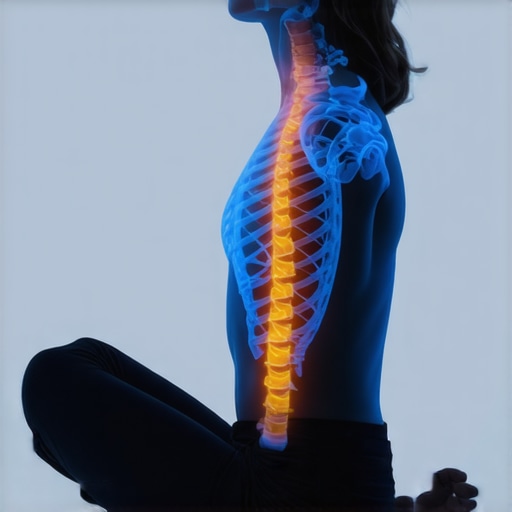
Once your ribs are down, keep them there and take a slow breath in through your nose. The goal is to feel the air move into the “dead zones” of your back—those areas that usually feel like a solid block of wood. Think of your lungs like a parachute that opens backward and sideways rather than forward. If you only breathe into your chest, you’re fueling the breathing habit that is keeping your back muscles tight. I remember a specific afternoon last winter when I’d been hunched over my laptop for six hours and my lower back felt like it was made of dry kindling. I didn’t reach for my toes because I knew why reaching for your toes is the worst way to stretch your back. Instead, I got on all fours—a position similar to how you’d sit on the floor with your kids without hurting your hips—rounded my back slightly like a scared cat, and inhaled into the space between my shoulder blades. It felt messy at first, but on the fourth breath, I felt a literal expansion that no foam roller could ever reach.
Use a reach to maximize the space
To really get the spine to open up, you need to add a reaching element. When you reach your arms forward, your shoulder blades wrap around your rib cage, which further pulls the back open from the outside. You can do this against a wall or even at your desk. I often use the 10-second wall slide for instant shoulder tension relief while focusing on this specific breath. By combining a forward reach with a deep, posterior inhale, you are creating a pressurized “internal massage” for your nerves. This is the exact mechanism behind how a simple reach and breathe move can decompress your back. It isn’t about flexibility; it’s about changing the pressure inside your torso so your muscles don’t feel the need to stay in a defensive spasm.
The traffic jam test for real-world relief
I once applied this while stuck in a three-hour traffic jam. My lower back was screaming and I felt that familiar sharp pinch starting to travel down my leg. Usually, I would have tried to twist or shift my weight, but instead, I gripped the steering wheel, pushed my mid-back into the car seat, and focused on those three-dimensional breaths. By the time I reached my exit, the “locked” feeling in my SI joint had dissipated. You don’t need a yoga mat or a gym to do this; you just need to stop fighting your anatomy and start using the air you’re already breathing to create space from the inside out.
Most people think that if a muscle feels tight, the solution is to pull it until it gives up. This is the biggest trap in the world of mobility. I see it every day: someone with a “tight” leg reaches for their toes, unknowingly yanking on an already inflamed sciatic nerve. This is exactly why some sciatica stretches actually pinch the nerve further. You aren’t stretching muscle; you’re tensioning a nerve that’s already reached its limit. In my experience, focusing on local “tightness” is a surface-level distraction from the real mechanical issue that usually starts with understanding the link between poor posture and chronic back pain.
Can you actually stretch your way into a disc injury?
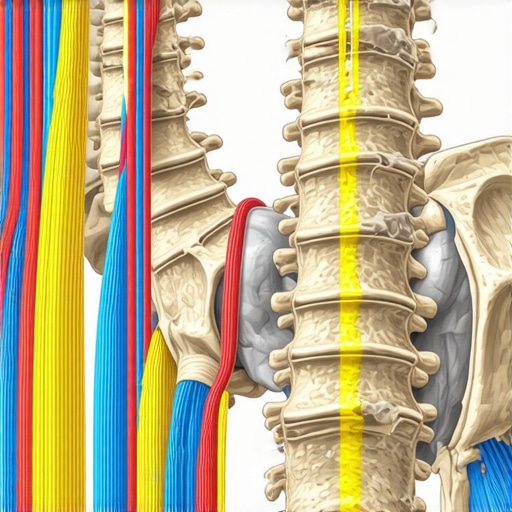
It sounds extreme, but when you force a stretch on a “locked” spine, you’re creating a massive amount of shear force. A study published in The Spine Journal notes that aggressive end-range lumbar flexion can significantly increase intradiscal pressure, which is bad news if you’re already dealing with a bulge. This is the “oops” factor most gurus won’t tell you: that “good pain” you feel while stretching might actually be is your back pain a sign of something more serious developing in the background. If you keep pushing into that sharp pinch, you are effectively hammering a wedge into your own spinal discs.
The “ice and stretch” myth that stalls your progress
Another nuance is the obsession with ice. While we’re told to “ice the inflammation,” the reality is that why icing your lower back might be slowing down your recovery is because you’re essentially shutting off the blood flow required for tissue repair. You need that metabolic waste to move out so fresh, oxygenated blood can move in to heal the area. This is a critical component of back pain breakthroughs navigating your path to restored mobility. I also spent years trying to stretch my hip flexors, only to realize why a tight psoas is often actually a weak psoas. If a muscle is weak, the brain will keep it “tight” as a protective mechanism. Stretching a weak muscle just makes it more unstable and prone to spasming.
Why does your leg feel tight even after a full yoga session?
If you’re dealing with persistent leg pain, you have to distinguish the difference between muscular sciatica and a slipped disc before you try any more “hacks.” If you just jump into conquering sciatica proven approaches to end discomfort now without knowing your baseline, you might be throwing fuel on the fire. We often think of mobility as a flexibility contest, but for the spine, mobility is actually about controlled stability. Have you ever fallen into this trap of stretching a “tight” spot only to have it feel even more locked up the next day? Let me know in the comments.
Once you stop the aggressive stretching, the real work begins: maintenance. You can’t just fix your back once and expect it to stay that way if you spend eight hours a day in a chair that fights your anatomy. I had to learn the hard way that the environment I live in is just as important as the exercises I do. I started by auditing my workspace. I used to think I needed a thousand-dollar designer chair, but I eventually discovered how to set up your home office for less than fifty dollars and actually get better results. The most important tool in my kit? A simple, firm lumbar roll. Using the specific way to use a lumbar roll for maximum relief changed how my spine felt after a long day of writing. It’s not just about padding; it’s about maintaining that natural curve so your discs aren’t constantly under pressure from the ‘flat-back’ posture many office chairs force upon us. If you’re still working from a kitchen chair or a couch, you’re essentially gambling with your disc health every hour you sit.
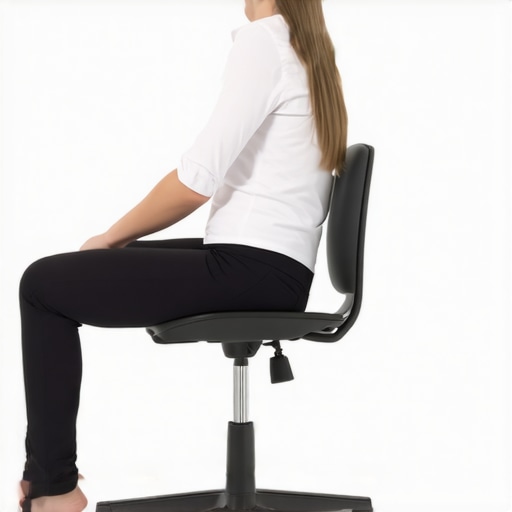
According to Dr. Stuart McGill, a world-renowned expert in spine biomechanics and professor emeritus at the University of Waterloo, the key to long-term recovery is ‘spinal hygiene.’ In his research, he emphasizes that we must remove the cause of the pain—often repetitive, poor movement patterns—before any exercise can be effective. He notes that the ‘cumulative load’ on your discs from sitting in a slumped position is often what prevents tissue from ever truly healing, regardless of how many stretches you do at the end of the day. Treating your spine like your teeth—with daily, small maintenance habits—is the only way to stay out of the cycle of chronic flare-ups.
How do I maintain these mobility gains over time?
Consistency beats intensity every single time. I shifted my focus from ‘working out’ to ‘moving well’ during my mundane daily chores. For example, I adopted the one foot up rule for pain-free dishwashing and chores, which takes the shear force off my lower back while I’m standing at the sink. These micro-adjustments are the foundation of back pain breakthroughs navigating your path to restored mobility. If you only focus on your back during your 15-minute stretching routine, you’re missing the other 23 hours of the day where you might be undoing all your progress. It’s about building a lifestyle that supports your structure rather than stressing it.
The future of back health is in your pocket
Looking ahead, I believe we’re entering an era where we won’t have to guess if we’re moving correctly. In unlocking mobility expert tips on managing back pain in 2025, I discuss how haptic feedback wearables will likely become the standard for those of us with chronic issues. Imagine a tiny sensor on your shirt that vibrates when you start to slump at your desk, or your phone alerting you that your rib cage has been flared for twenty minutes. This real-time awareness will bridge the gap between ‘knowing’ how to move and actually doing it throughout a busy day. Until those tools are universal, we have to be our own sensors. I highly recommend you try my favorite ‘stealth’ maintenance tip: how to adjust your rearview mirror to force better posture. Set the mirror when you’re sitting perfectly upright at the start of your drive; the moment you can’t see the traffic behind you, you’ll have a physical reminder that your spine has started to collapse. It’s a simple, high-level habit that protects your spine without requiring an extra second of your time.
The moment I realized I was fighting my own spine
The hardest lesson I had to learn was that my back didn’t need to be ‘conquered’; it needed to be heard. I used to think that a ‘no pain, no gain’ approach was the only way to fix my stiffness, but I was actually triggering a protective guard that kept me locked in a cycle of inflammation. One major lightbulb moment was realizing that my brain was using ‘tightness’ as a brake pedal because it didn’t trust my stability. Once I stopped the aggressive pulling and started focusing on gentle expansion through the breath, the brakes finally came off. I stopped seeing my body as something to be fixed and started seeing it as a system that was simply trying to protect itself. This shift in perspective is the foundation of true back pain breakthroughs.
I also learned that those ‘quick fix’ stretches were often masking the real issue. If you’ve been stretching your hamstrings for months with zero change in flexibility, it’s a massive sign that your nervous system is holding that tension for a reason. Often, why stretching your hamstrings won’t fix your tight legs is because the root cause is actually coming from your lower back or pelvis. Shifting from a ‘fix it now’ mentality to a ‘support it always’ mindset was the true catalyst for my restored mobility.
The tools that actually earned a spot in my living room
I’ve tried every gadget on the market, but these three are the only ones I still use daily. First, a simple firm lumbar roll—but only if you know the specific way to use a lumbar roll for maximum relief. Second, I stopped wearing squishy, overly cushioned shoes for my morning walks; I found out the hard way why your current sneakers are causing your lower back to ache by making your spine do the shock absorption work your feet should be doing. Finally, I invested in a firmer sleep surface. Many people think a soft bed is ‘comfy,’ but why your firm mattress is making your morning sciatica worse is often just a myth; for most, the extra support prevents the spine from sagging into painful positions overnight. These aren’t expensive hacks, but they are essential for long-term spinal hygiene.
Your spine is remarkably resilient if you let it be
Recovery isn’t a straight line, and there will be days when you feel a bit of that old familiar twinge. The difference now is that you have the internal tools to manage it without panicking. Don’t let a flare-up convince you that you’re back at square one. You are building a new relationship with your body, one where movement is a celebration rather than a chore. If you ever feel unsure about a new symptom, always check if is your back pain a sign of something more serious, but otherwise, trust the process of building 3D space in your torso. You have the air in your lungs and the knowledge in your head to reclaim your life from chronic pain. What is one ‘healthy’ stretch or habit you’ve been doing for years that actually makes you feel tighter the next day? Let me know in the comments below!