
The floor-seated position that actually fixes your stiff hips
It happened on a Tuesday. I was down on the rug, trying to build a LEGO castle with my youngest, and I realized I was groaning like a rusted gate every time I moved. My hips felt locked. Brittle. I tried to sit cross-legged, but my hip felt completely stuck, and honestly, it was embarrassing. I’m too young to feel this old. I spent years thinking the answer was more ‘perfect posture’ in my expensive office chair, but I was wrong. Dead wrong. This wasn’t just a hip thing, either. I noticed that when my hips were tight, my back felt like a coiled spring ready to snap. I’d stand up and feel that sharp pinch in my lower back, making me realize how poor posture and back pain are so tightly linked. Today, I am going to show you the exact floor-seated position that actually reshapes how your femur sits in the socket and releases that deep tension. [image_placeholder]
Is sitting on the floor really worth the struggle?
You might be thinking your knees can’t handle it or it is just too uncomfortable to bother. I felt the same way, especially after making the mistake of thinking I just needed to stretch my hamstrings more to loosen up. In fact, reaching for your toes is often the worst way to help a cranky back because it stresses the discs rather than the joints. But here is a surprising fact: a study published in the European Journal of Preventive Cardiology found that the ability to sit and rise from the floor is a massive predictor of long-term musculoskeletal health and even longevity. It is not just about ‘flexibility’; it is about maintaining a body that can actually move through life.
Why your couch is secretly stealing your hip range
We were not meant to live in 90-degree angles all day. When we sit in chairs, our hip flexors shorten, and our glutes basically go on a permanent vacation. Even worse, soft sofas create a mid-back stiffness that trickles down to your pelvis, locking everything in place. I used to think I was resting, but I was actually rotting. If you have ever felt that ‘stuck’ sensation in your groin after a long car ride or a movie, you are not alone. Have you ever felt like your hips were literally rusting shut during a normal day? I want to hear your story in the comments. Before we dive into the specific mechanics, we have to understand that sitting on the floor with your kids should not be a chore—it should be a daily reset button for your spine and joints.To start reclaiming your mobility, we have to move beyond the chair. Think of your femur—that large thigh bone—as a joystick. When you spend your life in a chair, that joystick is locked into one forward-facing position. On the floor, we are finally giving that joint the full circular range it craves.
Find your range with the 90/90 shin box
The gold standard for opening up ‘stuck’ hips is the 90/90 position. Sit on the floor with your right leg bent at a 90-degree angle in front of you, and your left leg bent at 90 degrees out to the side. I remember the first time I attempted this; I was so tight I couldn’t even sit upright. I had to lean way over on my right arm just to keep from toppling. It felt clumsy and honestly a bit frustrating, but it was the clearest sign that my hips had forgotten how to rotate independently. By spending just two minutes a day in this position, you begin to stretch the internal and external rotators that chairs leave untouched. This is a foundational step in unlocking sciatica relief because it creates space for the nerves to glide rather than being pinched by stiff muscles. 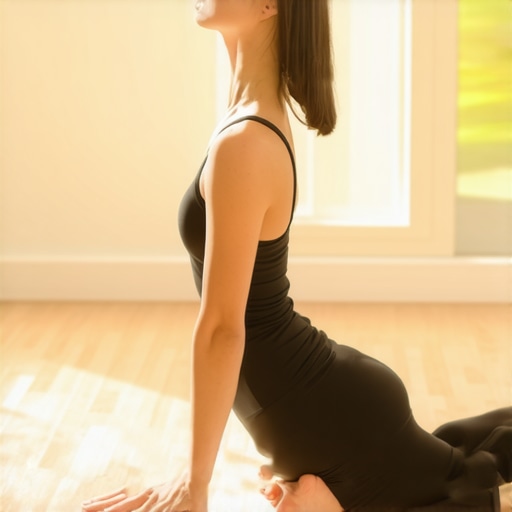
Fix the pinch before it stops you
While you are in this position, pay close attention to any ‘closing side’ joint pain. If you feel a sharp catch in the front of your hip as you lean forward, stop immediately. Often, your deep squat is causing a pinch in your hip because the femur is jamming into the acetabulum (the socket). Instead of pushing through that ‘bone-on-bone’ sensation, simply back off or rotate your torso slightly away from the pinch. This isn’t about forced flexibility; it is about finding the path of least resistance for your skeleton. This mindful movement is one of those simple exercises that make a difference without requiring a gym membership or expensive equipment.
Breathe into the tension to unlock your pelvis
The secret to making floor sitting sustainable is your diaphragm. Most people hold their breath when they feel a stretch, which sends a ‘danger’ signal to the brain and causes the muscles to tighten even more. This is particularly problematic for the hip area, where a tight psoas is often actually a weak psoas reacting to instability. Instead of bracing, you must learn how to breathe into your lower back to release deep muscle tension. Imagine your breath traveling down your spine and expanding your lower ribs like an umbrella. This internal pressure helps reset the pelvis from the inside out. When I finally stopped fighting the floor and started breathing through the initial discomfort, the ‘rusted gate’ feeling in my hips began to vanish in weeks, not months. You are training your nervous system to feel safe in these new ranges of motion, which is the only way to make the changes stick.Let’s talk about the biggest lie in the fitness world: that you just need to stretch more. When I started my journey, I was obsessed with my hamstrings. I thought if I could just touch my toes, my back would stop screaming. But I fell into a classic trap. Research published in the Journal of Manual & Manipulative Therapy suggests that what we perceive as ‘muscle tightness’ is often protective tension from the nervous system. If your brain thinks your spine is unstable, it will lock your hamstrings to act as secondary stabilizers. This is why stretching your hamstrings won’t fix your tight legs—you’re fighting a safety mechanism, not a short muscle. Have you ever fallen into this trap? Let me know in the comments.
Stop fighting your hamstrings
This guarding response is your body’s way of playing defense. When you force a stretch on a muscle that is protecting your spine, your brain actually sends more tension to that area. It is like trying to open a door that someone is leaning against on the other side. Instead of forcing length, we need to show the nervous system that it is safe to let go through controlled, comfortable movement. This is a nuance often missed in basic mobility classes. If you’ve spent months reaching for your toes with zero progress, it’s a clear sign your body is using those muscles for support rather than movement.
The trap of the perfect posture
The biggest mistake I see people make is trying to force ‘perfect’ posture. We have been told to sit up straight like we have a string pulling our head to the ceiling. In reality, why your straight posture is actually straining your muscles is simple: it creates a rigid, static spine. Your spine thrives on micro-movements, not statuesque stillness. In fact, why your perfect upright posture is actually tensing your spine is because you are engaging your back extensors non-stop, leading to that mid-day fatigue we all dread. True mobility comes from the ability to move in and out of different positions, not from holding one ‘correct’ shape for eight hours.
Can a stiff ankle really be the cause of my recurring back pain?
It sounds crazy, but your body is a closed loop. If your ankle is stiff from an old injury or just years of wearing the wrong shoes, your lower back has to move twice as much to compensate during a simple walk. This is how a stiff ankle is actually causing your recurring lower back aches. We often treat the site of the pain, but the source is usually a joint or two away. For example, how a stiff big toe forces your lower back to overwork is a nuance most people ignore until they are sidelined by a spasm. 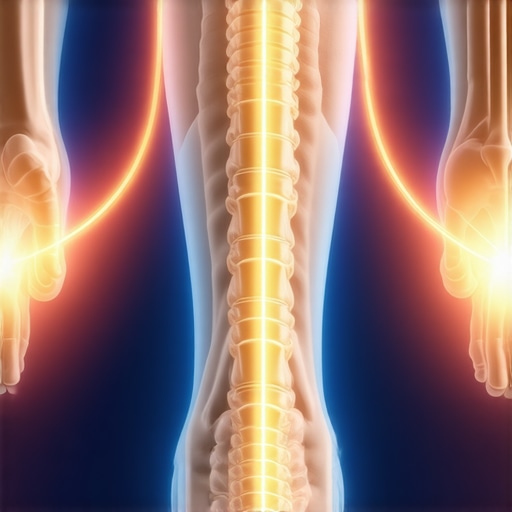
Nerve tension is not a muscle knot
When it comes to the shooting pain down the leg, most people assume it is a disc issue or a ‘tight’ glute. However, the difference between muscular sciatica and a slipped disc is often found in how you respond to movement. If you find that certain yoga poses or aggressive ‘glute stretches’ make the tingling worse, you might be dealing with nerve sensitivity. In these cases, why some sciatica stretches actually pinch the nerve further becomes a vital piece of the puzzle. You do not want to pull on a nerve that is already inflamed; you want to give it space and blood flow, not a high-tension tug-of-war. To find lasting relief, we have to stop treating the symptoms and start respecting the body’s kinetic chain.To keep these results for the long haul, I stopped looking for a miracle cure and started looking at my floor. I realized that the best tool for my back wasn’t a thousand-dollar chair, but a simple lacrosse ball. I use it because it targets the precise spots where my fascia feels like it’s glued together. If you’ve never tried it, how a simple tennis ball can release your deep glute tension is the most cost-effective therapy you will ever find. I keep one under my desk and another by the couch. It’s not about a dedicated hour of ‘stretching’; it’s about these tiny interventions throughout the day.
Ditch the expensive gadgets for a tennis ball
Most of the gear marketed for back pain actually makes us more passive. We want a machine to do the work, but mobility is an active process. I personally swear by a firm floor mat and a single yoga block. The block isn’t just for ‘propping up’—I use it to create leverage during my 90/90 shins boxes. By having a few specific tools, you transition from someone who ‘has back pain’ to someone who ‘manages their own body.’ This shift in identity is exactly what mobility mastery daily tips to keep your spine and joints healthy is all about. It is the difference between a temporary fix and a lifestyle change. 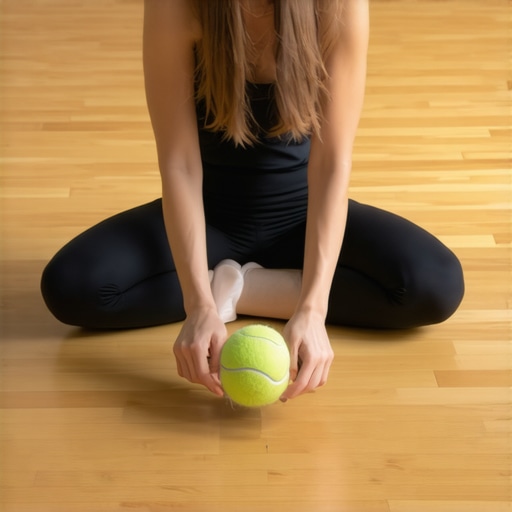
Why movement snacks save your spine
I’ve started implementing what I call ‘movement snacks.’ Instead of one long, grueling session, I do the 30-second ankle drill that reduces your risk of back injury every time I boil the kettle. This consistency prevents the ‘stiffening’ that happens when we stay in one position too long. Dr. Kelly Starrett, a world-renowned physical therapist and author of Becoming a Supple Leopard, argues that we should aim for at least 10 minutes of maintenance work for every hour of sitting. That might sound like a lot, but when you break it into 30-second bursts, it becomes effortless. This approach is a core part of unlocking mobility expert tips on managing back pain in 2025 as we move toward more integrated, daily health habits.
How can I make mobility a permanent habit?
The key is to tether your movement to an existing habit. I do a the 2-minute foot massage that helps your lower back relax while I brush my teeth. By the time I’m done with my morning routine, I’ve already addressed two major kinetic chain triggers. Looking ahead, I suspect we will see more wearable technology that provides real-time biofeedback on our joint angles, making it even easier to identify when we are slipping back into old patterns. But for now, your best bet is to stay curious about how your body moves. I challenge you to try the glute release with a tennis ball right now—just sixty seconds on each side. You’ll be amazed at how much lighter your legs feel when you stand back up.
The Most Expensive Mistakes I Made While Trying to Heal
Reflecting on my journey, I realize I wasted years looking for a magic bullet when the answers were right under my feet. The first lesson was that rest is not recovery. I used to think a weekend on the sofa was helping my back, but I eventually learned why your back hurts more after a day of resting on the couch. Movement, even small, micro-doses of it, is what keeps the joints lubricated and the nerves happy. Secondly, I learned to stop ignoring the ‘quiet’ signals. Before a full-blown spasm, your body usually whispers with a dull ache or a weird heaviness. If you are ever unsure if your discomfort is normal or dangerous, check is your back pain a sign of something more serious to stay ahead of the curve. Finally, I stopped blaming my age. Stiffness is often just a lack of diverse movement, not an inevitable part of getting older. These back pain breakthroughs came only when I started treating my body as a dynamic system rather than a collection of separate parts.
The Minimalist Gear I Use Every Single Day
You don’t need a thousand-dollar setup to fix your posture. I personally rely on a few simple tools that have made a bigger difference than any ergonomic chair I’ve ever owned. First is a standard lacrosse ball or tennis ball. It is the ultimate tool for deep tissue work, and I use it daily to ensure my hips don’t lock up. Next, I swear by a firm yoga block; it provides the perfect height adjustment when you are working on your floor-sitting range. Lastly, I highly recommend the book Becoming a Supple Leopard by Dr. Kelly Starrett. It’s essentially a manual for the human body and helped me understand proven techniques to regain your range of motion across all my joints. These tools are the foundation of what I call mobility mastery, allowing you to become your own best therapist.
Your New Relationship with Movement Starts Now
The journey to a pain-free life isn’t about achieving a perfect yoga pose; it’s about reclaiming the ability to move through your day without fear. When you stop fighting your body and start listening to its signals, everything changes. Whether you are dealing with a nagging ache or looking for expert tips on managing back pain in 2025, the key is consistency over intensity. You have the power to reshape how your joints feel and function. Don’t let a temporary setback keep you from the active life you deserve. Your body is incredibly resilient, and it is never too late to start moving again. Have you ever tried using a tennis ball to release your glutes or back tension? Let me know your experience in the comments below!