
The reason your neck feels stiff every time you get a headache
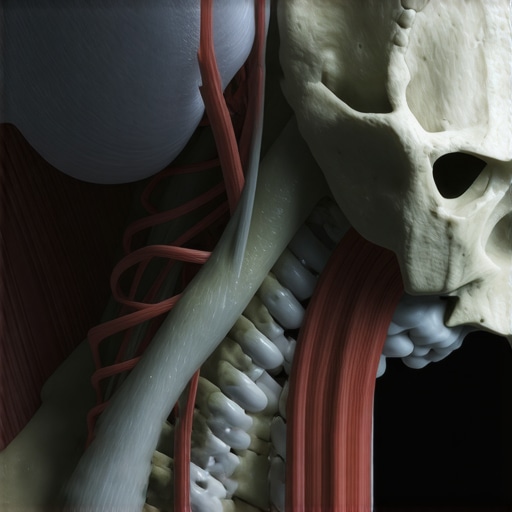
I remember sitting at my kitchen table three years ago, a dull throb building behind my left eye, and realizing I couldn’t actually turn my head to see the toaster. It wasn’t just a headache; my neck felt like it had been replaced by a rusted iron pillar. I tried to rub the base of my skull, but the muscles were so tight they felt like guitar strings tuned three octaves too high. That visceral moment of being trapped in my own body was my wake-up call. If you have ever felt that creeping tightness move from your shoulders up into your temples, you know exactly what I am talking about. Today, we are going to fix that. I am going to show you why this happens and how you can finally stop the cycle of stiffness and pain that makes your afternoons feel like a marathon.
Your Head and Neck Are Actually on the Same Team
Early on in my journey to fix this, I made a massive mistake: I treated my headaches and my neck pain as two totally separate problems. I would take a pill for the head pain and use a heating pad for the neck, never realizing they were feeding each other. The reality is that how a stiff upper back is forcing your neck to move too much is often the hidden culprit behind that localized head pressure. When your upper back stops moving, your neck tries to do all the work, and eventually, the nerves and muscles just give up and scream for help in the form of a tension headache. According to research published in The Journal of Headache and Pain, the trigeminocervical complex is a specialized area of the brainstem where neck and head pain signals converge, meaning your brain literally cannot tell where one ends and the other begins. This is why neck pain and stress create a loop that feels impossible to break. Have you ever felt like your head actually weighs fifty pounds by the time 3 PM rolls around? Drop a comment or reach out because I’ve been there, and I know how exhausting it is.
Is this just something I have to live with as I get older?
It is easy to blame the calendar for our aches, but that is a trap I fell into for far too long. Skepticism is healthy, and you might think your neck is just ‘permanently’ stiff because of your desk job or your age. But more often than not, it is about small habits that add up, like why looking at your keyboard while typing is ruining your neck and sending those tension signals straight to your brain. You don’t have to accept a life of limited mobility. Even something as simple as the 10-second jaw release that softens your neck muscles can provide immediate relief by calming the nervous system. We aren’t just looking for a temporary fix; we are looking to change how your body handles the daily grind so those headaches become a thing of the past.
Force Your Body to Sit Right Without Even Thinking
Most people think posture is a matter of willpower, but your brain is inherently efficient—it will always revert to the easiest path. I used to spend my entire commute hunched over the steering wheel, wondering why my jaw felt like it was in a vice by the time I pulled into the office. The fix wasn’t ‘trying harder.’ It was a simple hack. I sat up tall, tucked my chin slightly, and then I adjusted my rearview mirror specifically for that height. The moment I started to slouch, I couldn’t see the traffic behind me anymore. This how to adjust your rearview mirror to force better posture trick created a biofeedback loop that saved my neck from hours of strain every week. You can apply this same logic to your workspace. When you adjust your environment to force alignment, you stop fighting your own biology. If you find yourself leaning in toward your screen, why your laptop stand might be making your neck knots worse is likely because it’s at the wrong height, forcing your eyes to lead your head into a strained ‘turtle’ position.
Stop Your Shoulder Blades from Cementing in Place
When your mid-back becomes a solid block of tension, your neck has to compensate for every tiny movement. To break this, you need to reintroduce blood flow to the muscles between your scapulae. I call this the ‘reset’ button. While sitting, imagine trying to tuck your shoulder blades into your back pockets. It is not a massive shrug; it is a subtle downward squeeze. Using the seated shoulder blade squeeze to kill midday tension headaches throughout the day prevents that 3 PM ‘heavy head’ feeling that so many of us dread. 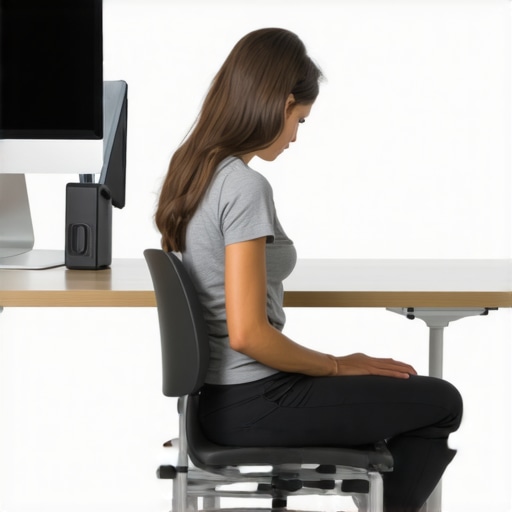
The Upright Posture Trap That Is Actually Hurting You
I have to confess something: for about six months during my recovery, I was my own worst enemy. I was so obsessed with ‘good posture’ that I sat like a rigid statue. I thought I was being healthy, but I was actually creating massive amounts of muscular fatigue. I would finish a day at the computer feeling more exhausted than if I’d run a 5k. I eventually learned that why your perfect upright posture is actually tensing your spine is due to the constant isometric contraction of your back muscles. Your spine loves movement, not stillness. If you feel a burning sensation between your shoulder blades, it is often a sign that you’re holding yourself too tight rather than just slouching. Static positions are the enemy of recovery. Even if you think you are doing everything right, your body will eventually scream for a change in position.
Loosen the Mid-Back to Save the Neck
Once I stopped trying to be a statue, I started focusing on decompression. If your upper back is stiff, your neck is basically living on a shaky foundation. I started using a foam roller, but I did it wrong at first—I would just roll up and down like a rolling pin on dough, which actually flared up my ribs. The key is to find the stiff spots and breathe into them. Learning how to use a foam roller on your mid-back without causing pain changed everything. It is about gentle extension, not aggressive pressure. When your mid-back moves, your neck doesn’t have to work nearly as hard. Even something as small as why your wrist position at your desk affects your neck health plays a role, because those tension lines travel all the way up your arm, through the shoulder, and straight into the base of your skull. Think of your body like a chain; if one link is frozen, the next link has to do double duty. By addressing the mid-back and the shoulders, you take the literal weight off your cervical spine.We need to talk about the most dangerous word in recovery: ‘Tight.’ When you feel tightness in your hamstrings, your first instinct is to stretch them out until they give. I spent years doing long, agonizing toe touches every morning, only to find my back pain actually intensified. Here is the contrarian truth: your hamstrings are likely feeling ‘tight’ because they are being pulled like a rubber band that is already at its limit. This is often caused by an anterior pelvic tilt, where your pelvis dumps forward, putting the back of your legs on a constant stretch. In this case, why stretching your hamstrings won’t fix your tight legs is because you are just pulling on a muscle that is already overextended. If you keep pulling, you aren’t gaining mobility; you are just irritating the sciatic nerve and destabilizing your pelvis. According to a study published in the Journal of Athletic Training, what we perceive as muscle tightness is frequently the nervous system’s ‘protective guarding’ response—a way for the brain to lock down a region it perceives as unstable or injured. If you have an underlying disc issue, your brain will keep your hamstrings taut to prevent you from bending over and causing further damage. This is why reaching for your toes is the worst way to stretch your back when you are in a flare-up; you are fighting your brain’s own safety mechanism and likely compressing your spinal discs further. 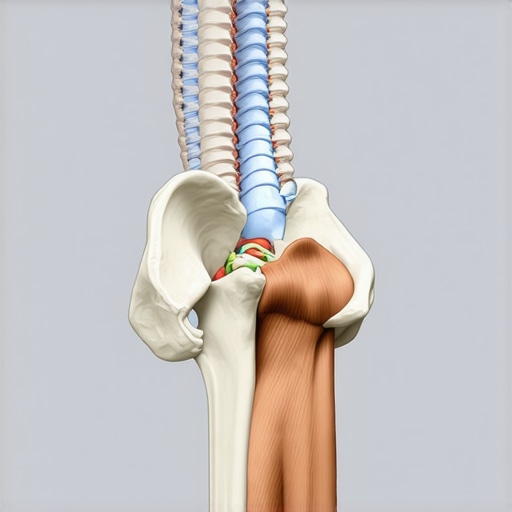
Can a Weak Muscle Feel Tighter Than a Strong One?
The biggest ‘oops’ factor I see in modern mobility work is people aggressively stretching their hip flexors because they sit at a desk all day. We have been conditioned to believe the psoas is always ‘short’ from sitting. However, for many of us, the reality is that why a tight psoas is often actually a weak psoas is the missing piece of the puzzle. A weak muscle will often feel ‘tight’ because it is struggling and failing to handle the basic load of your posture. When you stretch a weak muscle, you make it even less capable of supporting your spine, which leads to more guarding and more pain. This is why standard advice often fails for chronic cases; it treats the sensation of tightness rather than the source of the weakness. You must also learn to distinguish between true muscle tension and neural irritation. If you feel a ‘stretch’ that is sharp, electric, or travels down your leg, you aren’t stretching a muscle—you are yanking on a sensitized nerve. Understanding the difference between muscular sciatica and a slipped disc is vital before you start any self-treatment routine. Even tiny daily habits, like how your wallet in your back pocket is ruining your alignment, can create a functional pelvic tilt that makes one side of your body feel permanently ‘tight’ when it’s actually just lopsided. Let’s dig deeper: stop trying to ‘lengthen’ every muscle that feels stiff and start asking why your body feels the need to tighten up in the first place. Have you ever fallen into this trap of stretching a ‘tight’ muscle for weeks with zero results? Let me know in the comments, because once you stop the ‘stretch-pain’ cycle, your actual recovery can finally begin.
Stop treating your spine like a weekend project
I used to think of mobility as a chore, like mowing the lawn—something I did once a week when the pain got too loud to ignore. But true recovery doesn’t happen in a single Saturday session; it happens in the tiny gaps of your day. As Dr. Stuart McGill, a world-renowned expert in spine biomechanics, explains in his research on spinal hygiene, the goal of long-term health is to identify your unique ‘pain triggers’ and systematically remove them from your daily movement patterns. When I finally committed to unlocking mobility expert tips on managing back pain in 2025, I realized that the future of recovery isn’t just about better surgeries; it’s about smarter daily environments. We are moving toward a world where ‘passive correction’—tools that fix your posture without you thinking—is the gold standard. This means how to set up your home office for less than fifty dollars is more valuable than a thousand-dollar injection because it addresses the 2,000 hours a year you spend at your desk.
The low-tech gear that outperforms expensive gadgets
You don’t need a high-tech vibrating chair to fix your back. In fact, some of the most effective tools I use cost less than a cup of coffee. For example, how a simple tennis ball can release your deep glute tension is my go-to move after a long drive. I literally lean against a wall with a tennis ball tucked into my glute-medius to ‘turn off’ the muscle guarding that often leads to sciatica. I also swear by the simple footstool trick to stop lower back pain while sitting. By elevating your feet just a few inches, you change the tilt of your pelvis and take the sheer force off your L5-S1 disc. If you’re a side sleeper, you also need to stop crushing your nerves; the side-sleeping trick for people with narrowing in the spine involves using a specific pillow height to keep your neck in a neutral ‘tunnel,’ preventing that morning stiffness. 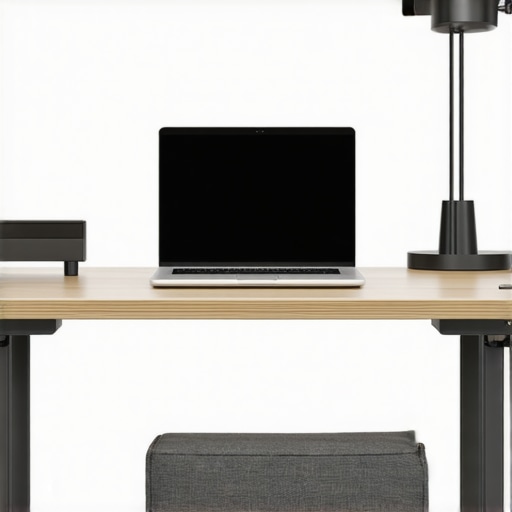
How do I maintain my mobility without spending hours in the gym?
The secret is integrating movement into your chores so they actually become part of your therapy. I started using the one-foot-up rule for pain free dishwashing and chores, which involves opening the cabinet under the sink and resting one foot on the ledge. This small shift prevents your lower back from arching and fatiguing while you stand. For those of us glued to a computer, I found that the 15-degree rule for your computer monitor to save your neck is a non-negotiable. If your screen is too low, your cervical spine carries the weight of a bowling ball; if it’s right, your neck muscles can finally relax. If you do nothing else tomorrow, I want you to try how to adjust your rearview mirror to force better posture—it is the lowest effort, highest reward change you can make today. This simple biofeedback loop ensures you aren’t slowly compressing your spine during your commute without even realizing it.
The Quiet Revelations That Finally Stopped the Spasms
Over the years, I have realized that recovery isn’t about working harder; it is about working smarter with the nervous system you already have. My biggest lightbulb moment came when I stopped viewing my back pain as a muscle failure and started seeing it as a software glitch. When your brain feels unsafe, it ‘locks’ the doors by tightening your muscles. If you don’t address that feeling of safety, no amount of stretching will ever stick. I also learned that is your back pain a sign of something more serious is the first question you must answer to give your mind the peace it needs to let go of that tension. Lastly, I discovered that the best progress often happens when you aren’t ‘exercising’ at all, but rather when you are simply moving through your life with better mechanics, such as mobility mastery daily tips to keep your spine and joints healthy during your normal routine.
Gear That Proved More Effective Than a Massage
You do not need a gym full of equipment to regain your mobility. My essential toolkit is surprisingly low-tech and resides mostly in my car and my kitchen. First, a simple tennis ball is my secret weapon; I’ve found that how a simple tennis ball can release your deep glute tension is more effective for sciatica relief than many expensive gadgets. Second, a cheap footstool or even a stack of old textbooks can transform your desk setup instantly. I trust these tools because they provide immediate biofeedback—they don’t just mask the pain; they change the way your skeleton interacts with the world. If you are working from a bedroom or a small apartment, knowing how to set up your home office for less than fifty dollars ensures that your environment supports your neck pain recovery rather than sabotaging it.
You Aren’t Broken, You Are Just in Guarding Mode
If there is one thing I want you to take away from this journey, it is that your body is remarkably resilient. That stiffness you feel is not a permanent state of aging; it is a temporary protective response that we can gently negotiate with. By using the strategies we have discussed, from the rearview mirror trick to the 15-degree monitor rule, you are slowly teaching your brain that it is safe to move again. You can continue unlocking mobility expert tips on managing back pain in 2025 as the science evolves, but the fundamentals of listening to your body will never change. Don’t be afraid to take that first step toward a more fluid, comfortable version of yourself. If you ever feel stuck or need specific guidance, feel free to visit our contact us page to reach out. Have you ever noticed your body ‘guarding’ a certain area even when you weren’t in active pain? Let me know in the comments below!