
Why cracking your own back is making your joints more unstable
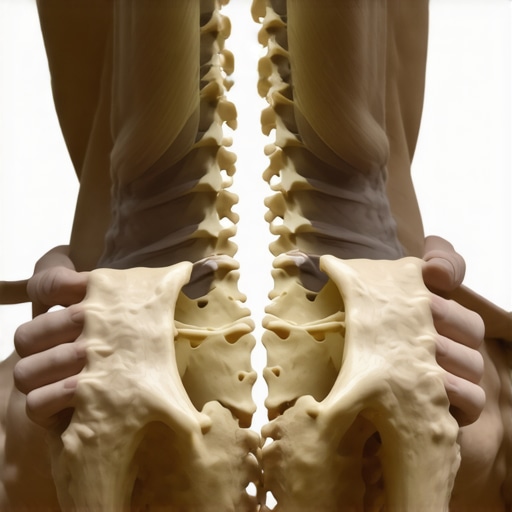
I used to be a serial cracker. Every single morning, I’d grab the side of my office chair, twist my torso until I heard that machine-gun fire of pops, and let out a long sigh of relief. I genuinely thought I was doing my body a favor. I thought I was ‘unlocking’ my spine for the day. But then, the relief started lasting ten minutes instead of two hours. Eventually, that dull ache became a constant companion, and my neck felt like it was made of loose Jello.
Stop Chasing That Satisfying Pop
If you’re anything like I was, you’ve probably realized that why cracking your back at home is a temporary fix isn’t just a catchy phrase—it’s a warning. When we twist and shove our own spines, we usually hit the joints that are already too loose, rather than the ones that are actually stuck. It’s a short-term hit of endorphins that masks a growing problem. I spent years making this mistake, thinking that more noise meant more progress. In reality, I was just teaching my ligaments to let go when they should have been holding me together. Today, I want to show you how to break that cycle and find real stability without the constant need for a ‘pop.’
Is self-cracking actually damaging your long-term mobility?
It’s a valid fear. Many people worry they are ‘grinding bone on bone.’ While that’s not exactly what’s happening, the truth is almost as concerning. According to research cited by Harvard Health, that popping sound is actually gas bubbles—nitrogen and carbon dioxide—escaping from the synovial fluid in your joints. While the gas itself isn’t the problem, the force you use to release it can lead to hypermobility. Have you ever felt like you just can’t sit through a meeting without needing to twist your spine for relief? If so, you’re not alone, but you might be making your joints more unstable every time you do it.
The Hidden Danger of Overstretched Ligaments
When we self-adjust, we often ignore the fact that is your back pain a sign of something more serious might be the underlying question we should be asking. By repeatedly popping the same segments, we stretch the ligaments—the ‘duct tape’ of the human body—until they become lax. This makes the muscles around them work twice as hard to keep you upright. It’s why your how your phone habits are creating a permanent neck hump can feel so much worse if you’re constantly trying to ‘crack’ the tension away. You’re essentially loosening the bolts on a machine that’s already vibrating too much. Instead of forcing a release, we need to focus on the 5 minute stretching routine for chronic desk workers that builds support rather than tearing it down. It took me a long time to realize that why your lumbar support might be making your back stiffer was often tied to how much I was messing with my own spinal alignment manually.To stop the cycle of self-cracking, you have to stop thinking of your spine as a stiff rod that needs to be bent into submission. Think of it more like a high-tension suspension bridge. When you compulsively twist and shove, you aren’t fixing the bridge; you’re loosening the very cables that keep the road flat.
Ditch the C-Shape and Save Your Discs
Most of us, when we feel that familiar ‘tightness,’ immediately hunch over to touch our toes or pull our knees to our chest. We think we’re stretching the muscles, but often, why you should stop stretching your back into a c-shape is the first lesson in real stability. This rounded position puts immense pressure on the front of your spinal discs, pushing the gel-like center backward toward your sensitive nerves. Instead of a deep bend, try the ‘hip hinge.’ Imagine there’s a dowel rod strapped to your back, touching your head, your mid-back, and your tailbone. If you bend and any of those points lose contact, you’re folding, not hinging. I learned this the hard way during a cross-country move. I spent four hours bending over boxes, thinking I was ‘stretching’ between loads. By hour five, I couldn’t stand up straight because I had overstretched the very tissues meant to support me.
Why Your Hips are the Real Culprit
If your back feels like it needs a constant pop, the problem is rarely the back itself. Usually, it’s because your hips have turned into blocks of concrete. When your hips don’t move, your lower back has to move twice as much to compensate for every step you take. This is why your core strength wont fix your back if your hips are locked—you can have six-pack abs, but if your pelvis is stuck, your spine will continue to scream for relief. 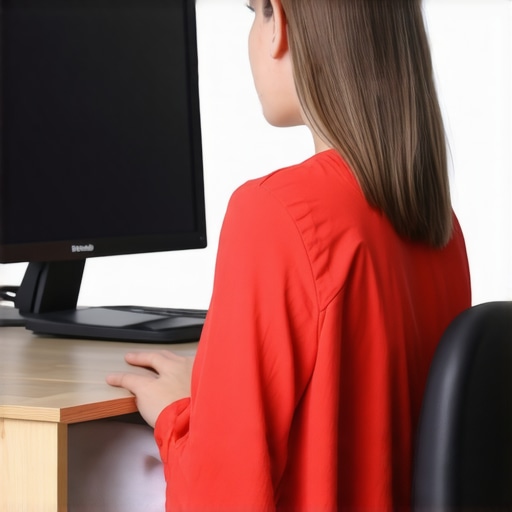
Reset Your Environment Before Your Body Breaks
We spend so much time in our cars and at our desks that our bodies eventually melt into those poor shapes. I used to find myself ‘turtling’—poking my chin out toward the windshield while driving. One of the best hacks I ever found was how to adjust your rearview mirror to improve your driving posture. Sit up tall, pull your shoulder blades back slightly, and then set your mirror. The moment you start to slouch, the mirror will be ‘off,’ serving as a physical reminder to reset your posture. This same logic applies to your workspace; how your monitor height is causing those recurring headaches is often a matter of just two or three inches of elevation. I once spent two hundred dollars on a lumbar cushion only to realize I was sitting so far forward that it wasn’t even touching me. I had to learn how to use a lumbar roll to prevent mid-day back fatigue correctly by pinning it against the small of my back, which immediately killed the urge to twist my spine for a ‘pop.’
The 5-Second Muscle Hack You Can Do Anywhere
Real stability doesn’t require a gym membership. It requires waking up the muscles that have gone dormant from hours of sitting. When you’re standing in line at the grocery store and feel that familiar ache, don’t twist your torso. Instead, try the 5 second glute squeeze that prevents sciatica flares while standing. By engaging your glutes, you create a solid ‘floor’ for your spine to sit on, taking the immediate pressure off your lower back. If you need something more internal, focusing on the specific core move that stabilizes the si-joint can provide that ‘locked-in’ feeling without the trauma of a self-adjustment. I started doing this every time I stood up from my desk, and within two weeks, the urge to ‘crack’ my lower back almost entirely vanished.Let’s dig deeper into the biggest lie in the fitness world: that you just need a stronger core to fix your back. I used to do a hundred deadbugs and planks every night, convinced that a bulletproof midsection would stop my lumbar spine from aching. But why your core strength wont fix your back if your hips are locked is a reality I had to face after months of no progress. According to research by Dr. Stuart McGill, a leading expert in spine biomechanics, the issue often isn’t a lack of strength, but a lack of coordination and hip mobility. If your hips are like frozen blocks of ice, your lower back is forced to do all the ‘bending’ during daily life. No amount of core work can compensate for a spine that is being forced to move in ways it wasn’t designed to.
The Dangerous Myth of the Hamstring Stretch
Most of us were taught that if our back hurts, we should stretch our hamstrings. However, why stretching your hamstrings can actually flare up sciatica is one of the most common ‘traps’ I see people fall into. If your leg pain is actually coming from an irritated nerve, pulling on that leg is like yanking on a frayed electrical cord. You aren’t ‘loosening’ anything; you are creating more inflammation. A study published in the Journal of Orthopaedic & Sports Physical Therapy confirms that neural mobilization—gentle gliding movements—is far more effective than aggressive static stretching for nerve-related pain. 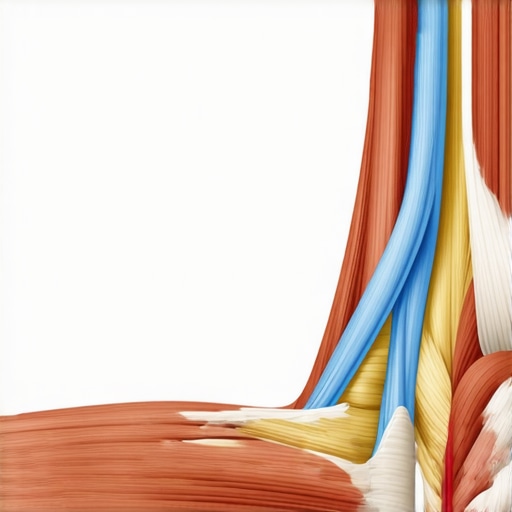
Are you stretching a nerve instead of a muscle?
This is the advanced question you need to ask if your symptoms never seem to go away. When a nerve is ‘caught’ or irritated, the surrounding muscles will tighten up as a defense mechanism. If you keep trying to force those muscles to relax through why deep tissue massage isnt fixing your recurring back pain, you are fighting your own brain’s safety signals. This ‘protective guarding’ is there for a reason. Instead of forcing the muscle to let go, you need to address the instability that made the brain pull the alarm in the first place. This often means focusing on the specific core move that stabilizes the si-joint to provide the structural support your nervous system is looking for.
Stop Trying to Sit with Perfect Posture
One of the biggest ‘oops’ factors in recovery is the obsession with sitting perfectly straight. We’ve been told to sit like soldiers, but why your perfect sitting posture is making you stiffer comes down to blood flow. Static loading, even in a ‘good’ position, eventually starves your discs and muscles of oxygen. The best posture is your next posture. I spent years buying ergonomic chairs only to realize the chair wasn’t the problem—my lack of movement was. Have you ever fallen into this trap of doing all the ‘right’ exercises but still feeling stuck? Let me know in the comments.
Keep Your Spine Happy for the Next Decade
Maintenance is where most people fail. They wait until they are in a crisis to do their exercises, and then stop as soon as the pain dips below a five out of ten. I’ve realized that mobility mastery daily tips to keep your spine and joints healthy aren’t about spending an hour in the gym; they are about high-frequency, low-intensity “movement snacks.” As Dr. Kelly Starrett often emphasizes in his work on human performance, our bodies are essentially soft tissue systems that get “matted down” when we remain static for too long. If you want to keep your progress, you have to treat your spine like a high-maintenance pet—it needs a walk and a stretch every single day, not just when it starts barking. This consistency is the only way to combat the mechanical creep that naturally occurs in our ligaments during a long workday.
Why I Swear by the Humble Tennis Ball
You don’t need a thousand-dollar massage chair to manage chronic tension. I carry a tennis ball in my laptop bag everywhere I go because how a simple tennis ball can fix deep glute tension is the single most effective tool for daily self-maintenance. By leaning against a wall and placing the ball in the “meat” of your glute, you can pin down trigger points that lead to that nagging sciatic ache. I do this for two minutes every evening while checking my email. It prevents the tightness from accumulating into a full-blown flare-up. When you combine this release with the 5 second glute squeeze that prevents sciatica flares while standing, you create a dynamic duo of release and stability that keeps you functional through long flights or marathon meetings.

How do I maintain my spinal mobility over time?
The secret is building “micro-habits” into your existing environment so you don’t have to think about them. For me, that meant learning how to use a lumbar roll to prevent mid-day back fatigue so I wasn’t fighting my office chair’s poor design all day. I also adopted a movement-based version of the the 20-20-20 rule for neck and eye strain relief: every 20 minutes, I move for 20 seconds. This might just be the 10 second hip reset for relief after sitting where I stand up and squeeze my glutes to wake up the posterior chain. It sounds simple, but it prevents the cumulative deformation of spinal tissues that happens when we sit for hours without a break.
The Future of Your Back is Data-Driven
Looking ahead, I predict that the next five years will shift away from generic stretches and toward real-time biofeedback. We are already seeing the rise of smart clothing and wearables that track spinal curvature and vibrate when you’ve exceeded your “strain budget.” This data will help us identify exactly how your monitor height is causing those recurring headaches before the headache even begins. We are moving toward a world where back pain breakthroughs navigating your path to restored mobility will be powered by AI that knows your movement patterns better than you do. For now, the most advanced tool you have is your own awareness. I challenge you to try the tennis ball glute release for just two minutes tonight and see if you wake up with a little more “give” in your step tomorrow morning.
The Hard Lessons My Spine Forced Me to Learn
After years of trial and error, I’ve realized that the ‘pop’ is a liar. It promises freedom but delivers a debt that your ligaments have to pay later. One of my biggest lightbulb moments was realizing that stiffness is often a request for stability, not more stretching. When your brain feels a joint is ‘loose’ or unstable, it clamps the surrounding muscles shut to protect you. Trying to ‘crack’ that open is fighting against your own survival software.
Another hard truth: consistency beats intensity every single time. You can’t undo eight hours of sitting with one aggressive gym session. It’s the mobility mastery daily tips to keep your spine and joints healthy that actually move the needle. I stopped looking for ‘big fixes’ and started focusing on the small, boring habits that keep my discs hydrated and my nerves happy.
The Simple Tools that Keep My Joints Moving
I don’t believe in expensive gadgets, but there are certain resources I never travel without. First, I highly recommend looking into the work of Dr. Stuart McGill, particularly his insights on spinal hygiene which changed how I handle everyday tasks. Second, I always keep a small roll in my bag because knowing how to use a lumbar roll to prevent mid-day back fatigue is the difference between ending the day with energy or ending it with a throbbing ache. Finally, I swear by how a simple tennis ball can fix deep glute tension as the ultimate portable physical therapist for those long commutes. For a quick reset, a simple doorway is my best friend for a 5 minute stretching routine for chronic desk workers to open up the chest and reverse the ‘office slouch.’
You Can Break the Cycle of Constant Tension
The journey away from chronic back pain isn’t a straight line. You’ll have days where you forget your posture or feel the urge to twist for that quick hit of relief. That’s okay. The goal isn’t perfection; it’s a better relationship with your body. By shifting your focus from ‘releasing’ to ‘supporting,’ you are giving your nervous system the safety it needs to finally let go of that protective guarding. You aren’t just managing symptoms anymore; you are building a resilient, stable frame that will carry you through the next several decades. Check out more back pain breakthroughs navigating your path to restored mobility to keep your momentum going.
Have you ever felt like you’re ‘addicted’ to cracking your own back for relief? Let me know in the comments below!