
How to stand at a concert without your lower back locking up

It was the middle of the second set, the bass was thumping through the floorboards, and everyone around me was caught in the moment. Me? I was frozen. Not because of the music, but because my lower back had decided to weld itself into a solid block of concrete. I tried to do that awkward side-to-side sway to loosen it up, but every shift felt like a rusty hinge screaming for oil. By the time the encore hit, I wasn’t even listening; I was just doing the math on how many ibuprofen I had in my kitchen cabinet. It’s a miserable way to experience live music. For years, I genuinely believed I was just cursed with a “bad back” that couldn’t handle three hours on my feet. I spent hundreds on tickets only to spend the night leaning against sticky walls or looking for a VIP seat I couldn’t afford. But here is the good news: I figured out it wasn’t my age or some permanent injury. It was how I was standing. Today, I want to share the exact shifts that changed everything for me so you can actually focus on the music instead of your lumbar spine.
Stop treating your spine like a structural beam
One of the biggest mistakes I made early on was trying to maintain what I thought was “perfect” posture. I’d stand there like a soldier, chest out and knees locked. I thought I was being “healthy,” but why your straight posture is actually straining your muscles became a painful reality for me very quickly. Your spine isn’t a static pillar; it’s a dynamic series of curves designed for movement. When you lock your knees, you tilt your pelvis forward, which puts an incredible amount of shear force on those tiny joints in your lower back. According to researchers at Cornell University Ergonomics, standing still for long periods is actually more taxing on the body than walking because it causes blood to pool in the legs and forces the back muscles to work constantly without a break. This constant tension is exactly understanding the link between poor posture and chronic back pain in a nutshell.
Is a simple shift really worth the hype?
You might be skeptical—I certainly was. I thought the only solution was a chair. But once I started implementing the the 5-second glute squeeze that prevents sciatica flares while standing, my “endurance” at shows doubled. Have you ever felt like you had to leave a concert early because the pain was just too much to ignore? Let me know, because I’ve been there, and it’s heart-breaking.
The sneaker trap and the stiff ankle connection
Early in my concert-going days, I insisted on wearing flat-soled, trendy sneakers. I loved the look, but I didn’t realize why your current sneakers are causing your lower back to ache until I spoke to a specialist. Those shoes offer zero shock absorption, meaning every vibration from the floor and every ounce of your body weight travels straight up into your hips and lower back. Even worse, I had no idea that how a stiff ankle is actually causing your recurrent lower back aches by forcing my lower back to overcompensate for my lack of foot mobility. If your ankles don’t move, your back has to. It’s a chain reaction that ends in a locking sensation that can ruin your entire weekend.
Ditch the statue act and find your micro-groove
Think of your spine not as a rigid steel rod, but more like a stack of donuts with jelly in the middle. When you stand perfectly still for three hours, you are essentially squashing those donuts in the exact same spot until the jelly starts to bulge and the nerves get angry. To avoid this, you need to master the art of the ‘micro-shift.’ I remember being at a Foo Fighters show a few years back where I spent the first forty-five minutes trying to look cool and immovable. By the time the acoustic set started, I was in agony. I decided to stop caring about looking ‘chill’ and started shifting my weight every thirty seconds—not a massive dance move, just a subtle transfer from the ball of one foot to the heel of the other. This prevents blood from pooling and keeps the pressure from staying localized on a single disc. If you find your hips feel like they are locking up, you need to boost your back mobility with simple exercises that make a difference before the show even starts.
Find a ledge to give your spine a break
There is a hidden weapon in almost every venue that most people ignore: the footrest. Whether it is a literal bar rail, a slight concrete lip near a pillar, or even just the base of a security barricade, putting one foot slightly higher than the other is a game-changer. This is what I call the one-foot-up rule for pain-free standing, and while it’s great for doing dishes, it’s a lifesaver in a crowded pit. By elevating one foot just three or four inches, you instantly tilt your pelvis back into a neutral position, which takes the ‘pinch’ out of your lower lumbar. I used this trick during a four-hour festival set, alternating feet every ten minutes, and it was the first time in a decade I didn’t wake up the next morning feeling like I’d been folded in half. 
Wake up your feet to save your lumbar
Most of us focus on where the pain is—the back—but the problem usually starts in the basement. If your feet are cramped, your back is doomed. I used to wear high-top boots that looked great but acted like a cast for my ankles. I didn’t realize that why your thin shoes are impacting your lower back shock absorption was the reason my spine felt every beat of the drum. Even something as small as how a stiff big toe forces your lower back to overwork can derail your night. When your big toe doesn’t flex, your gait changes, and your lower back has to pick up the slack for that lack of propulsion.
Breathe into the space where it hurts
When we are in pain, we tend to take shallow, ‘chest’ breaths. This actually tightens the psoas and the muscles surrounding your spine, creating a biological corset of tension. During a particularly loud set, I caught myself holding my breath during the heavy riffs. I forced myself to take deep belly breaths, focusing on expanding my lower ribs. It sounds like hippie advice until you realize that the breathing habit that is keeping your back muscles tight is often the final straw for a stressed spine. If the tension starts to peak, try how a simple reach and breathe move can decompress your back right there in the crowd. It only takes ten seconds, but it resets the pressure and buys you another hour of music.
It’s easy to think that if we just find the right stretch or buy the most expensive ergonomic chair, our pain will vanish. But after years of navigating the world of chronic stiffness, I’ve realized that most of us are actually sabotaging our recovery by following ‘common sense’ advice that is fundamentally flawed. Let’s dig deeper into the mechanics of why your body might still be protesting even after you’ve tried the basics.
The hamstring stretch that is actually a trap
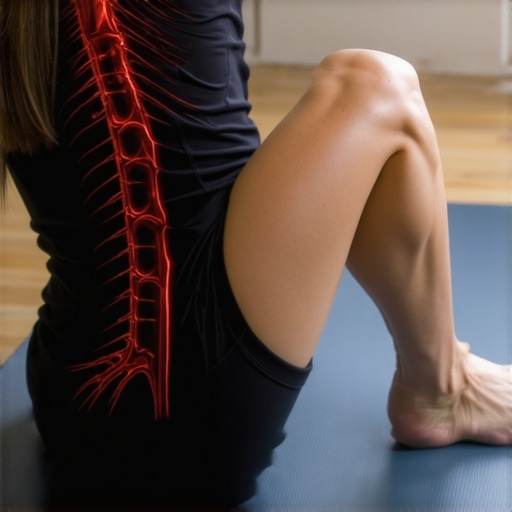
You’ve probably heard the advice a thousand times: if your lower back hurts, you need to stretch your hamstrings. It sounds logical, but here is the contrarian truth that most people miss: in many cases, why stretching your hamstrings won’t fix your tight legs is because those muscles aren’t actually short—they are ‘locked long’ to protect a sensitive nerve. When you yank on them, you aren’t releasing tension; you are essentially playing tug-of-war with your sciatic nerve. A study published in the Journal of Orthopaedic & Sports Physical Therapy highlights that ‘tightness’ is often a neurological protective mechanism rather than a physical length issue. If you keep pulling on a nerve that is already irritated, you’ll likely find that why some sciatica stretches actually pinch the nerve further becomes your new, painful reality. Have you ever fallen into this trap of stretching for weeks with zero progress? Let me know in the comments, because I spent a solid year making that mistake.
Stop chasing the ‘pop’ for temporary relief
I used to be a chronic neck-cracker. Every time my head felt heavy or my shoulders felt like they were creeping toward my ears, I’d give my head a quick tilt until I heard that satisfying ‘click.’ It felt great for about ten minutes, but then the tension would come roaring back even harder. What I didn’t realize was why cracking your own back is making your joints more unstable. When you self-manipulate, you aren’t usually hitting the joint that is actually stuck; instead, you are over-stretching the segments above and below it that are already moving too much. This creates a cycle of hypermobility that forces your muscles to seize up even tighter just to keep your spine from feeling ‘loose.’ If you want real longevity, you have to look for back pain breakthroughs that address the root cause of the restriction rather than just chasing the chemical high of a joint release.
Wait, isn’t a firm mattress supposed to be better for my disc?
This is one of the most persistent myths in the orthopedic world. We are told that a firm mattress is the gold standard for spine health, but for many people—especially those with a specific type of lumbar narrowing—it’s a recipe for a sleepless night. I learned the hard way that why your firm mattress is making your morning sciatica worse is often due to the lack of contouring, which forces the lower back to stay in an arched position all night. This ‘extension’ narrows the space where the nerves exit the spine. If you wake up feeling like your legs are made of lead, it’s time to rethink your sleep setup and perhaps explore the side sleeping trick for people with narrowing in the spine to give your nervous system a break.
The hidden link between your jaw and your neck
If you are struggling with persistent stiffness at the base of your skull, the problem might not be your posture at all; it might be your bite. There is a profound neurological connection between the trigeminal nerve (which controls your jaw) and the upper cervical spine. When you clench your teeth during a stressful workday, you are automatically triggering a contraction in the muscles that hold your head up. I started seeing real progress when I practiced the 10-second jaw release that softens your neck muscles. It sounds too simple to be true, but once you break the ‘biological corset’ of tension that starts in the face, you’ll find neck pain solutions become much more effective. Remember, the body is a single, integrated unit—not a collection of separate parts that don’t talk to each other. Keeping your mobility mastery goals in mind requires looking at these subtle, often ignored connections.
Maintaining a resilient spine isn’t about spending two hours at the gym; it’s about the small, intentional choices you make during the 23 hours you aren’t exercising. I’ve found that high-tech gadgets are often less effective than a simple tool I keep in my laptop bag: a lacrosse ball. When I feel that familiar, creeping pull in my hip while sitting at a terminal, I don’t wait for a weekly appointment. I use it immediately. Learning how a simple tennis ball can release your deep glute tension was the moment I stopped being a victim of my own anatomy and started being its manager. Dr. Stuart McGill, a world-renowned expert in spine biomechanics and author of ‘Back Mechanic,’ emphasizes the importance of ‘spine hygiene’—the way we move during everyday tasks to avoid cumulative micro-trauma. It’s about building a lifestyle where mobility mastery is just as automatic as brushing your teeth.
Your desk setup shouldn’t be a torture rack
If you work from a laptop for more than an hour a day, you are fighting a losing battle against gravity. I used to think my persistent headaches and ‘tech neck’ were just part of the job until I implemented the 15-degree rule for your computer monitor to save your neck. It seems minor, but keeping the top third of your screen at eye level stops that slow-motion collapse of your cervical spine. I also realized that why your wrist position at your desk affects your neck health is a real neurological phenomenon; if your forearms aren’t properly supported, your upper traps have to work overtime to hold the weight of your arms all day. 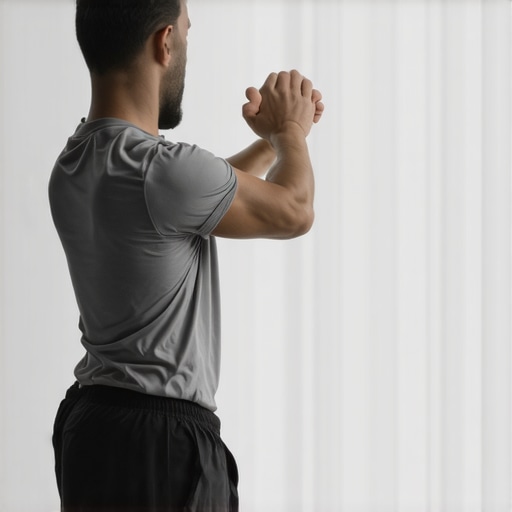
How do I keep my spine feeling this good for the long haul?
Consistency is your only real currency here. You cannot undo ten years of slouching with one ‘perfect’ weekend of stretching. I’ve found that the secret is ‘micro-sessions.’ Instead of a 45-minute stretching routine that I’ll eventually get bored with and quit, I do the 30-second ankle drill that reduces your risk of back injury every time I’m waiting for my morning coffee to brew. These tiny wins add up. I suspect that in the next few years, we’ll see a massive surge in AI-powered wearables that provide haptic feedback the moment your pelvic tilt goes out of whack or your neck muscles start to over-fire. We are moving toward a future where biofeedback will make ‘forgetting’ your posture nearly impossible.
Listen to the basement to save the attic
If you take one thing away from this journey, let it be the power of your feet. Everything starts there. Tonight, before you crawl into bed, try the 2-minute foot massage that helps your lower back relax. It sounds disconnected, but opening up the fascia on the bottom of your feet sends a neurological signal to your entire posterior chain to let go of the day’s tension. Once you experience that immediate drop in lumbar pressure, you’ll see why back pain breakthroughs often start in the places you’d least expect. Don’t wait for the pain to become unbearable to act; start with that two-minute foot release tonight and feel the difference in your first step tomorrow morning.
The hard truths about why my back still hurt even when I tried to be perfect
Reflecting on my years of managing back pain, I’ve realized that the biggest obstacle wasn’t a lack of information, but the wrong kind of information. First, I had to accept that there is no such thing as a ‘perfect’ posture that you can hold forever; your body craves variety, not a static ideal. Second, I learned that understanding the link between poor posture and chronic back pain isn’t about sitting like a statue, it’s about learning to breathe through the tension. Third, the most profound changes happened when I stopped looking at my spine in isolation and started addressing my stiff ankles and toes. Lastly, I realized that back pain breakthroughs often come from the smallest, most boring habits rather than expensive gadgets.
My personal toolkit for maintaining a resilient spine
If you want to stop guessing and start healing, you need a few reliable resources in your corner. I swear by the ‘Back Mechanic’ by Dr. Stuart McGill; it’s essentially the owner’s manual for the human spine that we should have all received at birth. For daily maintenance, I never go a week without checking in on mobility mastery daily tips to keep your spine and joints healthy, which helps me stay ahead of flares before they start. I also keep a simple lacrosse ball in my bag because how a simple tennis ball can release your deep glute tension is a trick that has saved me during long travel days and office marathons. Finally, I recommend keeping a small footstool under your desk to utilize the simple footstool trick to stop lower back pain while sitting, which is the easiest way to reset your pelvic tilt without thinking about it.
#IMAGE_PLACEHOLDER_E#
Your journey back to the front row starts today
You don’t have to accept a life of leaning against walls or leaving the party early. By implementing these micro-shifts and focusing on mobility, you are training your nervous system to feel safe in movement again. Whether you are dealing with a nagging ache or sciatica, remember that your body has an incredible capacity for adaptation when given the right signals. Start small, stay consistent, and don’t be afraid to take up space and move your body in ways that feel good. You deserve to focus on the music, the conversation, and the moments that matter, not the pressure in your lumbar. Have you found a specific micro-shift or movement that helps you survive long events without pain? Let me know in the comments below!