
Why your heavy purse is the real cause of your one-sided back pain
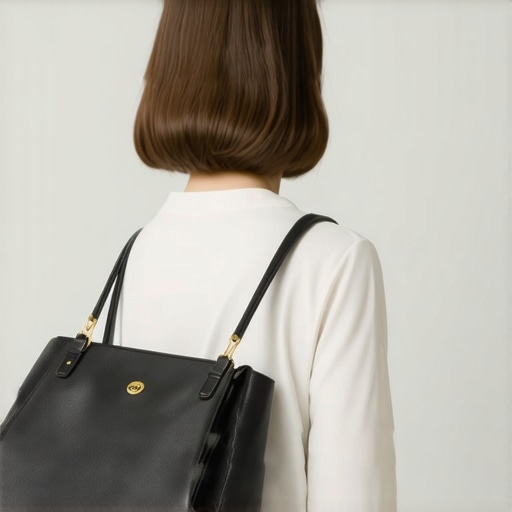
I remember a Tuesday last October where I actually had to stop halfway across a parking lot because my right lower back felt like it was being squeezed by a vice. It wasn’t a gym injury. I hadn’t fallen. I was just carrying my usual ‘daily essentials’ bag—which, if I’m honest, weighed about as much as a medium-sized bowling ball. I stood there, feeling lopsided and frustrated, wondering if I was finally paying the price for years of poor alignment. It turns out, I was literally pulling my own spine out of place every single morning. Today, I want to help you stop that cycle. We’re going to look at why that one-sided ache keeps coming back and how something as simple as how you carry your gear can be the difference between a pain-free walk and a week on the couch. [image_placeholder]
Stop Letting Your Tote Bag Control Your Spine
My biggest mistake early on was thinking I could just ‘tough it out’ or that a few extra pounds didn’t matter. I’d switch shoulders for five minutes, call it good, and then wonder why my back hurt more after a day of resting on the couch. It’s not just about the weight; it’s about the constant, subtle ‘hiking’ of your shoulder to keep the strap from slipping. This creates a functional scoliosis—a temporary curve in your spine—that wreaks havoc on your muscles. If you’ve ever felt like your body is permanently tilted, you might even be tilting your pelvis without even realizing it.
Is a smaller purse actually worth the hassle?
I get it. You need your laptop, your charger, that extra sweater, and the three lipsticks you haven’t used in months. But according to the American Chiropractic Association, a bag should never exceed 10% of your total body weight to avoid significant spinal strain. When you go over that limit, you aren’t just carrying a bag; you’re forcing your core to work overtime just to stay upright. I used to carry a heavy leather messenger bag on my left side exclusively, thinking I was being ‘ergonomic’ because it had a padded strap. Big mistake. That padding just masked the pressure while my deep spinal muscles were screaming for help. I eventually realized that understanding the link between poor posture and chronic back pain was only half the battle; I had to actually change the physical load I was putting on my body. Have you ever noticed that your pain is always on the same side as your favorite bag? Drop a comment below—I’d love to know if I’m not the only one who tried to carry their whole life in a single tote. Even learning how to carry a heavy backpack without leaning forward can make a world of difference for your daily comfort level.
Strip Away the Dead Weight First
You can’t out-posture a bag that is fundamentally too heavy. I finally bought a small digital luggage scale and hooked it to my favorite tote last month. The reading? 18 pounds. For someone my size, that’s nearly 15% of my body weight, well over the recommended ergonomic limit. I realized I was carrying ‘just in case’ items—like a heavy external battery and three notebooks—that were literally crushing my discs. I immediately purged the unnecessary weight. If you haven’t touched an item in your bag for three days, it doesn’t belong in your daily carry. When you do have to carry a load, remember the specific way to lift a grocery bag to avoid a spasm—the same mechanics apply to swinging your daily gear onto your shoulder. Keep the load close to your center of gravity to minimize the leverage against your spine. 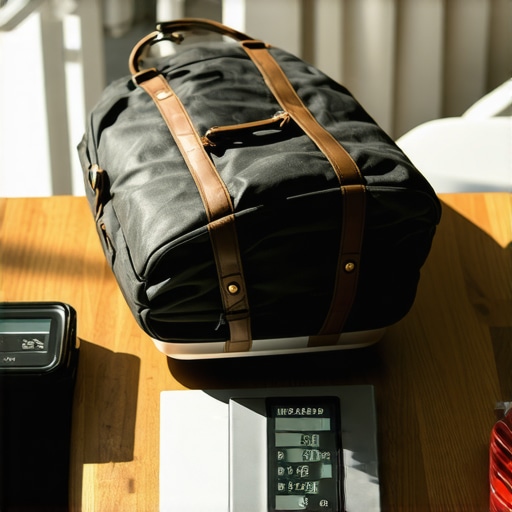
Stop the One-Sided Shoulder Hike
When we carry a bag on one side, our brain instinctively tells the shoulder to ‘hike’ up to prevent the strap from falling off. This constant contraction causes the muscles on one side of your neck and upper back to become chronically short and tight. I spent months thinking I had a pinched nerve when, in reality, I was just training my trapezius muscle to be a permanent shelf for a leather strap. If you feel a sharp pull under your scapula, keep in mind that your shoulder blade pain might actually be a neck issue caused by this very habit. To break this, you must switch sides every block or every time you hit a red light during your commute. It feels clunky at first—like writing with your non-dominant hand—but it forces your nervous system to redistribute the tension and prevents a permanent pelvic tilt.
Adopt the Cross-Body Strategy
If you aren’t ready to switch to a traditional backpack, at least move to a cross-body bag with a wide, padded strap. The goal is to distribute the pressure across the chest and the opposite hip rather than letting it sit entirely on one shoulder joint. This helps maintain a more neutral alignment and prevents the ‘side-lean’ that leads to chronic sciatica. For those already struggling with the aftermath of a heavy bag, following mobility mastery and daily tips can help reset those locked-up joints.
Reset Your Spine After the Commute
Once you put the bag down, your body doesn’t automatically return to its natural state. It often stays in that ’tilted’ muscle memory. I started doing a 30-second ‘wall reset’ every time I walked through my front door. Standing with your back against a flat surface is the simple way to check your own spine for pelvic tilt. If you find one side of your pelvis is higher than the other, you’ve been over-relying on one side. Follow this with the wall angel move that fixes rounded shoulders to open up the chest and counteract the forward pull of the straps. You can even try how a simple reach and breathe move can decompress your back after a long day of carrying heavy gear. These micro-adjustments tell your muscles the ‘work’ is over and it’s time to relax. If you ignore this reset, you’re just stacking today’s tension on top of yesterday’s, which is why simple exercises that make a difference eventually become a necessity rather than a preventative measure.Most people think they just need to ‘stand up straight’ to fix their problems. But honestly, why standing up straight is actually making your back pain worse is a conversation I have almost weekly. When you force a ‘military’ posture, you’re often just replacing one set of strained muscles with another. You’re trading a slump for a rigid, breathless state that doesn’t allow your spine to move naturally. In fact, research published in the Journal of Biomechanics suggests that postural variability—the ability to move through different positions—is far more important for spinal health than maintaining a single ‘correct’ one. If you’re constantly fighting your own anatomy to look like a mannequin, you’re just creating a different kind of tension trap. 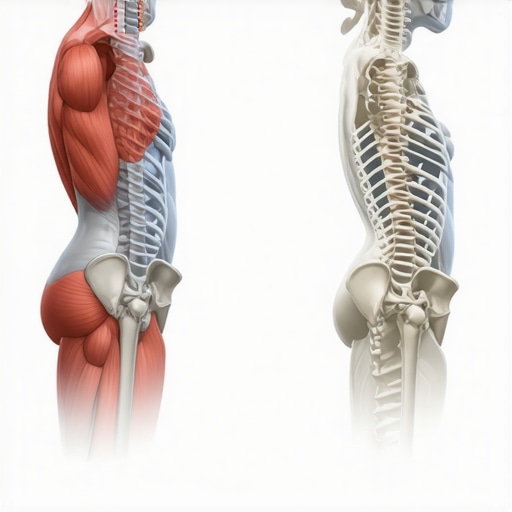
The Hamstring Trap for Sciatica Sufferers
The biggest ‘oops’ factor I see involves the legs. We’ve been conditioned to think that tightness always requires stretching. But if you have radiating leg pain, understanding why stretching your hamstrings won’t fix your tight legs is a hard truth to swallow. When the sciatic nerve is sensitized, pulling on it like a rubber band via a classic hamstring stretch is like picking a scab. It feels ‘tight,’ but that’s often neural tension, not muscle length. This is why some sciatica stretches actually pinch the nerve further and leave you hobbling the next morning. You may be searching for sciatica relief secrets, but sometimes the most effective secret is simply knowing when to stop pulling on an already angry nerve.
Why does the pain linger even after your ‘alignment’ looks perfect?
It’s because pain isn’t just a structural issue; it’s frequently a neurological one. Your brain can keep the ‘pain’ signal on high alert even after the physical load—like that heavy bag we talked about—has been lightened. This is the nuance that separates basic stretching from true mobility mastery. You have to address the underlying sensitivity of the nervous system, not just the bones. Have you ever fallen into this trap—doing all the ‘right’ exercises but still feeling stuck? Let me know in the comments. If you aren’t seeing progress, it’s worth checking if your back pain is a sign of something more serious or if you just need a more tailored approach to navigating your path to restored mobility. By shifting our focus from ‘perfect’ looks to ‘functional’ movement, we can finally break the cycle of chronic stiffness. Remember, a spine that can’t move is just as vulnerable as a spine that slumps.I’ve spent thousands of dollars on fancy office chairs only to realize that the most effective tool I own cost three dollars at a sporting goods store. It’s easy to get overwhelmed by the wellness industry, but I’ve found that true maintenance comes down to environmental hacks you don’t even have to think about. For instance, how to adjust your rearview mirror to force better posture is a trick I use every morning; if I slouch, I can’t see the car behind me. It’s a self-correcting system. I apply that same logic to my workspace by following the 15 degree rule for your computer monitor to save your neck. If the tech is positioned to support your anatomy, your anatomy won’t have to strain to support your tech. I predict that in the next five years, we’ll move away from generic ergonomic furniture and toward AI-powered biofeedback sensors that vibrate when our deep stabilizers shut off, but until then, we have to be our own sensors.
Small Tools with Massive Payoffs
One tool I never travel without is a simple tennis ball. It’s not for a game; it’s for my hips. Learning how a simple tennis ball can release your deep glute tension saved my lower back during a cross-country flight last year. When you’re stuck in a seat that was clearly designed for someone half your size, a small focal point of pressure can prevent the fascia from gluing together. Similarly, if you’re sitting for long periods, the specific way to use a lumbar roll for maximum relief is often misunderstood—it should be at the level of your waist, not your hips. A study published in Clinical Biomechanics highlighted that even a 2cm shift in lumbar support can drastically change the intradiscal pressure in your L4-L5 region. This isn’t just about feeling good; it’s about mechanical physics. 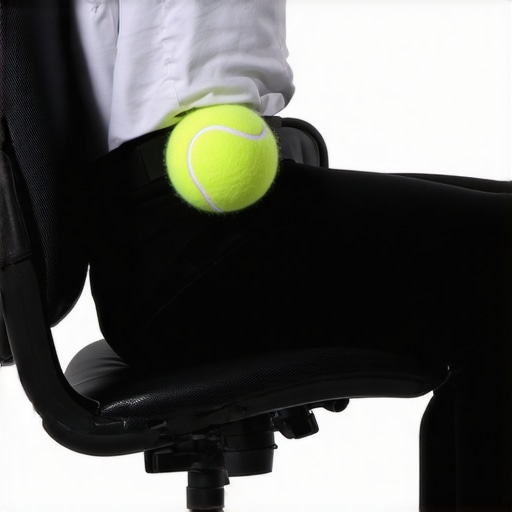
How do I maintain my mobility results for the long haul?
The key to long-term success isn’t a grueling 90-minute gym session; it’s the micro-dosing of movement. I follow mobility mastery and daily tips to keep your spine and joints healthy by setting a timer for every 50 minutes of work. During those breaks, I’m not just walking to the fridge; I’m doing one or two targeted resets. If you want to keep the progress you’ve made, you have to stop seeing recovery as something you do only when you’re hurt. It’s like brushing your teeth—you do it to prevent the decay, not just to fix the cavity. If you’re ready to take this seriously, I challenge you to try the rearview mirror trick tomorrow morning. It’s the easiest way to start navigating your path to restored mobility without adding another chore to your to-do list. Staying consistent is where the real expert tips on managing back pain in 2025 will focus—shifting from reactive care to proactive environmental design.
Lessons My Spine Had to Teach Me the Hard Way
The most humbling realization I had was that my body wasn’t ‘broken’—it was just responding perfectly to the stress I was giving it. I spent far too long thinking I needed to ‘fix’ my alignment, when I really needed to stop fighting my own anatomy. In fact, why your straight posture is actually straining your muscles was a total game-changer for me; it helped me move away from rigidity and toward fluid, functional movement. I also learned that that nagging pull in my leg wasn’t a muscle issue at all. Discovering why your hamstrings feel tight but never get better with stretching saved me from months of useless pulling on a sensitive sciatic nerve. Finally, I realized that my environment is my best therapist. If I set up my space correctly, I don’t have to think about my health—it just happens.
The Minimalist Toolkit for Pain-Free Living
You don’t need a thousand-dollar setup to find relief. My daily routine relies on a few specific, high-impact items that keep my joints happy. First, I never sit for long periods without the specific way to use a lumbar roll for maximum relief; it’s a simple fix that prevents that deep, lower-back ache. Second, I keep a digital luggage scale in my closet to check my bags once a week—it’s the only way to ensure I’m not creeping back into that 15-pound danger zone. [image_placeholder] For those looking for more comprehensive guidance, I always recommend checking out expert tips on managing back pain in 2025 to stay ahead of the curve as research evolves. These tools aren’t just gadgets; they are the boundaries I set to protect my quality of life.
Build a Body That Moves with You
Recovery isn’t a destination you reach and then stop; it’s a rhythm you settle into. By making these small shifts—ditching the heavy tote, resetting against the wall, and listening to your nervous system—you’re doing more than just avoiding pain; you’re investing in your future self. It’s about navigating your path to restored mobility with patience and the right information. Don’t be afraid to start small today. Even one less item in your bag is a win for your spine. Have you weighed your daily bag lately? Let me know what surprised you in the comments below!