
The specific hip shift that relieves pressure on the SI joint
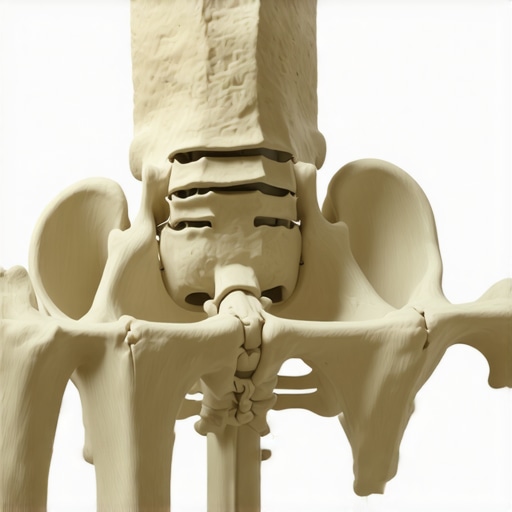
I was standing in the kitchen, gripped by a pain so sharp I couldn’t even reach for the salt shaker. It felt like a hot needle was stuck right in the dimple of my lower back. For years, I’d been told to ‘just stretch more,’ but every time I touched my toes, the stabbing sensation got worse. I was making a classic mistake: I was treating my spine like the enemy when the real culprit was a tiny, misaligned joint in my pelvis. If you’ve ever felt like your leg was ‘longer’ than the other or experienced a dull throb that won’t go away after sitting, you aren’t alone. Today, I’m going to show you the exact hip shift that finally gave me my mobility back without needing a single expensive gadget.
That Deep Ache in Your Pelvis is Sending You a Message
It’s easy to assume every twinge is a disc issue, but often it’s the sacroiliac (SI) joint screaming for help. I spent far too long focused on my lumbar spine, even obsessing over whether my back pain was a sign of something more serious. The reality was much simpler. My pelvis was tilted, and my body was overcompensating. Early on, I made the huge mistake of thinking I just had ‘tight legs.’ I doubled down on my yoga routine, but stretching your hamstrings won’t fix your tight legs if the joint they attach to is out of whack. In fact, research published in the Journal of Clinical Medicine suggests that up to 30% of patients with lower back pain actually have SI joint involvement.
Stop Fighting Your Body and Start Shifting the Pressure
We’re going to look at how a three-inch adjustment in how you carry your weight can decompress that nerve in seconds. It’s about working with your anatomy, not against it. [image] Before we dive into the mechanics, have you ever felt that sharp ‘catch’ in your hip when simply trying to stand up from a chair?
Will this actually work if everything else has failed?
I get the skepticism—I was the person who tried every foam roller and ‘miracle’ ointment on the market. The difference here is that we aren’t just masking the symptom; we are resetting the pelvic baseline. Instead of a grueling hour of exercise, we’re focusing on a simple morning move to prime your spine and get that joint gliding again. It’s about finding that sweet spot where the pressure dissipates and your body can finally breathe.Think of your pelvis like a bowl of water. If that bowl tips forward or to the side, the water spills, and your brain sends an emergency signal to your lower back muscles to lock down and ‘save’ you. This is why you feel that constant, tight ache. To fix it, you don’t need a gym; you need to realign the bowl. You can actually start by learning the simple way to check your own spine for pelvic tilt in front of your bathroom mirror. If one hip bone sits higher than the other, you’ve found your culprit.
The Three-Inch Shift That Quiets the Nerve
The most effective way to reset this misalignment is through a technique called an isometric pelvic reset. I remember one afternoon on a hiking trail when my hip felt so ‘stuck’ I thought I’d have to be carried back. I sat on a fallen log, performed a version of this move, and the relief was nearly instantaneous. To do this at home, lie on your back with your knees bent. Place one hand on the front of your right knee and the other hand behind your left thigh. Simultaneously, push your right knee into your hand while pulling your left thigh toward your chest. You aren’t trying to win a strength contest; you are just providing enough resistance to ‘re-center’ the joint. This is the simple movement that resets your si joint after a run or a long day on your feet. 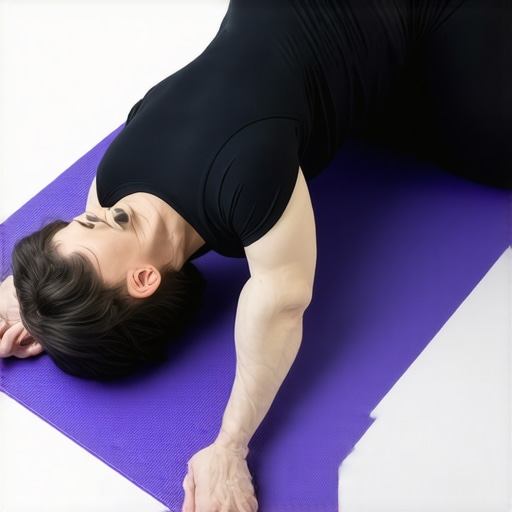
Stop Pushing So Hard and Start Breathing Instead
A common mistake I see—and one I made for years—is thinking that more force equals faster healing. It doesn’t. When it comes to the pelvis, why gentle is the most important word cannot be overstated. If you strain, your body enters a ‘fight or flight’ mode, which causes the very muscles you’re trying to relax to seize up even tighter. Instead of gritting your teeth, focus on your diaphragm. Learning how to breathe into your lower back to release deep muscle tension allows the nervous system to let go of the ’emergency brake’ it has placed on your SI joint.
Small Daily Habits That Keep the Reset Locked In
Once you’ve shifted the joint back into place, the goal is to keep it there. You’d be surprised how much your environment fights against your alignment. For instance, why crossing your legs is the fastest way to tilt your pelvis is something most of us ignore until the pain returns. I had to train myself to sit with both feet flat, which felt ‘wrong’ at first because my muscles were so used to being crooked. Additionally, check your footwear. If your heels are worn down on one side more than the other, why your current sneakers are causing your lower back to ache becomes obvious—they are literally forcing your pelvis back into that tilted position every time you take a step.
We’ve been conditioned since grade school to ‘stand up straight’ and ‘shoulders back,’ but here is the truth: forcing a military-style posture is one of the fastest ways to exhaust your paraspinal muscles. When you pin your shoulder blades together, you aren’t fixing your alignment; you’re just creating a new, rigid pattern of tension that prevents your rib cage from moving as you breathe. I spent years trying to maintain that ‘perfect’ look, only to realize that why standing up straight is actually making your back pain worse comes down to the lack of natural spinal curves. Real mobility is about being adaptable, not rigid. Have you ever fallen into this trap of trying to ‘force’ your body into a position it wasn’t ready for? Let me know in the comments.
The Core Bracing Mistake That Locks Your Pelvis
Another nuance most people miss is the danger of ‘over-bracing’ the core. We are told to keep our abs tight to protect our backs, but if you are constantly sucking in your stomach, you are essentially creating a pressurized canister in your abdomen that has nowhere to go but down onto your pelvic floor or up into your diaphragm. This is why you should stop doing planks if your back already hurts—you are likely just reinforcing a state of high-threshold strategy where your muscles never actually learn to relax. Instead of a rock-hard core, we need a responsive one. 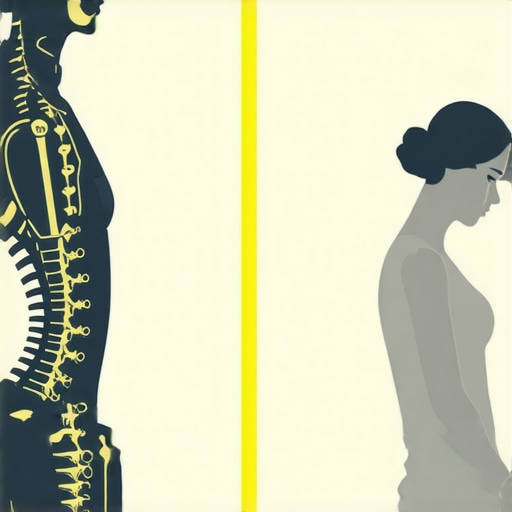
Is it possible for your MRI results to be totally misleading?
This is the ‘Oops’ factor that keeps many people stuck in a cycle of fear. You get an MRI, see the words ‘disc bulge’ or ‘degeneration,’ and suddenly you’re afraid to move. However, expert research, including a landmark study published in the New England Journal of Medicine by Jensen et al., revealed that 64% of people with no back pain whatsoever had disc abnormalities. This proves that your imaging isn’t always your destiny. Often, the pain isn’t coming from the structural ‘damage’ on the screen, but from the functional way your joints are failing to glide together. This is why back pain breakthroughs often happen when we stop treating the scan and start treating the person.
Why Your High-Tech Fixes Often Fail
I see it all the time: people buying $1,000 ergonomic chairs or vibrating massage guns, thinking technology will solve a movement problem. The nuance here is that your body adapts to what you do most often, not what you do for five minutes with a gadget. If you spend eight hours a day in a specific position, even the best chair won’t save you if you don’t understand mobility mastery daily tips to keep your spine and joints healthy. You have to break the static hold. For example, the simple chair height trick to stop your legs from falling asleep is far more effective than any fancy lumbar support because it changes the actual mechanics of your hip flexion. As we look toward unlocking mobility expert tips on managing back pain in 2025, the focus is shifting away from external tools and back toward internal awareness.
Keep the Progress from Slipping Away
Maintenance isn’t about doing an hour of rehab every morning. It’s about the small, almost invisible choices you make throughout the day. For me, the most powerful tool isn’t a fancy electronic massager; it’s a simple tennis ball. I use it to target the piriformis and the glute medius, which are the primary ‘anchors’ for your SI joint. Learning how a simple tennis ball can release your deep glute tension was a game-changer for my travel days. I keep one in my carry-on and use it against the back of my seat to prevent that dreaded ‘stuck’ feeling. It’s effective because it provides a pinpointed, ischemic pressure that your hand or a foam roller just can’t replicate.
The Secret Signal Hidden on Your Soles
I also started looking at my shoes every month like a mechanic looks at a tire. If you see your tread wearing down significantly on the outer edge, your body is likely stuck in an ‘outside’ weight-bearing pattern that keeps your pelvis tilted. Understanding what your shoe wear pattern reveals about your sciatica allows you to catch a flare-up before it even starts. Instead of waiting for the pain to signal a problem, you let the physical evidence of your movement guide your next adjustment. This is what I call proactive biomechanics.
How do I maintain my pelvic alignment over time?
The answer lies in what Dr. Stuart McGill, a world-renowned expert in spine biomechanics and author of Back Mechanic, calls ‘Spinal Hygiene.’ It’s the idea that your spine has a finite budget for movement each day. To keep the reset locked in, you need to stop spending that budget on ‘junk’ movements. This means knowing how to unload the dishwasher without rounding your spine and using the specific way to lift a grocery bag to avoid a spasm. When these micro-movements become automatic, you aren’t ‘doing’ maintenance anymore—you’re just living in a way that respects your anatomy. 
Where the Science of Mobility is Heading
I predict that by 2030, we’ll move away from ‘one-size-fits-all’ stretches and toward highly personalized sensor-based feedback. We are already seeing this with wearable tech that tracks pelvic tilt in real-time. However, you don’t have to wait for the future. You can start by implementing the 15-degree rule for your computer monitor to save your neck today. My biggest piece of advice? Don’t wait for the ache to return to do your resets. Use them as a ‘primer’ every morning. I challenge you to go look at your favorite pair of sneakers right now—check the heels for uneven wear. If they’re uneven, that’s your sign to double down on your mobility mastery daily tips to keep those joints happy.
Why Chasing a Loud Pop Is Often a Mistake
Over the years, I’ve had several lightbulb moments that completely shifted my recovery path. First, I learned that silence isn’t always the goal; while a ‘pop’ in the joint often feels like a quick win, the real success is the quiet, stable strength that follows a proper reset. I also discovered that ‘resting it out’ is usually a trap for your nervous system. It turns out why your back hurts more after a day of resting on the couch is simply because your joints crave rhythmic, gentle movement rather than total stagnation. Finally, I stopped fearing medical jargon. Understanding the difference between a bulging disc and a herniated disc helped me realize that many structural changes are just a normal part of life and don’t have to mean a lifetime of limitations.
My Minimalist Toolkit for Daily Spinal Hygiene
I keep my toolkit minimalist because consistency is easier when the bar is low. Beyond the tennis ball we discussed for glute release, a simple footstool is a life-saver for anyone trapped at a desk for eight hours. Using the simple footstool trick to stop lower back pain while sitting keeps the pelvis in a neutral position without any conscious effort on your part. I also highly recommend the book Back Mechanic by Dr. Stuart McGill for anyone wanting to understand the engineering behind their own spine. [image] If you’re ever unsure about whether your progress is on track, knowing how to know if your back pain needs a chiropractor or a doctor is the best way to protect your time and emotional energy.
Reclaim Your Freedom One Shift at a Time
You don’t have to live in fear of a sudden ‘tweak’ or a morning where you can’t even bend over to reach your shoes. By incorporating these small pelvic shifts, you are teaching your nervous system that it is finally safe to let go of the emergency brake. Your journey toward back pain breakthroughs doesn’t happen in an expensive clinic—it happens in your kitchen, at your workstation, and in how you choose to move every single day. You have the power to reset your own baseline and get back to the things you love. Have you noticed one of your hip bones sitting higher than the other when you check the mirror for a pelvic tilt? Let me know what you found in the comments below!