
Why your neck tension is making your eyes feel tired
I remember sitting at my desk three years ago, squinting at my monitor and rubbing my eyelids for the tenth time that hour. My eyes felt heavy, gritty, and completely exhausted. I’d already bought the blue-light glasses, tried the expensive eye drops, and even scheduled an eye exam only to be told my vision was perfect. It wasn’t until I reached back to rub a burning knot at the base of my skull that the lightbulb finally went off. My eyes weren’t the problem; my neck was.
Your neck and eyes are more connected than you think
It sounds a bit crazy at first, right? How can muscles in your neck make your eyeballs feel like they’ve run a marathon? Well, it all comes down to the suboccipital muscles—those tiny, hard-working muscles right where your head meets your spine. These muscles have a direct neurological link to your eye movements. When you stiffen up your neck, your brain gets confused by the conflicting signals, and the real reason your head feels heavy at the end of the day is often because your visual system is working overtime to compensate for a locked-up cervical spine. We’re going to fix this today by looking at the tension you didn’t even know you were carrying. Have you ever noticed that your blurry vision seems to get worse specifically after a long day of driving or typing?
Does this mean I don’t actually need a new eye prescription?
It’s a valid question. Skepticism is healthy here because we’re so conditioned to treat the symptom rather than the source. I made the massive mistake early on of trying to fix my ‘tired eyes’ with more caffeine and brighter screen settings, which only made me more jittery and tense. I even spent months obsessing over ‘perfect’ posture, not realizing that why your straight posture is actually straining your muscles was the very thing locking my neck into a state of constant fatigue. The truth is, according to research on the cervico-ocular reflex (COR), our neck muscles are responsible for stabilizing our gaze. If those muscles are tight, your eyes have to work significantly harder just to stay focused. It’s like trying to take a photo while someone is shaking your arm; eventually, the camera—and your eyes—just give up. By learning how to break the cycle of neck pain and stress, you give your ocular nerves a much-needed break. A simple jaw release that softens your neck can sometimes do more for eye strain than any pair of glasses ever could. We need to stop looking at our bodies as a collection of separate parts and start seeing them as a single, interconnected web.
Stop the feedback loop between your eyes and spine
The fastest way to break this cycle is to address the physical tension where the nerves of the neck and eyes intersect. Think of your suboccipital muscles as the ‘gimbal’ for your head. If that gimbal is locked or jerky, your brain has to manually stabilize your vision, which burns through your mental energy and leaves your eyes feeling scorched. I remember one Tuesday when the ‘screen fog’ was so bad I almost drove home early. I was convinced I needed a stronger prescription. Instead of reaching for more drops, I spent two minutes performing a manual release on the base of my skull. By the time I sat back up, the brightness of the room didn’t hurt anymore and the text on my screen was sharp again. It wasn’t a miracle; I simply stopped the feedback loop. To do this yourself, you need to revitalize your neck with effective techniques for lasting pain relief that target those deep, tiny muscles.
Find the release point at the base of your skull
You don’t need fancy equipment for this. Sit upright and find the two bony bumps at the very top of your neck, right where it meets your skull. Use your thumbs or two tennis balls to apply firm, upwards pressure into that groove. Now, here is the secret: don’t move your neck. Instead, move your eyes. Look up to the ceiling, then down to the floor, then left and right, all while maintaining that pressure. You will likely feel a strange, deep ache or even a slight ‘pulling’ behind your eyes. This is the neurological link in action. By pinning the muscle and moving the eyes, you are forcing the fascia to let go. This works far better than generic stretching because you are addressing the specific way your body coordinates movement. 
Force your environment to support your vision
Once you’ve released the physical knot, you have to stop the environment from tying it again. Most of us are ‘head-forward’ thinkers. We lean into the screen to see better, but that actually makes the vision worse by straining the neck. You need to investigate how your monitor height is causing those recurring headaches and adjust your setup so your eyes are level with the top third of the screen. If you are on a laptop, get an external keyboard and prop the screen up on a stack of books. Additionally, be mindful of your mobile use. Learning the specific way to hold your phone that saves your cervical spine ensures that your evening scrolling doesn’t undo all the progress you made during the day.
Use your car mirrors as a posture alarm
Driving is a hidden culprit for eye-neck strain because we tend to freeze our gaze and our neck simultaneously. I started using a trick where I would sit up perfectly straight and adjust my rearview mirror to force better driving posture. The moment I started to slouch or jut my chin forward—straining those suboccipitals—I could no longer see out of the mirror. It’s an immediate biofeedback tool. When you combine this with the seated shoulder blade squeeze to kill midday tension headaches, you keep the blood flowing to the areas that support your ocular health. You’ll find that when your neck is mobile, your eyes naturally feel ‘softer’ and more relaxed.Most people believe that if their neck is tight, they should just pull on it until it lets go. In my experience, this is the quickest way to flare up your symptoms. You should actually stop stretching your back into a C-shape because long, passive stretches often trigger a protective contraction in the very muscles you’re trying to relax. This is the nuance most ergonomic guides miss: your neck is often the victim, not the culprit. A common trap I see people fall into is the crack-and-go habit. You feel that pressure at the base of your skull, you twist your head until it pops, and you feel better for exactly five minutes. The reality is that why cracking your own back is making your joints more unstable is because it creates hypermobility in specific segments while leaving the actual restriction untouched. This forces those tiny eye-stabilizing muscles to work even harder to hold your head up.
Is your upper back actually doing all the heavy lifting?
We often ignore the thoracic spine, but how a stiff upper back is forcing your neck to move too much is a major factor in chronic eye strain. If your mid-back is locked up like a frozen radiator, every time you look around, your neck has to over-rotate to compensate. This excessive movement irritates the nerves that communicate with your visual system. Research published in the Journal of Physical Therapy Science confirms that cervical proprioception—the body’s ability to sense its position—is significantly impaired in individuals with chronic neck tension, directly leading to visual fatigue. To fix this, you need mobility mastery daily tips to keep your spine and joints healthy that focus on the ribcage and shoulders rather than just the neck itself. 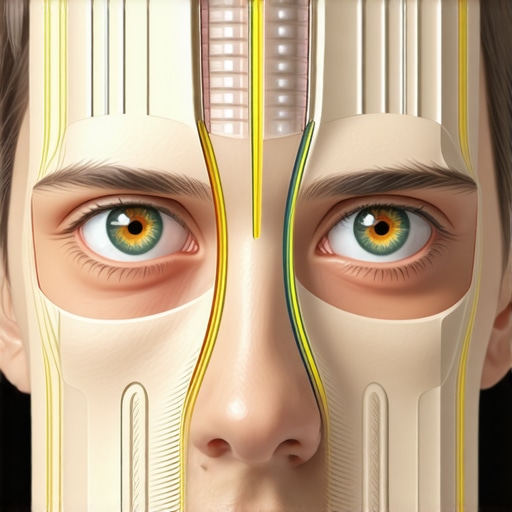
Why does my vision stay blurry even after I’ve rested my eyes?
If you’ve spent an hour away from your screen and things still look fuzzy, it’s likely because your suboccipital muscles are still in a state of isometric contraction. They are literally stuck in screen mode. This is where why your straight posture is actually straining your muscles becomes so relevant. By trying to sit perfectly upright, you might be creating a rigid, static load that prevents blood flow to the ocular nerves. Instead of chasing a rigid military posture, you need to find dynamic alignment. Have you ever fallen into this trap of over-stretching or forcing perfect posture only to feel tighter an hour later? Let me know in the comments. When you finally address the understanding the link between poor posture and chronic back pain as a full-body issue, the fog in your eyes usually clears on its own.I’ve spent thousands of dollars on ergonomic chairs that promised to ‘align my chakras,’ but the only tool that actually kept me out of pain was a twenty-dollar foam roll. I started to use a lumbar roll to prevent mid-day back fatigue because it addresses the literal foundation of your posture. If your lower back collapses into a slouch, your neck has to crane forward just so your eyes can remain level with the screen. It’s a mechanical chain reaction that no amount of eye drops can solve. I also swear by a specific piece of software called f.lux, which warms up my monitor colors as the sun sets. But here’s my personal secret: I don’t just use it for the blue light. I use the automated color shift as a ‘movement trigger.’ Every time the screen shifts hue, I immediately perform the seated shoulder blade squeeze to kill midday tension headaches. It’s about building a system of micro-habits, not just buying a fancy product. In the next few years, I predict we will see webcam-integrated AI that tracks our suboccipital tension in real-time, gently vibrating our phones when our chins start to jut forward or our blink rate drops too low.
How do I keep my neck and spine healthy for the long haul?
The secret to long-term results isn’t a grueling sixty-minute gym session; it is what Dr. Stuart McGill, a world-renowned expert in spine biomechanics, calls ‘spinal hygiene.’ It’s about the way you brush your teeth, how you sit on a flight, and how you pick up your dog or child without a back injury. I personally keep a tennis ball in my desk drawer at all times. When I feel that familiar burning pressure building behind my eyes, I don’t wait for it to become a migraine. I immediately use a simple tennis ball to fix deep glute tension while standing at my desk. You would be surprised how much loosening your hips can reflexively take the pressure off your cervical spine. You should also enhance your back mobility with ergonomic tips that focus on these three-minute micro-breaks rather than one long, aggressive stretching session at the end of a long day. 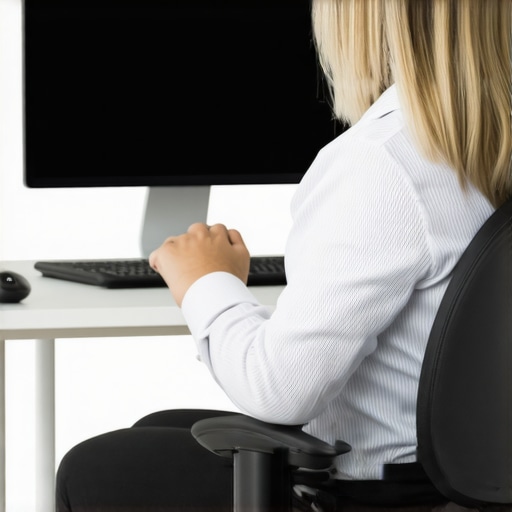 If you are serious about scaling these results, you have to look at your footwear too. I realized that why your thin shoes are impacting your lower back shock absorption was the hidden reason I had neck tension every time I walked more than a mile. The shock travels up the spine and ends right at the suboccipital muscles. I now only use shoes with a neutral drop to keep my pelvis from tilting. To truly revitalize your neck with effective techniques, you have to stop these micro-traumas from happening in the first place. My challenge to you is simple: tonight, when you get in your car, set your rearview mirror just half an inch higher than your usual slumped position. It will force you to sit taller to see clearly. When you master these daily tips to keep your spine and joints healthy, the visual fog doesn’t just go away—it stays away for good.
The Subtle Shift That Finally Cleared My Vision Fog
For years, I treated my body like it was made of separate pieces that could be fixed in isolation. I learned the hard way that you cannot stabilize the ‘camera’ if the ‘tripod’ is shaking. My biggest lightbulb moment was realizing that my visual fatigue wasn’t from too much reading, but from my suboccipital muscles being stuck in a protective ‘brace’ mode. If you feel like your eyes are constantly heavy or gritty, stop looking for a new prescription and start looking at how your cervical spine is positioned. When you focus on neck pain solutions that prioritize functional movement over static stretching, the clarity often returns within minutes. Another hard-learned truth is that ‘perfect’ posture is often just ‘frozen’ posture; I had to learn to let my body be dynamic to truly find relief from that deep, behind-the-eye ache.
The Simple Gear I Use to Keep My Focus Sharp
I don’t believe in buying every ergonomic gadget on the market, but there are three things I never go without. First, a firm tennis ball is the cheapest physical therapist you will ever own. Using it to release the base of the skull while you are lying in the best sleeping position for a pinched nerve can reset your entire nervous system before bed. Second, I highly recommend learning how to set up your laptop for spine protection because most of us are literally looking down into a pit of neck strain for eight hours a day. Lastly, I swear by a simple lumbar roll or even a rolled-up towel. By supporting your low back, you stop the head-forward slump that causes your neck to over-extend just to keep your eyes level with the horizon.
Take Your Sight Back One Small Adjustment at a Time
You don’t have to overhaul your entire life today to see results. Healing is about the compound interest of tiny, smart choices. Whether it’s raising your monitor by two inches or finally managing back pain in 2025 with a focus on movement rather than rest, every step counts. Your body wants to be in balance; you just have to give it the right environment to get there. Stop letting chronic neck pain dictate how you see the world and start reclaim your focus. Have you ever felt that strange ‘pulling’ sensation behind your eyes when your neck is tight? Let me know in the comments below! #IMAGE_PLACEHOLDER_E#