
Why you feel a burning sensation between your shoulder blades

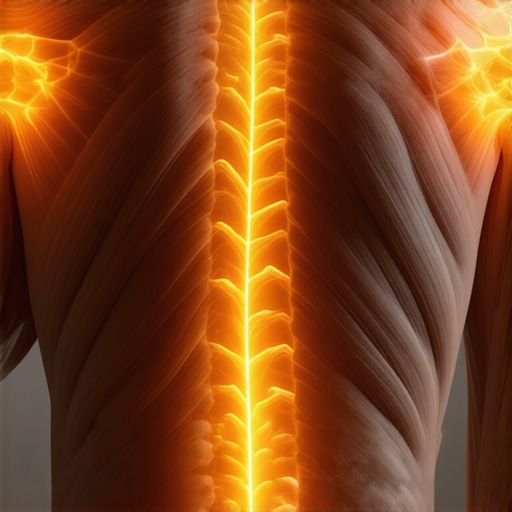
I remember it like it was yesterday—leaning over my laptop, trying to finish a project, when this sharp, hot sensation flared up right between my shoulder blades. It felt like someone was pressing a heated coin against my spine. I tried to rub it out, I tried to stretch, but it just kept simmering. For a long time, I made the huge mistake of thinking I just needed to ‘sit up straighter’ by pinning my shoulders back, which actually made the tension much worse. I’ve spent years figuring out that this burning isn’t just a random annoyance; it’s a direct signal from your nervous system that your upper back is working overtime. Today, I’m going to help you decode that fire and share the specific shifts that finally gave me my mobility back.
That Searing Heat Between Your Shoulders Needs to Stop
When you feel that localized burn, it is usually your rhomboids and trapezius muscles screaming for a break. I spent months thinking I had a ‘bad back,’ but the reality was that my daily habits were the culprit. I learned the hard way that why your shoulder hurts more when you try to stand up straight often comes down to over-compensating with the wrong muscles. It wasn’t until I started using the 10-second wall slide for instant shoulder tension relief that I realized how much I was forcing my posture. If you are constantly reaching for a foam roller or a tennis ball, you aren’t alone. Have you ever felt that weird, hot-poker sensation while driving or typing? Tell me in the comments if it’s a daily occurrence for you. According to research published by the American Chiropractic Association, repetitive postural strain is one of the leading causes of chronic myofascial pain, often manifesting as that exact burning sensation you’re feeling right now.
Is this just ‘old age’ or can I actually fix it?
It is easy to dismiss this as just part of getting older or a side effect of a desk job. I certainly did. But the truth is, your body is incredibly resilient if you stop feeding the fire. I used to ignore the signs until my monitor height was causing those recurring headaches along with the back pain. We often focus on the spot that hurts, but the solution usually lies in how we move through our entire day. If you’ve tried every stretch in the book and that burning still won’t budge, it’s time to look at the ‘why’ behind the pain. We’re going to dive into how a stiff upper back is forcing your neck to move too much and why that might be the missing piece of your puzzle. Setting the stage for real relief means moving past temporary fixes and looking at the structural habits that keep the heat turned up high.
The biggest mistake I ever made was trying to be “perfectly” upright. I thought if I just marched around like a soldier with my chest puffed out, the pain would vanish. Instead, I was just creating a miserable tug-of-war between my chest and my back muscles. I didn’t realize that why your straight posture is actually tensing your spine is a concept most people miss—you aren’t a statue; you’re a dynamic machine that needs to breathe and move.
Stop Pulling Your Shoulders Back Like a Soldier
When you force your shoulder blades together, you’re basically putting your rhomboids in a constant state of contraction. Think of your upper back like a bowstring that is constantly pulled tight; eventually, that string is going to fray. That fraying feeling is the “hot poker” sensation you’re dealing with. Instead of pulling back, think about “widening” your collarbones. I remember a specific Tuesday at the office when I finally stopped fighting my chair and let my shoulders just drop. I felt an immediate rush of blood flow to my neck. It felt messy and “slumped” at first, but the burning stopped within ten minutes. This shift is crucial because how a stiff upper back is forcing your neck to move too much usually starts with this over-correction habit.

The Doorway Move That Opens Your Chest
To actually fix the root, you have to address the front of your body. If your chest is tight, your back is always losing the fight. I use a specific variation of the wall angel move that fixes rounded shoulders every single morning before I even pour my coffee. Stand in a doorway, place your forearms on the frame at a 90-degree angle, and gently lean your heart forward. You aren’t trying to snap anything or push through pain; you’re just reminding your pec muscles that they don’t need to be clenched tight. When these muscles relax, your shoulder blades can finally sit in their neutral “home” position without you having to force them there. It’s the difference between a door swinging freely on a greased hinge versus one that’s rusted shut.
Small Stealth Fixes for the Road and the Desk
The most “ah-ha” moment for me came in my car. I used to slump as I drove, so I tried a psychological trick: I sat up tall, adjusted my rearview mirror so I could see the traffic behind me perfectly, and then purposely didn’t touch that mirror again. If I started to slouch, the mirror became “wrong,” forcing me to find my height again to see clearly. You can learn how to adjust your rearview mirror to force better posture to make this corrective habit automatic. Also, pay attention to your face. It sounds weird, but clenching your teeth creates a chain reaction of tension down into your traps. I started practicing the 10-second jaw release that softens your neck muscles whenever I hit a red light, and it was an absolute game-changer for my upper back fire.
Stop Stretching the Spot That Already Hurts
We often treat pain as a signal to pull, push, or rub the area into submission, but this is where most of us get it fundamentally wrong. Everyone tells you to stretch what hurts, but in my experience, stretching the ‘fire’ in your upper back is like throwing gasoline on a match. If those muscles are already being pulled forward by a tight chest or poor desk habits, they are already at their structural limit. Adding a stretch just makes them more unstable and increases the ‘protection’ response from your brain. This is exactly why deep tissue massage isnt fixing your recurring back pain—you’re trying to loosen a muscle that is actually screaming for stability, not more length. The ‘Oops’ factor here is the common belief that ‘tight’ always means ‘short.’ In reality, your rhomboids are often ‘locked long.’ Imagine a rubber band stretched to its absolute max; it feels hard and tense, right? If you pull it more, it doesn’t relax—it risks snapping. When you feel that burn, your brain is actually trying to protect the muscle from tearing. This nuance is vital for back pain breakthroughs navigating your path to restored mobility. I see so many people spend hours on a foam roller only to feel worse the next day because they’ve essentially bruised a muscle that was already exhausted from overwork.
Why Does the Burn Return After a Professional Treatment?
It’s a frustrating cycle: you get relief for an hour, then the ‘hot poker’ returns. A study published in the Journal of Bodywork and Movement Therapies highlights how ‘sensitization’ of the nervous system can cause muscles to stay in a state of high alert even when the physical threat is gone. This is often the same reason why your hamstrings feel tight but never get better with stretching; the issue isn’t the physical length of the tissue, it’s the neurological ‘volume’ being turned up too high by your spinal cord. To lower that volume, you have to look at your breath. I realized that the breathing habit that is keeping your back muscles tight was the real culprit—I was breathing high in my chest, which kept my upper back muscles on a 24/7 shift to lift my ribs. This created a permanent loop of tension that no amount of rubbing could fix.
Forget Everything You Know About Icing Your Back
Another nuance people miss is the ‘cold trap.’ We’ve been conditioned to reach for ice the moment something hurts, assuming there is inflammation to ‘put out.’ However, for chronic upper back burning, ice can actually cause the muscle spindles to contract further to stay warm, worsening the ‘locked’ feeling. Understanding the truth about using heat packs versus ice for chronic stiffness can save you days of unnecessary misery. Heat encourages blood flow, relaxes the fascia, and signals the nervous system to let go of that ‘bowstring’ tension. Integrating this shift with neck pain solutions innovative strategies for fast recovery means moving beyond the basic ice pack and actually addressing the blood flow issues. Have you ever fallen into this trap of icing a burning muscle only to have it stiffen up like a board an hour later? Let me know in the comments; I’ve been there too, and it’s a lesson I had to learn the hard way.
Stop Squinting at Your Screen and Lift Your Gaze
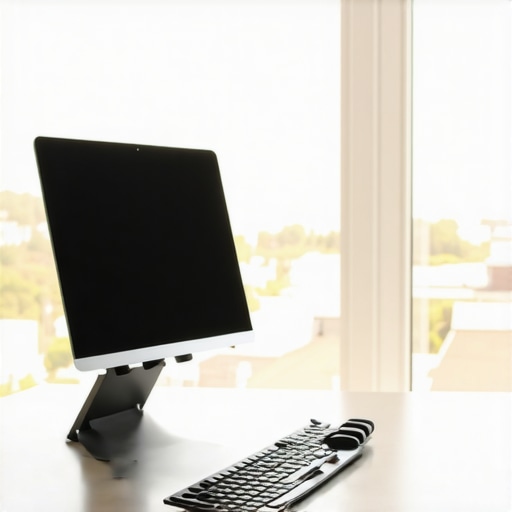
I spent years searching for a “magic” gadget, only to realize the most effective tools were already in my house. My favorite hack is using an external keyboard combined with a dedicated riser. By separating the keyboard from the screen, I can actually follow the 15 degree rule for your computer monitor to save your neck. If you are still looking down at a laptop resting on your lap, you are essentially inviting that burning sensation between your shoulders to return every single afternoon. I have even discovered that why your laptop stand might be making your neck knots worse is a common pitfall; if the height is slightly off, you end up tilting your chin up into a ‘pigeon’ position, which creates a whole new set of problems for your upper cervical spine.
The Mirror Hack for a Pain-Free Drive
Maintenance does not have to happen in a gym; it happens when you are stuck in traffic. I mentioned the rearview mirror trick earlier, but let us get specific about the execution. Most people set their mirrors while they are already slumped into their seat. Instead, sit with a ‘tall’ spine, adjust the mirror so you have a perfect view of the traffic behind you, and then treat that mirror as your primary posture alarm. The moment the cars behind you disappear from the top of the frame, you know you have slouched. Learning how to adjust your rearview mirror to improve your driving posture was the single biggest factor in ending my post-commute neck stiffness. It turns a passive, grueling activity into a subconscious training session for your core and upper back.
How do I maintain these mobility gains over time?
Real longevity comes down to what I call ‘Spinal Hygiene.’ Dr. Stuart McGill, a world-renowned spine biomechanics expert and author of Back Mechanic, emphasizes that ‘micro-movements and spine hygiene are more important than any hour-long gym session’ when it comes to preventing disc issues and chronic strain. This means checking in with your body every thirty minutes rather than hoping a weekly massage will save you. Integrating mobility mastery daily tips to keep your spine and joints healthy into your routine ensures that the ‘fire’ does not have a chance to ignite in the first place. We are moving toward a future where wearable posture sensors will likely do this for us—I predict that within five years, haptic feedback clothing will be the industry standard, gently vibrating the moment our rhomboids over-stretch or our shoulders begin to roll forward.
If you really want to level up, stop thinking about ‘fixing’ your back and start thinking about ‘managing’ your environment. From how to set up your laptop for better spine protection to choosing the right chair depth, these small structural shifts are the true back pain breakthroughs navigating your path to restored mobility. I challenge you today: go to your car or your desk right now and move your screen or your mirror up by just one inch. That tiny adjustment is the first step in telling your nervous system that it is finally safe to let go of the chronic tension.
Why Trying to Be “Perfect” Kept My Back in Flames
Looking back at my journey through chronic tension, the most startling realization was that my recovery only started when I stopped trying so hard. I’ve realized that your back isn’t weak; it’s exhausted. Those burning muscles aren’t failing you; they are trying to save your spine from the constant forward-leaning environment we live in. Another lightbulb moment was acknowledging that your eyes are the steering wheel of your posture. If you are squinting or leaning into your screen, no amount of exercise will fix the strain. Finally, I learned that understanding the link between poor posture and chronic back pain is about more than just sitting up straight—it is about finding a neutral, effortless alignment that allows your nervous system to dial down the pain signals.
My Daily “Survival Kit” for a Calm Spine
I don’t rely on luck anymore; I rely on a few non-negotiables that keep the fire away. First, I always have an external keyboard and mouse ready—using a laptop as-is for more than twenty minutes is a recipe for disaster. Second, I prioritize heat over ice. I’ve found that why heat is often better than ice for chronic neck stiffness and back burning is because it actually invites the muscle to let go of its defensive guard. Third, I highly recommend reading “Back Mechanic” by Dr. Stuart McGill; his evidence-based approach to spinal stability changed my perspective on movement entirely. Lastly, I never skip the doorway move that opens your chest and fixes your slouch because it provides that immediate, mechanical reset my chest muscles need to stop pulling on my upper back.
Reclaim Your Freedom and Extinguish the Fire
You don’t have to live with that hot poker sensation as your permanent desk companion. By shifting from a mindset of ‘fixing’ a broken part to ‘optimizing’ your daily environment, you give your body the space it needs to heal itself. I’ve seen these back pain breakthroughs navigating your path to restored mobility happen for so many people who finally stopped stretching the pain and started addressing the cause. Remember that a small shift, like how a simple reach and breathe move can decompress your back, can be more effective than an hour of aggressive gym work. You have the tools, you have the knowledge, and now it’s time to let your back finally relax. Have you ever noticed that your back pain flares up more when you’re stressed or when you’ve been staring at a screen for too long? Let me know your experience in the comments below.