
The way to sleep on your side without crushing your shoulder

I woke up last Tuesday, reached for my alarm, and felt a jolt of electricity shoot from my shoulder straight down to my fingertips. It wasn’t a sports injury or a heavy lifting mishap; it was just… sleeping. For years, I thought I was a “natural” side sleeper, but in reality, I was treating my shoulder like a kickstand for my entire body weight. It turns out, that pins-and-needles sensation is a loud scream from your nerves and joints. If you’ve been struggling with why you feel a burning sensation between your shoulder blades, you know exactly the kind of misery I’m talking about. Today, we’re going to fix that ‘shoulder sandwich’ once and for all so you can actually wake up feeling refreshed instead of wrecked.
Stop Treating Your Shoulder Like a Foundation Beam
The biggest mistake I made for a decade was thinking that a “firm” surface was the answer to everything. I even bought one of those mattresses that felt like a sidewalk, thinking it would solve my back issues. Instead, why your firm mattress is making your morning sciatica worse became my daily reality. The truth is, your shoulder isn’t meant to bear the brunt of your torso’s weight for eight hours. When you collapse onto that joint, you’re essentially crushing the rotator cuff and the bursa, which leads to that nagging inflammation. It’s a similar mechanical failure to why your shoulder hurts more when you try to stand up straight after a long day at a desk. According to the Sleep Foundation, nearly 60% of adults are side sleepers, yet most of us haven’t been taught how to support the spaces between our joints. If you don’t create a ‘pocket’ for your shoulder to live in, you’re just waiting for a chronic impingement to happen.
Is side sleeping actually worth the hype?
You might be wondering if you should just give up and flip onto your back. While back sleeping is great for some, side sleeping is actually a powerhouse for digestion and brain health—if you do it right. The problem isn’t the position; it’s the geometry. When your top leg slides forward, it pulls your hip, which then twists your spine and forces your bottom shoulder to rotate inward to compensate. It’s a chain reaction of bad news. I’ve spent way too much time dealing with neck pain and stress because I didn’t realize my sleeping posture was the culprit. Have you ever spent the first twenty minutes of your morning ‘thawing out’ a frozen shoulder or dealing with the best sleeping position for a herniated disc in your neck? Let me know if you’ve felt that same frustration. We’re about to dive into the specific pillow hacks and alignment tricks that saved my sleep and my mobility.
Create a Safe Haven for Your Rotator Cuff
To stop the crushing pressure on your joint, you have to stop lying directly on the point of your shoulder. Think of your shoulder like a delicate hinge on a heavy door; if you lean the whole door’s weight on that hinge, it eventually bends and squeaks. Instead of stacking your shoulders vertically, slightly roll your torso backward while pulling the bottom shoulder blade forward. This creates a small ‘pocket’ where the joint can rest without being compressed by your ribcage. I tried this for the first time about three weeks ago, and while it felt incredibly awkward—like I was leaning into a half-roll—it was the first morning I didn’t have to use the 10-second wall slide for instant shoulder tension relief just to put on a t-shirt. By redistributing your weight onto the broad part of your upper back, you give the nerves in your arm a chance to breathe.

Tuck Your Bottom Shoulder for Immediate Pressure Relief
Once you are in that slightly rolled-back position, make sure your bottom arm isn’t tucked under your head. That ‘arm-pillow’ move is a fast track to numbness. Keep that arm out in front of you or slightly bent at the side. If you still feel a pinch, it might be because your thoracic spine is too stiff to allow for that subtle rotation. Practicing mobility mastery daily tips to keep your spine and joints healthy can help your ribcage move more freely so you aren’t fighting your own anatomy while you sleep.
Stop the Spinal Twist with Knee Support
If you don’t support your legs, your top hip will inevitably fall forward, dragging your lower back into a twist. This rotation travels all the way up your spine, forcing your neck and shoulders to compensate for the instability below. It’s why so many people looking for conquering sciatica proven approaches to end discomfort now find that their pain actually starts in their sleeping posture. Place a firm pillow between your knees and ankles. It needs to be thick enough to keep your knees hip-width apart. I used to think a thin, flimsy pillow was enough until I realized my knees were still touching by 2 AM, meaning my lower back was essentially a twisted wet towel for six hours straight. This is a crucial the side sleeping trick for people with narrowing in the spine because it keeps the neural pathways open and prevents that heavy, dragging sensation in your legs.
Why Your Pillow Height Dictates Your Morning Neck Pain
The final piece of the puzzle is the gap between your ear and the mattress. If your pillow is too thin, your head tilts down, stretching the top side of your neck and pinching the bottom. If it’s too thick, you’re stuck in a permanent side-bend. You want your nose to be perfectly parallel to the mattress. When I finally found a pillow that actually filled that gap, the chronic ‘hot’ feeling in my nerves started to fade. If you’ve been searching for revitalize your neck effective techniques for lasting pain relief, look at your pillow height first. It is the bridge that determines whether your cervical spine stays neutral or spends the night under extreme duress.
We often assume that if a muscle feels tight, we must stretch it until it yields. I spent years aggressively pulling my toes toward my face every morning, only to wonder why my leg pain was getting sharper. Here is the contrarian truth: if your pain is nerve-based, traditional stretching is often your enemy. Specifically, why stretching your hamstrings can actually flare up sciatica is a lesson I learned the hard way through months of trial and error. Nerves do not like to be stretched like rubber bands; they prefer to be ‘slid’ or ‘glided’ within their pathways. When you yank on a tight hamstring that is actually protecting an irritated sciatic nerve, you are essentially pouring gasoline on a neurological fire. Recognizing the difference between muscular sciatica and a slipped disc is the first real step in knowing whether to reach for your toes or reach for a professional’s assessment.
Your Perfect Upright Posture is a Hidden Tension Trap
Another massive mistake I see people make—and one I was guilty of for nearly a decade—is falling into the ‘military posture’ trap. We have been told to ‘sit up straight’ so often that we end up in a state of constant muscular bracing. But why your straight posture is actually straining your muscles comes down to a fundamental lack of movement variability. Your spine is not a rigid steel rod; it is a series of dynamic curves designed to move and distribute load. By forcing a stiff, upright position, you are actually starving your spinal discs of the subtle movement they need to stay hydrated and healthy. This self-imposed rigidity often leads to a desperate urge to pop your own joints to find relief, but why cracking your own back is making your joints more unstable is a dangerous cycle that eventually leads to even more chronic tension and hypermobility issues.
Why does my neck hurt even when I sit up perfectly straight?
The answer usually isn’t located in your neck at all—it is hidden in your ribcage and mid-back. If your thoracic spine is locked up like a rusty gate, your neck has to work twice as hard to compensate for every look and turn you make. This is exactly how a stiff upper back is forcing your neck to move too much and creating those deep, localized aches that never seem to go away with a massage. Research in spinal biomechanics, such as that conducted by Dr. Stuart McGill, suggests that stability in the lower back must be balanced with mobility in the middle back. Without that thoracic flexibility, your neck and shoulders are essentially fighting a losing battle against gravity. Have you ever fallen into this trap of over-stretching a sore spot only to have it bite back the next day? Let me know in the comments.
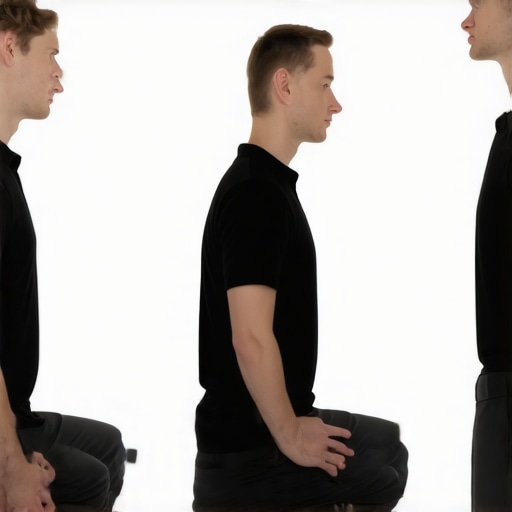
Finally, do not overlook the impact of daily ‘micro-traumas.’ You might be doing everything right during your eight hours of sleep, but if you ignore mobility mastery daily tips to keep your spine and joints healthy during your work hours, your progress will inevitably stall. It is the small, repetitive shifts—like how you lean into your monitor or hold your phone at eye level—that cement the very pain patterns we try so hard to sleep away. Stop looking for the one ‘magic stretch’ and start looking at the mechanical nuances of how you move through the world. Real relief comes when you stop fighting your anatomy and start working with it.
While finding the right sleeping position is a massive win, the real challenge begins when you step out of bed. I’ve found that the ‘fix’ isn’t a one-time event; it’s a series of small, intentional tools that keep the rust from settling in. My absolute favorite tool isn’t some high-tech massage gun—it’s a simple lacrosse ball. I use it to target the high-tension spots in my glutes and upper back. It’s effective because it provides the localized, high-pressure input that foam rollers simply can’t reach. If you’ve ever wondered how a simple tennis ball can release your deep glute tension, imagine that but with a firmer tool that doesn’t compress under your weight. I spend five minutes every evening working on my ‘hot spots,’ and it’s the only way I’ve managed to stay ahead of the curve.
The One Tool That Actually Lives in My Gym Bag
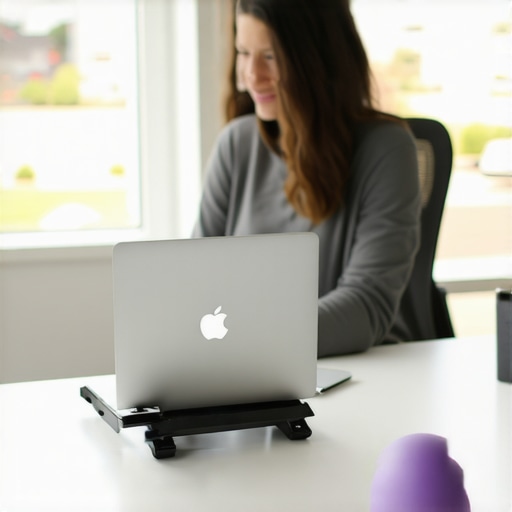
Another non-negotiable for me is the workspace. I realized that how to set up your laptop for better spine protection is about more than just a stand; it’s about the 15-degree rule. If your eyes aren’t hitting the top third of your screen, your neck is doing the heavy lifting. I personally use a portable monitor riser that keeps my cervical spine neutral even when I’m working at a coffee shop. Following the 15-degree rule for your computer monitor to save your neck has practically eliminated those 3 PM tension headaches that used to ruin my productivity.
How do I maintain my spinal mobility over time?
Maintenance is less about hours of stretching and more about frequent, low-intensity ‘check-ins.’ Dr. Kelly Starrett, a renowned physical therapist and author of Becoming a Supple Leopard, emphasizes that we should aim for 10 to 15 minutes of daily maintenance to counteract the hours we spend in fixed positions. I follow this by integrating mobility mastery daily tips to keep your spine and joints healthy into my existing routine. For instance, while my coffee brews, I do a quick set of boost your back mobility simple exercises that make a difference. This ‘stacking’ habit ensures that I never miss a day, even when I’m busy.
Your Car Mirror is a Secret Posture Coach
One of the best ‘passive’ tools I’ve ever implemented is the rearview mirror trick. Next time you are sitting with perfect posture in your car, how to adjust your rearview mirror to force better driving posture involves setting the mirror slightly too high. The moment you start to slouch, the mirror becomes ‘useless,’ forcing you to sit up tall to see behind you again. It’s a genius, low-tech way to build kinesthetic awareness without needing an app to tell you you’re slumping.
Looking ahead, I suspect we are moving toward a world of ‘bio-responsive’ ergonomics. I predict that unlocking mobility expert tips on managing back pain in 2025 will involve wearable haptic sensors built directly into our clothing. These will provide real-time feedback on spinal shear and joint compression before the pain even starts. Until that tech becomes mainstream, we have to be our own sensors. I challenge you to try one thing today: raise your monitor to eye level. It sounds simple, but it’s the difference between a lifetime of ‘tech neck’ and a spine that actually supports your life.
The Hardest Realizations I Had to Accept About My Spine
After years of struggling with recurring aches, I had to stop looking for a “quick fix” and start looking at my habits. First, I learned that more stretching is rarely the answer for nerve pain; in fact, why your hamstrings feel tight but never get better with stretching is often a sign of nerve irritation rather than muscle length. Second, I realized that my “perfect” posture was actually a form of rigid bracing that was starving my joints of blood flow. Finally, I discovered that if I didn’t address is your back pain a sign of something more serious by checking my basic mobility, no mattress in the world could save me. It wasn’t about being “stiff”—it was about being misaligned.
#IMAGE_PLACEHOLDER_E#
My Personal Arsenal for Long-Term Spinal Health
I don’t believe in cluttering your house with gadgets, but these three things changed the game for me. I swear by a standard lacrosse ball for breaking up deep glute tension; it’s far more effective than a foam roller. I also never travel without my portable laptop stand to ensure enhance your back mobility ergonomic tips for everyday comfort wherever I am working. Lastly, the book Becoming a Supple Leopard by Dr. Kelly Starrett is my “bible” for understanding human movement. These tools help me maintain a baseline of health so I can focus on living rather than just managing pain.
Reclaim the Way You Move Every Morning
You don’t have to accept waking up with “pins and needles” as an inevitable part of aging. By making small, intentional shifts in how you stack your joints and support your limbs, you can radically change your quality of life. The goal isn’t just to sleep better—it’s to improve your overall mobility so you can play with your kids, excel at work, and enjoy your hobbies without a background hum of discomfort. Start with one change today, whether it’s the pillow between your knees or the height of your monitor, and listen to how your body responds. You’re more resilient than you think; you just need to give your spine the support it’s been asking for. Mobility mastery daily tips to keep your spine and joints healthy are the foundation of a pain-free life.
Have you tried the “pillow between the knees” trick yet, and did it actually help your lower back feel less “twisted” in the morning? Let me know in the comments below.