
How to use a pillow between your knees to stop morning back stiffness

I used to wake up every single day feeling like a rusty garden gate that hadn’t been oiled since the Truman administration. I’d swing my legs over the side of the bed, take that first step, and immediately wince as a sharp tug in my lower back reminded me I wasn’t twenty anymore. For the longest time, I blamed my mattress, my job, and probably the weather. I even went through a phase where I thought why your firm mattress is making your morning sciatica worse was the only explanation, but the real culprit was much simpler: my hips were collapsing every time I closed my eyes. It took a lot of trial and error, including one very embarrassing incident where I threw my back out just reaching for a toothbrush, to realize that the secret wasn’t a three-thousand-dollar bed, but a humble pillow tucked between my knees.
Stop the morning shuffle before it starts
If you are tired of that first-step dread when the alarm goes off, I have some good news. We are going to fix your alignment tonight so you can actually stand up straight tomorrow. Most of us sleep in positions that put a slow-motion torque on the lumbar spine for eight hours straight. It is no wonder we feel like we have been in a minor car wreck by sunrise. Have you ever felt like your back is actually more stiff after a full night of rest than after a long day of movement? Tell me in the comments if you have experienced that weird morning lockout. By using a support, you ensure your spine stays neutral, much like how the morning habit that prevents your sciatica from flaring up sets the tone for your entire day.
Can a simple pillow really fix years of back stiffness?
It sounds almost too easy, right? I was the biggest skeptic at first. I used to think that real problems required expensive gadgets or intense medical interventions. I even made the mistake of using a giant, fluffy king-sized pillow that was so thick it actually tilted my pelvis the opposite way, which is why mobility mastery feels so far out of reach for many. But once I found the right height, the relief was almost instant. According to research cited by Harvard Health, side sleeping without support causes the upper leg to pull the spine out of alignment, placing significant stress on the hips and lower back. Today, I am going to show you exactly how to choose the right support and position it so you are not fighting your own body while you dream. Let us get your spine back on your side.
Stack your hips to stop the slow-motion spinal twist
When you lie on your side, gravity is not your friend. Think of your top leg as a heavy weight. Without a pillow, that leg drops down, pulling your hip forward and twisting your lower back like a wet washcloth being wrung out. This creates a constant tug on the sciatic nerve. To fix this, you need to align your knees and ankles so they are perfectly parallel to the bed. It is not just about the knees; if your ankles touch but your knees are separated by a pillow, you are still creating a lever effect that strains the SI joint. You want your legs to look like two railroad tracks, perfectly straight and never crossing. I learned this the hard way during a weekend camping trip where I forgot my extra pillow. By the second night, my leg felt like it was radiating heat, a classic sign I needed unlocking sciatica relief through better positioning. I ended up stuffing a rolled-up fleece jacket between my knees, and the difference in my morning mobility was night and day. 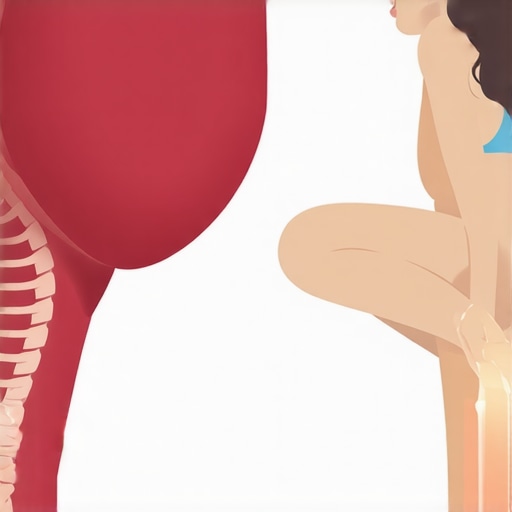
Find the right height so you don’t overcorrect
Not all pillows are created equal. If the pillow is too thin, your leg still drops. If it is too thick, like that king-sized monster I mentioned earlier, it pushes your hip too high and creates a different kind of pinch. You are looking for the ‘Goldilocks’ thickness that keeps your top hip directly above your bottom hip. A firm memory foam pillow usually works best because it does not flatten out three hours into the night. This stability is key for conquering sciatica because it prevents the micro-shifts that irritate the nerve while you shift in your sleep. If you have a narrower frame, you might find that the side sleeping trick for people with narrowing in the spine involves a slightly softer support to accommodate the natural curve of your pelvis.
The three-point check for a neutral spine
Once you are tucked in, do a quick mental scan. Your ears, shoulders, and hips should form a relatively straight line. If your chin is tucked to your chest, you are creating a secondary problem in your neck, which is often the real reason your neck feels stiff during the day. Ensure your head pillow is supportive enough to fill the gap between your shoulder and your ear. For many, adding a small lumbar support can also help. I often suggest the simple towel roll trick for better sleep with neck pain as a way to keep the upper spine as happy as the lower spine. When you eventually need to move, remember to use the specific way to roll over in bed without triggering a flare-up by engaging your core and moving your shoulders and hips as one solid unit. This prevents that sudden ‘zinger’ of pain that happens when you twist too fast. By focusing on these concrete steps, you turn your bed from a place of potential injury into a recovery tool that supports your mobility mastery.It is a common mistake to assume that every sensation of ‘tightness’ requires a long, aggressive stretch. In fact, why reaching for your toes is the worst way to stretch your back is one of the first things I tell my clients, because you might be yanking on an already irritated sciatic nerve rather than a muscle. This is the ‘tension’ trap. When a nerve is inflamed, your muscles lock down as a protective mechanism. If you try to force them open, you are essentially fighting your body’s safety brakes. Have you ever spent twenty minutes stretching only to feel even stiffer an hour later? Let me know in the comments if you have fallen into this cycle. Real back pain breakthroughs happen when you realize that why your hamstrings feel tight but never get better with stretching is often due to neural tension, not physical muscle length.
Ditch the ‘military’ posture for a more natural spine
We have all been told to ‘sit up straight,’ but forcing a rigid, upright position can be just as damaging as a deep slouch. In my experience, why standing up straight is actually making your back pain worse is the hardest myth to unlearn. This rigid stance overworks the paraspinal muscles and increases pressure on the facet joints of the spine. Instead of ‘pulling back,’ focus on ‘stacking’ your weight through your skeletal frame rather than holding it with your muscles. This subtle shift is a key part of enhance your back mobility because it allows the deep stabilizers to take over.
Why does your leg pain increase when you perform standard stretches?
If a stretch causes a zing, a burn, or increased numbness, you are likely ‘over-stretching’ the nerve rather than the muscle. The Journal of Orthopaedic & Sports Physical Therapy (JOSPT) notes that nerve mechanosensitivity is often mistaken for simple muscle tightness, and aggressive stretching can worsen the inflammation. This is exactly why some sciatica stretches actually pinch the nerve further when done with too much intensity. To fix this, you should switch to the nerve flossing routine for stubborn leg numbness and tingling, which encourages the nerve to move smoothly through the surrounding tissue without added strain. 
The ‘weak’ muscle hidden behind the ‘tight’ feeling
Another nuance involves the psoas—the deep hip flexor that often gets blamed for every back issue under the sun. While most people reach for a stretch, why a tight psoas is often actually a weak psoas is the real secret to unlocking mobility. If a muscle is weak, it stays ‘on’ constantly to provide stability, creating a sensation of chronic tightness. Strengthening the area often provides the release that stretching never could. Understanding the difference between muscular sciatica and a slipped disc is also vital before you start any rehabilitation. This level of mobility mastery is what separates those who find temporary relief from those who achieve a permanent recovery.Once you have cleared the initial hurdle of acute pain, the real work begins: maintenance. I am a huge advocate for low-tech solutions that you can actually stick with daily. For example, I do not go anywhere without a standard tennis ball. It sounds silly, but knowing how a simple tennis ball can release your deep glute tension has saved me from dozens of potential flare-ups during long car rides. I use it to pin down those specific ‘trigger points’ in my glutes that otherwise lead to that heavy-leg feeling by the time I reach my destination. It is about being proactive rather than waiting for a spasm to force you into bed. 
The two-dollar tool that beats a professional massage
The environment you live in matters more than the hour you spend at the gym. If you work from home, following the 15-degree rule for your computer monitor to save your neck is non-negotiable. I personally measured my eye level and realized I was looking down just enough to add twenty pounds of pressure to my cervical spine every single hour. Correcting that height was a total game-changer for my recurring afternoon headaches. Another trick I use is the ‘posture anchor.’ I intentionally set my car’s rearview mirror slightly higher than I normally would. This forces me to sit up tall to see out of it, providing a constant, passive correction. It is one of those sciatica relief secrets how to banish pain quickly today that nobody talks about because it is not a fancy gadget; it is just clever ergonomics.
How do I keep my spine healthy for the next decade?
Maintenance is not about doing more; it is about being more intentional with the things you are already doing. I have found that integrating boost your back mobility simple exercises that make a difference into my morning coffee routine ensures I never miss a day. Consistency trumps intensity every single time. According to Dr. Stuart McGill, a leading expert on spine biomechanics and author of Back Mechanic, ‘proximal stiffness’—the ability to stabilize your core—is the essential foundation for ‘distal mobility.’ This means if your trunk is stable and your core is engaged correctly during daily tasks, your limbs can move freely without tugging on your spine and causing irritation.
Where the future of mobility is headed
I predict that over the next few years, we will see a massive shift toward wearable biofeedback sensors. Instead of guessing if our posture is ‘good’ or if our pelvic tilt is off, we will have small devices that vibrate when our shoulders slump too far forward or when our glutes ‘turn off’ during long sitting sessions. We are moving away from reactive care and toward a ‘check-engine light’ system for the human body that prevents injuries before they happen. Try the rearview mirror trick tomorrow morning. It is the easiest way to see how often you actually slouch during your commute. If you are still struggling to find a baseline of comfort despite these changes, please reach out to us through our contact-us page so we can help you find a strategy that fits your specific lifestyle.
What Decades of Stiffness Taught Me About Resilience
After years of trial and error, I realized that the hardest lesson to learn was that my back isn’t fragile—it’s just communicating. I used to treat every twinge like a structural failure, but real mobility mastery comes from understanding that pain is a signal to change your mechanics, not to stop moving altogether. Thinking movement is dangerous is often the real danger. Over time, I’ve found that your chair is rarely the sole culprit; it is how long you stay in it without a reset. Most importantly, I learned that nerve flossing beats aggressive stretching every time for stubborn sciatica because nerves require space and glide, not tension. These back pain breakthroughs happened only when I stopped fighting my body and started listening to its whispers.
My Personal Toolkit for a Pain-Free Life
I don’t believe in expensive gadgets, but I do believe in the right tools that support daily consistency. My non-negotiable routine always includes the simple footstool trick to stop lower back pain while sitting because it takes the mechanical pull off my hip flexors and SI joint instantly. I also trust the foundational principles found in Back Mechanic by Dr. Stuart McGill, which helped me identify my specific pain triggers. To keep my joints lubricated, I never skip the simple morning move to prime your spine for the day, as it wakes up my core stabilizers before the physical demands of the day begin. These simple, low-tech solutions have provided more relief than any high-priced therapy ever could.
#IMAGE_PLACEHOLDER_E#
Reclaim Your Freedom One Morning at a Time
The journey toward unlocking mobility is paved with small, intentional choices rather than overnight miracles. You have the power to change how your body feels by simply respecting its natural alignment and giving it the support it needs to heal itself. I have seen countless people go from feeling like ‘rusty gates’ to moving with fluid confidence just by applying these ergonomic basics. If you ever feel stuck or overwhelmed by your symptoms, please reach out to us on our contact-us page so we can help you find a strategy tailored to your life. Have you ever tried the knee pillow trick but found it hard to keep the pillow in place all night? Let me know in the comments below!