
The 30-second wall slide for better shoulder alignment
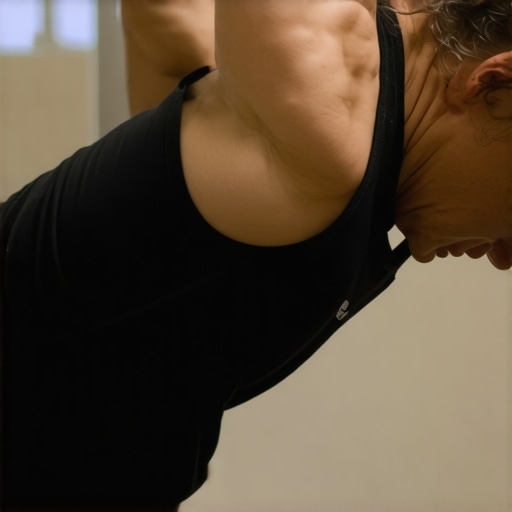
I’ll never forget the day I caught a glimpse of my silhouette in a storefront window downtown. I didn’t recognize myself. My head was leading the way three inches in front of my chest, and my shoulders were curled inward like I was protecting a secret. I looked exhausted, even though I’d just had my morning coffee. For years, I tried the ‘chest out, shoulders back’ mantra, only to realize that forcing a straight posture actually strains your muscles more than it helps. I even remember standing in line at the grocery store, trying to tuck my chin so hard I gave myself a tension headache before I even reached the parking lot. That was my early mistake: treating alignment like a rigid cage rather than a fluid reset. My lightbulb moment came when I stopped fighting my body and started using a simple 30-second wall slide to reset my alignment. Today, I am going to show you how this tiny habit can stop that nagging burning sensation between your shoulder blades and finally give your neck a break.
Stop Fighting Your Muscles and Start Resetting Your Frame
The biggest mistake I made for a long time was thinking I could muscle my way into good posture. I would pull my shoulder blades together until they cramped, thinking I was doing myself a favor. In reality, I was just ignoring the link between poor posture and chronic back pain. The 30-second wall slide isn’t about strength in the traditional sense; it is about reminding your nervous system where home is for your joints. If you have spent the day hunched over a laptop, your brain literally forgets how to engage the muscles that keep you upright. You might even find that your laptop screen height is giving you headaches because your shoulders have climbed up toward your ears. It is a vicious cycle of tension that no amount of standing up straight will fix on its own.
Is a 30-second exercise actually enough to fix years of slouching?
It sounds too simple to work, doesn’t it? I was the ultimate skeptic when I first heard it. But here is the thing: consistency beats intensity every single time when it comes to mobility. Research published in the Journal of Physical Therapy Science has shown that short, targeted postural exercises can significantly decrease the ‘forward head’ angle and even improve lung capacity by opening the thoracic cavity. It turns out that how you breathe affects your core stability, and you cannot breathe deeply if your rib cage is collapsed forward. Have you ever felt like no matter how much you stretch, that tightness in your upper back just won’t budge? We are going to break that cycle right now by focusing on the rib cage position that determines your shoulder health. Let’s get into the mechanics of why this works before we hit the wall.
Find a Flat Wall and Lose the Shoes
To start this reset, you need a flat surface and a bit of honesty. Find a door or a clear patch of wall and stand with your heels about two to four inches away from the baseboard. Lean back so your glutes, your shoulder blades, and the back of your head are all making firm contact with the wall. I remember the first time I did this; I felt like I was leaning backward into an abyss. My brain was so used to my head hanging forward that ‘straight’ felt like I was tilting toward the ceiling. If you want to fix the rounded shoulders you get from scrolling your phone, you have to maintain these three points of contact without compromise. If your head pulls away, you are just reinforcing the very strain you are trying to escape. Imagine there is a magnet pulling your ears back in line with your shoulders. This setup alone often provides a 10-second wall slide for instant shoulder tension relief because it forces your upper traps to finally let go of the heavy lifting. 
Keep Your Lower Back From Arching Like a Bridge
The biggest trap people fall into—myself included—is the rib flare. When I first attempted this, I was so determined to get my shoulders back that I arched my lower back until I could have slid a whole toaster oven behind my spine. That is a massive cheat. You have to engage your core and pull your belly button toward the wall to keep your lower back relatively flat. This is crucial because your rib cage position determines your shoulder health. If your ribs are sticking out, your shoulder blades cannot glide properly. Think of your torso as a canister; if the top and bottom aren’t aligned, the whole structure loses its integrity. This is the same reason why following the 15-degree rule for your computer monitor to save your neck is so effective—it prevents you from having to compensate with your mid-back just to see your screen clearly.
Slide Your Arms Like You Are Trapped in Glass
Now for the actual movement. Bring your arms up into a ‘goalpost’ or ‘W’ shape, with your elbows and the back of your hands touching the wall. Slowly slide your hands upward, trying to reach toward the ceiling without letting your elbows or wrists lift off the surface. It sounds easy, but the first time I tried it, I could only move my arms about three inches before they popped off like a spring. The wall angel move that fixes rounded shoulders is a diagnostic tool as much as it is a fix. If you feel a sharp pinch, stop and reset. You are retraining the serratus anterior and the lower traps—the ‘forgotten’ muscles that keep your frame upright. Once you finish ten slow reps, step away from the wall. You will feel strangely light, almost like someone is pulling a string from the top of your head. To keep this feeling throughout the day, I learned to adjust your rearview mirror to force better posture while driving, ensuring that if I slouch, I literally cannot see the traffic behind me. It is a constant, gentle nudge back to the alignment you just practiced.But even with the best wall slide technique, most people hit a plateau because they’re following the ‘more is better’ fallacy of mobility. I spent years thinking that if a muscle felt tight, I had to stretch it into submission. It turns out that why your hamstrings feel tight but never get better with stretching is often because they aren’t short—they’re overextended. Your brain is locking them down as a protective mechanism for your spine. If you keep pulling on them, you’re just pulling on a nerve that’s already screaming for slack. This is a common trap in sciatica management; many people try to reach for their toes, unaware that why some sciatica stretches actually pinch the nerve further is due to increased neural tension rather than muscle length.
Stop Chasing the Stretch and Focus on Stability
The hidden nuance I wish someone had told me a decade ago is that ‘tightness’ is often a symptom of weakness. For example, why a tight psoas is often actually a weak psoas is a classic orthopedic puzzle. When the muscle can’t stabilize your hip, it tightens up to provide a fake sense of security. If you just stretch it, you remove that stability, and your lower back pays the price in the form of a nasty spasm. I used to fall into this ‘Oops’ factor every single morning. I’d wake up stiff and immediately start aggressive yoga poses, only to wonder why my back felt like glass by noon. I wasn’t fixing anything; I was just destabilizing my already vulnerable joints. 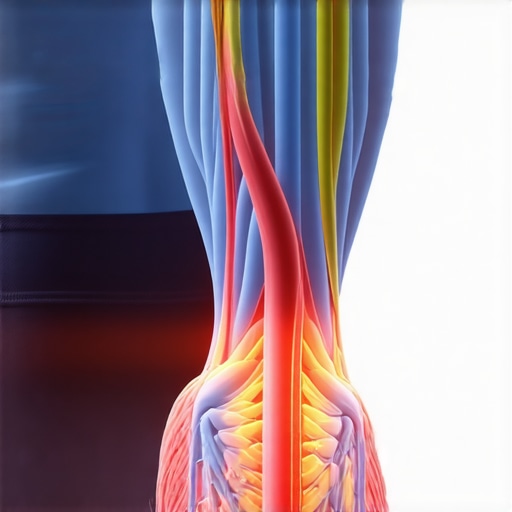
Does icing your lower back actually slow down your long-term recovery?
It’s the standard advice: get a bag of frozen peas and numb the pain. However, recent research in journals like the *British Journal of Sports Medicine* suggests that excessive icing can actually interfere with the body’s natural inflammatory healing process. In fact, why icing your lower back might be slowing down your recovery is a hot topic among modern kinesiologists. By constricting the vessels for too long, you prevent the ‘waste’ from leaving the area and slow the delivery of fresh, healing nutrients. Instead of numbing the area, I’ve found that gentle movement and heat often yield a more sustainable result for chronic stiffness. It’s also vital to identify the source of the fire; knowing the difference between muscular sciatica and a slipped disc can save you months of the wrong treatment. Have you ever fallen into this trap of over-stretching or over-icing? Let me know in the comments. I’m curious if you’ve noticed your pain getting worse after a ‘good’ stretching session.
The Tools That Earned a Permanent Spot in My Home Office
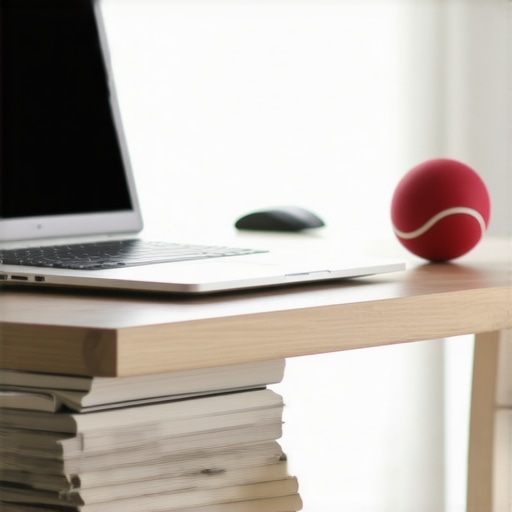
I’ve spent an embarrassing amount of money on posture correctors that felt like medieval torture devices. Most of them just pull your shoulders back without teaching your muscles how to hold themselves. If you really want neck pain solutions that stick, you need tools that provide feedback, not force. Personally, I swear by a simple, firm tennis ball. I use it for a tennis ball release for deep glute tension while I’m sitting on my ergonomic stool. It forces me to stay active in my seat rather than melting into the cushions. I also finally stopped using my laptop on the kitchen table after realizing why your laptop stand might be making your neck knots worse—if it isn’t at eye level, you’re still looking down, just with a more expensive setup. I eventually learned how to set up your home office for less than fifty dollars by using a stack of books and a separate keyboard, which immediately took the weight off my upper traps.
How do I maintain my mobility progress over the long haul?
Maintenance is where most people fail because they treat it like a temporary fix. Dr. Stuart McGill, a leading expert in back biomechanics, often discusses the concept of ‘spinal hygiene.’ This means your mobility mastery depends on the cumulative effect of your daily movements. It isn’t enough to do your wall slides then spend eight hours in a soft sofa that causes mid-back stiffness. You have to integrate little ‘micro-breaks.’ I set a timer for every 50 minutes. When it goes off, I perform the single movement that resets your posture—a standing reach with a deep diaphragmatic breath. This keeps the nervous system from getting ‘stuck’ in a seated pattern and prevents the long-term creep of chronic tightness.
The Tech That is Changing How We Heal
Looking ahead, I suspect we are going to see a massive shift toward wearable biofeedback. We already have watches that track steps, but soon, we’ll have shirts with haptic sensors that gently buzz when your rib cage flares or your head drifts forward. This is the ultimate evolution of back pain breakthroughs—moving from reactive treatment to proactive, real-time coaching. For now, we have to be our own sensors. I’ve started using my phone’s camera to do a simple test for text neck in the mirror once a week just to keep myself honest. If I see my ears creeping forward, I know I need to spend more time on my thoracic mobility. My challenge for you today is this: don’t just read this and go back to slouching. Go find a tennis ball, put it under one glute while you work, and feel the difference in how your lower back supports you. You might just find that a quick 2-minute massage is all it takes to break a six-hour tension cycle.
3 Lessons About My Spine I Learned the Hard Way
I spent years thinking my body was broken, but it was just miscommunicating. I eventually learned that tightness is often a protective shell rather than a lack of muscle length. For instance, I discovered that stretching your hamstrings won’t fix your tight legs if the real issue is neural tension originating from a misaligned pelvis. I also realized that pain isn’t always the enemy—it’s a signal. If you don’t listen, it just gets louder. Most importantly, I learned to ask myself: is your back pain a sign of something more serious? Sometimes you need to stop the DIY approach and consult a professional when you see specific red flags like numbness or progressive weakness. These realizations shifted my focus from chasing symptoms to building a resilient frame.
The Low-Tech Tools That Keep Me Pain-Free
My toolkit is surprisingly simple and doesn’t involve expensive gimmicks that promise overnight miracles. I rely on a firm tennis ball for deep glute release and I’ve mastered the specific way to use a lumbar roll to maintain my spinal curve while I work at my desk. These tools provide the physical feedback your nervous system needs to stay out of a ‘slump’ pattern during a long workday. Integrating these habits into your daily mobility mastery routine ensures that you aren’t just fixing pain for an hour, but building a body that stays open and energized. I trust these methods because they focus on the fundamental mechanics of how your joints are designed to move.
#IMAGE_PLACEHOLDER_E#
Take Control of Your Body Starting Now
Your journey toward lasting relief doesn’t have to be a grueling marathon of complex exercises. It is built in the tiny windows of time between meetings and in the mindful way you choose to sit while watching a movie. These back pain breakthroughs happen when you commit to being a student of your own body rather than a passive observer of your discomfort. You have the tools now—the wall slide, the optimized office setup, and the mindset shift to move with intention. It’s time to take that first step into a more comfortable, fluid life where your body supports your ambitions rather than limiting them. Have you ever tried a new posture exercise only to feel more stiff the next morning? Let me know in the comments below—I’d love to help you troubleshoot what might be going on.