
How your breathing pattern affects your core stability
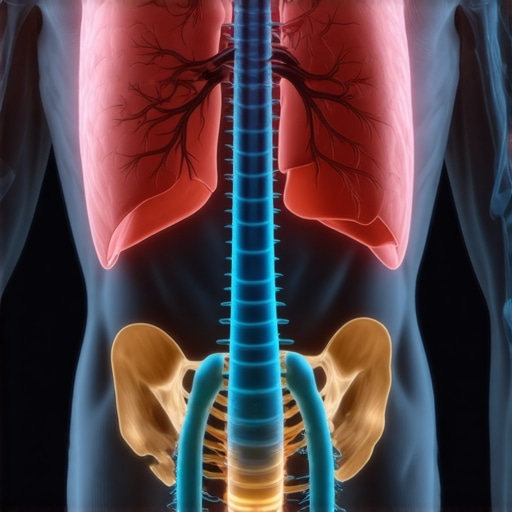
I was standing in the middle of the living room, frozen like a statue while my two-year-old reached up, crying for a hug. I couldn’t move. My back had ‘gone out’ again, and the irony wasn’t lost on me. I spent three mornings a week doing planks and leg raises, thinking my core was a fortress. Yet, there I was, humbled by a thirty-pound toddler and a poorly timed exhale. It was a visceral, painful realization: my ‘iron core’ was actually as brittle as glass because I had no idea how to breathe. I was bracing my muscles, but I wasn’t stabilizing my spine. Today, we are going to fix that disconnect so you can stop living in fear of the next ‘tweak.’
Your six-pack won’t save your spine
For years, I made the classic mistake of thinking that a tight stomach equaled a stable back. I would suck my belly button in toward my spine, thinking I was being ‘safe.’ In reality, I was just creating a hollow shell. Think of your torso like a soda can. If that can is sealed and pressurized, you can stand on it without it buckling. But if you pop the top or dent the sides—which is exactly what happens when you shallow-breathe into your chest—the whole structure collapses under pressure. This internal pressure, or intra-abdominal pressure (IAP), is the real secret to stability. If you’ve been struggling with a lower back tweak every time you lift something, you’re likely losing that pressure.
Does breathing really matter that much?
I used to be the biggest skeptic. I thought ‘breathing work’ was for yoga retreats, not for fixing real-deal back pain. But the science is hard to ignore. According to research published in the Journal of Biomechanics, the diaphragm is not just a respiratory muscle; it is a postural one. When it stays high in the chest, your lower back muscles have to overwork to keep you upright. This is the exact breathing habit that is keeping your back muscles tight and exhausted. Once I learned how to breathe into your lower back to release deep muscle tension, the constant ‘background noise’ of my ache finally started to fade. Have you ever felt your back seize up during something totally mundane, like sneezing or reaching for a grocery bag? I’d love to hear your story in the comments—it’s time we stop blaming ‘weak’ muscles for what is actually a coordination problem.
The bracing myth that keeps you stiff
We often hear the advice to ‘squeeze your glutes’ or ‘tighten your abs’ before we move. While well-intentioned, this often leads to a rigid, unnatural movement pattern that actually increases the load on your joints. If you stop doing planks if your back already hurts, you might find that your body is actually craving fluid pressure rather than isometric tension. We need to move away from the idea of the core as a rigid box and start seeing it as a dynamic, pressurized cylinder that expands and contracts with every breath.
Ditch the hollowing and find your 360 expansion
Most of us were taught to ‘pull the navel to the spine’ to protect our backs. This is a disaster for your discs. Imagine trying to support a house with a hollowed-out foundation. Instead, you need to create a pressurized cylinder. Sit on a firm chair and place your hands around your waist, just above your hips. Your thumbs should be on your back and your fingers on your obliques. Now, breathe ‘down’ into your hands. You should feel your fingers pushed outward in every direction—front, sides, and even into your thumbs. This isn’t a ‘belly breath’; it’s a total expansion. If you struggle to feel this, it’s a sign that poor posture is wrecking your spinal mechanics. 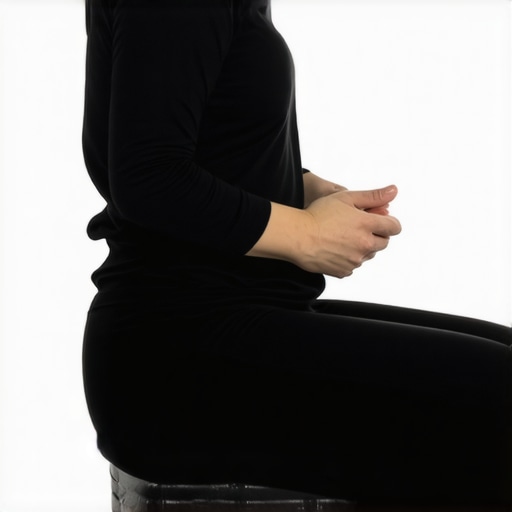
Pressurize before you power through
Once you can feel that expansion, you have to learn to ‘brace’ over it. This is where people get confused. You don’t suck in; you stiffen the wall around the pressure. Think of it like inflating a tire and then checking the rubber’s firmness. I learned this the hard way when I tried to hoist a massive cast-iron skillet out of a low cabinet. I grabbed the handle and yanked while my chest was high and my belly was soft. My back screamed. Now, I take that 360-degree breath, ‘set’ the pressure, and then move. This simple sequence is how you boost your back mobility while keeping the joints safe.
The hiss that saves your spine
The biggest mistake is holding your breath until your face turns red. That spikes your blood pressure but doesn’t actually help your movement. You need to ‘breathe behind the shield.’ As you perform a difficult task—like when you lift a heavy grocery bag—let out a tiny ‘hiss’ of air through pursed lips. This maintains the internal pressure while allowing the diaphragm to move. It’s the same mechanism used in the dead bug exercise variation that protects your spine. It keeps the ‘soda can’ rigid so the spine doesn’t have to bear the brunt of the weight.
Apply the pressure to everyday chores
It’s easy to do this while lying on the floor, but the real magic happens when you’re unloading the dishwasher or tying your shoes. I used to feel a sharp pinch every time I leaned over the sink. I realized my rib cage was flared up, ‘opening the top of the can’ and letting all the pressure out. By tucking my ribs slightly and inhaling into my lower back, that pinch vanished. If you’re constantly feeling tight, you might need to enhance your back mobility with these ergonomic tips. This isn’t just about strength; it’s about making sure your internal ‘airbag’ is deployed before you hit a bump.
The great hamstring lie
Everyone tells you to stretch your hamstrings if your back hurts. I did it for years. Every morning, I’d reach for my toes, feeling that satisfying ‘burn.’ But here is the nuance most people miss: that tightness is often a protective reflex, not a lack of flexibility. If your brain perceives your spine as unstable, it locks down your hamstrings to act as secondary stabilizers. When you force them to lengthen, you’re essentially pulling the emergency brake while the car is still moving. This is why reaching for your toes is the worst way to stretch your back. You aren’t fixing the source; you’re just annoying the symptom. I see this constantly with my clients who wonder why your hamstrings feel tight but never get better with stretching. Have you ever fallen into this trap of stretching every day only to feel stiffer by noon? Let me know in the comments.
Is that leg pain a muscle strain or a pinched nerve?
This is the ‘oops’ factor that lands people in my office with a massive flare-up. If you have a true nerve issue, traditional stretching is like cheese-wiring your nervous system. In clinical neurodynamics, as pioneered by experts like Michael Shacklock, we’ve learned that nerves don’t like to be stretched—they like to ‘slide’ and ‘glide.’ When you perform a standard sit-and-reach, you might be increasing neural tension by up to 15%, which is a disaster for a sensitized disc. You need to know how to tell if your leg pain is a muscle strain or a pinched nerve before you try to ‘fix’ it yourself. For those with radiating symptoms, the nerve flossing routine for stubborn leg numbness and tingling is almost always superior to a static hold. 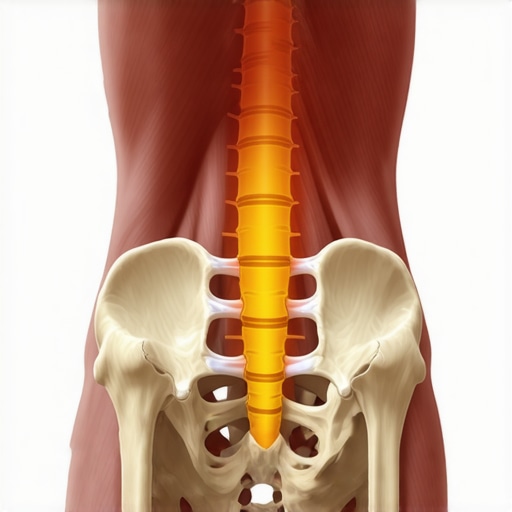
Why ‘standing up straight’ is a trap
We’ve been told since kindergarten to ‘stand up straight.’ But forcing your shoulder blades back and puffing your chest out actually creates a massive amount of muscular compression in your mid-back. This ‘military posture’ locks your rib cage in a flared position, making it impossible for your diaphragm to create that 360-degree pressure we talked about earlier. In my experience, why standing up straight is actually making your back pain worse comes down to the constant isometric load you’re putting on your spinal extensors. You’re trading a ‘slouch’ for a ‘siege,’ and neither is sustainable. If you’re struggling with lasting neck pain relief, the answer isn’t more rigidity. It’s about finding a ‘stacked’ position where your ribs sit directly over your pelvis, allowing your muscles to actually turn off for once. If you aren’t sure where your alignment stands, the simple way to check your own spine for pelvic tilt is a great place to start. Stop trying to be a statue; start trying to be a pressurized cylinder that can move in any direction. If you’re tired of the ‘stretch-pain-repeat’ cycle, it’s time to look at back pain breakthroughs that prioritize neural health over raw flexibility.I stopped buying ‘magic’ gadgets and started looking at the physics of my environment. If you want to keep these gains, you need a system that doesn’t rely on willpower. I rely on three specific tools that cost almost nothing but change everything about how I sit and move. First, I had to fix my car setup. Most seats are designed for ‘comfort,’ which really means ‘slumping into a C-shape.’ I used a specific method to adjust your rearview mirror to force better posture. Every time I start to slouch, the mirror goes out of alignment, giving me an instant, non-verbal cue to sit up. It’s better than any vibrating sensor you can buy.
Stop guessing and start using the right gear
Beyond the car, I found that the specific way to use a lumbar roll for maximum relief is actually higher up the back than most people think. It should support the natural curve without pushing the pelvis forward into a tilt. 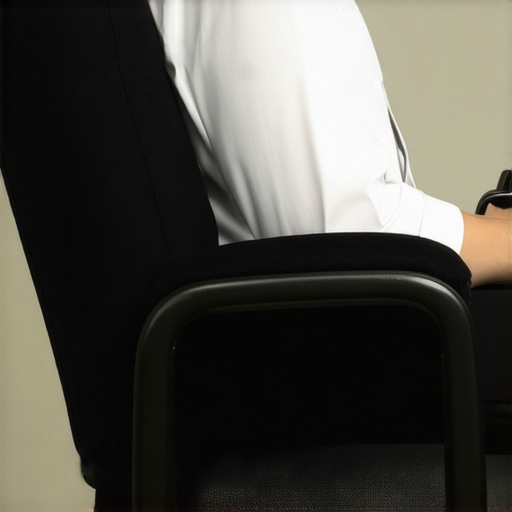 This approach is backed by Dr. Stuart McGill, a world-renowned spine researcher at the University of Waterloo, who emphasizes in his seminal work on ‘Spine Sparing’ that maintaining the natural lumbar lordosis reduces disc strain significantly. He calls this creating a ‘virtual core’—using external supports to let the deep stabilizers rest rather than staying under constant, exhausting tension. Then there’s the home setup. I didn’t spend a fortune on fancy furniture. I learned how to set up your home office for less than fifty dollars using a simple laptop stand and an external keyboard. It is about the height of your eyes, not the depth of your pockets.
The rearview mirror trick that forces you to sit tall
Consistency beats intensity every single time. I don’t do hour-long stretches anymore; instead, I follow mobility mastery daily tips to keep the system greased and responsive. I also swear by the morning routine that prevents lower back stiffness, which takes exactly four minutes while my coffee brews.
How do I maintain my spine health without it becoming a full-time job?
Looking ahead, I suspect we are moving toward managing back pain in 2025 through wearable biofeedback and smart fabrics that track our breathing and rib cage position in real-time. But for now, these analog hacks are your best defense against the return of chronic pain. Go to your car right now and adjust that mirror—it’s the fastest way to build a habit that sticks.
What I Finally Figured Out After Years of Stiffness
The biggest lightbulb moment for me was realizing that my back wasn’t ‘weak’; it was exhausted from over-protecting me. I spent years trying to muscle my way through life, but the real gains came when I learned to let the diaphragm do the heavy lifting. I also realized that feeling tight is often just my brain’s way of asking for more stability, not a request for more aggressive stretching. If you are ever unsure if your progress is on track, keep an eye on key symptoms to watch to ensure you’re moving in the right direction. Finally, I stopped treating every ‘ping’ of pain as a catastrophe and started seeing it as a data point that I needed to reset my 360-degree expansion.
A Few Tools That Make Staying Pain-Free Automatic
You don’t need a gym full of equipment to maintain your progress. I personally swear by a simple firm lumbar roll placed at the mid-lumbar level to prevent the C-slump. I also keep a basic laptop stand in my bag at all times; keeping my screen at eye level is the only way I can ensure lasting neck pain relief after a long workday. #IMAGE_PLACEHOLDER_E# For deeper reading, anything by Dr. Stuart McGill is gold—his research on ‘spine sparing’ completely changed how I pick up my kids and unload my groceries.
It is Time to Trust Your Body Again
Healing isn’t about finding a one-time fix; it’s about building a better relationship with how you move through the world. Whether you are dealing with a recent tweak or seeking long-term back pain breakthroughs, remember that your body is incredibly resilient. You now have the internal tools—the pressure, the breathing, and the ergonomic cues—to stop the cycle of fear. You can move, you can lift, and you can live without the constant shadow of back pain holding you back. Which of these hacks—the mirror trick or the 360-degree expansion—are you going to try first today? Let me know in the comments!