
Why your hamstrings are not the real reason your back is tight
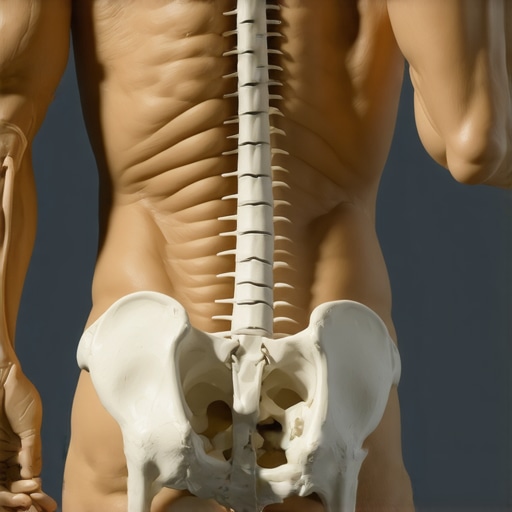
I remember one specific Tuesday morning when I nearly tipped over just trying to pull on my left sock. My lower back felt like it was locked in a vice, and my legs were so stiff I could’ve been made of wood. Like most people, I immediately dropped to the floor and started reaching for my toes, gritting my teeth and thinking, ‘If I could just get these hamstrings to loosen up, everything would be fine.’ I was wrong. I spent the next three years stretching those muscles every single day, only to wake up every morning feeling just as tight as the day before. It was exhausting, frustrating, and—as it turns out—completely unnecessary. We have been told for decades that tight legs cause back pain, but for many of us, that’s just a symptom of a much deeper mechanical issue. Today, I want to show you why the standard advice hasn’t worked for you and how focusing on your spine’s position is the actual key to finding relief. Why stretching your hamstrings won’t fix your tight legs is a lesson I learned the hard way after months of zero progress.
Your Body is Using Tightness as a Safety Shield
Honestly, my biggest mistake was treating my body like a collection of rubber bands rather than a complex electrical system. When your lower back is out of whack or your pelvis is tilted, your brain sends a signal to your hamstrings to tighten up. It’s not because the muscle is short; it’s because your brain is trying to stabilize your spine. It’s a protective mechanism. According to the Mayo Clinic, nerve compression or irritation can often manifest as muscle stiffness, meaning that ‘tight’ feeling in your leg might actually be your sciatic nerve screaming for space, not a muscle that needs more pulling. If you keep yanking on a nerve that is already irritated, you’re just making the fire hotter. This is why understanding the link between poor posture and chronic back pain changed everything for me. I stopped attacking my legs and started looking at my alignment.
Will stretching less actually make me more flexible?
It sounds like a total lie, doesn’t it? We’re taught that ‘no pain, no gain’ is the golden rule of mobility. I used to be terrified that if I stopped my 20-minute daily stretching routine, I’d eventually just turn into a statue. But the reality is that once I addressed my pelvic tilt and learned how to boost your back mobility with simple exercises that didn’t involve yanking on my legs, my hamstrings magically ‘loosened’ on their own within a week. I wasn’t less flexible; I was just less guarded. Have you ever spent weeks stretching a specific spot only to have it feel exactly the same the next morning? If so, you’re not failing; you’re just solving the wrong puzzle. Let’s dig into what is actually holding you back.
Fix the tilt of your internal bucket
Think of your pelvis as a bucket filled to the brim with water. When your hamstrings feel perpetually tight, it is usually because that bucket is tipping forward, dumping water out the front. This is known as an anterior pelvic tilt. When this happens, your hamstrings are physically pulled into a lengthened position before you even move a muscle. They aren’t short; they are maxed out. I discovered this one morning while standing at the kitchen sink. I realized I was arched like a bow just to reach the faucet. I tried how to fix your pelvic alignment while washing dishes by tucking my tailbone slightly, and for the first time in months, that ‘pull’ in the back of my legs simply vanished. If you want to see if this is your issue, you can use the simple way to check your own spine for pelvic tilt in front of any full-length mirror. 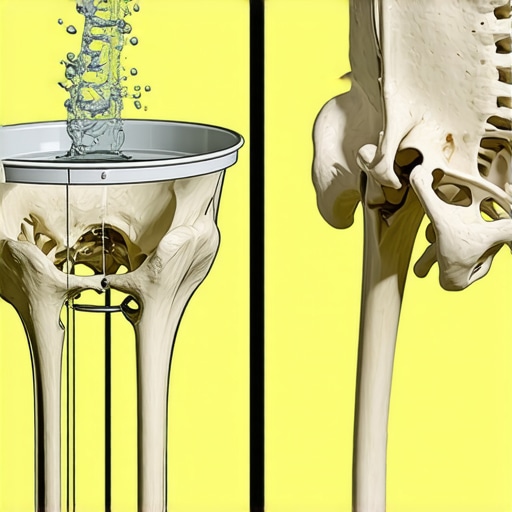
Stop yanking and start flossing the nerve
Nerves do not behave like muscles. If you stretch a muscle, it eventually yields; if you stretch an irritated nerve, it gets angry and swells. Imagine a silk thread trapped inside a rusted metal straw. If you pull both ends of the thread, it will snap or fray. This is why why some sciatica stretches actually pinch the nerve further and leave you limping. Instead of pulling, you need to ‘floss’ the nerve so it slides smoothly through the surrounding tissue. I started using the nerve flossing routine for stubborn leg numbness and tingling twice a day. It felt like nothing was happening—no burn, no intense pull—but within three days, the electric zing that usually shot down my calf when I sat down was gone.
Build a spine that doesn’t need a shield
The reason your brain keeps locking those hamstrings is that it doesn’t trust your core to hold you up. If your deep stabilizers aren’t firing, your body recruits the biggest muscles nearby to do the job of a splint. When I first tried to fix this, I went straight to heavy planks and sit-ups, which actually made my back spasm. I had to go back to basics with the dead bug exercise variation that actually protects your spine. The key is keeping your lower back glued to the floor so firmly that someone couldn’t slide a piece of paper under it. It’s boring, and it won’t give you six-pack abs, but it tells your brain that the spine is safe, allowing those hamstrings to finally stand down.
Small shifts in how you sit change everything
We spend hours in positions that force our nerves into a constant state of tension. I used to sit with my legs crossed and my hips twisted toward my second monitor, wondering why my left leg felt like a tight guitar string. It turns out that how a slight change in your sitting angle stops leg numbness is more effective than any 30-minute stretching session. By uncrossing my legs and placing a small support under my feet, I removed the mechanical stress on my sciatic nerve. You don’t need a thousand-dollar chair; you just need to stop putting your anatomy in a compromised position.For years, I was a victim of the ‘good posture’ police. I thought that pulling my shoulders back and sucking in my gut was the peak of spinal health. It turns out, why standing up straight is actually making your back pain worse was the hardest lesson I had to learn. When you force a rigid, upright position, you aren’t actually supporting your spine; you’re just creating a different kind of compression. Research published in the British Journal of Sports Medicine suggests that there is no single ‘ideal’ posture that prevents pain; rather, it’s the lack of movement variability that causes trouble. By locking myself into what I thought was a perfect ‘straight’ line, I was preventing my joints from micro-adjusting throughout the day. This is a classic trap: we replace one bad habit with a hyper-corrected one that is just as stressful for the nervous system.
Squeezing your shoulder blades is a recovery trap
I used to think that ‘shoulders back’ meant squeezing my blades together as hard as I could. All I was doing was crushing the nerves that exit the neck, which is often why you feel a burning sensation between your shoulder blades. This ‘military posture’ creates a massive amount of tension in the mid-back and neck, which eventually trickles down the kinetic chain to your lower back. Instead of forcing a position, you should be looking for ‘stacked’ alignment where your rib cage sits directly over your pelvis. When those two aren’t aligned, your core cannot function correctly, and your back is forced to take the hit.
Is your breathing keeping your nervous system on high alert?
Here is the nuance most people miss: your diaphragm is your primary core stabilizer. If you are a ‘chest breather’—meaning your shoulders move up and down rather than your ribs moving out—your brain perceives a state of low-level emergency. This breathing habit that is keeping your back muscles tight acts like a dimmer switch that never turns off. Your psoas and lower back muscles stay partially ‘on’ because they are trying to help you breathe. I’ve seen people spend thousands on new chairs when all they really needed was to learn how to breathe into your lower back to release deep muscle tension. It’s these invisible mechanical errors that separate a temporary fix from a permanent recovery. 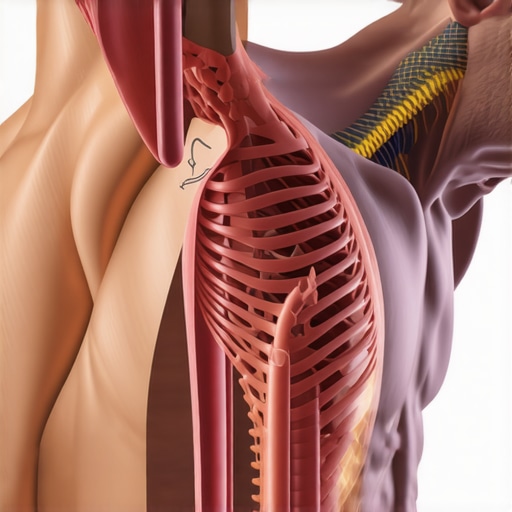
Look at your feet to find the source of back pain
Another hidden culprit that almost no one talks about is your feet. It sounds crazy, but how a stiff big toe forces your lower back to overwork is a mechanical reality. If your big toe doesn’t have the range of motion to push off the ground correctly while you walk, your hip has to compensate by rotating internally, which eventually tugs on your lower back and sciatic nerve. You can do all the back stretches in the world, but if your foundation is locked up, the symptoms will keep returning. This is the ‘Oops’ factor: ignoring the joints furthest from the pain. Have you ever fallen into this trap of over-focusing on the spot that hurts while ignoring everything else? Let me know in the comments. I’m curious to see how many of you were told to ‘just stand up straight’ like I was! If you’re ready to stop the guesswork, you can always contact us to look at your alignment from a new perspective.I spent years buying every vibrating massager and gravity boot on the market, but the most effective tool in my kit cost less than a cup of coffee. I am talking about a standard tennis ball. It is the perfect density to get into the piriformis without bruising the tissue. I realized that how a simple tennis ball can release your deep glute tension was more about precision than power. If you find that one hot spot and just breathe into it for ninety seconds, the relief is more profound than any deep-tissue massage I have ever paid for. Beyond that, my home office is now a sanctuary of cheap but effective hacks. I stopped using my high-end ergonomic chair’s built-in support and switched to the specific way to use a lumbar roll for maximum relief. Most built-in supports are too high or too low for your specific vertebrae; a portable roll lets you pin the support exactly where your spine is currently tipping the most.
The ten-dollar desk upgrade you are ignoring
Similarly, I finally stopped my legs from aching under my desk by using the simple footstool trick to stop lower back pain while sitting. By elevating my feet just four inches, I shifted the load from my lumbar discs back to my sit-bones. It is a mechanical win that requires zero effort once it is set up. Even at night, I stopped fighting my mattress and started using how to use a pillow between your knees to stop morning back stiffness to keep my hips stacked while I slept. These are not just tips; they are the infrastructure of a pain-free life. According to a study in the Journal of Bodywork and Movement Therapies, real-time feedback on spinal loading significantly reduces the rate of re-injury in chronic back pain patients, proving that small mechanical adjustments are the key to long-term success.
Wearable tech will soon track your pelvic tilt in real time
Looking ahead, I suspect we are moving toward a world where biofeedback is invisible. We are already seeing sensors that clip onto your waistband to track pelvic tilt in real-time. We are quickly approaching a time when unlocking mobility: expert tips on managing back pain in 2025 will involve AI-driven apps that tell you when you have been sitting in a guarded position for too long. This technology will take the guesswork out of recovery, allowing us to focus on movement rather than monitoring.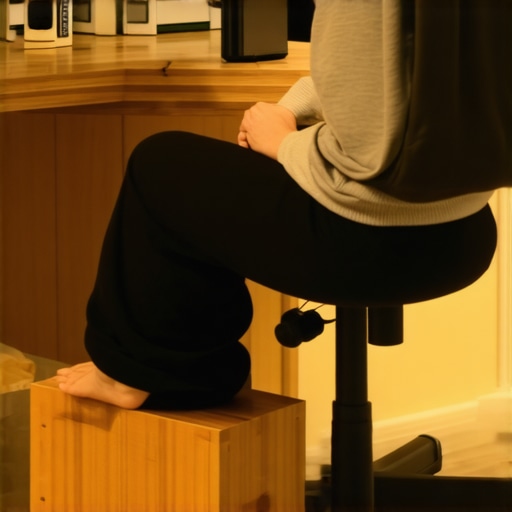
How do I maintain my mobility results without making it a full-time job?
The biggest fear I hear is that once you feel better, the work never ends. I found that I did not need an hour of stretching; I just needed mobility mastery: daily tips to keep your spine and joints healthy integrated into what I was already doing. For example, I do three wall slides every time I wait for the microwave. I do a single nerve floss while I am on hold during a phone call. This is about movement snacks rather than a feast. If you can commit to just one of these habits—like using a footstool—you are already doing more for your long-term health than most people. If you are feeling stuck on which tool to try first, contact us and we can help you prioritize your recovery kit. Start with the tennis ball glute release today; your lower back will thank you by tomorrow morning.
The Truths I Had to Accept to Finally Stop Hurting
Looking back, my recovery didn’t start in a gym; it started when I stopped fighting my own anatomy. Here are the three most important things I wish someone had told me years ago: First, the pain is rarely the problem. Your brain tightens your legs to protect your spine. If you keep pulling on them, you’re just removing the shield your body built. This is how to tell if your leg pain is a muscle strain or a pinched nerve, which determines whether you should rest or move. Second, gentle movement is a signal of safety. When I switched from aggressive stretching to subtle nerve flossing, my nervous system finally stopped being on high alert. Third, alignment happens in the boring moments. It’s not the hour at the gym that fixes you; it’s the eight hours at your desk or the six hours in your car.
My Daily Gear for a Resilient Spine
You don’t need expensive gadgets to find relief, but you do need the right tools used the right way. These are the items I never travel without: First, a simple tennis ball. It is the most effective way to target deep trigger points without causing rebound inflammation. Learning how a simple tennis ball can release your deep glute tension was my first real win against chronic stiffness. Second, a portable lumbar roll. Most chairs are designed for average people, but your spine is unique. I rely on the specific way to use a lumbar roll for maximum relief to keep my pelvis from tipping backward. #IMAGE_PLACEHOLDER_E# Third, a small footstool. If your feet aren’t supported, your hamstrings will never truly relax. I found that the simple footstool trick to stop lower back pain while sitting made an immediate difference by the end of the day.
Your Body is Ready for a Change
Living with constant stiffness is exhausting, but it doesn’t have to be your permanent reality. When you stop chasing symptoms and start respecting your body’s need for stability and alignment, everything shifts. You will find that back pain breakthroughs: navigating your path to restored mobility are usually the result of small, consistent changes rather than one big fix. Remember, why stretching your hamstrings won’t fix your tight legs is a mechanical lesson, not a failure of your strength. You are capable of moving without fear again. Have you ever spent weeks stretching your legs only to feel even tighter the next day? Let me know your experience in the comments below!