
How to fix your pelvic alignment while washing dishes
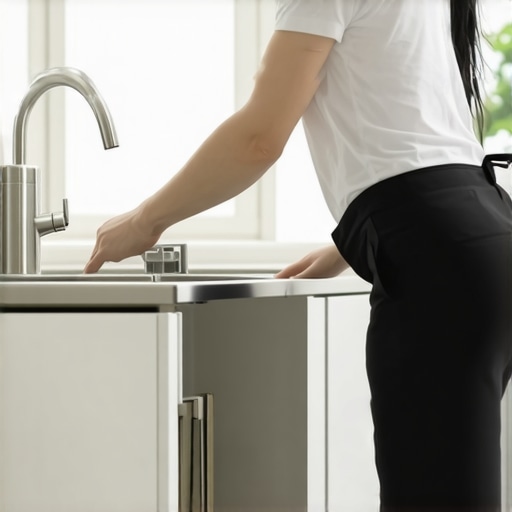
I was halfway through a mountain of crusty lasagna pans when my lower back decided it had finally seen enough. It wasn’t a sharp pop, but a slow, dull grinding that made me want to drop the scrub brush and just lay on the linoleum floor. I’d spent years thinking my kitchen was the enemy. I blamed the tile. I blamed the counters. I even looked into how your kitchen counter height is straining your neck every single day because my head always felt heavy by the time I was drying the silverware. But the real culprit wasn’t the cabinetry. It was my pelvis, tilted like a spilled bucket of water, while I mindlessly rinsed plates. Today, I am going to show you how to transform this daily chore into a corrective movement that actually heals your spine instead of wrecking it. [image_placeholder]
Stop Leaning on the Counter and Reclaim Your Core
Most of us do the sink lean. We press our thighs or belly against the edge of the counter, effectively turning off our core and letting our lower back take the full weight of our torso. I made this mistake for a decade. I thought I was relaxing into the chore. In reality, I was jamming my facet joints together and wondering why I needed swift relief for sciatica every Tuesday morning. When we lean, we lose that neutral spine we work so hard to maintain. It’s a lazy posture that feels good for ten seconds and hurts for ten hours.
Is a tiny hip shift actually worth the effort?
You might be skeptical. It’s just dishes, right? But think about the cumulative time you spend there. If you spend twenty minutes a day at the sink, that’s over 120 hours a year spent in a distorted posture. A study published in the Journal of Physical Therapy Science confirms that static standing is a major contributor to muscle fatigue in the lumbar region, even in people without previous injuries. By making a slight adjustment, you’re not just cleaning a pan; you’re practicing the simple way to check your own spine for pelvic tilt in real-time. I used to think standing up straight like a soldier was the answer, but I eventually learned why standing up straight is actually making your back pain worse when you’re just forcing a rigid, unnatural arch. The secret isn’t about being stiff. It’s about finding a kickstand for your body. Before we dive into the specific footwork, tell me: have you ever finished the dishes and realized you can’t quite stand up straight for a few minutes? It’s a sign your alignment is screaming for help. We’ve all been there, and honestly, learning how to unload the dishwasher without rounding your spine is only half the battle—the real work happens while the water is still running.
Open the Cabinet and Create a Kickstand
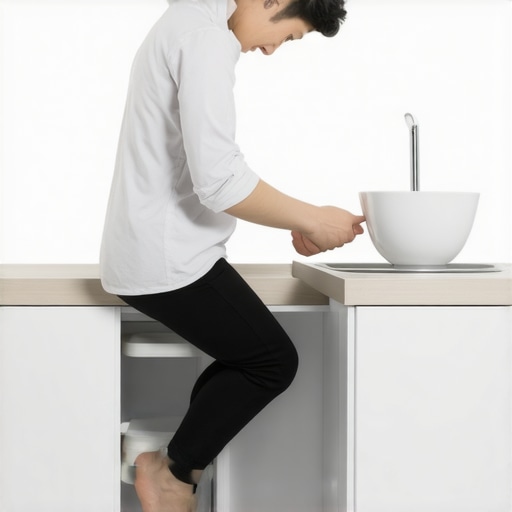
The first and most effective change you can make doesn’t involve buying a fancy ergonomic brush. It involves opening the cabinet door directly under your sink. Most of us stand with our feet glued together, parallel to the counter. This forces the lower back to act as a cantilever for the weight of our arms and head. Instead, open that door and place one foot on the base of the cabinet. This staggered stance immediately shifts your center of gravity. It’s like adding a kickstand to a bicycle; suddenly, the bike doesn’t have to work to stay upright. If your cabinet base is too high or uncomfortable, using the simple footstool trick to stop lower back pain while sitting can be adapted here—just place a small, sturdy stool on the floor to rest one foot. Rotate feet every few minutes to keep the load even across your hips.
Stack Your Ribs Over Your Hips
Once your feet are set, you have to address the ‘spilled bucket’ problem. If your pelvis is tilted forward, your lower back is in a constant state of compression. I remember a particularly messy Sunday night—lasagna stuck to every inch of the pan—where I was so focused on the grease that I didn’t realize I was practically arching my back into a C-shape. I ended up with a flare-up that lasted three days. Now, I use the simple way to check your own spine for pelvic tilt by imagining my pelvis is a bowl of water that I cannot let spill out the front. By gently tucking the tailbone, you engage the lower abdominals and create a solid foundation. This isn’t about sucking in your stomach; it’s about alignment. Remember that why your rib cage position determines your shoulder health is a crucial concept here—if your ribs are flared out, your lower back is taking the hit. Keep the ribs soft and stacked directly over the hips.
Breathe Into Your Back to Release Tension
While you’re scrubbing, pay attention to where your breath is going. If you’re holding your breath or breathing shallowly into your chest, you’re actually signaling your nervous system to keep your muscles guarded and tight. Learning how your breathing pattern affects your core stability is a game-changer for chores. Try to send your inhale into the space between your shoulder blades and your lower back. This internal pressure acts like an airbag, supporting the spine from the inside out. When I finally mastered this, I stopped feeling like I needed to revitalize your neck every time I finished a load of pots and pans. It turns out, a lot of that ‘heaviness’ in the head comes from the tension we hold while concentrating on getting the dishes clean. By breathing deeply, you keep the muscles supple rather than rigid.
Keep Your Work Close to Your Body
The further you reach, the heavier the object becomes for your spine. If you are reaching way into the back of the sink to scrub a pot, you are multiplying the force on your lumbar discs. Bring the items closer to you. If you have a deep sink, consider a small plastic tub that sits higher up. This reduces the micro-flexion in your mid-back that often leads to boost your back mobility needs later in the day. I used to reach for the sprayer and twist my torso simultaneously—a recipe for a spasm. Now, I move my entire body as one unit. If I need to reach for the soap on the far left, I step my feet over rather than twisting at the waist. It feels slower at first, but your discs will thank you for the lack of shearing force.
Stop Stretching Your Hamstrings if They Feel Like Tight Piano Wires
While we’re talking about postural shifts at the sink, we need to address the biggest myth in the recovery world: the idea that every tight muscle needs to be pulled. I used to spend twenty minutes every morning touching my toes, convinced my stiff legs were the reason for my back aches. But here is the nuance: if your ‘tightness’ is actually neural tension from the sciatic nerve, traditional stretching is the worst thing you can do. It’s like pulling on a raw, sensitive wire. You need to understand why your hamstrings feel tight but never get better with stretching before you double down on those yoga poses. Often, what you really need is the nerve flossing routine for stubborn leg numbness and tingling, which glides the nerve through the tissue rather than yanking on it. Stretching a nerve that is already compressed only increases inflammation and keeps you in a cycle of pain.
The Hidden Trap of the Ice Pack
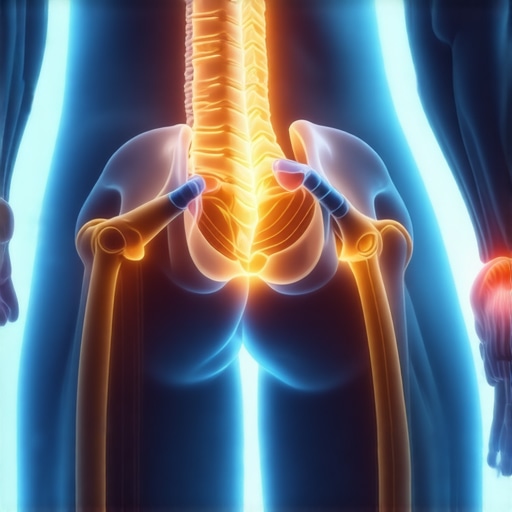
Then there is the ice trap. We have been told since middle school gym class that ice is the gold standard for any injury. But why icing your lower back might be slowing down your recovery is becoming a major talking point among modern mobility experts. While ice numbs the area, it can also constrict blood flow so significantly that it delays the arrival of the healing nutrients your discs and muscles desperately need. I made this mistake for years, icing my back after every heavy chore. In reality, I was stalling the very inflammatory process my body was trying to use to heal itself. If you aren’t dealing with a brand-new, acute injury with massive swelling, movement and gentle warmth are usually far more beneficial for long-term tissue health.
How do you know if it’s a muscle pull or something deeper?
This is the question that keeps most of us up at night when we feel that familiar twinge. Identifying how to tell if your leg pain is a muscle strain or a pinched nerve involves looking for the direction of the signal. If the pain stays localized in the lower back or glute, it is likely muscular. However, if you feel a ‘zip’ or ‘zing’ that travels past your knee, you are likely dealing with the nerve itself. A landmark study published in The Lancet highlighted that for non-specific low back pain, staying active and maintaining normal movement patterns is significantly more effective than bed rest or passive treatments. I used to think crawling into bed was ‘safe,’ but I eventually realized why your back hurts more after a day of resting on the couch. When we stop moving, our joints stiffen and our muscles guard even harder. The secret isn’t staying still; it’s moving within a range that doesn’t trigger a protective spasm. Have you ever fallen into the trap of stretching a nerve and making the pain twice as bad the next day? Let me know in the comments.
I did not just wake up one day and decide to be a posture person. I was forced into it by a back that refused to cooperate after years of neglect. Over time, I have narrowed down my save my spine kit to a few specific items that I use religiously. First, I never travel without a simple tennis ball. It sounds incredibly low-tech, but knowing how a simple tennis ball can release your deep glule tension has saved me from dozens of airport-related flare-ups. I use it to pin down the piriformis muscle while leaning against a wall, providing pinpoint pressure that a large foam roller simply cannot reach. Speaking of rollers, you have to be very careful with your technique; I learned the hard way that how to use a foam roller on your mid-back without causing pain is all about avoiding the lumbar spine and focusing strictly on the thoracic rib cage area. 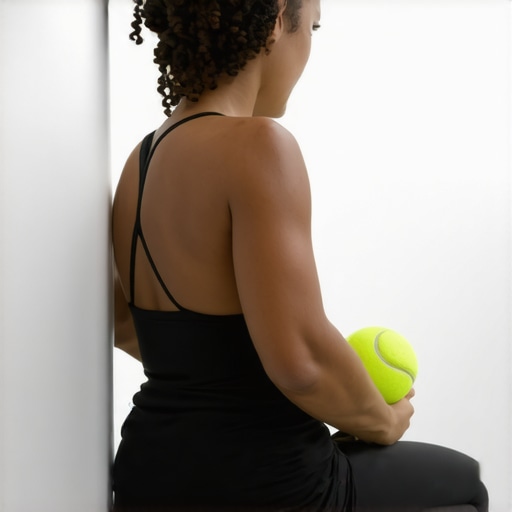
Turn Your Living Room Into a Mobility Lab
If you are serious about long-term results, you have to stop treating your body like a project you only work on when it is already broken. Dr. Stuart McGill, a world-renowned expert in spine biomechanics and author of Back Mechanic, emphasizes that spine hygiene—the way we move during the mundane moments of our day—is far more impactful than any one-hour gym session. I took this advice to heart and revamped my entire workspace. I finally realized why your laptop stand might be making your neck knots worse: if the screen is at the right height but you are still reaching forward for the trackpad, you are just trading a neck ache for a shoulder impingement. Now, I use a separate mechanical keyboard and a stand that follows the 15-degree rule for your computer monitor to save your neck, ensuring my eyes and spine stay in a neutral alignment.
How do I keep my spine resilient for the next decade?
Consistency is the only thing that eventually beats gravity. I do not do hour-long stretching marathons anymore because they are often counterproductive. Instead, I stick to the morning routine that prevents lower back stiffness, which takes exactly four minutes. It is about greasing the joints and waking up the stabilizers before I ask them to carry me through the day. I also keep a small mirror by my desk to occasionally run the simple test for text neck you can do in the mirror. If my ears have drifted ahead of my shoulders, I immediately perform a chin tuck to reset.
The Future of Posture is Already on Your Wrist
Looking ahead, I predict we are going to see a massive shift toward biofeedback wearables that offer more than just step counting. The next frontier in mobility mastery is real-time spinal mapping. Imagine a small, unobtrusive sensor on your shirt that gives your phone a gentle ping the moment you start to slouch over the sink or round your back while lifting a grocery bag. This technology will take the guesswork out of recovery by providing objective data on our movement patterns. For now, I want you to try one specific thing today: the next time you feel that familiar zing in your glute or hip, grab a tennis ball and spend two minutes leaning into that tension against a wall. Your future self will thank you for the immediate relief and the long-term habit.
The Hard Lessons I Learned While Chasing Real Relief
For years, I treated my body like a collection of parts rather than a system. I thought if I just stretched my hamstrings more, the pain would vanish. But the truth is, why stretching your hamstrings won’t fix your tight legs became clear only when I realized my ‘tightness’ was actually my nervous system trying to protect me. I also learned that the breathing habit that is keeping your back muscles tight was sabotaging my core stability every time I reached for a heavy pot. Real recovery isn’t about one big fix; it’s about the small, repetitive choices we make while standing at the counter or sitting on the sofa.
[image_placeholder_final]
The Gear That Actually Saved My Back
I don’t believe in expensive gadgets, but I do believe in tools that work. My ‘survival kit’ for daily life includes a small footstool to avoid the consequences of poor posture the hard way. I also keep a tennis ball nearby because knowing how a simple tennis ball can release your deep glute tension is the fastest way to stop a spasm before it starts. Finally, I’ve redesigned my workspace using the 15-degree rule for your computer monitor to save your neck, which has eliminated those 3 PM tension headaches forever.
Start Reclaiming Your Range of Motion Today
You don’t have to live in fear of the next sink full of dishes or the next heavy grocery bag. By implementing these small shifts, you are building a resilient foundation for long-term mobility mastery. Remember, your spine is incredibly strong, but it needs you to be its ally, not its obstacle. Start with one change—maybe it’s the kickstand foot position or the deep back breathing—and watch how your body responds. Have you ever noticed your back locking up specifically after a certain chore? Let me know in the comments below!