
Why You Should Stop Doing Sit-Ups for Core Strength
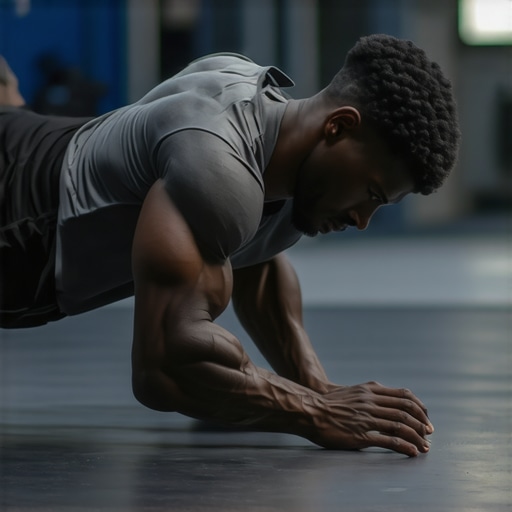
I still remember the sharp, hot poker sensation that flared up in my lower back every time I tried to tie my shoes. For years, I was the king of the crunch. I thought a strong core was synonymous with a six-pack, so I would spend fifteen minutes every night hammering out sit-ups on my living room rug. I was convinced I was building a suit of armor for my spine. Instead, I was slowly grinding my intervertebral discs into dust. One Tuesday morning, I reached for my coffee and my back simply gave out. I spent the next three days on the floor, wondering how someone so dedicated to fitness could end up so broken. If you have ever felt that sickening ‘pop’ or a dull ache that lingers after a workout, you are not alone. Today, I want to show you why the classic sit-up is actually a relic of the past and how we can rebuild your strength without the side effect of chronic pain.
Stop Grinding Your Spine into the Carpet
When I first started my journey into spinal health, I made the classic mistake of equating ‘the burn’ with progress. I did not realize that the repetitive flexing of the spine under tension—the very motion of a sit-up—is like bending a paperclip back and forth until it snaps. We often think we are helping ourselves, but managing back pain in 2025 requires a much more sophisticated approach than the old-school gym teacher methods. Research from experts like Dr. Stuart McGill has shown that a traditional sit-up can place over 3,000 Newtons of compression on the spine, which is a massive amount of stress for a movement that is supposed to be ‘healthy.’ I had to learn the hard way that my core’s real job is not to crunch, but to resist movement and protect the sensitive nerves exiting my vertebrae. If you are struggling, it is vital to know is your back pain a sign of something more serious before you keep pushing through the discomfort.
Is your current ab workout just a recipe for sciatica?
It is a scary thought, right? You go to the gym to get healthy, but you might actually be pinching the very nerves that keep your legs moving. When I was at my worst, I did not even connect my leg tingles to my floor exercises. I just thought I was ‘tight.’ I eventually discovered that how your breathing pattern affects your core stability is ten times more important than how many reps you can do. Have you ever felt a sharp zip of electricity down your leg after a set of leg raises or crunches? That is your body screaming for a different approach. We need to stop focusing on the surface muscles and start looking at the deep stabilizers that actually hold us upright. Have you ever had a workout that left you feeling worse the next day instead of stronger? Let me know, because that is the first sign we need to change your strategy. We are going to move away from the ‘fold’ and toward the ‘brace,’ ensuring your spine stays neutral while your strength skyrockets.
Ditch the Suck-In and Learn to Expand
Most people think bracing your core means sucking your belly button toward your spine. I used to do this religiously, thinking I was making my waist smaller and my back safer. In reality, I was just creating a hollow tube with no internal pressure. Think of your core like a soda can. If the can is full and pressurized, you can stand on it without it collapsing. If it is empty or dented—like when you ‘suck in’—it buckles under the slightest weight. To protect your discs, you need 360-degree expansion. Place your hands on your love handles and breathe into your fingers until they push outward. This creates a natural weight belt of muscle. I remember the first time I tried this while picking up my heavy cast-iron skillet; the usual ‘tweak’ in my lower back simply didn’t happen because I was pressurized from the inside out. This shift is why how your breathing pattern affects your core stability is the foundation of every movement you make. 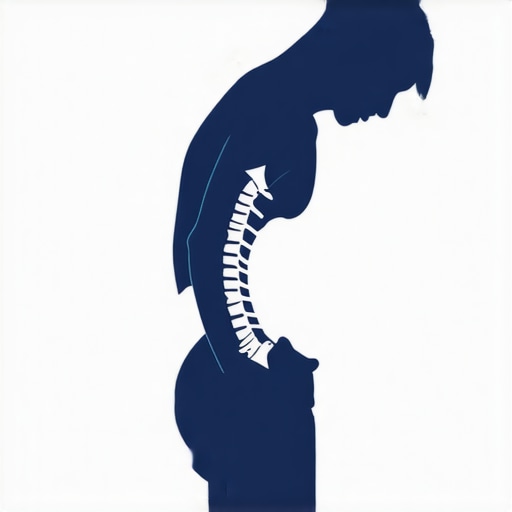
Keep Your Spine Like a Steel Beam Not a Wet Noodle
Once you have the brace down, you have to learn to move your limbs while your spine stays perfectly still. This is where most people fail because they treat their back like a hinge. Imagine you have a glass of water sitting on your belly; your goal is to move your arms and legs without spilling a single drop. This concept of ‘proximal stiffness for distal mobility’ is what separates those who stay in the pain cycle from those who break free. If you are unsure where your spine is in space, you can use the simple way to check your own spine for pelvic tilt to ensure you aren’t starting from a compromised position. When I finally stopped letting my back arch during overhead reaches, my chronic ‘tightness’ vanished within two weeks.
The Single Exercise That Changed My Recovery
The Dead Bug became my best friend, but not the way you see it done in high-speed HIIT classes. I did it at a snail’s pace. Lie on your back, legs in the air at ninety degrees, and slowly lower one arm and the opposite leg. If your lower back leaves the floor even a millimeter, you’ve lost the battle. I spent months doing just three reps of the dead bug exercise variation that actually protects your spine every morning. It felt boring at first, but it taught my brain that my legs could move without my pelvis tilting. This is the exact skill you need when you are out in the world, like learning how to lift heavy boxes using your hips instead of your spine.
Distinguish Between Muscle Fatigue and Nerve Warnings
It is vital to recognize when the ‘burn’ is actually a ‘pinch.’ I once ignored a sharp, electric zing in my hip during a workout, thinking I was just pushing myself. That mistake cost me a month of progress because I was actually compressing a nerve root. You have to be able to tell if you are building strength or triggering a flare-up. Knowing how to tell if your leg pain is a muscle strain or a pinched nerve is the difference between a productive workout and a trip to the ER. If you feel that sharp, lightning-bolt sensation, stop immediately and reset your brace. Your core should feel like a solid shield, never a source of shooting pain.It is the most common advice you will hear in any yoga studio or physical therapy office: ‘Your back hurts because your hamstrings are tight.’ For years, I dutifully leaned over my toes every morning, trying to touch the floor, only to find that my back felt stiffer an hour later. This is where most of us get it wrong. In many cases, those ‘tight’ hamstrings are not actually short muscles; they are under high neurological tension because your brain is trying to protect an unstable spine. When you yank on them, your nervous system panics and tightens your back even further. It is a vicious cycle. I finally realized that why your hamstrings are not the real reason your back is tight is because they are acting as a secondary brake for your pelvis.
Is Your Go-To Stretch Making Your Sciatica Worse?
This is the ‘Oops’ factor that keeps people in the clinic for months. If you have a disc issue, certain movements like the ‘pigeon pose’ or a deep forward fold can actually tension the nerve like a guitar string. Instead of ‘loosening’ the nerve, you are actually irritating the sheath that surrounds it. This is precisely why some sciatica stretches actually pinch the nerve further. You are not stretching muscle; you are tugging on sensitive electrical wiring. Research published in the Journal of Manual & Manipulative Therapy suggests that ‘neural flossing’—a technique where you glide the nerve back and forth—is significantly more effective for radiating pain than static stretching. I switched from holding stretches to the nerve flossing routine for stubborn leg numbness and tingling, and the results were night and day. 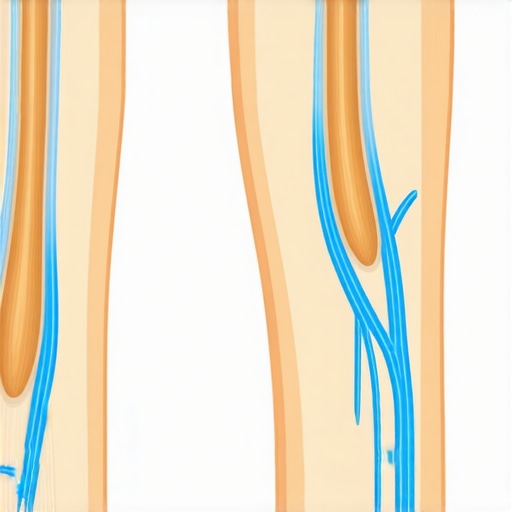 One of the biggest nuances I missed early on was the difference between structural tightness and protective guarding. Have you ever noticed how some days you can touch your toes easily, and other days you are six inches off the ground? Your muscles did not shrink overnight. Your brain just changed the ‘braking’ distance. This is also why why standing up straight is actually making your back pain worse if you are forcing a military posture rather than finding a natural balance. We also need to reconsider the ‘ice everything’ rule. Modern evidence suggests that why icing your lower back might be slowing down your recovery is due to the reduction in blood flow needed for actual tissue remodeling. Have you ever fallen into the trap of stretching your way out of pain, only to feel worse the next morning? Let me know in the comments.
Looking back, I realize that the gear I chose was just as important as the exercises I performed. I’ve gone through dozens of gadgets, but the ones that stuck were the simplest. For instance, I never leave for a road trip without my lumbar roll because I learned that the specific way to use a lumbar roll for maximum relief isn’t just about sticking it behind your back; it’s about the precise placement in the small of the arch. This prevents the ‘slump’ that leads to tension headaches. I also keep a tennis ball in my desk drawer. Why? Because how a simple tennis ball can release your deep glute tension is a game-changer when you’ve been sitting for three hours straight and your sciatica starts to whisper. Research from the Human Factors and Ergonomics Society, specifically the ANSI/HFES 100-2007 standard, emphasizes that your environment must adapt to your body, not the other way around. If your workstation is forcing you into a ‘C’ shape, no amount of stretching will save you. This is why I always tell people that how to set up your home office for less than fifty dollars is the best investment you can make for your back health. 
How can you keep your spine happy for the next thirty years?
Maintenance isn’t a one-time event; it’s a series of small, non-negotiable habits. I follow a strict mobility mastery routine every morning. It’s not an hour-long ordeal—it’s ten minutes of priming my joints. I specifically focus on the morning routine that prevents lower back stiffness, which usually involves light movements to wake up the stabilizers without stressing the discs. Looking ahead, I predict we are going to see a massive shift toward wearable bio-feedback. Imagine a shirt that gently vibrates when your shoulders start to round or your pelvis tilts too far forward. We won’t have to ‘remember’ to sit up straight; our tech will coach us in real-time. Until then, you have to be your own coach. If you want to see a massive difference by tomorrow morning, I want you to try one thing: use a towel roll under your neck tonight. Following the simple towel roll trick for better sleep with neck pain can reset your cervical curve while you’re unconscious, making your morning coffee taste a whole lot better without that lingering stiffness.
The Hardest Lessons My Spine Taught Me
For a long time, I thought that pain was just the price of getting older. I finally realized that my back wasn’t ‘weak’—it was just tired of doing everyone else’s job. My lightbulb moment was discovering that my hips were locked up, forcing my lumbar spine to become a hinge. Using the simple way to check your own spine for pelvic tilt helped me see exactly where my alignment was failing. I also learned that ‘pushing through’ is the fastest way to a month on the couch. Resilience comes from the simple morning move to prime your spine for the day, not from high-intensity crunches that shred your discs.
Tools That Earned a Permanent Spot in My Recovery Bag
If you want to build a similar routine, I recommend starting with three basics. First, grab a tennis ball; how a simple tennis ball can release your deep glute tension is the most effective five-minute habit I’ve ever found. Second, I suggest reading up on managing back pain in 2025 to understand the latest science on movement. #IMAGE_PLACEHOLDER_E# Finally, don’t ignore the basics of boost your back mobility through non-impact stretches. These aren’t just ‘tips’; they are the foundations of how I regained my life.
Your Back is Not the Enemy
You don’t have to accept a life of limitations. By moving toward a ‘brace’ mindset and respecting your spine’s natural limits, you are setting yourself up for decades of activity. The path to restored mobility isn’t always linear, but it is always worth the effort. Have you ever noticed why your back hurts more after a day of resting on the couch? Let me know your experience in the comments below.