
How to check your own hip mobility in under a minute
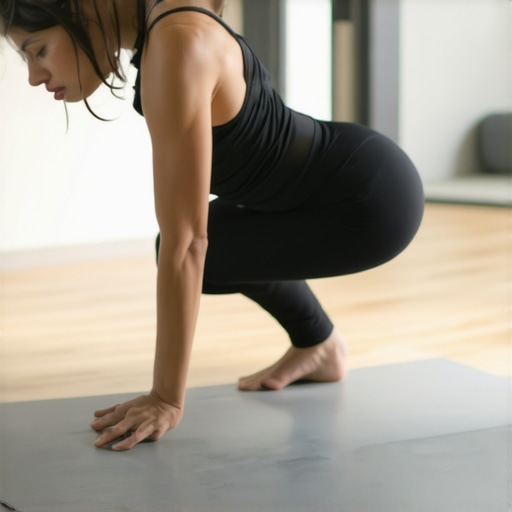
I’ll never forget the Tuesday afternoon I tried to demonstrate a simple lunge to my nephew and ended up groaning like a rusty gate. It wasn’t just a little ‘tweak’; it was a clear signal that my body had adapted to my office chair in all the wrong ways. For years, I ignored the signs, thinking poor posture was my only problem. But the reality was much deeper—literally. My hips had essentially locked themselves into a narrow range of motion, and I didn’t even realize it until I couldn’t move without a grimace.
Stop Letting Stiff Hips Dictate Your Life
Most of us are walking around with ‘sleeping’ glutes and ‘frozen’ hips because our lifestyle demands we sit for eight hours a day. We focus so much on expert tips on managing back pain, but we rarely look at the joints that actually support that back. Today, I’m going to share the exact 60-second method I used to finally identify where my movement was breaking down. This isn’t about being a gymnast; it’s about being able to live without that constant, nagging tightness.
Can a 60-second test really tell me anything useful?
You might be skeptical that a one-minute check can reveal years of damage, but your nervous system is incredibly efficient at hiding problems until they become crises. Early on, I made the mistake of thinking my tight hamstrings were the culprit. I spent months stretching them, only to realize that your core strength won’t fix your back if your hips are locked. A study published in the Journal of Physical Therapy Science highlights that restricted hip rotation is one of the single biggest predictors of recurring lower back issues in adults. If you’ve ever felt like your couch is the secret cause of your morning back stiffness, this test is for you. Have you ever noticed one leg feels ‘shorter’ or heavier than the other when you walk? Let’s find out why. [image] We are going to move beyond basic stretches and look at the 2-minute hip reset concepts that actually change how you feel when you wake up.
Locate Your Personal Movement Bottlenecks
To get started, you need to stop thinking about your body as a collection of isolated parts and start seeing it as a kinetic chain. If one link is rusted, the whole system groans. To find where your ‘rust’ is, we use the Windshield Wiper test. Lie flat on your back on a firm floor—not your bed, which is far too soft to give accurate feedback. Bend your knees so your feet are flat on the floor, positioned slightly wider than your hips.
Run the Windshield Wiper Test Right Now
Slowly let your right knee fall inward toward the center of your body while keeping your left leg still and your lower back pressed firmly against the ground. This movement is called internal rotation, and it is the first thing we lose when we spend too much time in a chair. When I first attempted this on my living room floor, my right knee barely moved a few inches before a sharp, pinching sensation stopped me cold. It felt like a door hinge crusted with salt and grit. I realized then that my back mobility simple exercises were only half the battle; I was fighting against a joint that was physically blocked.
The Telltale Signs of a Locked Joint
As you drop your knee, notice if your opposite hip wants to lift off the floor to ‘help.’ If it does, your brain is cheating to create the illusion of range. Repeat this on the left side and compare the two. Most people find a massive discrepancy. If you’ve been struggling with shooting pains, this imbalance is often a major contributor, making overcoming sciatica top lifestyle changes much harder to implement effectively. Think of your hip like a trailer hitch; if it can’t rotate freely, the ‘trailer’ (your lower back) is going to take all the strain every time you take a step or turn around.
Adjust Your Setup to Save Your Spine
Once you identify the restriction, look at your daily habits. For years, I didn’t realize why your desk chair height is wrecking your hips until I noticed I was sitting with my right leg tucked under my seat for hours. This forced my hip into a permanent state of internal rotation, eventually causing the joint capsule to tighten up. To combat this, you can’t just stretch; you have to actively remind the muscle how to fire. Integrating the 5-minute hip flexor release for desk workers into your afternoon slump can break that cycle of tension.
Why Your Feet Impact Your Hips
Don’t forget the bottom of the chain. It may seem unrelated, but why your toes are the key to better balance and back health is a concept that changed my recovery. If your feet are locked up in tight shoes, your hips have to work double-time to stabilize your gait. Try performing the windshield wiper test again, but this time, really spread your toes and grip the floor. You might be surprised to feel the tension in your hip socket shift instantly as your nervous system receives better data from your foundation.But here is where most of us go off the rails. We’ve been conditioned to believe that ‘tightness’ always requires ‘stretching.’ In reality, stretching a nerve that is already irritated is like pulling on both ends of a frayed rope. I see this constantly with people trying to manage leg pain; they spend twenty minutes a day cranking on their legs, only to find the pain intensifies.
Stop Stretching Your Hamstrings if You Have Nerve Pain
It sounds counterintuitive, right? Your leg feels tight, so you stretch it. However, if your discomfort is neural, you are likely dealing with ‘nerve tension’ rather than muscle shortness. A classic mistake is performing aggressive toe touches which can actually aggravate the dural sheath. This is why stretching your hamstrings often makes your sciatica worse. Instead of relief, you’re essentially ‘flossing’ an inflamed nerve against bone and disc material. If you’ve ever felt a ‘zing’ or a sharp heat while stretching, stop immediately. You’re not building flexibility; you’re increasing inflammation.
Why Your Perfect Sitting Posture is Actually Backfiring
We’ve all been told to sit up straight, shoulders back, at a rigid 90-degree angle. But ‘perfect’ posture is a myth if it’s static. Your spine thrives on movement, not statuesque stillness. I have found that why your perfect sitting posture is making you stiffer usually comes down to ‘static loading.’ When you hold one position—even a ‘good’ one—for hours, you’re starving your spinal discs of the nutrients they get through movement. This is a primary reason people struggle with expert tips on managing back pain in 2025; they are trying to be too still.
Is that tingling in your leg a disc issue or just a muscle knot?
This is the million-dollar question for anyone conquering sciatica with proven approaches. If your pain changes when you move your neck or cough, it’s more likely related to a disc. If it only hurts when you press on a specific spot in your glute, you might be looking at Piriformis Syndrome. Learning how to tell if your sciatica is a disc or muscle issue is the first step in avoiding unnecessary frustration. Experts like Dr. Stuart McGill, a leading spine biomechanist, often emphasize that ‘one-size-fits-all’ stretches are the enemy of true recovery. A study in The Spine Journal confirms that tailored movement patterns outperform general exercise for chronic lower back issues. Have you ever fallen into the trap of over-stretching and feeling worse the next day? Let me know in the comments. By shifting our focus to mobility mastery daily tips, we can move from ‘fixing’ a crisis to maintaining a body that simply works.
I’ve spent thousands of dollars on gadgets that promised to fix my back, but the most effective tool in my kit actually cost me less than a cup of coffee. When you move from active pain to ‘maintenance mode,’ your strategy has to change. You can’t live in a state of constant rehab; you need a system that integrates into your life without feeling like a second job. Transitioning to mobility mastery daily tips was the turning point where I stopped fearing a relapse and started trusting my body again.
Stop Buying Gadgets and Grab a Tennis Ball instead
The secret to keeping my glutes and lower back from seizing up after a long day isn’t a high-end massager—it’s pinpoint pressure. I’ve found that how a simple tennis ball can fix deep glute tension is more effective than most professional sessions because you can control the exact depth and duration of the release. By sitting on the ball and slowly oscillating over the piriformis muscle, you’re resetting the mechanoreceptors that tell your brain to keep that muscle ‘on’ and guarded. This isn’t just my opinion; Dr. Kelly Starrett, author of Becoming a Supple Leopard, emphasizes that local tissue shear is a prerequisite for high-level movement. If those tissues are glued together, no amount of stretching will unstick them.
How do I keep my spine healthy without spending hours on it?
Maintenance is about micro-adjustments rather than macro-sessions. I now live by a ‘no static hour’ rule. If I’m working, I ensure I’m using a lumbar roll to prevent mid-day back fatigue. It’s a tiny physical cue that keeps my spine in its natural S-curve while I type. I also made a radical change to my daily carry: I realized why your wallet belongs in your front pocket to save your hips. Sitting on even a slim wallet for years had created a slight pelvic tilt that was secretly driving my sciatica. These small, non-negotiable habits are why maintenance care is better than waiting for a spinal crisis. You want to be the person who manages their alignment, not the person who only reacts when they can’t put on their socks in the morning.
The Future of Posture is High-Tech and Invisible
Looking ahead, the trend in mobility is moving away from manual rollers and toward biofeedback. I predict that within the next few years, we will see haptic wearables—think ‘smart’ undershirts—that gently vibrate the moment your shoulders slump or your core goes slack. We are entering an era of expert tips on managing back pain in 2025 where AI-driven movement analysis will catch our ‘bottlenecks’ before they ever cause a spasm. This is already happening in elite sports, but it’s trickling down to the everyday office worker. Until that becomes affordable, your best bet is to develop ‘internal biofeedback’ by consistently checking your ranges of motion.
If you’re still feeling that nagging tug in your hip, I challenge you to try the tennis ball trick tonight. Don’t just roll aimlessly; find that one ‘hot spot’ in your glute, breathe into it for 90 seconds, and see if your range of motion improves instantly. It’s the simplest way to prove to your nervous system that you are back in control. We are nearly at the end of this journey, but before we finish, we need to talk about the final piece of the puzzle: how to handle those inevitable high-stress days when your body wants to revert to its old, tight patterns.
I’ve spent thousands of dollars on gadgets that promised to fix my back, but the most effective tool in my kit actually cost me less than a cup of coffee. When you move from active pain to ‘maintenance mode,’ your strategy has to change. You can’t live in a state of constant rehab; you need a system that integrates into your life without feeling like a second job. Transitioning to mobility mastery daily tips was the turning point where I stopped fearing a relapse and started trusting my body again.
The Hardest Truths I Learned While Healing My Spine
Reflecting on my journey, I realized that many of the ‘rules’ I followed were actually holding me back. Here is what I wish I had understood from day one:
- Movement is medicine, but the dose matters. I used to think more stretching was better, but I eventually learned why you should stop stretching your back into a c-shape if you want to protect your spinal discs. Over-stretching an unstable joint is a recipe for disaster.
- Your environment is the silent culprit. You can do all the exercises in the world, but if you don’t look at how to set up your laptop for better spine protection, you are fighting a losing battle against gravity every single day.
- Relief is rarely a straight line. Some days you will wake up stiff despite doing everything right. On those days, instead of panicking, look for is your back pain a sign of something more serious or simply a result of a stressful week.
The Gear That Actually Saved My Sanity
You don’t need a home gym to reclaim your range of motion. My ‘essential toolkit’ is surprisingly low-tech but scientifically sound:
- A standard tennis ball: This is the most versatile tool I own for how a tennis ball can relieve deep glute and sciatic pain. It allows for targeted release that a large foam roller just can’t reach.
- A firm lumbar roll: I don’t go anywhere without it. Learning how to use a lumbar roll to prevent mid-day back fatigue was the secret to surviving long flights and office marathons.
- Supportive Footwear: I had to face the reality of why your flip-flops are causing your morning heel and back pain. Switching to shoes that support my foundation changed the tension levels in my lower back almost instantly.
#IMAGE_PLACEHOLDER_E#
Take the First Step Toward a Pain-Free Life
You don’t have to live in fear of the next ‘tweak’ or ‘pop.’ By focusing on back pain breakthroughs and embracing consistent, micro-adjustments, you can rewrite your body’s story. Your spine is incredibly resilient when given the right environment to heal. Start with one small change today, and remember that conquering sciatica with proven approaches is a journey of patience, not a race to the finish line. Which of the mobility tests we discussed today surprised you the most—the hip rotation check or the nerve tension test? Let me know your results in the comments below!