
Why you feel a sharp pinch when standing up from a chair
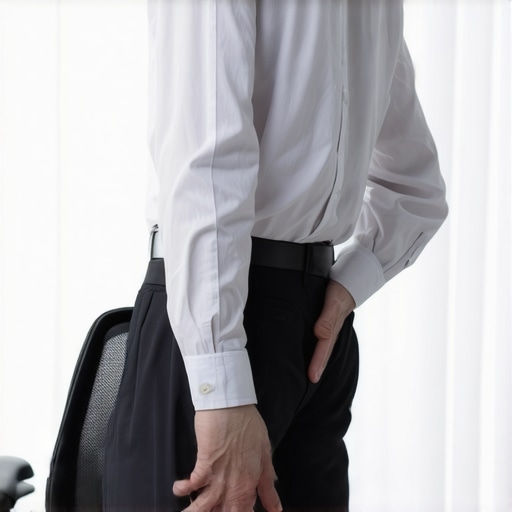
I remember it like it was yesterday—though it was actually last Tuesday. I had been powering through a stack of paperwork, and when I finally went to stand up, a bolt of lightning shot from my lower back right into my hip. It was that sharp, breath-stealing pinch that makes you freeze halfway. I felt like a human folding chair that had rusted shut, caught in a permanent crouch. It’s incredibly frustrating, isn’t it? You feel perfectly fine while you’re sitting there, but the second you try to rejoin the vertical world, your body decides to stage a full-scale revolt. For years, I just assumed I was getting old or that my bad back was just a permanent roommate I had to live with and accommodate. I even told my wife it was just part of the job of being an adult. I made the classic rookie mistake of thinking I just needed to stretch more to fix the issue. I spent weeks forcing myself into deep forward folds, only to find out the hard way that stretching your back into a deep C-shape during a flare-up was actually making my pinched nerve scream even louder. It was a humbling lesson in how our intuition can sometimes lead us straight into more pain.
Stop Letting Your Sofa Sabotage Your Spine
Sitting is a deceptive position. We think we’re relaxing, but our muscles are often locked in a silent tug-of-war beneath the surface. When you spend hours in a seat, especially one that doesn’t support your natural curves, your hip flexors shorten and your glutes essentially go to sleep. It’s like leaving a rubber band stretched out for hours; it doesn’t just snap back to its original shape the moment you let go. Then, when you stand, those tight muscles yank on your pelvis and spine, creating that signature pinch that stops you in your tracks. I eventually realized that my favorite armchair was secretly causing my lower back stiffness because it was just too soft, forcing my spine to slump and putting immense pressure on my discs. It’s not just about the chair, though; it’s about how we’ve accidentally trained our bodies to stay in these shortened positions. If you’re looking for back pain breakthroughs and restored mobility, you have to start by acknowledging that your environment and your habits are often the biggest culprits.
Is this sharp pain actually a sign of a serious injury?
This is the big fear that keeps most of us up at night, isn’t it? We feel that sudden jab and immediately our brains go to the worst-case scenario: a herniated disc, surgery, or the end of our active lives. While it’s vital to know the warning signs that your sciatica needs professional help, most of the time, that pinch is a functional issue—it’s a cry for better movement patterns. Interestingly, a study published in the journal Clinical Biomechanics noted that prolonged sitting leads to creep in the spinal tissues, where the ligaments and discs physically deform under the constant load and take significant time to return to their normal shape. That pinch is often just your tissues trying to snap back into place after being compressed out of position for too long. It’s like trying to straighten a piece of wire that’s been coiled up for a month. Today, I’m going to show you exactly how to wake your body up before you stand, so you never have to play that game of will I make it up again. Have you ever felt that sudden, sharp catch in your hip after a long movie or car ride? It’s more common than you think, and it’s definitely something we can handle together if we just change our approach.
Wake Up Your Glutes Before Your Feet Hit the Floor
To avoid that lightning-bolt pain, you need to turn on your body’s internal support system before you even think about shifting your weight. Think of your glutes as the engine of your movement. When you sit, the engine is off. If you try to stand without starting the engine, your lower back has to do all the heavy lifting, and that’s when the ‘creep’ we discussed earlier turns into a painful pinch. Before you stand, perform the 5-second glute squeeze that prevents sciatica flares while standing. Squeeze your buttocks tight, hold for five seconds, and release. Do this three times. It sends a signal to your brain that it’s time to work, effectively ‘waking up’ the muscles that stabilize your pelvis. I started doing this after a particularly brutal three-hour drive home to Omaha; I used to hobble out of the driver’s seat like I was ninety, but this small reset changed everything. It’s also worth learning how to sit in a car for hours without triggering sciatica so you aren’t starting from a place of deep irritation.
Ditch the Perfect Posture Myth
You’ve probably been told to sit ‘bolt upright’ with your shoulders pinned back. Here’s the reality: that rigid position often creates more tension than it solves. I used to force myself into a military-straight stance at my desk, only to find my mid-back burning by noon. You need to understand why your perfect upright posture is actually tensing your spine. Instead of focusing on being ‘straight,’ focus on being ‘supported.’ Use a small towel roll in the small of your back to maintain the curve without effort. If you’re unsure if your hips are even ready for movement, you can check your own hip mobility in under a minute to see where the real restriction lies.
The ‘Nose Over Toes’ Rule for a Pain-Free Stand
The actual transition from sitting to standing is where most of us fail. We tend to push off with our lower back or yank ourselves upward using a desk or chair arm. To do it right, slide your feet back slightly toward the chair, hinge at your hips (not your waist!), and bring your nose over your toes. This shifts your center of gravity forward over your legs, allowing your quadriceps and glutes to take the load. If you feel a twinge, it’s often because your hip flexors are still locked in ‘sitting mode.’ You might need a quick 2-minute hip reset to loosen the front of your thighs before you attempt a full day of activity. When I finally mastered this ‘hinge’ rather than ‘pull’ movement, the sharp catch in my hip vanished almost overnight. It’s about working with your body’s mechanics instead of fighting against them. Focus on that forward hinge today and notice how much lighter your spine feels.People always tell you that a ‘strong core’ is the holy grail of back health. While I’m not saying you should ignore your abs, this advice often leads people into a frustrating plateau. In my experience, you can have the most rock-solid six-pack in the world, but why your core strength won’t fix your back if your hips are locked is a reality many of my clients face. If your hip joints are glued shut from sitting all day, your lower back has to move twice as much to compensate. You aren’t suffering from a ‘weak back’; you’re suffering from a back that’s doing everyone else’s job. A study published in the Journal of Orthopaedic & Sports Physical Therapy (JOSPT) highlights this ‘hip-spine syndrome,’ showing that limited hip rotation is often a better predictor of lower back pain than core strength alone. It’s an analytical shift: instead of adding more ‘strength,’ we need to remove the ‘friction’ in your joints.
Stop Stretching the Nerve and Start Moving the Joint
This leads us to the biggest ‘trap’ I see in recovery. You feel that nagging pull in the back of your leg and your instinct is to reach for your toes. But here is the nuance: if you have sciatica, why stretching your hamstrings can actually flare up sciatica is because you aren’t stretching a muscle—you’re literally yanking on an already irritated nerve. It’s like pulling on a live wire. Instead of finding relief, you’re just keeping the flame of inflammation alive. 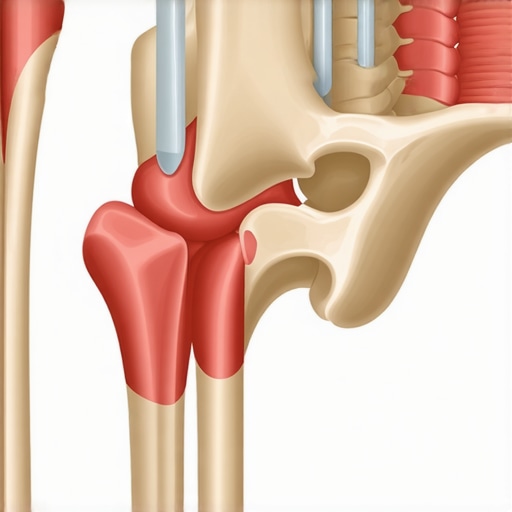
Are your hamstrings actually tight, or just protecting a nerve?
Often, that ‘tightness’ you feel is actually protective tension. Your brain is tightening the muscle to prevent you from over-stretching a nerve that is already under stress. If you ignore this signal and push through, you’re essentially fighting your own nervous system. It’s the same reason why deep tissue massage isn’t fixing your recurring back pain if the source is actually a mechanical misalignment. You can rub the muscle all day, but if the joint is still jammed, the muscle will just tighten right back up to protect it. To get past this, you have to look at the chain from the bottom up. It sounds crazy, but how a stiff ankle is actually causing your recurrent lower back aches is a common discovery in my practice. When your ankle doesn’t flex properly during your stride, your gait changes, your hip tightens to compensate, and suddenly your lower back is screaming during a simple walk. We have to stop treating the ‘scream’ and start looking at the ‘silent’ joints that aren’t doing their part. This is why mobility mastery is about the whole system, not just the spot that hurts. Have you ever fallen into this trap of stretching a ‘tight’ spot only for it to feel worse the next day? Let me know in the comments.
The Three Tools I Actually Carry in My Work Bag
I spent years buying every gadget that promised a ‘miracle cure,’ from vibrating foam rollers to expensive inversion tables. Most of them ended up collecting dust in the basement. Now, my maintenance kit is remarkably low-tech but incredibly effective. The first thing I never travel without is a simple tennis ball. It’s not for a quick game; it’s for my hips. Learning how a simple tennis ball can fix deep glute tension was a game-changer for me. By using it to apply targeted pressure to the piriformis muscle while I’m sitting in a hotel room or even a long-haul flight, I can prevent that sciatic nerve from being compressed. Secondly, I always keep a small inflatable lumbar roll in my laptop bag. If you don’t have one, you can easily learn how to use a lumbar roll to prevent mid-day back fatigue by just rolling up a sweatshirt. It provides that consistent tactile reminder to stay out of the ‘C-curve’ slump we talked about earlier. These aren’t just accessories; they are my first line of defense against the physical toll of a modern, desk-bound life.
Stop Killing Your Neck with Your Laptop
If you work from coffee shops or at your kitchen table, your neck is likely under a massive amount of mechanical stress. Laptops are an ergonomic nightmare because the screen and the keyboard are attached, forcing you to choose between straining your wrists or craning your neck. I personally use a foldable laptop stand and a separate Bluetooth keyboard. This allows me to bring the screen up to eye level, which is the most critical step in how to set up your laptop for better spine protection. When your monitor is at the right height, your deep neck flexors don’t have to work overtime just to keep your head from falling forward. This is backed by the work of Dr. Stuart McGill, a world-renowned spine biomechanist, who emphasizes that ‘spine hygiene’—the way we move and hold our bodies during the 16 hours we aren’t exercising—is far more important for long-term health than a one-hour gym session. If you’re constantly looking down, you’re essentially asking your cervical spine to hold up a bowling ball at the end of a long stick.
How do I keep my spine healthy for the long haul?
Maintenance isn’t about doing a grueling 60-minute routine every morning; it’s about micro-interventions. I follow the ‘10% rule.’ Every hour, I spend 10% of that time (six minutes) in a different position. If I was sitting, I stand. If I was standing, I walk. This prevents the ’tissue creep’ we mentioned earlier. I also lean heavily on mobility mastery daily tips to ensure I’m hitting my joints from every angle. Looking forward, I predict we are going to see a massive shift toward wearable biofeedback. In the next five years, your shirt or even your watch will likely vibrate the second your pelvic tilt shifts or your shoulders begin to round, correcting your posture in real-time before the pain even starts. We are moving away from ‘treatment’ and toward ‘constant optimization.’ For now, I want you to try this one advanced tip: the next time you feel that lower back tightness, don’t stretch. Instead, find a wall and perform the simple wall sit that builds spine-supporting strength. It engages the legs and core without putting shear force on your discs, giving you stability exactly where you need it most.
The Hardest Lesson I Learned About Chronic Stiffness
Reflecting on my own journey, the biggest shift happened when I stopped viewing my back as ‘broken’ and started seeing it as ‘overworked.’ It wasn’t about finding a miracle cure; it was about realizing that understanding the link between poor posture and chronic back pain is only half the battle—the other half is actually changing how you move. I used to think I needed more strength, but I really just needed less friction in my joints. I also learned that why cracking your back at home is a temporary fix became clear once I understood that I was just making my joints more unstable. Real progress came when I focused on expert strategies for lasting comfort rather than quick, satisfying pops. Consistency in these micro-movements is far more powerful than one intense stretching session once a week.
Tools That Actually Earned a Permanent Spot in My Routine
I trust these specific items because they address the root cause, not just the symptom. First, I always recommend how a tennis ball can relieve deep glute and sciatic pain—it’s the cheapest, most effective physical therapy tool you’ll ever own for releasing the piriformis. Second, if you’re struggling with your workspace, learning how to pick a chair that actually supports your lumbar curve is an investment in your future mobility. #IMAGE_PLACEHOLDER_E# Finally, I recommend keeping a small lumbar roll in your car or office chair to maintain that natural curve. These tools aren’t just gadgets; they are reminders to keep your spine in a neutral, happy position throughout the day, leading to real back pain breakthroughs.
Your Body is Ready to Heal if You Let It
You don’t have to live in a state of constant apprehension, waiting for the next pinch to strike. By implementing small, consistent changes—like the nose-over-toes rule or the 5-second glute squeeze—you are giving your nervous system the safety it needs to let go of that protective tension. Conquering sciatica isn’t an overnight event, but a series of better choices that add up to a life of freedom. You’ve got the tools; now it’s time to use them and trust the process of movement. Have you noticed that your back feels tighter after specific activities like driving or sitting at a desk? Let me know your experience in the comments below!