
The specific way to vacuum that protects your lower back
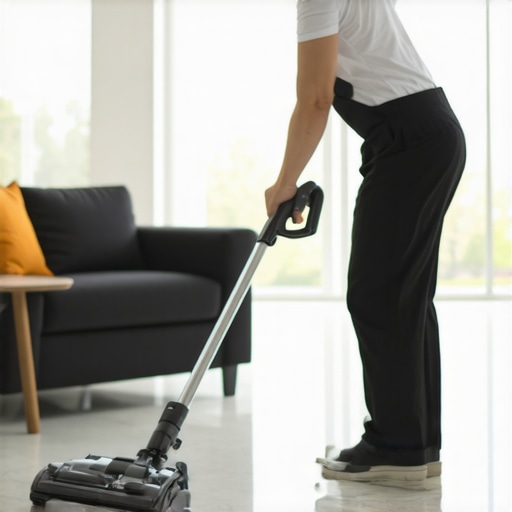
It happened right between the coffee table and the shag rug. One minute I was “power cleaning” before my in-laws arrived, and the next, a white-hot flash of pain shot through my lumbar spine, leaving me breathless. I didn’t drop the vacuum—I used it as a crutch to limp to the nearest chair. I spent the next three days on the floor, staring at the ceiling and wondering is your back pain a sign of something more serious. That moment was my wake-up call. I realized that my chores were literally breaking my body. My biggest mistake early on? I treated my vacuum like a long-range weapon. I would plant my feet and lunge my arm out as far as possible to reach under the furniture. It felt efficient, but I was actually creating a massive amount of shear force on my lower discs. Today, I’m going to show you exactly how to change your movement patterns so you can keep a clean house without triggering a back pain breakthrough that lands you in physical therapy. Have you ever felt that tell-tale twinge after a Saturday morning cleaning session? Let me know in the comments, because you are definitely not alone.
Ditch the Long Reach and Save Your Spine
When we vacuum, most of us default to a “lunge and pull” motion. We stand still and use our lower back as a hinge to push the machine forward. This is a recipe for disaster. According to the Mayo Clinic, mechanical back pain is often triggered by repetitive twisting or awkward reaching that strains the soft tissues surrounding the spine. I had to learn the hard way that understanding the link between poor posture and chronic back pain isn’t just for office workers—it’s for anyone holding a vacuum handle. The trick I use now is the “walk with it” method. Instead of reaching, I keep the vacuum close to my hip and move my whole body forward and back. It sounds simple, but it keeps your spine in a neutral position. If you’re already feeling the hum of a coming spasm, you might want to look into how to vacuum your house without straining your lower back specifically by using your legs as the engine.
Is a special technique really worth the extra effort?
You might be thinking, “It’s just vacuuming, I’ve done it this way for twenty years.” I thought that too, until those twenty years of micro-trauma turned into a week of unlocking sciatica relief just to be able to put on my own socks. When you protect your back during chores, you aren’t just avoiding a temporary ache; you are preserving your mobility for the things that actually matter, like playing with your kids or going for a hike. Small adjustments in how you move today prevent the heavy-duty conquering sciatica battles of tomorrow.
Stop Using Your Arms and Start Using Your Legs
Think of your spine like a fragile construction crane. If the crane extends its arm too far without moving its base, the whole structure tips or cracks under the pressure. This is exactly what happens when you lunge for that far corner. I remember trying to reach a persistent dust bunny under a heavy mahogany sideboard without moving my feet. I felt a sharp, electric “snap”—not a bone breaking, but a muscle seizing in protest. I spent the next hour frozen in a half-bent position. That’s when I realized that learning how to vacuum your house without straining your lower back is really about staying within your “power zone”—the square foot of space directly in front of your hips.
Adopt the Fencer’s Stance for Better Balance
Instead of standing with your feet side-by-side, which locks your pelvis and forces your lower back to do the heavy lifting, put one foot forward and the other back. This staggered stance allows you to shift your body weight forward and back using your glutes and thighs—the strongest muscles in your body—rather than your delicate lumbar discs. It’s the same logic behind the one foot up rule for pain free dishwashing and chores. By creating this stable base, you can glide with the vacuum rather than fighting against its weight. I found that once I mastered this weight shift, the usual post-cleaning ache in my SI joint vanished almost overnight.

Keep the Handle Near Your Belly Button
The further the vacuum handle travels from your core, the more leverage it has to pull your spine out of alignment. If you hold the handle at arm’s length, a ten-pound vacuum can feel like fifty pounds of torque on your lower back. By keeping your elbow tucked in and the handle close to your center of gravity, you stabilize the load. Remember, why your core strength won’t fix your back if your hips are locked is often down to these small mechanical errors that bypass your core entirely and put the strain on your joints. When I keep the machine close, I feel like I’m walking the vacuum rather than wrestling it.
Drop to One Knee for the Hard-to-Reach Places
We all have that one low-clearance coffee table or heavy bed frame. The instinct is to double over at the waist, but this is why you should stop stretching your back into a c-shape during daily tasks. When you round your back under load, you are essentially squeezing your spinal discs like a tube of toothpaste. If you need to reach deep, physically get down on one knee. This “tripod” position—one foot flat, one knee down—keeps your spine perfectly vertical while you reach. It’s a simple way to enhance your back mobility ergonomic tips for everyday comfort without risking a week of bed rest.
Use Your Body as a Counterweight
Think of vacuuming as a slow, rhythmic dance rather than a frantic chore. When the machine moves forward, your whole body steps forward. When it comes back, you step back. This total-body movement prevents the micro-twisting of the spine that accumulates into chronic inflammation. If you feel the muscles in your lower back starting to tighten, stop immediately and reset. Use how a simple breath reset can calm a back spasm to relax the nervous system before the pain takes hold. Integrating these shifts into your routine helps boost your back mobility simple exercises that make a difference in your long-term health. If you find your legs getting tired, don’t revert to bending; just take a break. Learning how to do a proper squat to protect your knees and back will eventually give you the foundational strength needed to keep your spine out of the line of fire.
Now that we have covered the basics of how to move your body during chores, let’s dig deeper into the nuances that most people—and even some trainers—get completely wrong. We’ve been conditioned to believe that if something feels tight, we should stretch it. But in the world of chronic back issues, this is often a dangerous oversimplification. I used to spend twenty minutes every morning doing toe touches, thinking I was helping my spine, when I was actually just irritating my nerve roots and delaying my own recovery. Have you ever fallen into this trap of stretching a “tight” muscle only to have the pain flare up an hour later? Let me know in the comments, because this is the number one mistake I see.
The Hamstring Stretch Trap and Why It Backfires
Most people assume that tight hamstrings cause back pain. While there is a connection, the “Oops” factor here is that the tightness you feel is often not a muscle problem at all—it’s a protective neurological response. When your spine feels unstable, your brain sends a signal to your hamstrings to tighten up and act as a secondary stabilizer. If you force those muscles to relax through aggressive stretching, you are essentially pulling the emergency brake off a car parked on a hill. This is specifically why stretching your hamstrings can actually flare up sciatica. You aren’t lengthening a muscle; you are tensioning a sensitive nerve that is already under duress.
Why do my legs feel tight even when I am flexible?
If you can touch your toes but still feel a persistent “pull” in the back of your legs, you are likely dealing with neural tension rather than muscular stiffness. Clinical research by experts like Dr. Stuart McGill, a renowned spine biomechanics professor, suggests that repetitive spinal flexion—the very movement used in most hamstring stretches—can delaminate the collagen fibers of your spinal discs over time. Instead of chasing flexibility, you should be focusing on mobility mastery daily tips to keep your spine and joints healthy that emphasize stability and neutral alignment. Real progress comes from teaching your body that it is safe to move, not from forcing it into end-range positions.
Ditch the Self-Cracking Habit for Better Stability
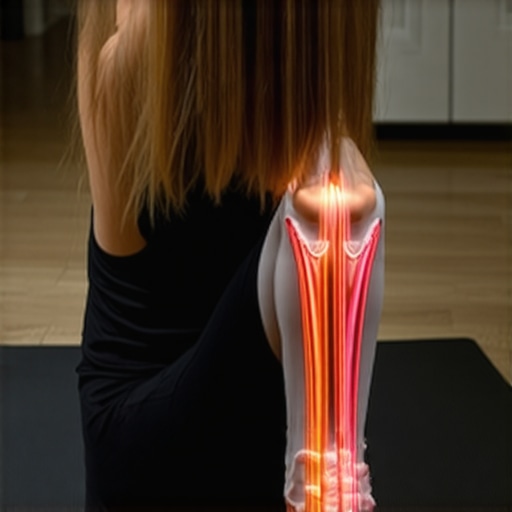
We all know that satisfying “pop” when we twist our backs on the couch. It feels like instant relief, right? Unfortunately, that relief is purely neuro-chemical and temporary. The hidden nuance here is that when you crack your own back, you aren’t usually hitting the joint that is actually stuck. Instead, you are hyper-mobilizing the joints above and below the stiff segment. This creates a cycle where those joints become too loose, leading to more muscle guarding and a constant urge to pop again. This is why cracking your own back is making your joints more unstable over the long term. You’re essentially creating micro-instability in your spine while the primary issue remains unaddressed.
The Myth of Deep Tissue for Chronic Issues
Another common mistake is thinking that you can just “rub out” a chronic back problem. While a good massage feels great, why deep tissue massage isnt fixing your recurring back pain often comes down to the fact that it only addresses the symptoms, not the mechanical cause. If your back is spasming because your hips are locked or your gait is off, no amount of pressure on your lumbar muscles will provide a permanent fix. You need to look for back pain breakthroughs that involve changing how you move throughout the day, rather than just lying on a table once a month. Real healing happens in the 23 hours a day you aren’t in a therapist’s office, starting with how you stand, sit, and even how you breathe to manage pressure.
Learning how to move is only half the battle; the other half is setting up your environment so you don’t have to think about your spine every second of the day. I used to think ‘ergonomics’ was just a buzzword used to sell overpriced office chairs, but after my third flare-up, I realized it’s actually about reducing the ‘cumulative load’ on your tissues. It is not the one heavy box that breaks you; it’s the thousand tiny movements you do poorly. To combat this, I’ve integrated a few specific tools that act as a safety net when my focus slips. One of my favorites is a simple high-density lumbar roll. I don’t just use it at my desk; I take it to the car. If you want to know the difference it makes, check out how to use a lumbar roll to prevent mid-day back fatigue. It forces your spine into a neutral curve even when you’re tired.
Why I Swear by the High-Density Lumbar Roll
Most car seats are designed for ‘safety’ in a crash, not for the long-term health of your lumbar discs. They often have a ‘bucket’ shape that encourages your pelvis to tuck under, putting you right back into that dangerous C-shape. By placing a firm roll at the level of my waistline, I maintain the natural arch. This is a game-changer if you need to know how to sit in a car for hours without triggering sciatica. According to a study published in the Journal of Electromyography and Kinesiology, using a lumbar support significantly reduces the activity of the spinal stabilizer muscles, which prevents them from fatiguing and giving out during long periods of sitting.
Tennis Balls are My Secret Weapon for Glute Pain
When I feel that deep, gnawing ache in my hip after a long day, I don’t reach for the ibuprofen first. I reach for a tennis ball. The ‘Oops’ factor for most people is that they try to roll their lower back directly, which can actually irritate the nerves. Instead, I focus on the glutes and the piriformis muscle. By lying on the floor and placing the ball under the fleshy part of the hip, I can find the exact trigger points that are referring pain down my leg. I’ve found that how a simple tennis ball can fix deep glute tension is often more effective than a professional massage because you can control the pressure perfectly. It’s about desensitizing the nervous system rather than ‘smashing’ the tissue. 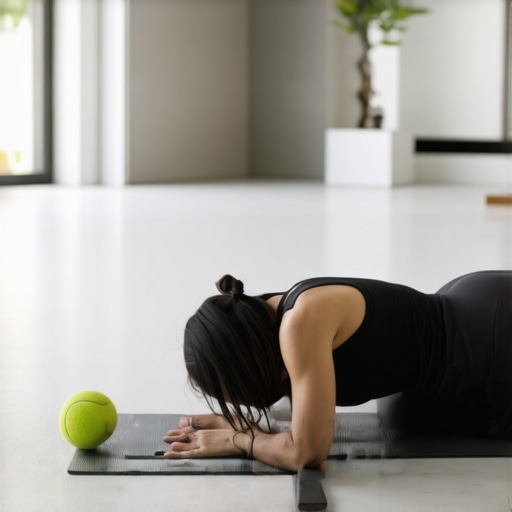
How do I maintain my mobility as I get older?
Maintenance is not a weekend project; it is a daily habit. I treat my spine like I treat my teeth—it needs ‘brushing’ every day. For me, that means a five-minute morning routine that includes boost your back mobility simple exercises that make a difference without overtaxing the joints. Looking forward, I predict we will see a massive rise in ‘smart’ apparel—shirts and bras with haptic sensors that vibrate when your shoulders round forward or your lower back collapses. We are moving toward a world where mobility mastery daily tips to keep your spine and joints healthy are automated by the tech we wear. Until then, you have to be your own sensor. If you spend all day on a laptop, you need to be proactive about how to set up your laptop for better spine protection to avoid that permanent neck hump. I want you to try one thing today: adjust your rearview mirror about two inches higher than you normally have it. This will force you to sit up straight and ‘grow tall’ through your spine just to see behind you. It’s a simple feedback loop that works wonders. Check out how to adjust your rearview mirror to force better driving posture for the full breakdown.
Hard Truths Learned on the Living Room Floor
After years of navigating my own recovery, I realized that most of us treat our bodies like disposable tools rather than finely tuned machines. One of the biggest shifts in my perspective was learning that pain is a dashboard light—it is telling you that a movement pattern is failing, not just that a muscle is weak. I also discovered that chasing flexibility is often a trap; for example, the real reason your hamstrings feel tight after a long walk is usually your nerves crying out for stability, not a need for more stretching. Finally, I stopped assuming that every popular exercise was good for me. I had to learn the truth about yoga for sciatica sufferers because certain poses were actually making my disc issues worse. Real progress started when I prioritized how I moved during the ‘boring’ parts of the day over what I did for thirty minutes at the gym.
The Non-Negotiable Gear in My Recovery Bag
I don’t believe in expensive gadgets, but there are a few low-cost tools that changed everything for me. First, a high-density lumbar roll is essential for anyone who spends time in a car or at a desk. Knowing how to use a lumbar roll to prevent mid-day back fatigue can stop a flare-up before it starts. Second, I never travel without a simple tennis ball. It is the most effective tool I have found for targeted release, and how a tennis ball can relieve deep glute and sciatic pain is a skill every homeowner should have in their back pocket. Lastly, I rely on visual cues. Simple habits like how to adjust your rearview mirror to improve your driving posture act as an automated coach, forcing me into better alignment without having to think about it constantly.
#IMAGE_PLACEHOLDER_E#
Building a Body That Can Handle the Hustle
You don’t have to live in fear of the vacuum or the laundry basket. By making these small mechanical shifts, you are investing in a future where you aren’t sidelined by your own chores. We are all looking for those back pain breakthroughs navigating your path to restored mobility, but those breakthroughs usually happen in the small, quiet moments when we choose to bend at the knees instead of the waist. I encourage you to stick with these mobility mastery daily tips to keep your spine and joints healthy. Your back will thank you for years to come. Which part of your house cleaning routine usually leaves you feeling the most sore? Let me know in the comments below!